- Category
- Fish and seafood
- State
- Fresh
- Usual unit
- g
What it is
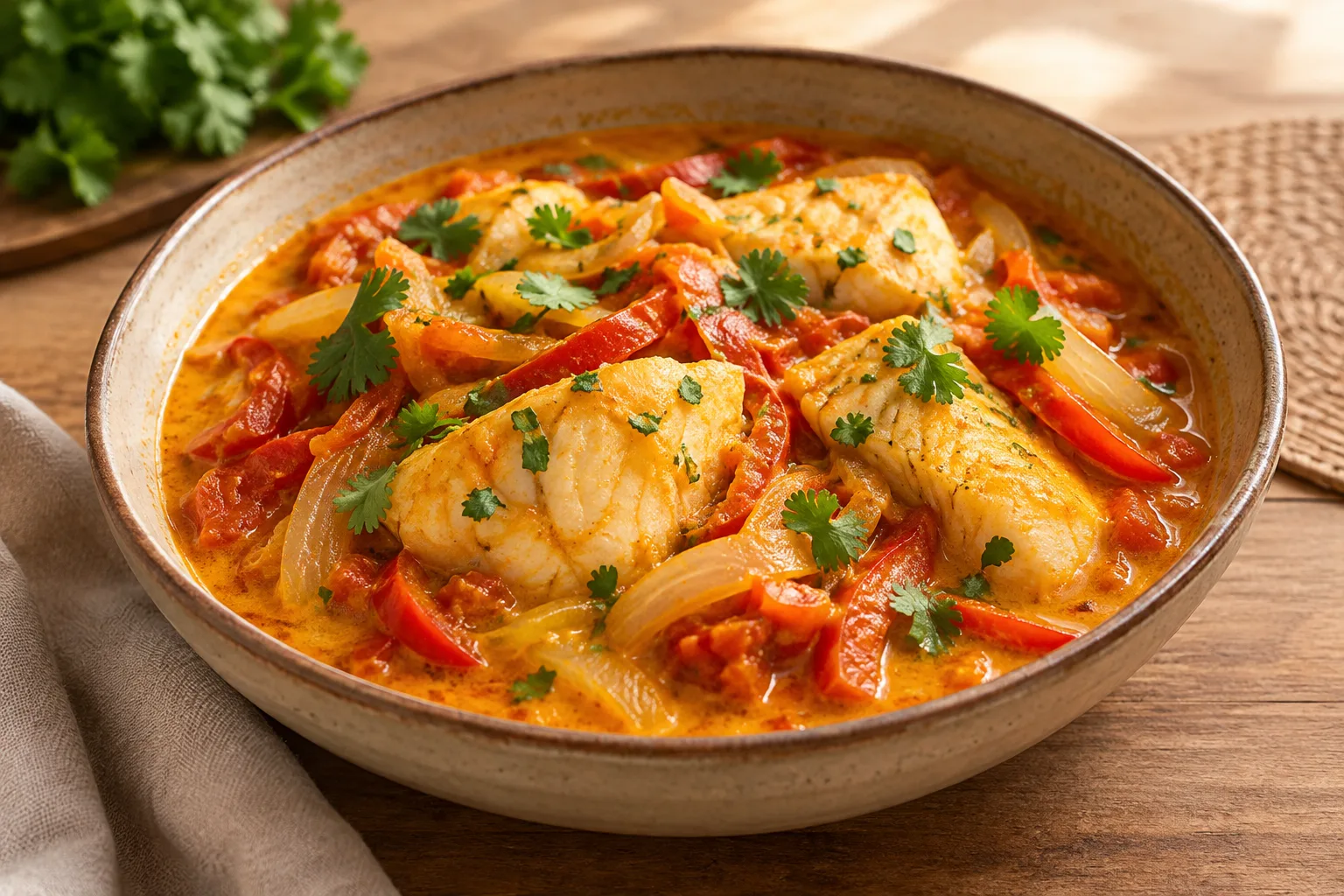
Firm white fish is a broad culinary description for light-fleshed fish that, in a particular species or cut, has a relatively firm texture. It does not name one species or a single biological family. Examples of fish described as white fish include cod, hake, haddock, and sea bass, but species and cuts do not all have the same consistency. The flavor is often mild, while the flesh can range from delicate and flaky to meaty and firm. The general label is therefore a useful starting point, not a guarantee of how a piece will cook. Look for the specific species and, where available, the cut description so you can choose fish suited to your planned recipe and technique.
When to use it
Choose a firm white-fish cut when you want a piece that can hold its shape in a dish and prefer a flavor that does not overpower other ingredients. Depending on the species and cut, white fish may be cooked in a pan, baked, grilled, or added to a stew. The category is broad: a delicate fillet will not necessarily behave like a meaty, firm piece. Before buying, compare the texture called for by your recipe with the fish available. If the species is unclear, ask the seller rather than assuming that all white fish can be exchanged without affecting the result.
How to use it
First identify the species and cut, then match the cooking method to the texture you have; the label “white fish” does not prescribe one technique. Culinary methods described for white fish include pan-cooking, grilling, baking, frying, battering, and stewing. To complement its generally mild flavor, try lemon or other citrus, garlic, or herbs such as dill, rosemary, tarragon, cilantro, and fennel. Capers and pickles provide a more pronounced contrast; white wine or cream can be used as part of a sauce. Follow a recipe written for the particular fish and do not assume the same treatment suits both delicate and firm cuts. When substituting one species for another, reconsider the method rather than transferring it automatically.
Flavour and texture
The flavor is generally mild and not dominant, and the flesh is often white or slightly translucent. Texture varies: it may be delicate, tender, flaky, meaty, or firm depending on the species and cut. Treat “firm” as a description of the particular piece, not a quality guaranteed by the broad white-fish category.
How to choose it
Look for the species name rather than relying only on the general label “white fish.” Check whether the cut is described as firm, delicate, meaty, or flaky, and compare that with the method your recipe calls for. Cod, hake, haddock, and sea bass are examples cited as white fish, but their culinary characteristics are not identical. If the label does not identify the fish clearly, ask the seller before choosing it as a substitute.
Storage
The available evidence does not establish storage times or temperatures that apply to every white-fish species and product form. Follow the package directions and current local official guidance for the particular product. Do not infer a storage method or duration from the culinary category; if directions are missing or you are unsure about the product, ask the seller or a competent authority.
Substitutions
Another white-fish species may be a possible substitute, but the change can affect texture and the finished dish. Choose a piece with a texture close to what the recipe specifies: delicate flesh is not automatically a good stand-in for a firm or meaty cut. Check the species and adapt the method rather than assuming cooking directions transfer unchanged.
Common mistakes
A common mistake is treating “white fish” as one species with a consistent texture. The category includes different fish, and the cut also affects how it cooks. Another pitfall is swapping species without checking whether the replacement is equally delicate or firm. Identify the fish and adjust the technique to the piece you have.
Safety and allergens
Follow the package directions and current local official guidance for handling, cooking, and storing the specific fish. The available evidence does not provide universal times or temperatures for this broad category; if you have questions about the product, ask the seller or a competent authority.
Culinary uses
- Ingrediente principal de platos de pescado
- Base de sabor suave para guisos y platos con salsa
- Pescado para preparaciones fritas o empanadas
Recommended techniques
- Cocinar en sartén o a la plancha
- Hornear
- Asar a la parrilla
- Freír o rebozar
- Incorporar a guisos y salsas
Pairs well with
- Limón y otros cítricos
- Eneldo, romero, estragón, cilantro e hinojo
- Alcaparras y pepinillos
- Ajo
- Vino blanco o nata en salsas
Frequently asked questions
Is firm white fish one particular species?
No. It is a broad culinary description. Check the species and cut because both can affect texture and the most suitable use.
Which fish are examples of white fish?
Sources list cod, hake, haddock, and sea bass among examples. This does not mean that every species or cut has the same firmness.
What flavors go well with white fish?
Try citrus, garlic, herbs such as dill or rosemary, and contrasting ingredients such as capers or pickles. Choose according to the fish and recipe.
Can I replace any white fish with another?
Not necessarily. Compare the cut’s texture with what the recipe calls for, and adapt the method instead of assuming the result will be identical.
Estimated nutrition
- Fat
- 2.32 g
- Saturates
- 0.45 g
- Carbohydrate
- 0 g
- Sugars
- 0 g
- Fibre
- 0 g
- Protein
- 16.8 g
- Salt
- 0.1 g
Sources and review
Automatically researched, cross-checked and validated content. Sources consulted:
- ¿Por qué la muerte es origen de miedos y tabúes? doi.org
- A PROGRAM FOR extension.usu.edu
- Beneficios del pescado blanco | Congelados Guerrero congeladosguerrero.es
- Pescado blanco: tipos y cómo cocinarlos | Fine Dining Lovers finedininglovers.es
- Healthy pregnancy handbook dickinson.edu
- Encounters with Animals in the New World A Dissertation ... trace.tennessee.edu
- Pescado Blanco | Lista Pescados Blancos | Delfín Ultracongelados delfinultracongelados.es
- Fresh Produce Recipe Book | Wsu s3.wp.wsu.edu
- Lista de pescados blancos y propiedades nutricionales - Compesca compesca.com
- Para obtener proteína y calorías suficientes - Health Online healthonline.washington.edu
- Para la ciudadanía aesan.gob.es
- Independiente - School of Journalism - The University of Arizona journalism.arizona.edu
- evaluacion de la calidad y composicion quimica de la carne de bovinosparacarne.uprm.edu
- Pescado blanco: cómo elegirlo y cocinarlo — KitchenPause kitchenpause.com