- Category
- Herbs and spices
- State
- Fresh
- Usual unit
- cup
What it is
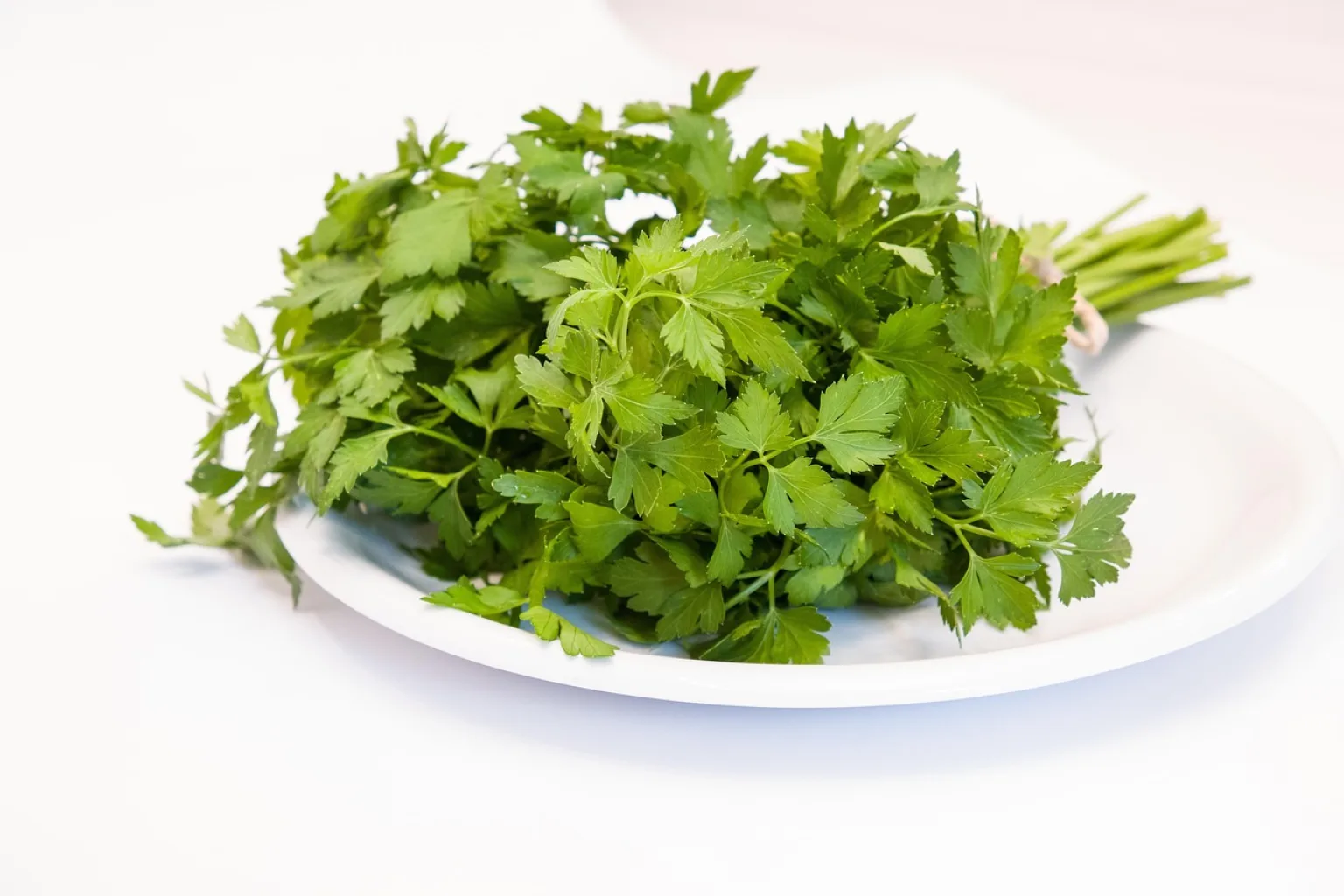
Flat-leaf parsley is the parsley variety with smooth, divided leaves, commonly sold fresh in bunches or packs. It belongs to the Apiaceae family, along with celery, fennel and carrots. The leaves are the part most often used in cooking, but the stems can also be chopped and used for flavor. It differs from curly parsley in leaf shape and is often described as having a more pronounced flavor. Parsley is an herb rather than a spice: its green leaves bring aroma, flavor and color to food, whether used raw or in cooked preparations.
When to use it
Use flat-leaf parsley when you want a green, aromatic flavor or a fresh finishing touch. Chopped raw, it works in salads, sauces and herb mixtures, and it pairs well with fish, meat and garlic. Long cooking can soften its aroma, so hold some back to add at the end. If you want the flavor to blend into a stew or warm sauce, add parsley during cooking and finish with fresh leaves just before serving.
How to use it
If you prefer a delicate texture, strip the leaves from the thicker stems, then chop them with a clean, sharp knife. Use the leaves raw in salads, sauces, mayonnaise and herb mixtures, or scatter them over fish, meat and other dishes just before serving. For cooked dishes, stir parsley into stews or sauces and save some for the finish: prolonged heat can mute its aroma and color. Tender stems can also be chopped and used, although their flavor is milder. Adjust the amount to taste, and remember that fresh and dried parsley are not used in equal quantities: about one tablespoon of chopped fresh herb is equivalent to one teaspoon dried.
Flavour and texture
Its flavor is green, aromatic and fairly pronounced, with herbal notes that complement garlic and many savory dishes. The flat, toothed leaves are tender when fresh and easy to chop; the stems are somewhat firmer and milder. With prolonged cooking, its aroma can become less noticeable.
How to choose it
Choose a bunch with green, fresh-looking, firm leaves. Avoid leaves that are brown, yellowing or wilted, and check for slimy areas or visible signs of spoilage. Flat-leaf parsley has smooth, divided leaves rather than curled ones. If buying a pack, check its contents and the general condition of the leaves before use.
Storage
Keep parsley refrigerated and protected so the leaves do not wilt quickly. For short-term use, you can stand the stems in a container with a little water and keep it in the refrigerator. It can also be frozen for longer storage; once thawed, it will be limp and is better suited to cooked dishes than to garnishing. Discard deteriorated leaves.
Substitutions
Curly parsley can replace flat-leaf parsley when you need a fresh herb, although the leaf shape and perceived intensity differ. Dried parsley also works in cooked dishes: as a guide, use one teaspoon dried for one tablespoon chopped fresh parsley. Adjust to taste, since the aroma and texture of the two forms are not identical.
Common mistakes
Do not confuse flat-leaf parsley with curly parsley or cilantro: they may look similar, but their flavors are not the same. Another common mistake is replacing fresh parsley with the same amount of dried; dried parsley is used in a smaller quantity. If you want a fresh aroma, avoid adding all the parsley at the start of a long cooking process; save some for the end.
Safety and allergens
Handle herbs with clean hands and utensils. Discard visibly deteriorated leaves and follow local official guidance for handling fresh produce safely.
Culinary uses
- Hierba aromática para condimentar
- Guarnición fresca
- Ingrediente para salsas y mezclas de hierbas
Recommended techniques
- Picar fino y añadir crudo
- Incorporar al final de la cocción
- Añadir a guisos durante la cocción
Pairs well with
- Ajo
- Pescado y marisco
- Carnes
- Ensaladas y salsas
Frequently asked questions
Can you eat the stems of flat-leaf parsley?
Yes. Tender stems can be chopped and used for seasoning; they generally have a milder flavor than the leaves.
When should parsley be added to a hot dish?
You can add it during cooking to blend its flavor into the dish, but adding some at the end helps preserve a fresher aroma.
How do you substitute dried parsley for fresh?
As a guide, use one teaspoon dried parsley for each tablespoon of chopped fresh parsley, then adjust to taste.
Sources and review
Automatically researched, cross-checked and validated content. Sources consulted:
- The Essential Glossary of Cooking Terms for the Culinary Arts - Escoffier escoffier.edu
- Qué es el perejil, la más popular de las hierbas mediterráneas: sus propiedades y las mejores recetas en las que usarlo directoalpaladar.com
- FSHN13-03s/FS264: De compras para la salud: Las hierbas y las especias ask.ifas.ufl.edu
- Agencia Española de Seguridad Alimentaria y Nutrición aesan.gob.es
- Perejil: propiedades, beneficios y usos en la cocina bonviveur.com
- Module 19: Food Safety While Harvesting Vegetables and Herbs From the School Gardens - Farm to School farmtoschool.osu.edu
- Valentine's Day Recipes from the Experience Notre Dame Chefs | News and Stories | Notre Dame Hospitality | University of Notre Dame hospitality.nd.edu
- Cultivo de perejil en huertos familiares | Extensión de la UMN es.extension.umn.edu
- Parsley Tabbouleh.pub myllu.llu.edu
- Recipes – Exploring Afro-Mexico Through Food and Science pressbooks.cuny.edu
- Perejil - Región de Murcia Digital regmurcia.com
- Perejil de Hoja Plana: guía de cultivo y cuidados plotmygarden.com