- Category
- Vegetables
- State
- Fresh
- Usual unit
- unit
What it is
Green sweet pepper is a fresh, mild pepper, distinct from hot chile varieties. In some places, “sweet chile” is used to mean bell pepper; the green color identifies the product as sold but does not, by itself, establish a particular variety. The pepper can be chopped and eaten raw or added to cooked preparations. In the kitchen it works as a vegetable and as an ingredient for salads, sauces, relishes, and marinated preparations.
When to use it
Use it when you want mild flavor, color, and firm pieces in a salad, sauce, or cooked dish. Raw, it can be cut into strips or dice; cooked, it works well in preparations with ingredients such as tomato and onion, or when roasted or grilled. It can also be used in a suitable tested preserving recipe, or frozen in portions so it is ready to cook with later.
How to use it
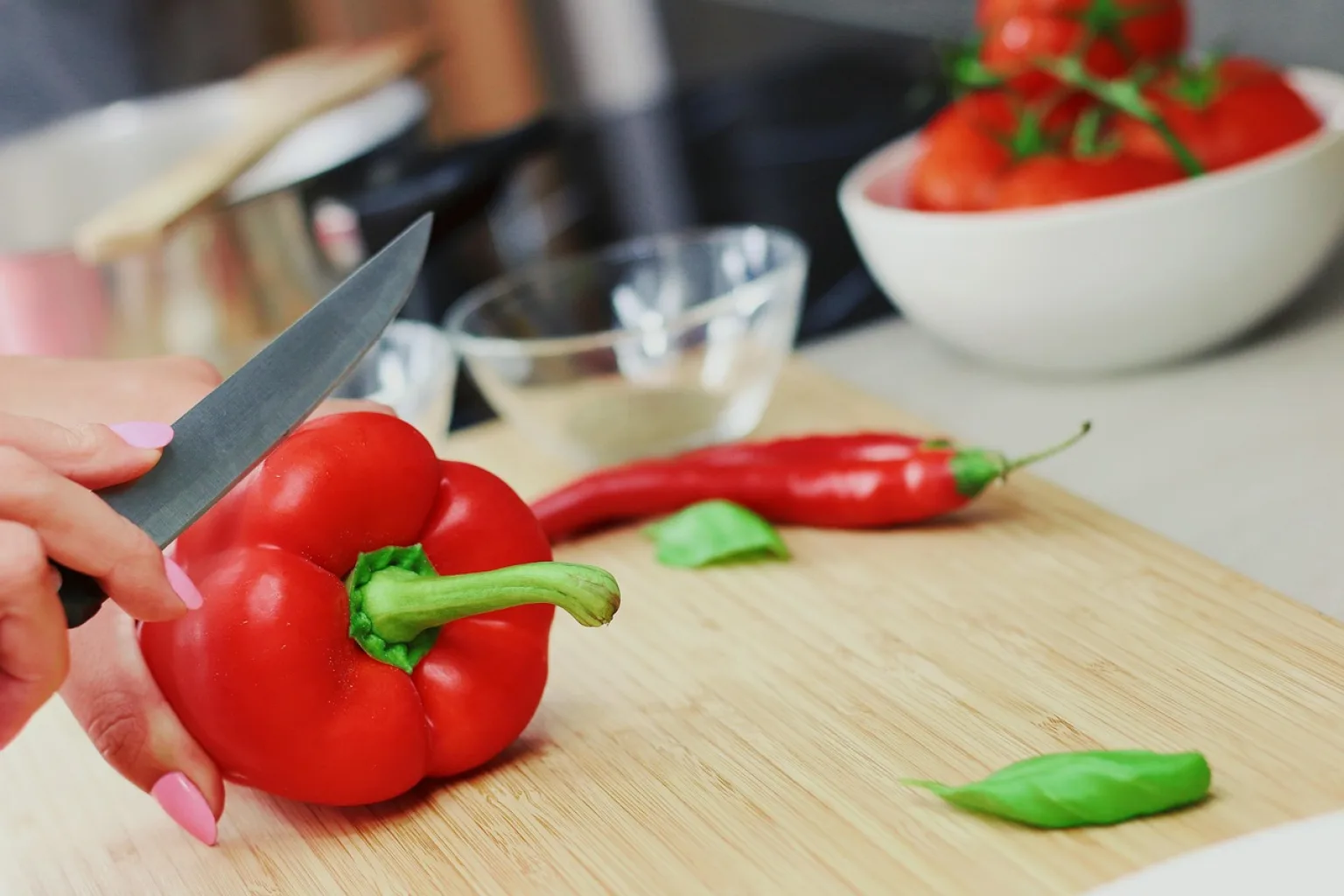
Gently wash the pepper under cold running water and dry it. Remove the stem and core, then remove the seeds before cutting it into strips, rings, or dice to suit the dish. Serve it raw in salads or as a garnish, or add it to sauces and cooked dishes with ingredients such as tomato and onion. Roast or grill it using a preparation suited to your dish. To freeze it, keep it in halves, strips, rings, or dice; blanching beforehand is optional.
Flavour and texture
Its flavor is mild and should not be confused with the heat of a hot chile. Fresh flesh is firm and crisp when served raw, and becomes more tender when cooked. The green color adds visual contrast. Individual peppers can vary, so choose firm ones when you want the pieces to hold their shape in a salad or other preparation.
How to choose it
Choose peppers that feel firm and show no visible signs of disease or insect damage. Color can vary among pepper types and products; for this ingredient, look for green peppers clearly labeled or sold as sweet. Avoid peppers that are soft or visibly damaged. Wash them under cold running water before preparation and do not leave them soaking.
Storage
For longer storage, sweet peppers can be frozen. Wash them, remove the stems and seeds, and pack them as halves or cut strips, rings, or dice in a well-sealed freezer-safe container or bag. Blanching first can help extend quality; freezing them raw is also an option when a crisper texture is the priority. For fresh storage, follow the handling directions provided by the seller or on the package.
Substitutions
Red or yellow sweet pepper can replace green sweet pepper in many dishes when keeping a mild pepper flavor is the priority. The color and appearance will change, and the flavor will not be identical. Do not automatically substitute a hot chile: the word “pepper” or “chile” can refer to products with very different heat levels.
Common mistakes
Do not assume that green sweet pepper is hot just because some peppers are called chiles. Do not assume every green variety has the same flavor or heat. Wash the pepper before cutting, use clean utensils and surfaces, and avoid soaking it. If freezing, choose a cut that suits the way you plan to use it later.
Safety and allergens
Wash the pepper under cold running water before eating or preparing it, and use clean hands, surfaces, and utensils. Do not leave it soaking. These are suitable precautions for ordinary preparation of a fresh sweet pepper.
Culinary uses
- Raw salad or garnish ingredient
- Cooked vegetable in sauces and dishes
- Ingredient for relish or marinated preparations
Recommended techniques
- Wash and chop
- Roast or grill
- Freeze in halves, strips, rings, or dice
Pairs well with
- Tomatoes
- Onions
- Garlic
Frequently asked questions
Is green sweet pepper hot?
This ingredient refers to a sweet pepper, not a hot chile. Check the label if the product is not clearly identified.
Can it be eaten raw?
Yes. Wash it, remove the stem, core, and seeds, then cut it for salads or use as a garnish.
Can green sweet pepper be frozen?
Yes. It can be frozen in halves, strips, rings, or dice; blanching first is optional.
Estimated nutrition
- Fat
- 11.8 g
- Saturates
- 1.59 g
- Carbohydrate
- 4.22 g
- Sugars
- 2.17 g
- Fibre
- 1.8 g
- Protein
- 0.78 g
- Salt
- 0.04 g
Sources and review
Automatically researched, cross-checked and validated content. Sources consulted:
- The Essential Glossary of Cooking Terms for the Culinary Arts - Escoffier escoffier.edu
- Agencia Española de Seguridad Alimentaria y Nutrición aesan.gob.es
- ¡Asegurándonos de que no eres un robot! doi.org
- El chile, ingrediente esencial en la cocina de México - Formacion en Gastronomia formacionengastronomia.com
- El chile, un regalo de Latinoamérica para el mundo | Verne México EL PAÍS verne.elpais.com
- Location coloradomesa.edu
- Vamos a Conservar Alimentos: Chiles/Pimientos extension.psu.edu
- Making Corn Tortillas and Salsa coloradosph.cuanschutz.edu
- Chiles verdes (¿crudos, orgánicos?) | Fundación G+E diet-health.info
- Events for October 2026 – Classic Cooking Academy – An Arizona Culinary School ccacademy.edu
- Chile, producto tradicional de la gastronomía mexicana | Fideicomiso de Riesgo Compartido | Gobierno | gob.mx gob.mx