- Category
- Grains, flour and pasta
- State
- Fresh
- Usual unit
- g
What it is
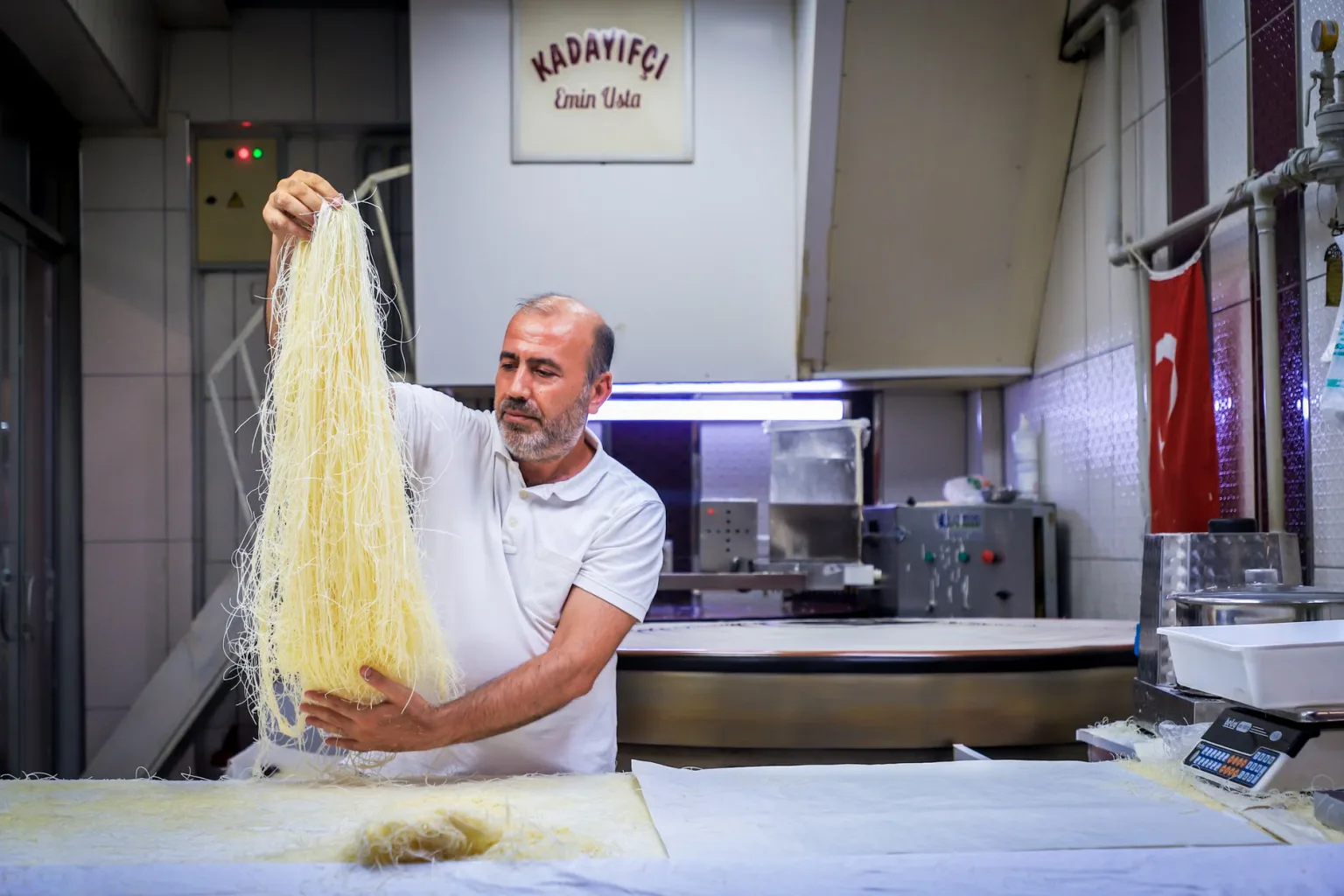
Kataifi, also called kadaif or kadayif, is pastry formed into very fine strands that resemble noodles. It is made in a way similar to phyllo and is commonly described as a wheat-flour-and-water dough, though products may differ in composition. Its flavor is considered neutral, making it suitable for both sweet and savory preparations. The strands can be arranged into nests, cylinders, layers or coverings to add volume and a crisp texture when cooked. It is sold in different forms: it may be fresh or frozen, and toasted versions are also available as ready-to-use toppings. Check the package to identify the form you have and to confirm its ingredients before using it.
When to use it
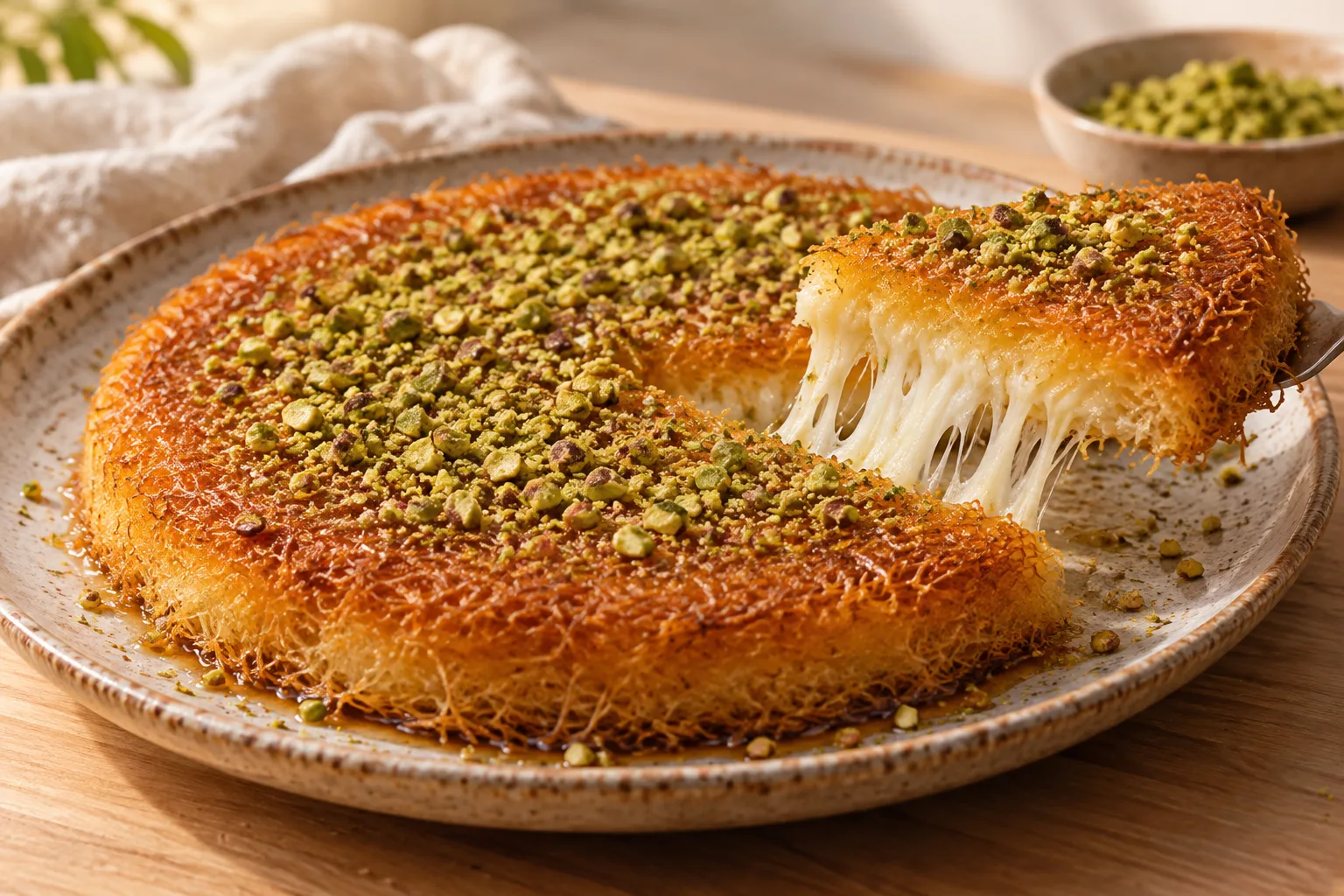
Choose kataifi when you want a crisp, thread-like texture or a delicate pastry shape around a filling. For sweets, it can wrap nuts and be served with honey, fruit or cream; it is also used in modern combinations with chocolate and pistachio. In savory dishes, it can wrap cheese, meat or seafood, or form a decorative nest or topping. The pastry itself is mild, so it lets the filling and accompaniments stand out. If you need a ready-to-add crunchy finish rather than pastry to shape and cook, look for toasted kataifi. For a cooked filling or shaped wrap, choose a raw version and follow the package directions.
How to use it
First check whether the product is raw, frozen or already toasted, and read the maker’s directions because the form affects how it should be used. To make nests, rolls or wraps, gently separate the strands and arrange them around or beneath the filling so the shape holds together. You can also spread the strands in layers to create a covering. Raw kataifi can be baked or fried; one culinary source also describes brushing it with butter or ghee before baking. No universal cooking time or temperature is established here, so use the recipe and package directions rather than guessing a figure. Toasted kataifi can be added as a crisp finish to desserts or other dishes; do not treat it as though it were raw pastry.
Flavour and texture
Kataifi has a mild or neutral flavor that works with a wide range of sweet and savory fillings. Its defining feature is its fine strands: once cooked, they can become light and crisp, while their tangled appearance creates volume and visual interest. The result depends on strand thickness and on whether the product is raw or toasted; products can vary by manufacturer. Do not assume every package has the same texture or ingredients. Check the label and adapt your use to the particular form you bought.
How to choose it
Look for kataifi in shops with Mediterranean or baking ingredients, specialist food stores or online suppliers. Before buying, check whether it is raw, frozen or toasted, and read the ingredient list and storage directions. The strands can differ in thickness, which affects the finished texture. If you plan to shape a wrap or nest, choose a version intended for cooking rather than a toasted product designed as a finishing garnish. Check the package for gluten information as well.
Storage
Kataifi may be sold fresh, frozen or toasted, and suitable storage depends on the product form and the manufacturer’s directions. Keep the package as instructed and reseal it if the packaging allows. Do not apply one storage rule to every product: the available evidence does not establish a universal shelf life or temperature. For frozen kataifi, follow the maker’s thawing directions. One culinary source notes that raw pastry can dry out when exposed to air, so limit its exposure while working and follow the package instructions.
Substitutions
Phyllo is the closest alternative mentioned in the sources because kataifi is made in a similar way, but its strands create a different appearance and texture. Using thin strips of phyllo instead of kataifi may give a less even result and will not look exactly like a bundle of fine threads. Substitute only when the recipe can accommodate a change in pastry shape; do not expect phyllo to reproduce kataifi’s characteristic nests or finish. The sources do not establish a fully equivalent replacement.
Common mistakes
Do not confuse raw kataifi with toasted, ready-to-use kataifi: they serve different purposes and cannot always be swapped without changing the recipe. Another mistake is expecting phyllo sheets to have the same structure as kataifi strands. Avoid leaving raw pastry exposed longer than needed, as a culinary source notes that it can dry out in the air. Do not assume every product has identical ingredients, strand thickness or directions; check the package before cooking.
Safety and allergens
The available evidence establishes no kataifi-specific safety warning. Check the label for ingredients and allergens, and follow the manufacturer’s instructions for handling and storage.
Culinary uses
- Masa crujiente para postres
- Envoltura o cobertura para preparaciones dulces y saladas
- Elemento decorativo moldeado en nidos, cilindros o capas
Recommended techniques
- Hornear
- Freír
- Moldear en nidos, rollos o capas
- Rellenar o envolver otros ingredientes
Pairs well with
- Frutos secos y miel
- Queso
- Carne
- Marisco
- Frutas y verduras
- Chocolate y crema de pistacho
Frequently asked questions
Is kataifi sweet?
The pastry is described as neutral in flavor. Sweetness usually comes from the filling or accompaniments, such as nuts and honey.
Does kataifi contain gluten?
A culinary source lists gluten as an allergen for kataifi, and another describes products made with wheat flour. Always check the label for the specific brand.
How can kataifi be cooked?
The sources describe baking and frying. The method depends on whether the product is raw or toasted, so follow the package or recipe directions.
Estimated nutrition
- Fat
- 10.4 g
- Saturates
- 5.2 g
- Carbohydrate
- 58.9 g
- Sugars
- 55.5 g
- Fibre
- 1.7 g
- Protein
- 3.47 g
- Salt
- 0.53 g
Sources and review
Automatically researched, cross-checked and validated content. Sources consulted:
- Client Challenge doi.org
- Translating Arab Cuisine into English: 101 Recipes scholarworks.umass.edu
- Cottage Food Producer Registration | Minnesota Department of Agriculture z.umn.edu
- Where to Buy Kataifi Near Me in Local Bakeries and Online Stores ~ cms.ncwc.edu cms.ncwc.edu
- Inside 2026’s biggest food trends | Lincoln Land Community College llcc.edu
- How To Make Homemade Butter - Escoffier escoffier.edu
- How long is food safe to eat after its sell- by date has ... davidsondavie.edu
- Dubious About Dubai Bars? Make This Manila Bar Instead | Institute of Culinary Education ice.edu
- \r\n Lafayette Dining Services | Lafayette | Home\r\n dining.lafayette.edu
- Pasta Kataifi - Gastronomía Vasca: Escuela de Hostelería Leioa gastronomiavasca.net
- Todo sobre la pasta kataifi con Codina: historia y recetas codinafoods.com
- ¿Qué es la masa kataifi? Usos, beneficios y dónde comprar al por mayor | FDCM fdcm.eu
- Pasta Kataifi | Gastronomía & Cía gastronomiaycia.com
- ¡Descubre la Nueva Tendencia Culinaria Mundial: El Kadayif, la Masa Hi dekora.es