- Category
- Vegetables
- State
- Fresh
- Usual unit
- unit
What it is
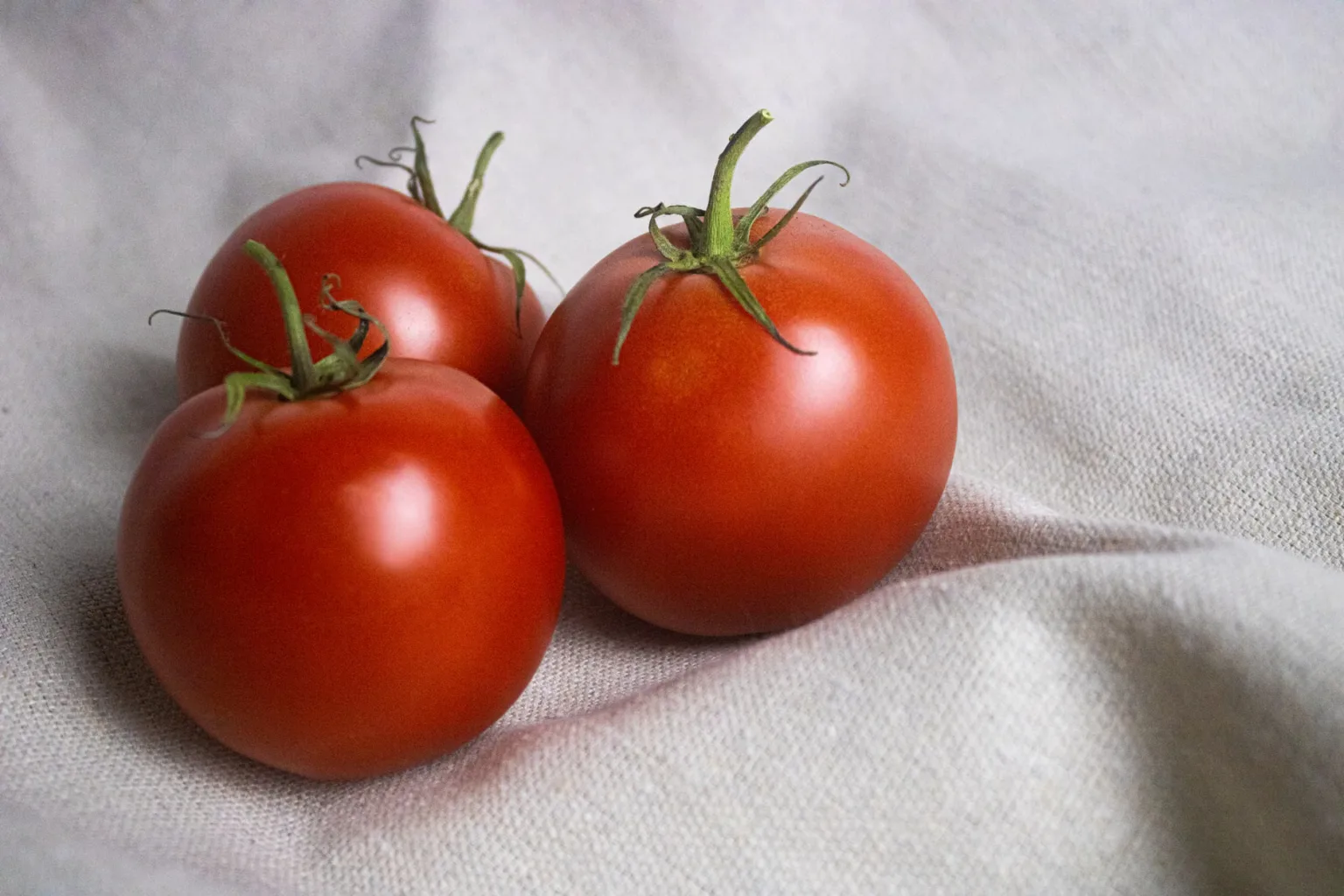
Large tomatoes are fresh fruits from the tomato plant that are commonly sold and prepared as vegetables. The name mainly describes size, not a single variety: tomatoes come in many cultivars and types with different shapes, colours, firmness, and culinary uses. Some large tomatoes have meaty flesh and less juice; others are juicier and well suited to slicing and serving fresh. Size alone therefore does not predict flavour or texture. Tomatoes can be eaten raw or cooked into sauces, soups, and other dishes. When choosing one, consider the intended preparation and look for fruit that feels firm and has no significant bruising.
When to use it
Choose large tomatoes when you want broad slices for salads, sandwiches, or toast, or when a recipe calls for fresh chopped tomato. Meaty examples can work well in raw dishes where a substantial texture is useful; juicier ones add freshness to sliced preparations. Large tomatoes can also be chopped and cooked for sauces, soups, and stews. Since varieties differ, do not assume every large tomato will behave the same way: match your choice to the texture you want and the recipe.
How to use it
Gently wash the tomato under cold running water, and work with clean hands, surfaces, and utensils. Remove the stem and slice it for salads, sandwiches, or toast; dice it for cold dishes or recipes that will be cooked; or purée it if the recipe calls for a more even base. Chopped tomato can be cooked until softened for sauces, soups, and stews. If freezing it, wash and prepare it using a suitable freezing method; it will lose firmness after thawing, so it is better suited to cooked dishes than to raw serving. Do not confuse home freezing with making shelf-stable canned food: canning requires specific processing instructions.
Flavour and texture
Depending on variety and ripeness, flavour can range from sweet and fruity to mildly acidic. Flesh varies too: some large tomatoes are meaty and relatively compact, while others are juicier. These differences make some better for slices and others more useful when a dish benefits from extra liquid. Size alone does not guarantee a particular flavour.
How to choose it
Choose tomatoes that feel firm and look fresh, without significant bruising, especially if you plan to slice them or cook them later. Firmness, colour, and shape vary by variety, so do not expect every tomato to look alike. For neat slices, look for a meaty-feeling example; if you want a juicier tomato, consider a salad type. Do not use size as the only indication of quality or flavour.
Storage
There is no single storage period that applies to every tomato; variety, ripeness, and purchase conditions can differ. Follow any special storage directions on the packaging. To freeze tomatoes, wash and prepare them using an appropriate method; remember that they lose firmness after thawing and are best used in cooked dishes. Freezing is not a substitute for a tested home-canning process.
Substitutions
In sauces and soups, canned tomatoes can replace fresh tomatoes; adjust the recipe’s liquid as needed. Smaller tomatoes can also work if you use an amount equivalent to what the recipe calls for. Substitutions may change juiciness and texture, and may affect how long the dish takes to reach the consistency you want, so check as it cooks.
Common mistakes
Do not assume all large tomatoes have the same flesh, acidity, or juiciness: varieties differ. Avoid choosing by size alone when a recipe depends on a particular texture. Do not expect a thawed tomato to stay firm enough for a salad. And do not use an improvised method for home canning; follow complete, validated processing instructions for the specific product.
Safety and allergens
Gently wash tomatoes under cold running water before eating or preparing them; do not soak them. Wash hands with soap and water, and use clean surfaces and utensils. For home canning, follow a validated recipe and its complete processing directions.
Culinary uses
- Fresh salad and sandwich ingredient
- Base for sauces, soups, and cooked dishes
Recommended techniques
- Slice or dice for raw dishes
- Chop and cook into sauces or soups
- Freeze for later use in cooked dishes
Pairs well with
- Bread and olive oil
- Onion and pepper
- Fresh herbs and salad greens
Frequently asked questions
Are all large tomatoes the same variety?
No. “Large” describes size, and different varieties have different shapes, flesh, juiciness, and culinary uses.
Can large tomatoes be frozen?
Yes. They usually lose firmness after thawing, so they are better used in cooked dishes than served raw.
How should I prepare a tomato before eating it?
Gently wash it under cold running water, remove the stem, and cut it as needed. Use clean hands, surfaces, and utensils.
Sources and review
Automatically researched, cross-checked and validated content. Sources consulted:
- En el etiquetado alimentario hay algunas menciones que son obligatorias eletiquetadocuentamucho.aesan.gob.es
- Client Challenge doi.org
- The Essential Glossary of Cooking Terms for the Culinary Arts - Escoffier escoffier.edu
- La historia del tomate en la cocina | Hida hida.es
- Los 6 mejores tipos de tomate y cómo usarlos en cocina mercadosantamariadelacabeza.es
- 6 VARIEDADES DE TOMATES Y SUS USOS EN COCINA - Masymas Supermercados super-masymas.com
- Vamos a Conservar Alimentos: Tomates extension.psu.edu
- New Mexico Favorites- Chile and Pecans | New Mexico State University - BE BOLD. Shape the Future. pubs.nmsu.edu
- Para la ciudadanía aesan.gob.es
- Cultive sus propios tomates y tomatillos | Servicio de Extensión de OSU extension.oregonstate.edu
- July: Culinary Arts Month - Spotlight Books - NICC Library at Northeast Iowa Community College library.nicc.edu
- Growing Tomatoes | UA Cooperative Extension extension.arizona.edu
- Selling Foods Made at Home: Texas Cottage Food Law agrilifeextension.tamu.edu
- Project MUSE -- Verification required! muse.jhu.edu