- Category
- Grains, flour and pasta
- State
- Dry
- Usual unit
- cup
What it is
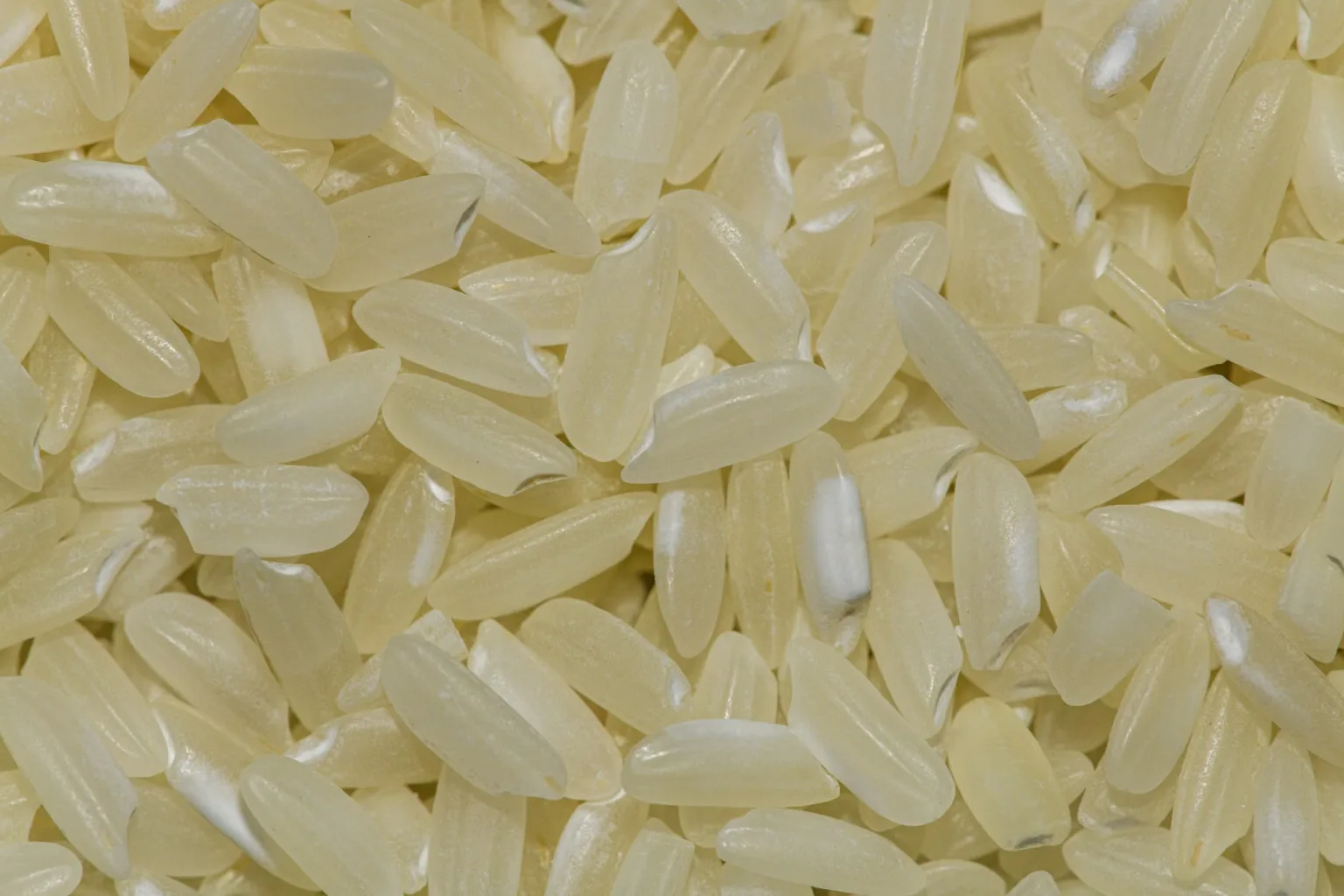
Long-grain white rice is rice that has been processed to remove its outer covering and bran. The grains are long and narrow; commercial descriptions commonly define the category by a grain several times longer than it is wide. It is a shape and processing category rather than one single cultivar. It can include aromatic varieties such as basmati or jasmine, as well as other long-grain rice. Aroma and cooked texture depend on the specific variety. In general, long grains tend to stay firm and separate after cooking instead of becoming compact or creamy. The product is sold dry and is cooked before serving.
When to use it
Choose long-grain white rice when you want a side dish with distinct grains or a base that can be mixed with other ingredients without turning creamy. It is a practical option for rice salads and accompaniments, and it is used in a range of Asian-style dishes. If a particular fragrance matters to the dish, check whether the package names an aromatic variety such as basmati or jasmine; not every long-grain rice has a pronounced aroma. This category may not suit recipes that depend on sticky grains or a creamy consistency.
How to use it
Cook the rice according to the package directions, since water needs and results can differ among varieties. For a salad or side dish, aim for cooked grains that remain separate, a common feature of long-grain rice. Once cooked, use it in the intended recipe or combine it with the other salad ingredients. For a fragrant result, choose a variety identified as basmati or jasmine rather than assuming all long-grain rice will smell the same. Avoid relying on universal cooking times or ratios; follow the instructions for the particular product.
Flavour and texture
Long-grain white rice generally has a mild flavor, while its aroma varies by variety and may be more noticeable in aromatic types. After cooking, the grains tend to remain firm and separate, unlike rice varieties that cling together or create a creamy texture. Variety, water amount, and cooking all affect the result, so the package directions are the practical guide for preparation.
How to choose it
Check that the package identifies the product as long-grain white rice, and look for a named variety such as basmati or jasmine if you want a particular aroma. This detail matters because not all long-grain rice is aromatic. For a salad or side dish, the category is often chosen for its tendency to cook up loose and firm. Check the product's preparation directions too, and select an intact package.
Storage
Store dry rice according to the package directions and keep it in its closed package when it is not in use. If you transfer it to another container, label the contents clearly and follow the manufacturer's storage guidance. Protecting the package from spills and moisture helps keep the dry rice from getting wet before cooking. After opening, consult the label for product-specific storage recommendations.
Substitutions
To keep a long-grain texture, substitute another long-grain white rice. Basmati or patna are options within this category; basmati and other aromatic varieties may change the fragrance of the dish. If a recipe depends on very separate grains, do not automatically replace it with a type that tends to become sticky or creamy. Follow the directions for the replacement rice, since cooking requirements can differ.
Common mistakes
A frequent mistake is assuming that every long-grain rice has the same aroma or needs the same amount of water. Basmati and jasmine can be aromatic, but not every long-grain variety is. Another is using it in a recipe that needs a creamy texture or grains that cling together. Check the variety and follow the package directions for that product.
Safety and allergens
Prepare rice according to its package directions, and do not use a package that is damaged or wet. The available evidence does not specify a procedure for storing cooked rice; follow applicable product and recipe guidance.
Culinary uses
- Guarnición
- Base para ensaladas
- Acompañamiento para platos de cocina asiática
Recommended techniques
- Cocción en agua siguiendo las instrucciones del envase
- Cocción para servir los granos sueltos
- Incorporación a ensaladas una vez cocido
Pairs well with
- Ensaladas
- Guarniciones
- Platos de cocina asiática
Frequently asked questions
What dishes work well with long-grain white rice?
It is commonly used in salads and as a side dish, and it also appears in a range of Asian-style dishes. Its tendency to remain separate is useful when distinct grains are wanted.
Is all long-grain rice aromatic?
No. Some varieties, such as basmati or jasmine, are aromatic, but aroma depends on the variety. Check the package name.
Can I replace it with basmati rice?
Yes, basmati can be a long-grain alternative, though it will bring its own aroma and may have different cooking directions.
Estimated nutrition
- Fat
- 0.66 g
- Saturates
- 0.18 g
- Carbohydrate
- 80 g
- Sugars
- 0.12 g
- Fibre
- 1.3 g
- Protein
- 7.13 g
- Salt
- 0.01 g
Sources and review
Automatically researched, cross-checked and validated content. Sources consulted:
- Hablemos de arroces - BuleBar bulebar.es
- Tipos de arroz, usos culinarios - Pepekitchen pepekitchen.com
- - YouTube youtube.com
- Healthy Eating Plan for Weight Management med.uc.edu
- El Arroz: Tipos de Arroz - Ybarra en tu cocina ybarraentucocina.com
- Pacífico FL 15 y Golfo FL 16, variedades multiambientales de arroz con grano extra largo para México | Revista Mexicana de Ciencias Agrícolas doi.org
- Imagining Sabor repositories.lib.utexas.edu
- Comité Científico aesan.gob.es
- Nutrición para el síndrome de ovario poliquístico - Health Online healthonline.washington.edu
- Plagas Comunes de Sitios Urbanos: Identificación, Prevención y Control extension.psu.edu