- Category
- Vegetables
- State
- Fresh
- Usual unit
- cup
What it is
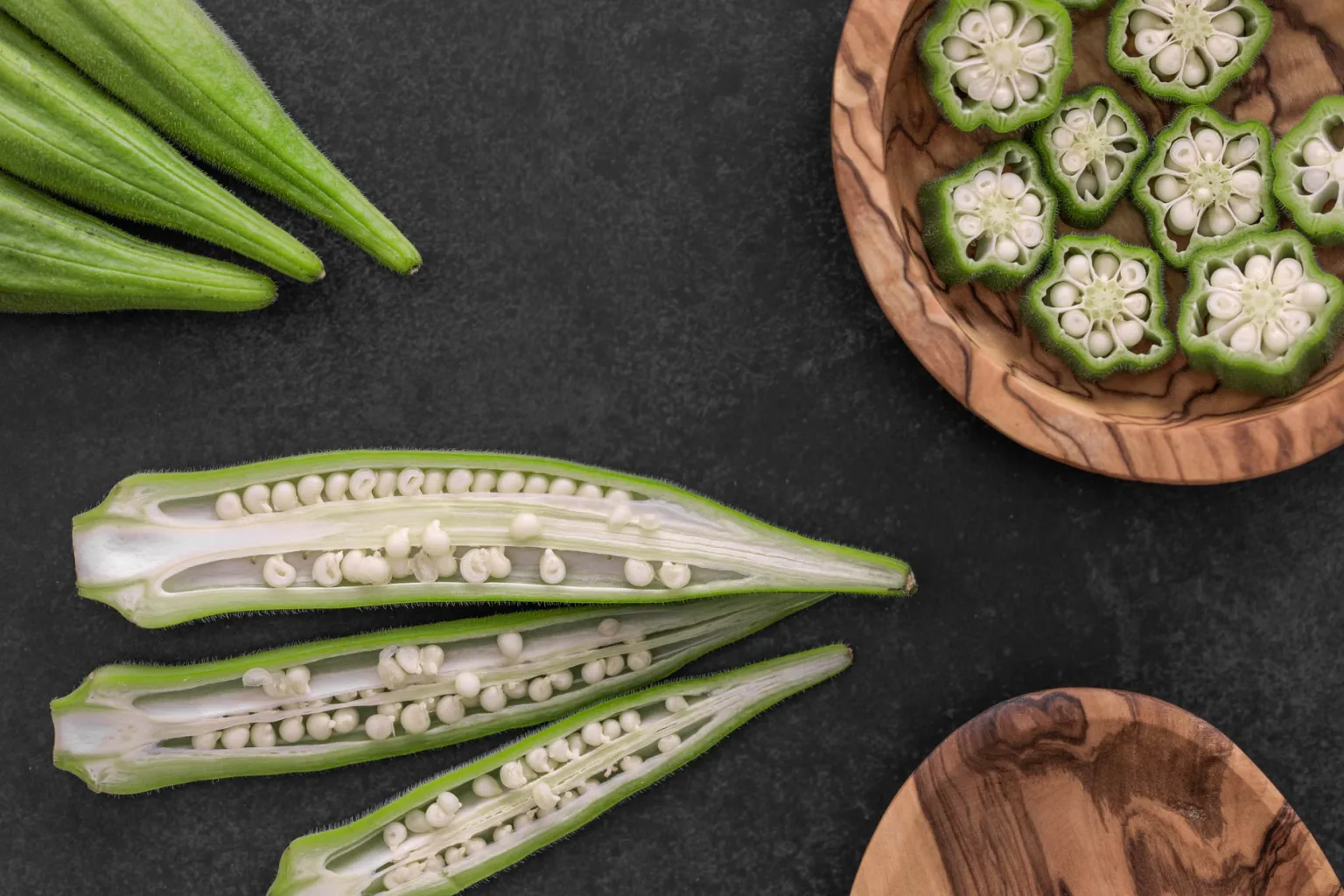
Okra, also called gumbo or ladies’ fingers in some places, is the edible pod of Abelmoschus esculentus, a member of the mallow family. The elongated green pods may be smooth or lightly fuzzy and contain edible seeds. When cut and cooked, okra releases mucilage, which gives liquids and stews a thicker consistency. This is a characteristic culinary quality rather than a flaw: it can be used deliberately to add body to a dish, or kept less noticeable with drier cooking methods. Okra has a mild, vegetal flavor that works with a range of seasonings and ingredients. The pod can be cooked whole, sliced, or split, depending on the texture and appearance desired.
When to use it
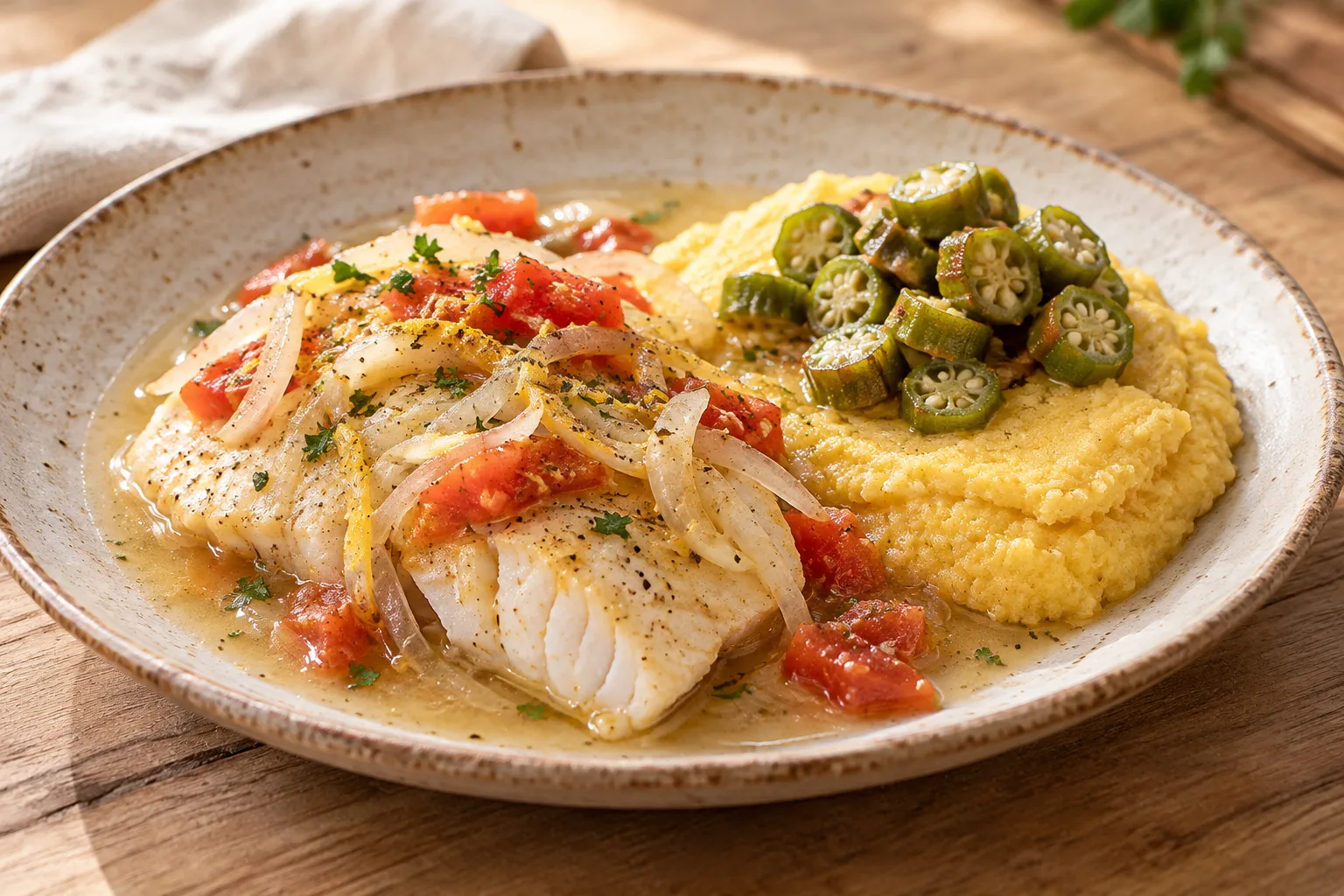
Use okra when you want a mild-tasting vegetable with a distinctive texture in soups, stews, and braises. Slice it before adding it to a liquid-based dish if you want its mucilage to disperse and help thicken the cooking liquid. If you would rather keep the pods more intact and reduce the slippery quality, cook them whole or halved by roasting, frying, or sautéing. Fresh, tender pods can also be used in salads. Okra works well with tomato and onion, and can be finished with lemon or vinegar for an acidic contrast.
How to use it
Rinse the pods before preparation and drain them. To cook okra whole, trim the tough stem end carefully without cutting into the pod. For soups and stews, slice the pods and add them to the liquid; as they cook, the mucilage helps thicken it. To make the mucilage less prominent, leave the pods whole or split them lengthwise, then roast, sauté, or fry them. Dry-heat cooking can produce browned outsides and tender interiors. Boiling and stewing are also options when a thicker result is welcome. Pair okra with tomato, onion, or pepper, and add lemon or vinegar if you want a bright, acidic note. Choose the cut and cooking method to suit the texture you want.
Flavour and texture
Okra has a mild, vegetal, slightly earthy flavor that takes well to more aromatic ingredients. Tender pods are firm and crisp before cooking, and their small seeds are edible. When cut and simmered in liquid, okra releases mucilage and gives the dish a thick, somewhat slippery texture. Roasted, fried, or sautéed pods tend to be browned outside and tender within, with the mucilage less noticeable.
How to choose it
Look for fresh pods with a fairly even color, firm feel, and no visibly damaged areas. Pods that are not too large are often more tender; very mature pods may be tougher. A light fuzz on the surface can be normal, so assess the overall condition and firmness rather than treating fuzz alone as damage. Buy an amount you can use soon and avoid pods with soft or wet-looking patches.
Storage
Keep fresh okra refrigerated and try to use it soon, as its quality can decline in storage. Avoid leaving the pods wet or crushed, and handle them gently to preserve their firmness. If you rinse them before storing, drain and dry them well. The available evidence does not support a sufficiently reliable exact storage duration, so no specific number of days is given.
Substitutions
If okra is unavailable, green beans can provide a firm-textured vegetable, but they will not thicken a cooking liquid. Eggplant can work as a mild-tasting vegetable in some stews, although it does not reproduce okra’s mucilage either. Choose a substitute according to what matters most in the dish: adding a vegetable or giving the liquid more body.
Common mistakes
Do not expect every cooking method to give the same texture: sliced okra cooked in liquid releases mucilage, while roasting or frying produces a less slippery result. Another common oversight is leaving the tough stem end on whole pods; trim it without opening the pod. Avoid very large pods when a tender texture is the priority.
Safety and allergens
Rinse pods under running water before cutting or eating them. Discard visibly damaged pods and keep fresh okra refrigerated; these are basic handling precautions, not a guarantee of extended storage.
Culinary uses
- Thickener for soups and stews
- Vegetable for side dishes, frying and salads
Recommended techniques
- Stewing or boiling to release its mucilage
- Roasting, grilling or frying for a less mucilaginous result
Pairs well with
- Tomatoes and onions
- Peppers, eggplant, lemon or vinegar
Frequently asked questions
Why does okra become slippery?
When cut and cooked, okra releases mucilage. This thickens soups and stews, but is less noticeable when the pods are roasted or fried.
Can you eat okra seeds?
Yes. The seeds inside the pod are edible.
How can I use okra to thicken a stew?
Slice it and simmer it in the stew liquid. The mucilage released as it cooks helps give the dish body.
Estimated nutrition
- Fat
- 0 g
- Saturates
- 0 g
- Carbohydrate
- 8 g
- Sugars
- 0 g
- Fibre
- 1 g
- Protein
- 3 g
- Salt
- 0.01 g
Sources and review
Automatically researched, cross-checked and validated content. Sources consulted:
- Client Challenge doi.org
- Su Propio Cultivo | Servicio de Extensión de OSU extension.oregonstate.edu
- Okra: qué es, beneficios y cómo usarla bonviveur.com
- Uses Selection Try It! fonddulac.extension.wisc.edu
- Exploring Ghanian Food with Okra Stew | Institute of Culinary Education ice.edu
- veggie bite okra handout.pub polk.extension.wisc.edu
- “DESDE ABAJO, COMO SEMILLA”: PUERTO RICAN ... scholarsbank.uoregon.edu
- Easy Gardening Series - Vegetable Resources Vegetable Resources aggie-horticulture.tamu.edu
- ¿Qué es el okra? Todo lo que debes saber del quingombó, y tres formas de prepararlo | Gastronosfera gastronosfera.com
- Quimbombó - EcuRed ecured.cu
- Okra o Quimbombó | Gastronomía & Cía gastronomiaycia.com
- Okra o Quimbombó: Beneficios, Propiedades y Recetas para Disfrutarla | Hurom hurom.es
- El Okra, Gombo o Quimbombó | La Vida en Bio ecoilogic.wordpress.com
- Qué es el quimbombó y cómo cocinarlo finedininglovers.es