- Category
- Fruit
- State
- Fresh
- Usual unit
- unit
What it is
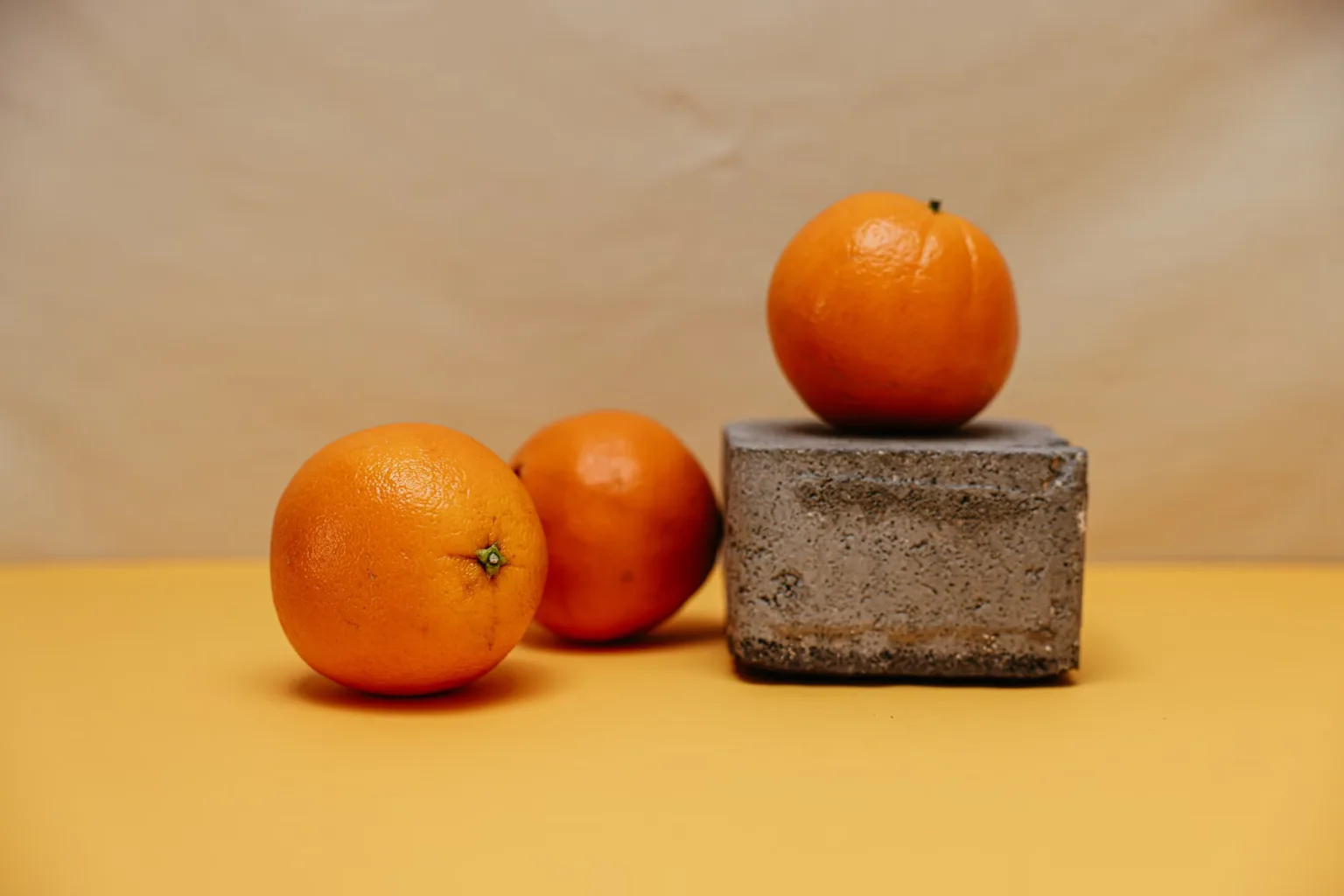
An orange is a citrus fruit with flesh divided into segments and an aromatic outer peel. Depending on the variety, the peel may be smooth or textured, and the flesh may taste sweeter or more tart. Oranges can be eaten peeled, squeezed for juice, or used in several ways in cooking: segments add juiciness to salads and desserts; juice brings sweetness and acidity to drinks, sauces, and marinades; and zest lends fragrance to batters and other preparations. Appearance, ease of peeling, and juiciness vary among varieties, so choose an orange with its intended use in mind.
When to use it
Use a fresh orange when you want a juicy bite, a sweet-and-tart contrast, or a clear citrus aroma. Segments work well in salads, breakfasts, and desserts; juice suits drinks, sauces, and marinades; and zest is useful in cakes, sweet breads, and creams. In savory dishes, a little juice or zest can balance stronger flavors. Oranges can also accompany poultry, fish, and seafood, with the amount adjusted to the balance of the recipe.
How to use it
Wash and dry the fruit before preparing it. To eat it fresh, peel it and separate the segments. For segments without their membranes, trim the ends, remove the peel and white pith, then cut out the sections. To make juice, halve and squeeze the fruit; strain it if you prefer to remove the pulp. For zest, grate only the colored outer layer and avoid the white pith, which can taste bitter. Add segments to salads or desserts, use juice in drinks, dressings, or sauces, and mix zest into batters or creams. For marinades and glazes, combine the citrus with the recipe's other ingredients and adjust sweetness and acidity to taste.
Flavour and texture
The flesh is usually juicy, with a balance of sweetness and acidity that varies from one orange to another. The segments are tender and moist, while their membranes offer a little more resistance when bitten. The colored peel is fragrant and can flavor a dish in small amounts; the white pith is more bitter. Flavor, juiciness, seeds, and ease of peeling depend on the variety.
How to choose it
Choose oranges for the job: a juicy fruit is convenient for squeezing, while one that peels easily is handy for eating in segments. Since peel color can vary by variety, do not use color alone to judge the fruit. Look for intact skin and avoid fruit with visible damage or soft patches. If you plan to use the zest, choose an orange with fragrant peel and wash it before grating.
Storage
Keep fresh oranges in a clean place and avoid crushing them or letting moisture collect around them. Check the fruit and separate any damaged pieces so they do not spoil the others. Once peeled or cut, cover and refrigerate the fruit, and use it soon. For longer-term storage by freezing, drying, or canning, follow a tested procedure suited to that method; home preservation requires method-specific safety instructions.
Substitutions
Mandarins can fill a similar role when you want citrus segments or flavor in salads, drinks, and desserts, though their sweetness, size, and juiciness may differ. If a recipe mainly needs acidity rather than orange sweetness, lemon or lime juice may work; adjust the amount to taste. These alternatives change the result, so add them gradually and taste as you go.
Common mistakes
Grating the white pith along with the peel can add unwanted bitterness; limit zest to the colored layer. Do not assume every variety has the same sweetness, peeling ease, or juice yield. In savory recipes, too much juice can overpower other flavors, so add it gradually. Do not improvise times or canning methods for home preservation; use tested directions for the method you choose.
Safety and allergens
Handle the fruit with clean hands and utensils. If you peel or cut it ahead of time, keep it covered in the refrigerator and use it soon. For home canning, use a tested method and follow its safety instructions.
Culinary uses
- Fresh fruit for eating in segments
- Source of juice and zest for drinks, sauces, marinades, and baking
- Sweet-tart accent in salads and savory dishes
Recommended techniques
- Juicing
- Finely grating the zest
- Peeling and separating into segments
- Reducing juice into a sauce or glaze
Pairs well with
- Leafy greens, nuts, and blue or aged cheeses
- Chocolate, cakes, and sweet breads
- Poultry, pork, and fish
- Ginger, garlic, rosemary, and warm spices
Frequently asked questions
Can orange peel be used in cooking?
Yes. The colored outer layer can be zested to flavor batters, creams, drinks, or sauces. Avoid including much of the white pith, which can taste bitter.
Which parts of an orange can I use?
Segments, flesh, juice, and zest can all be used. Segments add texture and juiciness, juice brings a sweet-tart note, and zest adds fragrance.
What goes well with oranges?
Oranges pair well with leafy greens, nuts, and cheese. They are also used in baking, drinks, sauces, and marinades for meat and fish.
Estimated nutrition
- Fat
- 0.15 g
- Saturates
- 0 g
- Carbohydrate
- 12.3 g
- Sugars
- 8.44 g
- Fibre
- 1.9 g
- Protein
- 0.65 g
- Salt
- 0 g
Sources and review
Automatically researched, cross-checked and validated content. Sources consulted:
- Client Challenge doi.org
- The Essential Glossary of Cooking Terms for the Culinary Arts - Escoffier escoffier.edu
- Nutrition After Your Transplant - Health Online healthonline.washington.edu
- Publications | Food Engineering | Washington State University labs.wsu.edu
- Food Resources | CAES Field Report fieldreport.caes.uga.edu
- Para la ciudadanía aesan.gob.es
- Naranjas, mil usos en la cocina - Mercado de Chamartín mercadodechamartin.es
- Usos culinarios de las naranjas y mandarinas naranjasdaniel.com
- Page 4 | Ways to Preserve Food at Home - Penn State Extension extension.psu.edu
- Pablo Naranjo Agular - Alumnus portrait | Le Cordon Bleu Paris cordonbleu.edu
- Approved Drug Products with Therapeutic Equivalence Evaluations | Orange Book | FDA guides.himmelfarb.gwu.edu
- Las propiedades culinarias de la naranja | Recetas Nestlé recetasnestle.com.ar
- HISTORIA DE LAS NARANJAS EN ESPAÑA naranjaslatorre.com