- Category
- Dairy and eggs
- State
- Fresh
- Usual unit
- g
What it is
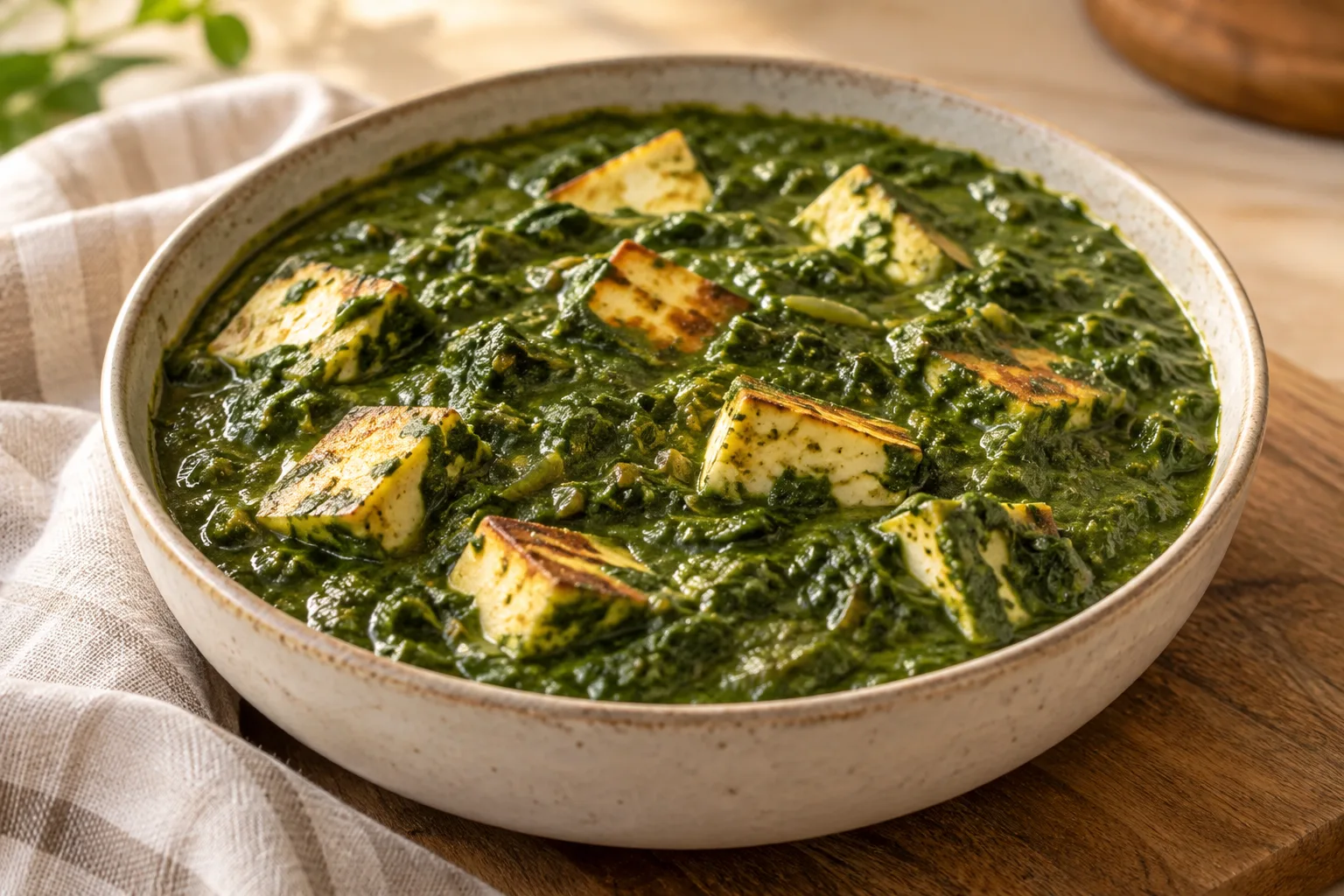
Paneer is a white, unripened fresh cheese, also known as Indian cheese. It is made by curdling milk with an acid such as lemon juice or vinegar, then pressing the solids into a block. Its flavor is mild and milky, and its texture can be firm and slightly elastic, though the result varies with the method and product. Unlike many cheeses, paneer generally holds its shape when heated, making it useful in curries, grilled dishes and pan-seared preparations. It is a dairy ingredient, not tofu: tofu is made from soy. Homemade and commercial products can differ, so check the package for ingredients and product-specific information.
When to use it
Use paneer when you want a mild, firm ingredient in a spiced sauce, vegetable stew or meat-free meal. It works particularly well with spinach and other leafy greens, and in dishes where you want the cheese pieces to remain intact. You can also brown or grill it and serve it with vegetables, rice or flatbread. Paneer is not usually the right choice when you want a cheese that melts completely into a sauce. Choose a substitute to suit the dish, bearing in mind that tofu and other cheeses change the flavor and texture.
How to use it
Cut paneer into cubes or slices for a curry or stew; add it toward the end and heat it gently so it is warm for serving without falling apart. For browned edges, pan-sear or grill it, then serve with a spiced sauce or vegetables. You can also crumble or grate it and mix it with onion, tomato and spices in a scramble-style dish. Pair it with rice, naan or chapati for scooping up sauce. Products vary in firmness; some recipes suggest softening a particularly dense store-bought block before cooking. Check the package for instructions specific to the product you have.
Flavour and texture
Paneer tastes mild, milky and fairly neutral, so it works with sauces and spices without overpowering them. Its texture is generally firm, dense and slightly elastic; when heated, paneer usually holds its shape instead of melting. Moisture and firmness can differ between homemade and commercial paneer and from one product to another.
How to choose it
Look for paneer in the refrigerated section of Indian or Asian grocery stores and supermarkets with an international-food section. Choose an intact package and check its ingredient list, date and storage directions. Firmness varies among products and methods; if you want pieces that stay whole, choose a block that can be cut cleanly.
Storage
Paneer is a fresh cheese: keep it refrigerated and follow the storage directions on its package. After opening, keep it covered in a clean container and follow the manufacturer’s instructions. Do not assume a product is safe based on appearance alone; if its package says to discard it or you are unsure of its condition, do not use it. The available evidence does not establish a universal storage duration.
Substitutions
Firm tofu is a dairy-free alternative, but it is made from soy and does not exactly match paneer’s flavor or cooking behavior. Halloumi may work in preparations that suit a firm cheese, though it gives a different result. Ricotta and other softer fresh cheeses are less suitable when you need cubes that hold their shape.
Common mistakes
Do not expect paneer to melt like a cheese used for gratins: it generally holds its shape when heated. Avoid assuming every block has the same moisture or firmness, and do not confuse paneer with tofu. Add it carefully if you want intact cubes, and check the package for the product’s ingredients and storage directions.
Safety and allergens
Paneer contains milk. If you have a milk allergy, check the label and avoid the product if it contains milk or its ingredients cannot be confirmed. Keep it refrigerated and follow the package directions.
Culinary uses
- Vegetarian main-dish ingredient
- Protein-rich component in curries and vegetable dishes
- Grilled or pan-seared ingredient
Recommended techniques
- Cut into cubes and simmer gently in sauce
- Pan-sear or grill until lightly browned
- Crumble or grate into a spiced mixture
Pairs well with
- Spinach and other leafy greens
- Tomato, onion, ginger and garlic
- Rice, naan, chapati and other flatbreads
- Warm spices such as cumin and garam masala
Frequently asked questions
What is paneer?
It is a fresh milk cheese curdled with acid and pressed into a block. It has a mild flavor and generally holds its shape when cooked.
Does paneer melt when heated?
Usually not. It generally holds its shape, which is why it is used in cubes in curries, stews and grilled or pan-seared dishes.
What can I use instead of paneer?
Firm tofu can work as a dairy-free alternative, but it is made from soy and changes the flavor and texture. Halloumi may also suit some dishes, with a different result.
Does paneer contain milk?
Yes. It is a milk cheese; check the label if you need to confirm ingredients or avoid allergens.
Estimated nutrition
- Fat
- 25 g
- Saturates
- 17.9 g
- Carbohydrate
- 3.57 g
- Sugars
- 3.57 g
- Fibre
- 0 g
- Protein
- 25 g
- Salt
- 0.04 g
Sources and review
Automatically researched, cross-checked and validated content. Sources consulted:
- Client Challenge doi.org
- The Essential Glossary of Cooking Terms for the Culinary Arts - Escoffier escoffier.edu
- USDA FoodData Central libguides.marist.edu
- Planning to Eat Out | Home & Garden Information Center hgic.clemson.edu
- Palak Paneer: origen, ingredientes y alérgenos menuella.com
- Test Kitchen: Saag Paneer | Sargent Choice Nutrition Center bu.edu
- WHC Food Blog Archives - Walnut Hill College walnuthillcollege.edu
- Cooking, Colonialism, & Color | University of Montana umt.edu
- A Panoramic View From the Interior of the Later Spanish Church | ClipVR ETC etc.usf.edu
- FSHN12-02/FS186: Shopping for Health: Guide to Frozen Meals ask.ifas.ufl.edu
- ¿Qué es el paneer o queso fresco indio? sportlife.es
- Paneer — Open Spice Box openspicebox.com
- Paneer: qué es, propiedades y cómo preparar el queso fresco indio hogarmania.com
- Queso paneer: la receta casera del queso fresco indio que se prepara con solo 3 ingredientes bonviveur.com
- Paneer Bhurji: receta de revuelto indio sin huevo (con queso fresco Paneer) - Spice and Colour spiceandcolour.com