- Category
- Fruit
- State
- Fresh
- Usual unit
- unit
What it is
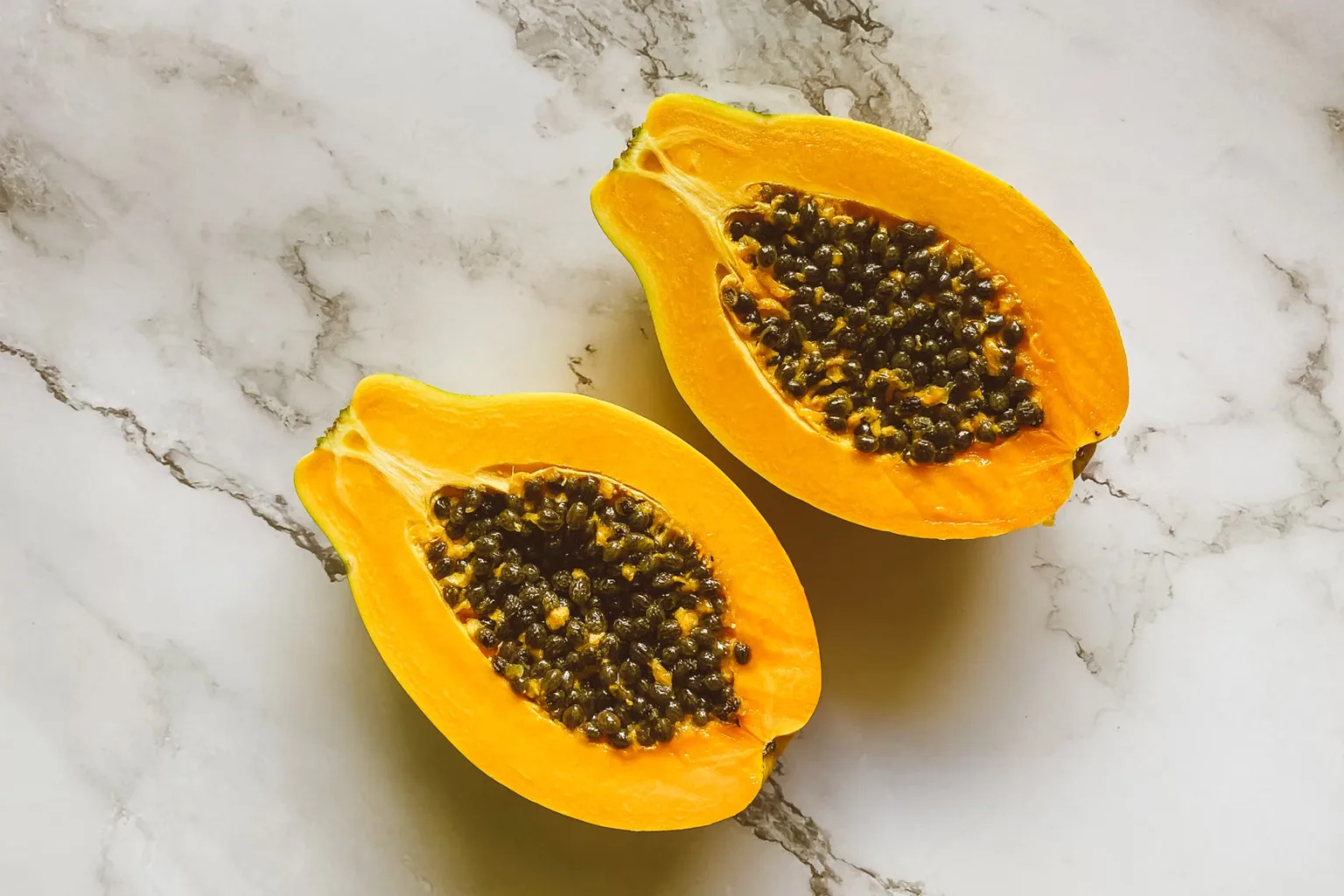
Papaya is the fruit of Carica papaya. It is often oval or elongated, with thin skin that may change from green toward yellow as it ripens and a central cavity filled with black seeds. The flesh can be orange, pink, or yellowish, depending on the type. The skin is not normally eaten; ripe flesh is soft, juicy, and sweet. The seeds are edible too and have a peppery taste, though their slippery texture is quite different from the flesh. Papayas vary considerably in size and appearance, so one particular color does not define every variety or reliably describe every fruit’s ripeness.
When to use it
Use ripe papaya when you want a soft, sweet fruit for breakfast, dessert, fruit salad, or a smoothie. Its color and juiciness also suit salsa, especially with mango, onion, and lime. If the papaya is green, cook it in a savory dish rather than expecting the softness of ripe fruit. Fresh papaya contains an enzyme that prevents gelatin from setting, so choose cooked or canned papaya for a gelatin dessert. Ripe papaya also makes a simple snack or side when served with a little lime juice.
How to use it
Wash your hands and rinse the whole papaya under running water before cutting, even if you plan to remove the skin. This helps prevent dirt on the outside from being transferred to the flesh by a knife. Dry the fruit with a clean cloth, place it on a cutting board, and cut it lengthwise with a knife. Scoop out the seeds, then peel the fruit and cut the flesh into cubes or slices. Eat ripe papaya on its own, combine it with other fruit, or blend it into a smoothie. For salsa, mix it with mango, onion, and lime. Cook green papaya in a savory preparation. Keep cut fruit separate from raw meat, poultry, or seafood, and clean the board and utensils after use.
Flavour and texture
Ripe papaya is generally sweet, juicy, and soft, with a flavor that can resemble melon. Intensity and aroma vary by type, and some fruit may have a more musky note. Green papaya is firmer and may be less sweet or somewhat bitter, making it better suited to cooked dishes. The black seeds have a peppery taste, while their slippery texture differs from the flesh.
How to choose it
For ripe papaya, look for skin beginning to change from green toward yellow and fruit that yields slightly to gentle pressure. Avoid fruit that is very soft, bruised, or visibly rotten. Size, shape, and flesh color vary between types, so do not expect one particular shade inside. A papaya bought while still green can continue to ripen at room temperature. Handle it gently because impacts can damage the skin and flesh.
Storage
Leave a still-green papaya at room temperature until it ripens. Once ripe, refrigerate it and aim to use it within about three days. Refrigerate cut papaya in a clean, covered container. Discard fruit that looks rotten; if the rest is sound, cut away bruised areas before preparing it. Keep pre-cut or packaged fruit refrigerated.
Substitutions
For fruit salads or salsa, mango can replace papaya when you want a sweet, juicy fruit, although mango usually has a more pronounced flavor and a different texture. Cantaloupe can also work in fruit salads because of its sweetness and melon-like character, but its flesh is generally less creamy. Adjust lime, salt, and other seasonings to taste: neither alternative exactly reproduces papaya’s flavor and texture.
Common mistakes
Do not cut a papaya without washing its skin first; a knife can carry dirt into the flesh. Do not judge ripeness by color alone, since appearance varies among types. A ripe papaya need not have one exact shade, but fruit that looks rotten should be discarded. Avoid adding fresh papaya to gelatin that needs to set: its enzyme can prevent setting. Use cooked or canned papaya instead.
Safety and allergens
Wash your hands and rinse whole fruit under running water before peeling or cutting; do not use soap or detergent. Cut away bruised areas and discard fruit that looks rotten. Keep papaya separate from raw meat, poultry, and seafood, and wash the cutting board and utensils after preparing them. Refrigerate pre-cut or packaged papaya.
Culinary uses
- Fruta fresca para desayunos y postres
- Ingrediente para ensaladas, salsas y batidos
- Fruta verde para preparaciones cocinadas
Recommended techniques
- Lavar la piel antes de cortar, partir y retirar las semillas con una cuchara
- Pelar y cortar en cubos o rodajas
- Licuar la pulpa madura
- Cocinar la papaya verde
Pairs well with
- Lima
- Mango
- Plátano
- Jengibre
- Cebolla, leche de coco y curry
Frequently asked questions
How can I tell whether a papaya is ripe?
Its skin often starts changing from green toward yellow, and the fruit yields slightly to gentle pressure. Color and shape can vary between types.
Can you eat papaya seeds?
Yes. They are edible and have a peppery taste, but their slippery texture is different from the flesh.
Why does gelatin not set with fresh papaya?
Fresh papaya contains an enzyme that prevents gelatin from setting. Use cooked or canned papaya for that preparation.
Estimated nutrition
- Fat
- 0 g
- Saturates
- 0 g
- Carbohydrate
- 65 g
- Sugars
- 40 g
- Fibre
- 10 g
- Protein
- 2.5 g
- Salt
- 0.04 g
Sources and review
Automatically researched, cross-checked and validated content. Sources consulted:
- Client Challenge doi.org
- Comité Científico aesan.gob.es
- Selecting and Serving Produce Safely | FDA go.unl.edu
- Papaya - National Center for Home Food Preservation nchfp.uga.edu
- Step into the Tropics with a Papaya | Simply Nutritious, Quick and Delicious | Illinois Extension | Illinois extension.illinois.edu
- Papaya - A Strange Name But Sweet Flavor uaex.uada.edu
- Papaya – Gardening Solutions gardeningsolutions.ifas.ufl.edu
- Sacarle provecho a la papaya y sus semillas | Recetas Nestlé recetasnestle.com.ec
- Todo sobre la papaya, carnosa y digestiva fruta tropical: propiedades, beneficios y recetas para disfrutarla en la cocina directoalpaladar.com
- ¿De dónde es la papaya? Origen e historia elciruelo.com
- La Papaya | Gastronomía & Cía gastronomiaycia.com