- Category
- Meat
- State
- Liquid
- Usual unit
- ml
What it is
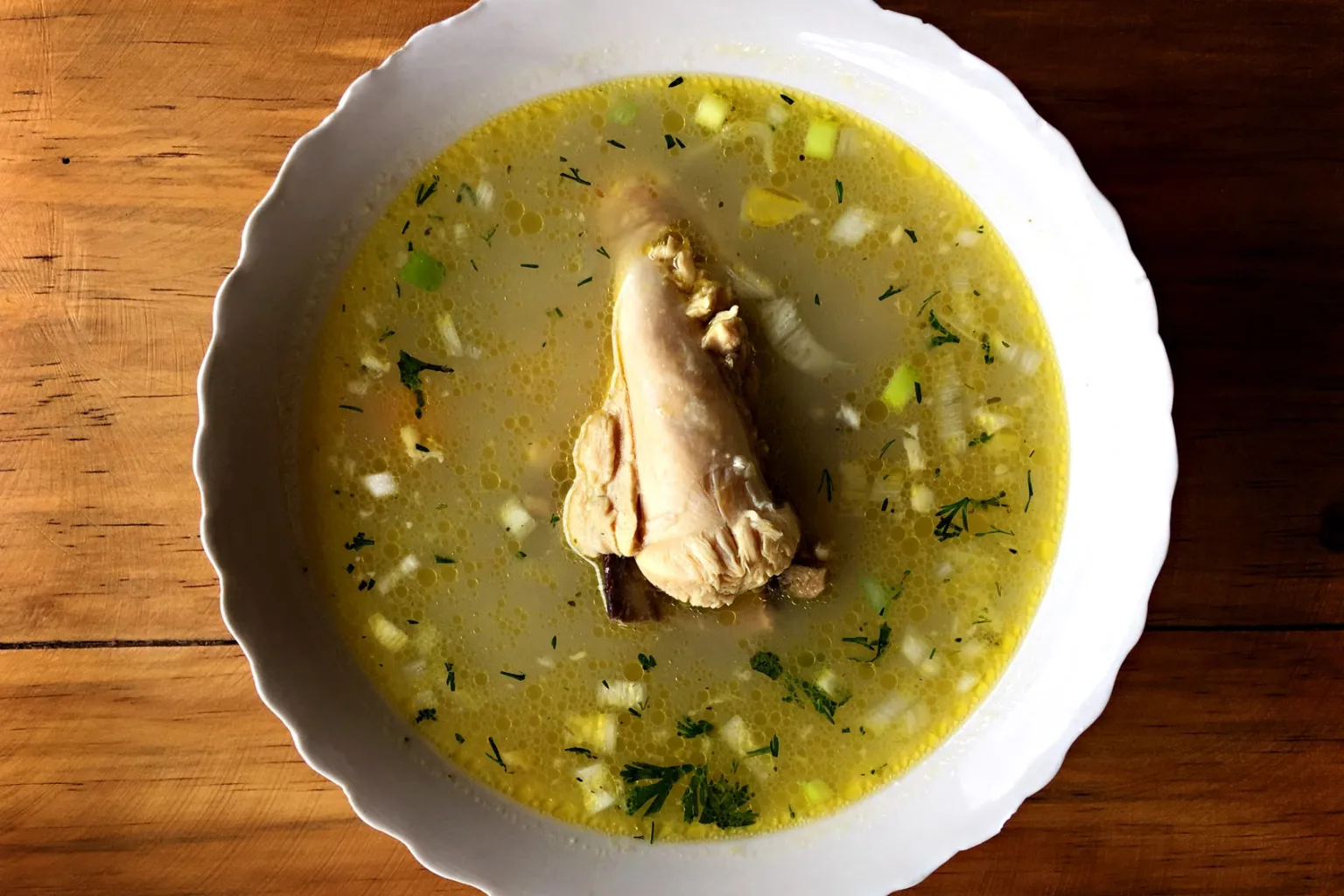
Reserved chicken broth is chicken broth kept aside for use in a later preparation. In cooking, broths and stocks are flavorful liquids used as the basis for other dishes. Depending on the original recipe, the liquid may have been made with chicken or chicken frames, vegetables and herbs; it may also be light if the ingredients were simmered without browning, or darker if they were browned first. Its color, intensity and salt level therefore are not fixed. This profile describes a ready-to-use liquid ingredient, not a product with one standard recipe or a single preservation method.
When to use it
Use it when a dish needs a chicken-flavored liquid instead of plain water, such as soup, purée, rice, stew or sauce. It can also cook pasta or vegetables when that flavor suits the recipe. Consider its seasoning and strength before adding it: a concentrated or well-seasoned broth can affect the finished dish more than a mild one. Add it gradually if you are unsure of its intensity, then adjust the other seasoning near the end.
How to use it
Measure the amount called for and pour it into the pot, pan or saucepan as part of the cooking liquid. In soups and purées it can form the base; in rice dishes, braises and stews it supplies liquid and flavor as the other ingredients cook. For a more intense sauce or stock, simmer it gently to reduce it, bearing in mind that evaporation concentrates both flavor and salt. If the broth is strongly seasoned, combine some with water or reduce the added salt. Taste before making final adjustments, and do not assume every broth has the same strength.
Flavour and texture
Flavor depends on the ingredients and method used to make the broth. It may be mild and light, or more intense and darker if the ingredients were browned before simmering. Vegetables, herbs and spices also shape its character. Its texture is liquid; a reduced stock may feel more concentrated and fuller-bodied. Salt levels are not standardized, so taste it before seasoning the dish.
How to choose it
If the reserved broth comes from an earlier preparation, check that you know what went into it, especially whether it contains salt, herbs or other ingredients that could affect the recipe. When choosing a prepared broth, read the label for ingredients and seasoning, and follow the package directions. Light broths and broths made with browned ingredients can differ in color and depth of flavor; this is normal and can help you choose one suited to the dish.
Storage
The culinary evidence consulted describes cooling broth and storing it in the refrigerator, but does not establish a universal storage period or a specific temperature. Follow package directions for commercial products. Keep homemade broth refrigerated, and do not infer how long it is safe to keep from its appearance or smell. If you do not know how long it has been stored or how it was handled, the prudent choice is not to use it.
Substitutions
Vegetable broth is an alternative when you want a flavorful liquid without a chicken profile; it will change the character of the dish. Broth from another bird can play a similar role, though its flavor will not be identical. Water also supplies liquid but less flavor, so the other ingredients may need adjustment. Taste and correct the seasoning at the end.
Common mistakes
Do not assume the broth is low in salt or mild in flavor; recipes vary. Adding salt before tasting can over-season a dish, especially if the liquid is reduced. Do not automatically replace it with the same amount of water without considering the effect on flavor, or treat an intensely flavored broth as a neutral liquid.
Safety and allergens
Broth is perishable. Cool it and keep it refrigerated; the available evidence gives no storage period or temperature, so follow product directions and do not use broth with an unknown storage history.
Culinary uses
- Base líquida para sopas y cremas
- Líquido de cocción y aporte de sabor para arroces, estofados y salsas
Recommended techniques
- Añadir directamente a la preparación y calentar
- Reducir a fuego lento para concentrar el sabor, vigilando la sal
Pairs well with
- Arroz y pasta
- Verduras, hierbas aromáticas y preparaciones de pollo
Frequently asked questions
What can I make with reserved chicken broth?
It can serve as a base or cooking liquid for soups, purées, rice dishes, stews, sauces and other preparations that suit a chicken flavor.
Can I reduce it to make the flavor stronger?
Yes. Gentle reduction concentrates the flavor. Salt may concentrate too, so taste before adding more seasoning.
How long does it keep?
The available culinary sources do not give a universal storage period. Follow product directions; keep homemade broth refrigerated and avoid using it if you do not know how or how long it was stored.
Estimated nutrition
- Fat
- 13.9 g
- Saturates
- 3.43 g
- Carbohydrate
- 18 g
- Sugars
- 17.4 g
- Fibre
- 0 g
- Protein
- 16.7 g
- Salt
- 59.75 g
Sources and review
Automatically researched, cross-checked and validated content. Sources consulted:
- ¿Por qué la muerte es origen de miedos y tabúes? doi.org
- Caldo de pollo - Wikipedia, la enciclopedia libre es.wikipedia.org
- Los diferentes tipos de caldo: Descubre 5 opciones aldelis.com
- "ALIGN=CENTER>LES TROIS MOUSQUETAIRES -- Los tres mosqueteros" people.duke.edu
- Bilingual Budget-Friendly Hispanic Cookbook and ... scholarworks.lib.csusb.edu
- Lo que Necesita Saber Sobre Derrames Cerebrales patientslearn.uams.edu
- Caldo de pollo: una base que conviene dominar cooking.elmundo.es
- actualización de la regla de ocha-ifá - OAKTrust oaktrust.library.tamu.edu
- Para mí, lo nutritivo es lo hecho en casa diposit.ub.edu
- llistat 2012 cast (31/10/2024) - Barcelona repositori.upf.edu
- Qué es un fondo de pollo, cómo prepararlo y en qué recetas utilizarlo directoalpaladar.com
- Por qué comprar pollo ‘bio’ (y cómo hacer caldo con él) | Te lo llevas fresco | El Comidista | EL PAÍS elpais.com