- Category
- Meat
- State
- Preserved
- Usual unit
- g
What it is
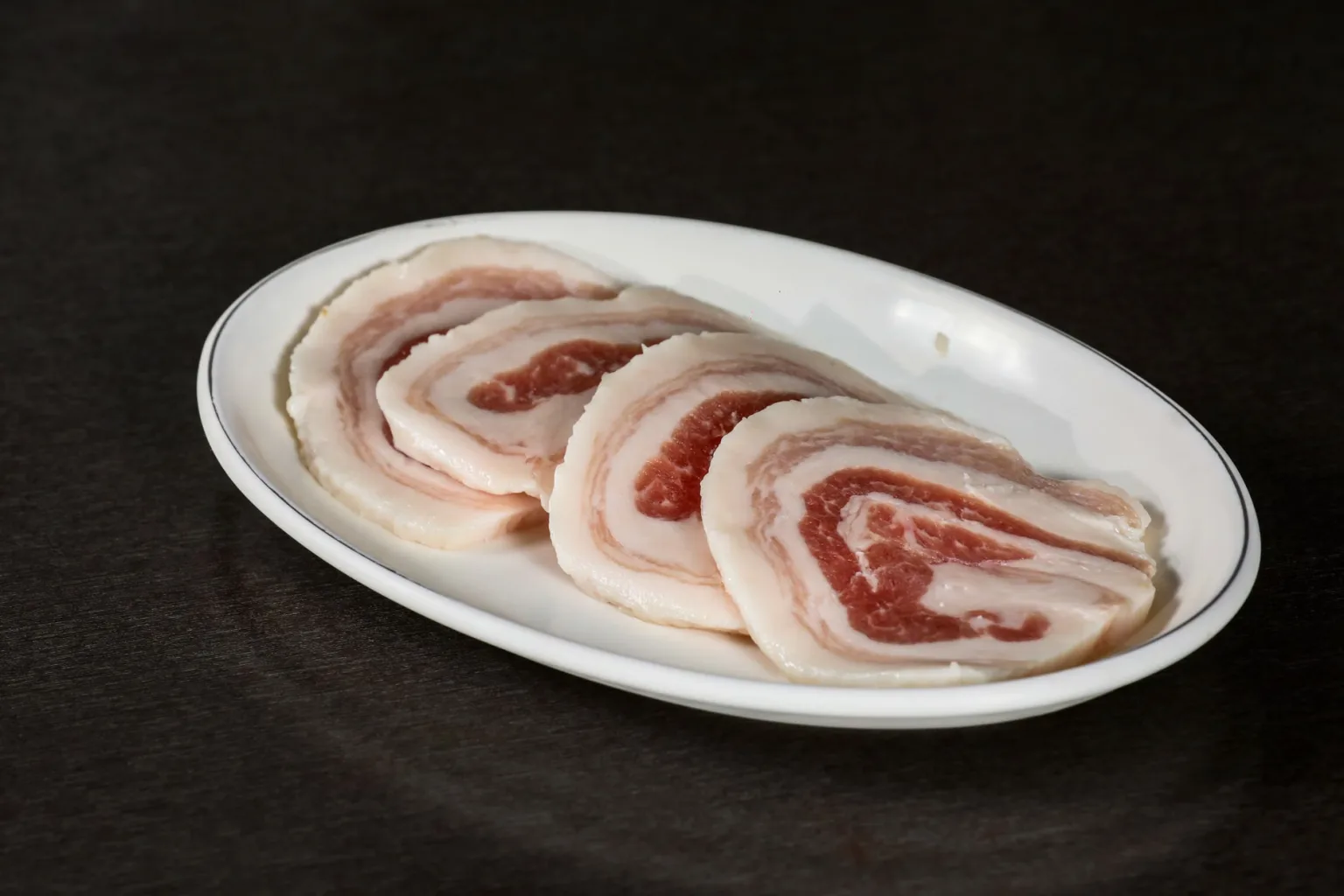
Salt pork is pork preserved by salting. A common form is salt-cured pork belly, often unsmoked and sold with the skin, though cuts and products can vary. It should not automatically be treated as the same thing as smoked bacon: salt pork may lack smoky flavor and can differ in fat content and texture. It is a salty preserved ingredient, not fresh pork. Read the product name and package directions, since the cut, composition, and degree of salting depend on the specific product.
When to use it
Use salt pork when a recipe calls for it or when a cooked dish can accommodate a salty, cured pork ingredient. It may suit dishes cooked with legumes, vegetables, or bread, provided its savory, fatty character fits the recipe. Consider its salt contribution before seasoning the rest of the dish, and taste as you go. If a recipe specifically calls for smoked bacon, remember that unsmoked salt pork will not provide the same smoky flavor.
How to use it
Start by reading the label and following the manufacturer’s and recipe’s directions. Cut the amount needed for the dish; if you do not know how salty it is, begin with a small amount and adjust the seasoning near the end. Use it as an ingredient in a cooked preparation rather than treating it as fresh meat or as ready-to-eat food. Whether to remove the skin, reduce the salt, or change the cut depends on the product and recipe, so there is no single method for every package. Keep the rest of the dish lightly seasoned until you can taste it.
Flavour and texture
Its defining characteristics are pork flavor and pronounced saltiness from curing. Belly versions may contain a substantial layer of fat; the cut, skin, and texture vary from product to product. Unsmoked salt pork does not provide the characteristic smoke aroma of smoked bacon. Salt levels can also vary, so taste it when appropriate and season the other ingredients cautiously.
How to choose it
Look for a clearly labeled salt pork product and check which cut it contains, whether it has skin, and whether it is smoked. The name can cover different presentations, so do not assume every package is identical to bacon or another cured pork product. Check the package directions for storage and preparation, and choose an intact package without damage or leaks.
Storage
Follow the storage directions on the package; requirements can vary with the product and its presentation. Keep it packaged until use and follow the instructions after opening. Do not assume that salting makes every product safe to store at room temperature. If the label does not make storage requirements clear, ask the seller or manufacturer before storing it.
Substitutions
Unsmoked bacon may work in some recipes, but it is not an exact substitute: salt level, fat, skin, and cut can differ. Another salt-cured pork product may also work if the dish allows it. Adjust the amount and taste before adding more salt. If a recipe depends on smoky flavor, unsmoked salt pork will not reproduce it.
Common mistakes
A frequent mistake is seasoning the dish as though salt pork were fresh pork. It is also easy to expect a smoky flavor from an unsmoked product or to assume that every cut has the same amount of fat and salt. Check the label, add it judiciously, and adjust the seasoning after tasting.
Safety and allergens
Handle it according to the package directions and ordinary hygienic practices for meat. Follow the manufacturer’s storage and cooking instructions; do not assume that curing means the product can be eaten without cooking.
Culinary uses
- Salty pork ingredient for cooked dishes
- Savory, fatty component in recipes that call for salt pork
Recommended techniques
- Salt-curing (the preservation method)
- Cooking as part of a dish, following the recipe and package directions
Pairs well with
- Beans and other legumes
- Bread and cooked vegetables
Frequently asked questions
Is salt pork the same as bacon?
Not necessarily. Salt pork is generally salt-cured and unsmoked; bacon may be smoked and can differ in cut and texture. Check the label.
Can I substitute bacon for salt pork?
Sometimes, but smoke flavor and salt level may change the dish. Account for those differences and adjust the seasoning.
Should I add salt to the recipe?
That depends on the product and the other ingredients. Start with less than usual, taste the dish, and adjust near the end.
Estimated nutrition
- Fat
- 80.5 g
- Saturates
- 29.4 g
- Carbohydrate
- 0 g
- Sugars
- 0 g
- Fibre
- 0 g
- Protein
- 5.05 g
- Salt
- 6.7 g
Sources and review
Automatically researched, cross-checked and validated content. Sources consulted:
- Client Challenge doi.org
- Migas - Wikipedia, la enciclopedia libre es.wikipedia.org
- ¿Por qué el mar es salado? doi.org
- La carne de cerdo, pilar de la cocina tradicional – Ibéricos Alhandiga ibericosalhandiga.com
- 1. Aprendamos sobre las comidas y las expectativas en un restaurante – Yo puedo: segundos pasos milnepublishing.geneseo.edu
- Revista del comité científico de la aecosan número 24 aesan.gob.es
- - YouTube youtube.com
- Subproductos del Cerdo - Atilano Anllo atilanoanllo.com
- El cerdo en la gastronomía mundial: un viaje global de sabor, cultura y tradición - Gesalor. Abonos Orgánicos google.com
- Piezas de cerdo: Guía completa de cortes - Cesar Nieto cesarnieto.com
- Gastronomía de Yucatán - Wikipedia, la enciclopedia libre es.wikipedia.org