- Category
- Vegetables
- State
- Fresh
- Usual unit
- g
What it is
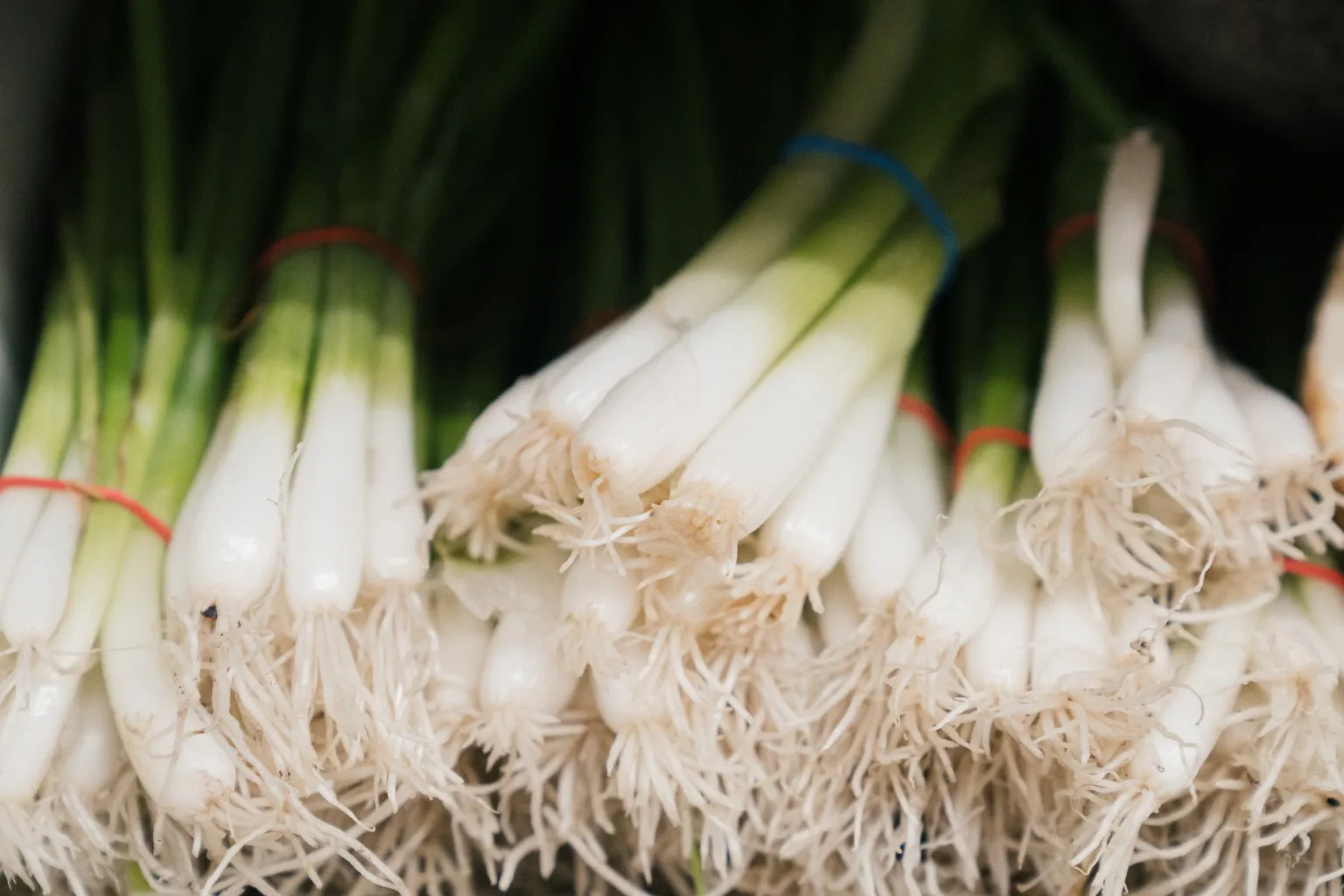
Scallion greens are the edible green leaves of an Allium vegetable related to onions. This profile covers the leaves only, not the white portion or bulb. Common names such as scallion and spring onion can refer to different plants or be used differently from place to place, so the label alone does not always identify one exact variety. In the kitchen, the leaves are chopped to add aroma, color and a fresh note. Tender leaves can be eaten raw; thicker leaves may feel fibrous and are often better cooked.
When to use it
Use scallion greens when you want an onion-like aromatic note that is generally gentler than dry onion, especially when a fresh green finish suits the dish. Finely chopped leaves work over salads, in vinaigrettes and sauces, or as a finishing touch. They can also be included in soups and broths, either cooked into the dish or added as a garnish. If the leaves are thick or fibrous, choose a cooked preparation such as soup or a sauté rather than serving them raw.
How to use it
Separate the green leaves from the white portion and consider their texture before using them. Finely chop the leaves to distribute their aroma and color through salads, vinaigrettes and sauces, or scatter them over a finished dish. They can also be added to soups and broths or sautéed as part of an aromatic base. Fresh, tender leaves are suitable for raw uses; thicker leaves may be fibrous, so cooking them in soup, broth or a sauté can be more pleasant. Adjust the amount to the dish, since the intensity can vary.
Flavour and texture
The aroma is reminiscent of onion but is generally mild and fresh. The green leaves can add a vegetal note and a slight crunch when chopped and served raw. Texture depends on leaf thickness and freshness: tender leaves feel more delicate, while thicker ones can be fibrous. Cooking is a useful option when the raw texture seems too firm.
How to choose it
Choose a bunch with green leaves that look fresh and firm, and do not rely on the market name alone, since scallion and spring onion labels can vary. Check that the green portion is what your recipe needs and that the leaves are not limp or damaged. Very thick leaves may be less pleasant raw and are often better cooked. When possible, select a bunch with a clean, characteristic aroma.
Storage
Keep fresh scallions refrigerated. Maintain the leaves in good condition and separate the green portion you need when preparing a dish. The available sources do not specify a storage life, so no exact time is given here. Check the leaves before use rather than assuming that every part of the bunch will retain the same texture.
Substitutions
For a garnish or decorative finish, finely chopped chives can replace scallion greens in many preparations. In cooked dishes, common onion can fill a similar aromatic role, although scallion greens are generally milder. Neither substitute exactly reproduces the appearance and texture of the green leaves; adjust the amount to the dish and the substitute's intensity.
Common mistakes
Do not assume every green leaf has the same texture: thicker leaves can be fibrous raw and may work better cooked. Another common mistake is assuming that scallion and spring onion always name the same plant. This profile covers only the green portion, so its texture and uses should not be confused with those of the white part.
Safety and allergens
The sources consulted do not identify a specific safety warning for scallion greens. As a general precaution for fresh produce, handle them hygienically and check their condition before use.
Culinary uses
- Aromático y condimento
- Acabado y guarnición fresca
Recommended techniques
- Picar muy fino para usar en crudo
- Incorporar en sopas o caldos
- Saltear como parte de una base aromática
Pairs well with
- Ensaladas y vinagretas
- Sopas, caldos y preparaciones de miso
- Mariscos
Frequently asked questions
Can scallion greens be eaten raw?
Yes. Fresh, tender leaves can be chopped into salads, vinaigrettes and sauces or used as a garnish. Thick leaves may be fibrous and are often better cooked.
Can I use the green leaves in soup?
Yes. Add them to soups and broths as an ingredient, or chop them over the dish at the end for aroma and color.
Can chives replace scallion greens?
Chives can replace them in many garnishes and finishing uses. The result will not be identical, so adjust the amount to suit the dish.
Sources and review
Automatically researched, cross-checked and validated content. Sources consulted:
- Usos culinarios apropiados de las variedades de plátano verde barraganete, dominico y maqueño, en la gastronomía ecuatoriana. | Revista de Gastronomía y Cocina doi.org
- Los alimentos como medicina: la dieta antiinflamatoria | Children's Hospital of Philadelphia chop.edu
- Qué es la cebolleta en España: La joya verde de nuestra gastronomía - Agrícola Campolor agricolacampolor.com
- A PROGRAM FOR extension.usu.edu
- Aurora outage ipm.cahnr.uconn.edu
- Lesson 4A – Semillas: Elementary Spanish I pressbooks.uiowa.edu
- Vegetative plant parts | Servicio de Extensión de OSU extension.oregonstate.edu
- Cebolleta o cebolla tierna | Gastronomía & Cía gastronomiaycia.com
- Fresh Produce Recipe Book | Wsu s3.wp.wsu.edu
- MyPlate-Garden Veggies 3rd grade- 5th grade coloradosph.cuanschutz.edu
- Aprovéchalo todo de la cebolleta ametllerorigen.com
- Marzo: La cebolleta | Consumer consumer.es
- Cebolleta abc.es