- Category
- Vegetables
- State
- Fresh
- Usual unit
- unit
What it is
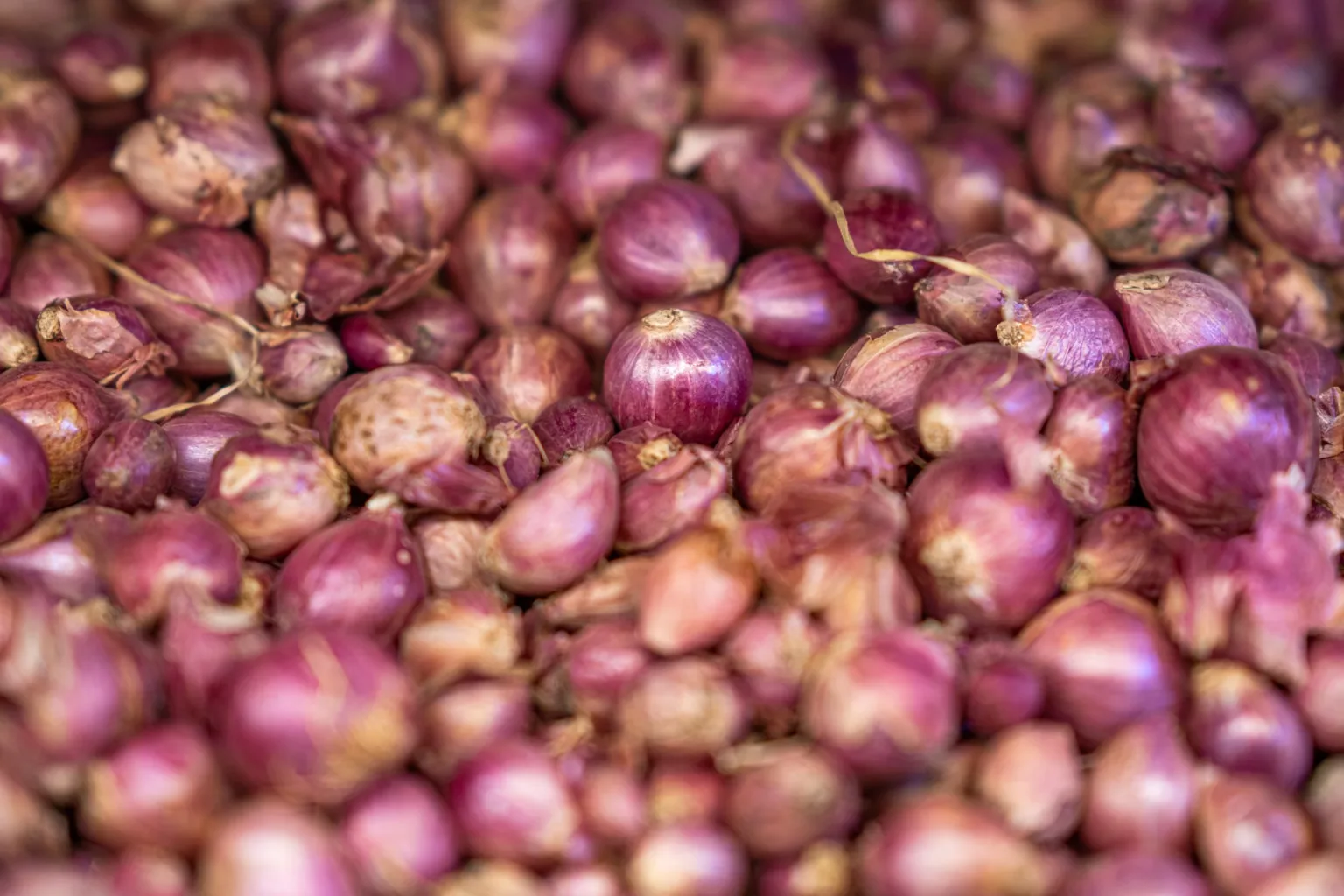
“Small onions” describes the size of bulb onions, not a specific variety. The name may refer to small round onions and can also be confused in shops or recipes with shallots, which are a distinct type. Small onions therefore do not all have the same flavor, shape, skin or cooking behavior. As fresh onions, they can be used whole, halved or chopped according to their size and the dish. Onions belong to the Amaryllidaceae family. If a recipe specifically calls for shallots, pickling onions or another named variety, check the label rather than assuming that any small onion is interchangeable.
When to use it
Choose small onions when you want to serve them whole or halved, portion onions easily, or add them to a side dish, stew or oven-cooked recipe. They can also be chopped to make an aromatic base for soups and sauces. The name describes size, not guaranteed sweetness or mildness, so flavor depends on the variety. For a raw preparation, taste a small piece first to see whether its intensity suits the dish. For cooked dishes, adapt the cut and amount to the recipe. When a particular variety is specified, use it if that distinction matters to the result.
How to use it
Remove the dry outer skin and trim the root end. If cooking the onions whole, choose pieces of similar size to help them cook evenly; halve any that are too large for the recipe. For a soup or sauce base, chop them and cook gently in the fat specified by the recipe, stirring until softened. For a side dish, roast them whole or halved and check their texture as they cook, since size and variety affect timing. You can also add them to stews or slice them into salads if their raw flavor suits the dish. There is no single cooking time that fits every small onion: follow your recipe and judge doneness by texture.
Flavour and texture
Flavor can range from mild to strongly aromatic and somewhat sharp; small size alone does not predict it. Cooking softens the onion and can bring out a sweeter impression, while raw onion is usually crisper and more pronounced. Firmness, moisture and skin also vary by variety and storage condition. Taste a small raw piece before using the onion in a dish where its uncooked flavor will stand out.
How to choose it
Choose onions that feel firm and dry and have intact outer skins. Avoid pieces that are soft, damp, moldy or visibly damaged. If you plan to cook them whole, similarly sized onions can help them cook more evenly. The label “small onion” may not identify a variety, so check it if you specifically need shallots or another type. Flavor and sweetness can vary; do not assume that every small onion will taste mild.
Storage
Keep fresh onions in a clean, dry place and avoid leaving them in damp conditions or beside damaged produce. Check them occasionally and separate any that become soft, moldy or spoiled. Storage life depends on variety and condition; the available evidence does not establish one universal storage period for all small onions. Once peeled or cut, keep them covered in the refrigerator and use them promptly, following ordinary food-storage practices.
Substitutions
Shallots can replace small onions when the recipe can accommodate a somewhat different aromatic flavor, but they are not identical. Regular bulb onions can also be chopped or cut to the needed size; adjust the amount to the flavor and role you want. If the recipe relies on whole, small pieces, a chopped substitute changes the appearance and texture. For a recipe that names a specific variety, use that variety when possible.
Common mistakes
A common mistake is treating “small onions” and “shallots” as interchangeable in every case: size does not determine variety or flavor. Cooking pieces of very different sizes together can also leave them tender at different rates. Do not assume every small onion is mild, and taste before using a large amount raw. In recipes that call for whole onions, chopping them changes both the presentation and texture.
Safety and allergens
Handle onions with clean hands, a clean knife and a clean cutting board. Discard pieces with mold, rot or obvious spoilage, and follow ordinary hygiene practices for fresh produce.
Culinary uses
- aromatic base for soups, stews and sauces
- whole or halved vegetable side dish
Recommended techniques
- roasting whole or halved
- sautéing or slow-cooking
- using raw in salads when mild enough
Pairs well with
- meat and roasted dishes
- soups, stews and sauces
- salads and vinaigrettes
Frequently asked questions
Are small onions the same as shallots?
Not necessarily. “Small” describes size; shallots are a distinct type of onion. Check the label when a recipe calls for shallots.
Can I cook small onions whole?
Yes. They can be roasted whole or added whole to some dishes. Choose similarly sized pieces and check their texture as they cook.
Can small onions be eaten raw?
Yes, if they are in good condition and their flavor suits the dish. Taste a small piece first because intensity varies by variety.
Sources and review
Automatically researched, cross-checked and validated content. Sources consulted:
- Client Challenge doi.org
- The Essential Glossary of Cooking Terms for the Culinary Arts - Escoffier escoffier.edu
- La cebolla, ese humilde ingrediente tan fundamental | Gastronosfera gastronosfera.com
- The Case of Pablo Neruda's Odas elementales and Food digitalcommons.sacredheart.edu
- UCCE efforts improve quality of and demand for fresh ... ucanr.edu
- Nutrition Education Program extension.purdue.edu
- Producción de Cebolla extension.psu.edu
- Tipo de Cebollas: usos y propiedades | Fruta y verdura Cal Fruitós calfruitos.com
- Maqueta.qxp:Maqueta Comità CientÃfico Nâ« 2 aesan.gob.es
- Introduction to post-harvest food handling | Servicio de Extensión de OSU extension.oregonstate.edu
- cebolla pequeña Archives | Dinner Tonight dinnertonight.tamu.edu
- Tipos de cebolla - Cebolla Blanca - Morada y más - Grupo Lomar grupolomar.es
- 11 tipos de cebolla y sus mejores usos en la cocina | Cocinatis cocinatis.com
- Conoce los principales tipos de cebollas freshis.com