- Category
- Fish and seafood
- State
- Fresh
- Usual unit
- g
What it is
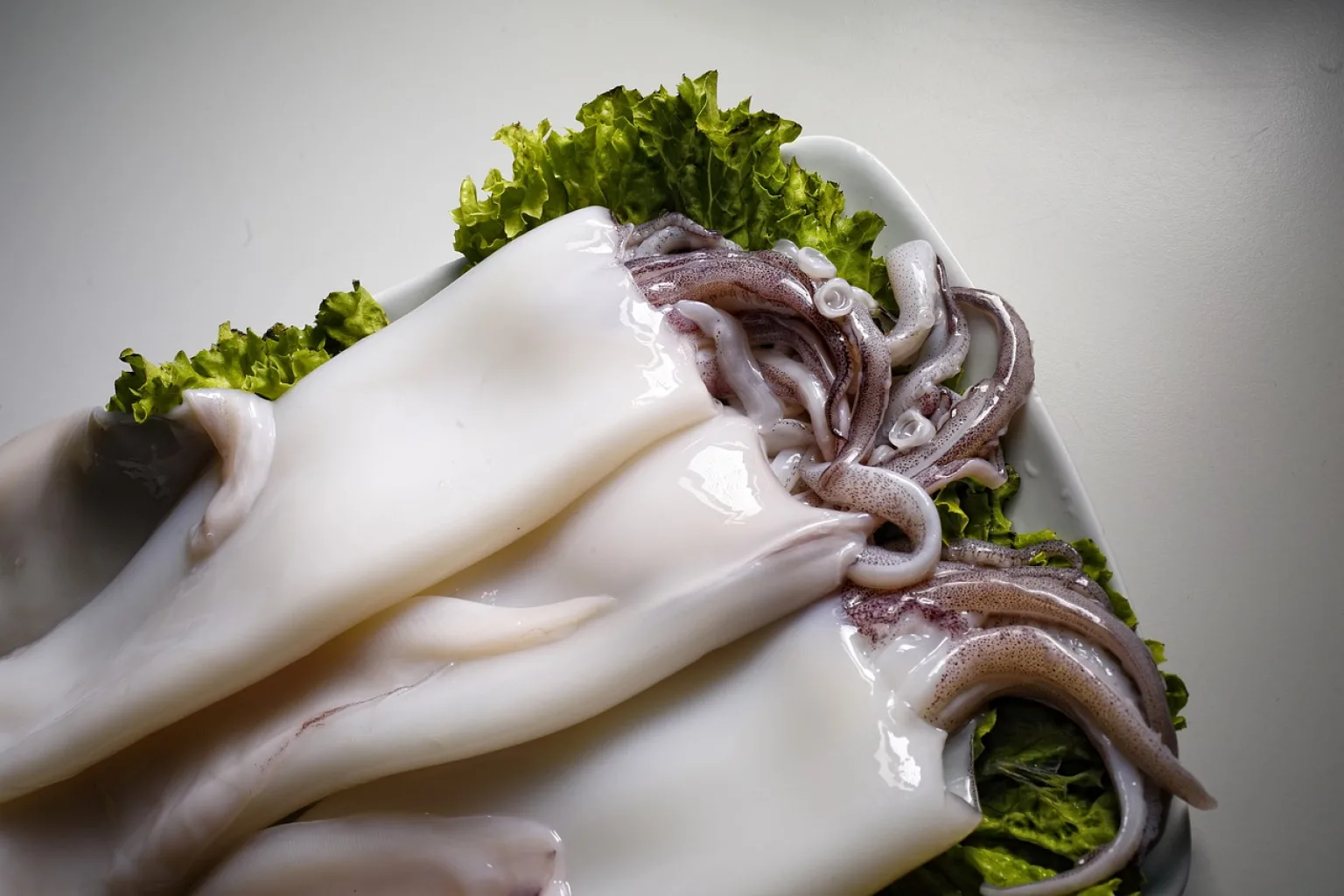
Squid is a marine animal in the cephalopod group, rather than a bony fish. In cooking, the body can be opened, cut into rings or strips, or left as a tube for stuffing; the tentacles and ink are also used. Squid is sold whole, cleaned, or in prepared cuts. Its flavor is described as delicate, making it suitable for a range of seasonings and sauces. It appears in fried, grilled, stuffed and stewed preparations, and recipes may use the body and tentacles in different ways.
When to use it
Choose squid when you want a seafood ingredient that can be served as a main dish or added to rice, pasta, vegetables or sauce. Rings and strips are useful for frying or stir-frying; whole tubes can be stuffed, and tentacles can be grilled or added to stews. Squid can also be simmered until tender. The cut and method affect the texture and presentation, so select a form that fits the recipe rather than assuming every cut cooks or serves the same way.
How to use it
Clean whole squid before preparing it, or choose cleaned pieces to reduce prep work. The body can be opened and cut into rings or strips, kept as a tube for stuffing, or cooked whole; tentacles can be grilled or added to stews and rice dishes. For a fried preparation, cut the body into suitable pieces and coat them if the recipe calls for it. You can also cook squid on a hot plate or add it to a tomato-and-onion sauce. Common preparations include squid stewed in its ink and dishes with rice or pasta. Keep raw squid separate from ready-to-eat foods, and follow the food-safety directions for your recipe and local authorities.
Flavour and texture
Squid has a delicate seafood flavor, as described for cleaned frozen squid. Texture depends on the cut and preparation: the body works well as rings, strips or stuffing, while tentacles have a different shape and bite. Frying is often used to create a crisp exterior, while longer stewing can soften the flesh. Do not expect every cut or method to produce the same result.
How to choose it
Buy squid from a trusted supplier and choose packages that are intact and not torn. Refrigerated seafood should feel cold; frozen seafood should remain solid. Take it home promptly and keep it separate from other foods to reduce the risk of cross-contamination. Check which form suits your recipe: whole, cleaned, tubes or tentacles. Choosing a prepared cut can reduce prep work and affect how the dish is presented.
Storage
Refrigerate perishable squid as soon as you get home. Keep it separate from cooked or ready-to-eat foods in a covered, leak-proof container. The storage guide consulted gives two to three days for whole fresh squid and three to four days for cleaned fresh squid; freeze it if you will not use it within that period. Always follow the package directions and local food-safety guidance.
Substitutions
If a recipe calls for rings and you have whole squid, open the body and cut it into rings. A cleaned tube can stand in for whole squid in stuffed or sliced preparations, while tentacles can replace rings when the shape is not essential. These are changes of cut within the same ingredient, not substitutes with identical flavor or texture. Adapt the presentation to the recipe.
Common mistakes
Do not choose a cut without considering how the dish will be served: a cleaned tube is convenient for stuffing or slicing, while tentacles have a different shape. Do not assume every cooking method produces the same texture; frying and slow stewing serve different purposes. Keep raw squid away from ready-to-eat food and do not delay refrigeration.
Safety and allergens
Squid is a mollusc and can cause a reaction in people allergic to molluscs or other seafood. Avoid it if you have that allergy, and prevent cross-contact through utensils and surfaces. Keep raw squid separate from cooked foods, refrigerate it promptly and follow official seafood-handling and cooking guidance.
Culinary uses
- main ingredient in seafood dishes
- ingredient for fried appetizers, stews, rice dishes and pasta
Recommended techniques
- fry in rings or strips
- grill or cook on a hot plate
- stuff and cook
- simmer in a stew or sauce
Pairs well with
- lemon
- garlic and parsley
- onion and tomato
- rice or pasta
Frequently asked questions
Which parts of squid are eaten?
The body, tentacles and ink are used in cooking. The beak and internal pen are not used as food.
How can squid be cooked?
It can be fried in rings or strips, grilled, stuffed or stewed. The recipe and cut determine the appropriate preparation.
How long does fresh squid keep in the refrigerator?
The storage guide consulted gives two to three days for whole squid and three to four days for cleaned squid. Refrigerate it promptly and also follow the product label.
Estimated nutrition
- Fat
- 1.77 g
- Saturates
- 0 g
- Carbohydrate
- 2.65 g
- Sugars
- 0 g
- Fibre
- 0 g
- Protein
- 15.9 g
- Salt
- 0.11 g
Sources and review
Automatically researched, cross-checked and validated content. Sources consulted:
- Client Challenge doi.org
- The Essential Glossary of Cooking Terms for the Culinary Arts - Escoffier escoffier.edu
- Calamar (gastronomía) - Wikipedia, la enciclopedia libre es.wikipedia.org
- Storing Meats & Seafood | Home & Garden Information Center hgic.clemson.edu
- USDA FoodData Central libguides.marist.edu
- Food Timeline: food history research service libguides.umflint.edu
- Bulletin 3110, Guidelines for Safe Seafood Consumption: Buying, Storing, Cooking and Seafood Allergies - Cooperative Extension Publications - University of Maine Cooperative Extension extension.umaine.edu
- Zumaque o sumac, la especia imprescindible de Oriente Medio: qué es, a qué sabe y cómo usarla en la cocina directoalpaladar.com
- Food Keeper deanofstudents.buffalostate.edu
- Aquatic Foods • The Nutrition Source nutritionsource.hsph.harvard.edu
- Explorando la diversidad del surimi friolisa.es
- Ingredientes | Cuisinenet cuisinenet.com
- Frozen Patagonian squid: An ally for the food and hospitality trade copemar.com