- Category
- Vegetables
- State
- Fresh
- Usual unit
- unit
What it is
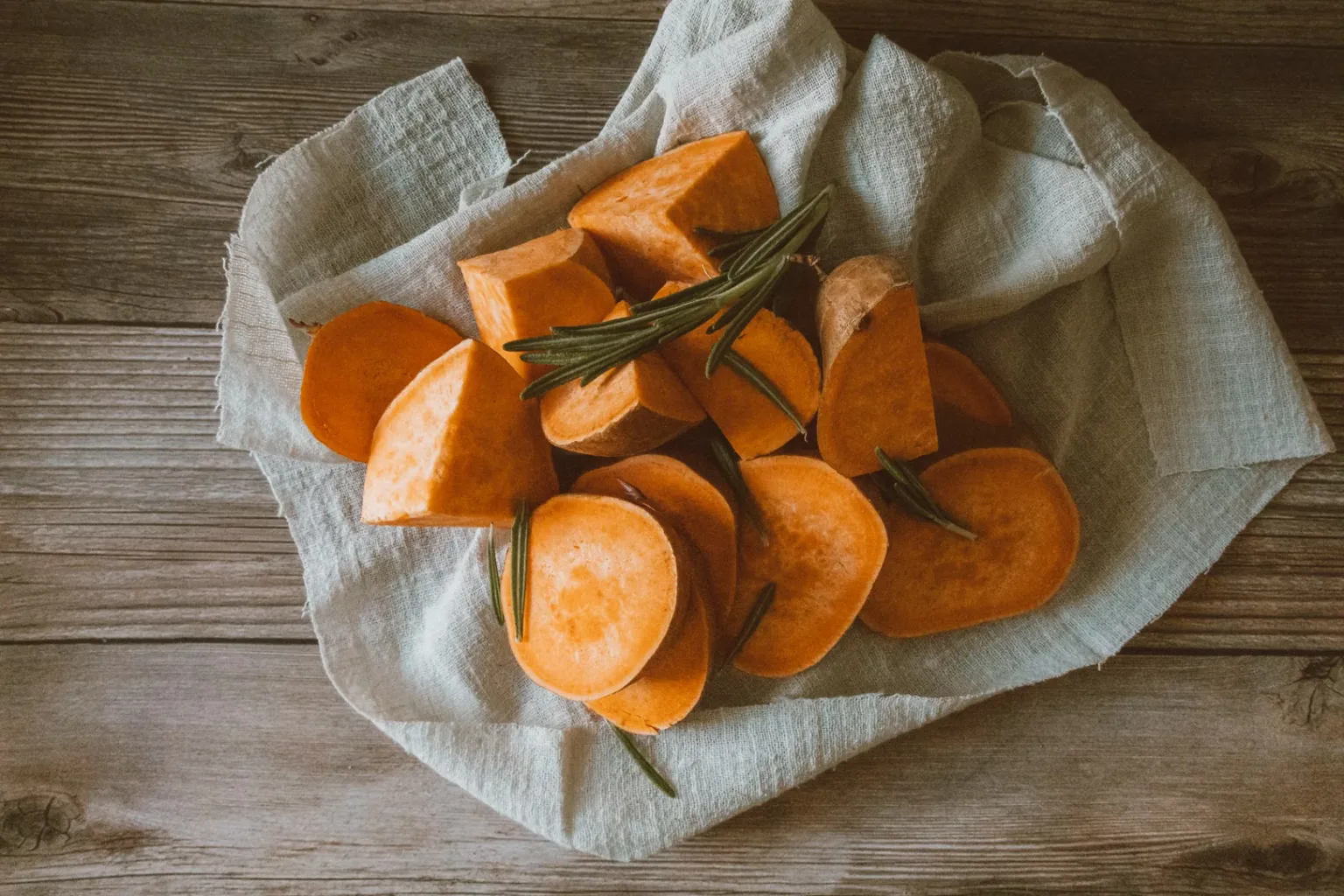
Sweet potato is the edible root of Ipomoea batatas. Despite the name, it is not the same as a common potato or a true yam; it belongs to the morning-glory family, Convolvulaceae. Many varieties are available, with skin and flesh that may be white, cream, yellow, orange, reddish or purple. Color, sweetness and texture can vary, so different varieties may behave differently when cooked. The root has a naturally sweet flavor that becomes more pronounced when roasted. Fresh sweet potatoes can be cooked whole or cut up, with the skin left on or removed depending on the dish. The skin is edible; scrub it well under running water before cooking if you plan to eat it.
When to use it
Choose sweet potatoes when you want a substantial side, a soft base for mash, or a naturally sweet ingredient to add body to soups and salads. Orange-fleshed varieties make a colorful choice for roasting or baking; other flesh colors offer variety, though their texture may differ. Sweet potatoes also work in sweet dishes and fillings. For an easy meal, serve a cooked sweet potato split open and topped with beans, broccoli and feta or Greek yogurt. In savory recipes, account for the root’s natural sweetness when seasoning and pairing it with other ingredients.
How to use it
Wash and scrub the skin well before cooking; leave it on if you want to eat it. To bake a whole sweet potato, pierce it several times with a fork and cook until the flesh is tender. Alternatively, cut it into cubes and simmer in water until soft, then drain and season. For mash, crush the cooked flesh with a fork, masher or blender; add water, broth or milk gradually if you want a smoother consistency. To roast pieces, cut the root into wedges, coat with oil and spread them in a single layer for more even browning. Season with salt, pepper, herbs or spices. Add cooked cubes to soups and salads or serve them as a side. Cook sweet potatoes before eating.
Flavour and texture
Sweet potatoes have natural sweetness that becomes more pronounced with cooking, especially roasting. Flesh may be white, yellow, orange or purple, and texture varies by variety: some are moist and soft, while others are firmer or drier. Roasted roots can be tender inside with browned edges; boiled flesh is usually easy to mash. Color alone does not guarantee that every sweet potato will have the same texture.
How to choose it
Choose roots that feel firm and have no obvious bruises or soft spots. Since varieties naturally have different skin and flesh colors, color alone is not a reliable sign of quality or intended use. Handle sweet potatoes gently to avoid bruising. When buying several, select roots that look sound and plan to use them while they remain firm. If you want a particular result, check the variety label or ask about the flesh color, since flavor and texture can differ.
Storage
Keep raw sweet potatoes in a cool, dry, dark and well-ventilated place. Avoid sealing them in airtight wrapping, and do not refrigerate them raw. They are perishable, so plan to use them soon after purchase. How long they keep depends on their condition and storage environment. Scrub the skin under running water before cooking. Refrigerate cooked sweet potatoes and use them promptly; they can also be frozen after cooking for longer storage.
Substitutions
In savory dishes, common potatoes can replace sweet potatoes, but the result will be less sweet and may have a different texture. To retain the characteristic flavor, swap one sweet-potato variety for another, keeping in mind that flesh color and texture can change. Adjust seasoning and cooking method to suit the result you want; do not assume every variety will cook alike.
Common mistakes
Do not confuse sweet potatoes with common potatoes or true yams; they are different foods. Do not assume every variety has the same sweetness or texture. Avoid storing raw roots in the refrigerator or in a damp, closed space. Scrub the skin if you plan to cook and eat it. When roasting pieces, spread them in a single layer so they cook more evenly.
Safety and allergens
Scrub the skin well under running water before cooking. Eat sweet potatoes cooked rather than raw, and cook the flesh until tender for the preparation you are making.
Culinary uses
- Starchy vegetable for sides and main dishes
- Base for soups, salads, purées and baked fillings
Recommended techniques
- Roasting
- Baking
- Boiling
- Mashing or puréeing
Pairs well with
- Beans and broccoli
- Feta cheese or Greek yogurt
- Pork or poultry
- Cinnamon, nutmeg, lime or coconut
Frequently asked questions
Are sweet potatoes the same as potatoes?
No. Sweet potato is the root of Ipomoea batatas in the Convolvulaceae family; the common potato is a different food.
Can you eat sweet-potato skin?
Yes. The skin is edible; scrub it well under running water before cooking.
How should raw sweet potatoes be stored?
Keep them in a cool, dry, dark and ventilated place. Do not refrigerate them raw, and plan to use them soon.
Estimated nutrition
- Fat
- 0 g
- Saturates
- 0 g
- Carbohydrate
- 17.7 g
- Sugars
- 5.38 g
- Fibre
- 3.1 g
- Protein
- 1.54 g
- Salt
- 0.14 g
Sources and review
Automatically researched, cross-checked and validated content. Sources consulted:
- Client Challenge doi.org
- The Essential Glossary of Cooking Terms for the Culinary Arts - Escoffier escoffier.edu
- El boniato: Historia y origen | Huercasa huercasa.com
- Sweet Potatoes • The Nutrition Source nutritionsource.hsph.harvard.edu
- Postharvest Handling of Sweetpotatoes | NC State Extension Publications content.ces.ncsu.edu
- Papas y Batatas (Camote o Papa Dulce) (Spanish) - National Center for Home Food Preservation nchfp.uga.edu
- Best practices for harvesting and storing homegrown potatoes | OSU Extension Service extension.oregonstate.edu
- Maqueta nº 10.2 aesan.gob.es
- Batata o boniato | Gastronomía & Cía gastronomiaycia.com
- Acrylamides: The Hidden Danger in Your Favorite Potato Dishes | Food Safety foodsafety.osu.edu
- ¡Asegurándonos de que no eres un robot! voljournals.utk.edu
- Effect of cultivar, storage, cooking method and tissue type ... repository.lsu.edu
- Potatoes in the Garden and the Kitchen extension.psu.edu
- La papa y la batata | ull.es
- La batata o camote | Consumer consumer.es