- Category
- Grains, flour and pasta
- State
- Powdered
- Usual unit
- g
What it is
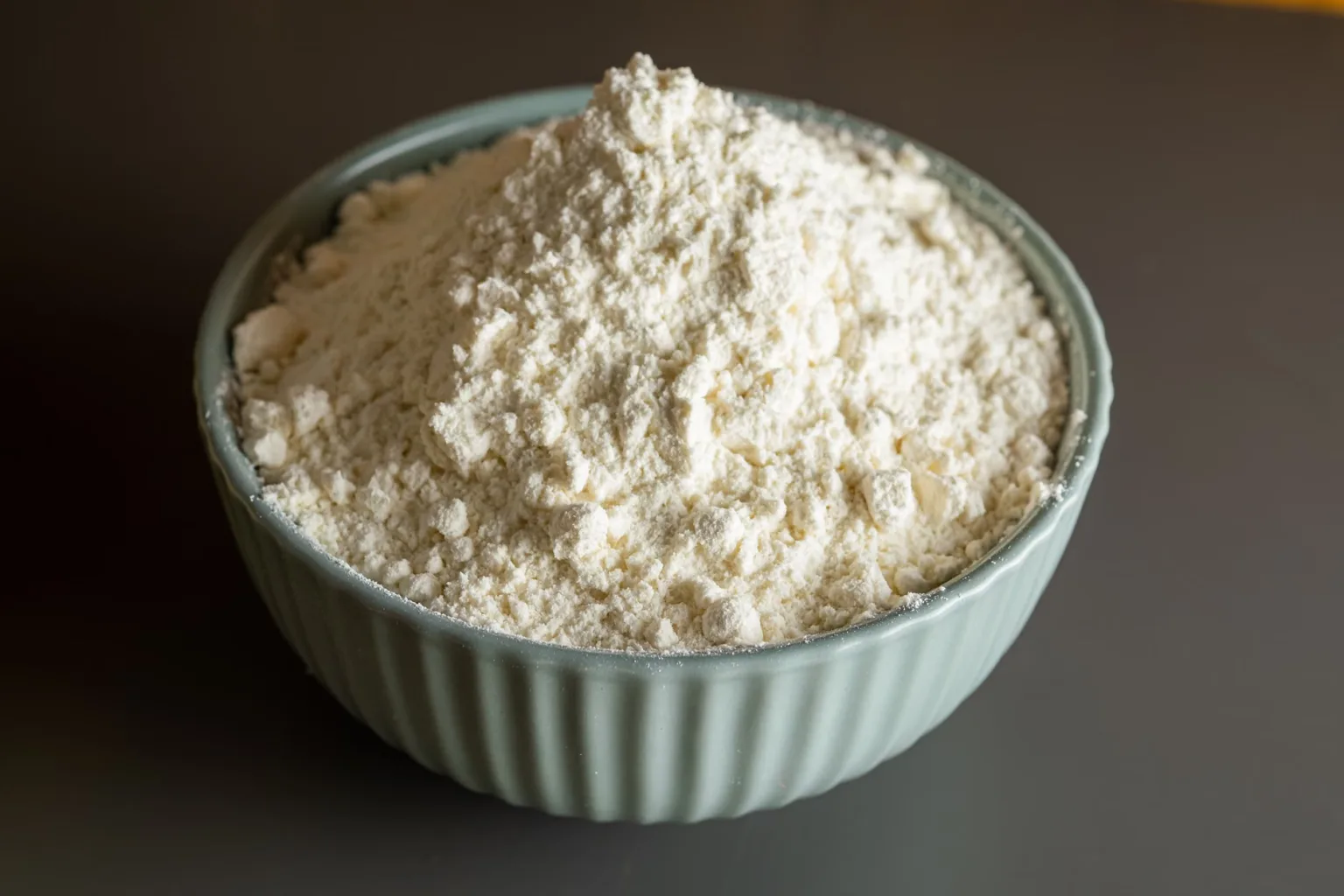
White corn flour is a milled product made from white corn kernels, but products sold under similar names do not all behave alike. The grind may be fine or coarse, and processing varies: products include flour from raw dried corn, precooked flour and nixtamalized flour. Ground white corn is used for tortillas, among other preparations, while precooked and nixtamalized flours have distinct uses. Corn starch is not the same as flour made from the grain: it is obtained from the starch and behaves differently in cooking. Check the package to identify the product before using it.
When to use it
Use it when you want ground corn in a dough, when a recipe specifically calls for white corn flour, or when using refined corn flour to thicken certain preparations. It may suit tortillas when its processing and the method match the recipe. For breads and baked doughs, corn flour can be combined with wheat or rye flour; on its own it does not behave like a gluten-containing flour. If a recipe calls for precooked flour, nixtamalized flour or corn starch, do not assume that ordinary white corn flour is an equivalent substitute.
How to use it
Start by checking the package for the product type—ground dry corn, precooked or nixtamalized—and its grind. For dough, add the recipe's liquid gradually and mix to the specified consistency; requirements vary by product, so there is no universal ratio to assume. For baking, use it alone only when the recipe is designed for corn flour; other doughs may combine it with wheat or rye flour. Refined corn flour is also used to thicken sauces, creams and desserts. Do not confuse it with corn starch, which is a different product with different uses.
Flavour and texture
Corn has a distinct flavor unlike that of other grains. The white color identifies the corn used, but does not by itself determine the finished flavor or texture: variety, processing and grind all matter. Fine and coarse grinds behave differently, and precooked and nixtamalized versions are not automatically interchangeable. Check these details on the package and choose a product that suits the texture required by the recipe.
How to choose it
Read the full product name and check whether the package specifies white corn flour, fine or coarse grind, precooked flour, nixtamalized flour or starch. Do not use “flour” and “starch” as synonyms: they are different products. For tortillas, confirm that the processing suits the recipe. For baking, check whether the formula calls for a blend with other flours. If you need to avoid gluten, check the product's label and cross-contact information rather than relying on the ingredient name alone.
Storage
The available evidence does not establish a universal shelf life or storage condition for this flour. Follow the manufacturer's directions and keep the product in its package or another clean, tightly closed container, away from moisture and contamination. Check the label for product-specific instructions, since processing and packaging can vary. If the package gives different directions, follow those.
Substitutions
There is no single substitute that works in every recipe. In some doughs, rice flour can be part of a blend; some breads and baked goods also combine corn flour with wheat or rye flour. These options do not automatically reproduce the original texture. Do not replace corn flour with corn starch, precooked flour or nixtamalized flour unless the recipe supports that change.
Common mistakes
A common mistake is treating ground corn flour, precooked flour, nixtamalized flour and corn starch as identical. A direct swap in a tortilla or bread recipe can also fail because processing and grind affect how the product behaves. Read the package and use a recipe suited to the specific flour.
Safety and allergens
Follow the package instructions and check applicable official product alerts. If you need to avoid gluten, check the label and cross-contact information: the words “corn flour” alone do not confirm that a packaged product is free from traces.
Culinary uses
- Base para masas y preparaciones de maíz
- Agente para espesar salsas y cremas
Recommended techniques
- Mezclar con líquido para formar una masa o una preparación espesa
- Combinar con otras harinas para ciertas masas horneadas
Pairs well with
- Harina de trigo o de centeno en algunas masas
- Líquidos en salsas y cremas
Frequently asked questions
Is white corn flour the same as corn starch?
No. Corn flour is made from ground kernels; corn starch is obtained from corn starch and is a different product.
Can any white corn flour be used for tortillas?
Not necessarily. Check the processing on the package and the flour specified by the recipe; precooked and nixtamalized flours have particular uses.
Can I use it on its own for bread?
It depends on the recipe. Some formulas combine it with wheat or rye flour; do not assume an ordinary dough will work the same way with corn flour alone.
Estimated nutrition
- Fat
- 2 g
- Saturates
- 0 g
- Carbohydrate
- 78 g
- Sugars
- 0 g
- Fibre
- 2 g
- Protein
- 8 g
- Salt
- 0 g
Sources and review
Automatically researched, cross-checked and validated content. Sources consulted:
- The Essential Glossary of Cooking Terms for the Culinary Arts - Escoffier escoffier.edu
- Harinas de maíz ¿Cuántos tipos hay y para qué sirven? - Formacion en Gastronomia formacionengastronomia.com
- La harina de maíz y sus diferentes usos en la cocina | masymas supermercados supermasymas.com
- Agencia Española de Seguridad Alimentaria y Nutrición aesan.gob.es
- educational content to support healthful lifestyle practices sjsu.edu
- Pictorial Recipes - OSU Extension Service extension.oregonstate.edu
- From Betty Crocker to Feminist Food Studies scholarworks.umass.edu
- Determinación proximal de los principales componentes nutricionales de harina de maíz, harina de trigo integral, avena, yuca, zanahoria amarilla, zanahoria blanca y chocho | infoANALÍTICA doi.org
- Beneficios de la harina de maíz en la cocina panceliac.com
- Beneficios y usos de la harina de maíz - Adpan adpan.es
- Buñuelos de Leche 1881 (Milk Fritters) - lacocina.utsa.edu
- Mexican Mole: Promoting Healthy Meals through Cultural ... extension.arizona.edu
- Harina de Maíz - Olivapan olivapan.es