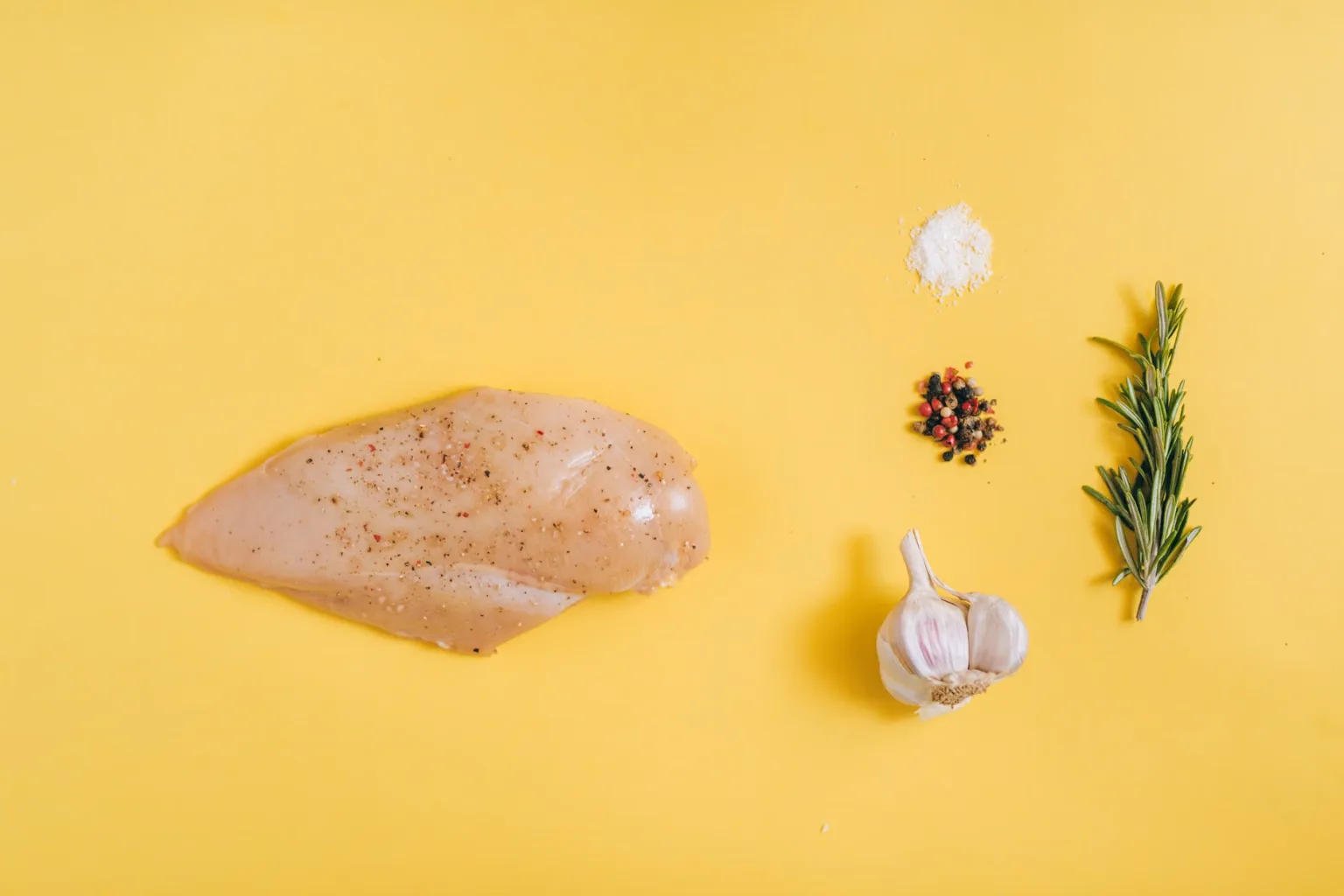
- Category
- Meat
- State
- Fresh
- Usual unit
- unit
What it is
Whole chicken legs are a fresh poultry cut sold by the piece. Names for chicken cuts can differ by country and retailer, so check the package or ask the butcher which parts the product includes. The name alone does not establish whether a particular piece has skin or bone, or how large it is. Chicken is used in many kinds of cooking: its cuts may be roasted, grilled, fried, stewed, or cooked in soups and broths. This profile refers to the uncooked cut sold as a whole leg, not to a ready-to-eat prepared dish. Individual products can vary in size and in the amount of skin, meat, and bone, so do not assume that every package will cook in the same way or at the same rate.
When to use it
Choose whole chicken legs when you want an individual poultry portion for a main dish or need chicken for a meal served to several people. They can be roasted or grilled, cooked in a covered stew, or used in a soup or broth. Lemon and thyme work well as aromatic additions; onion, carrot, and broth are useful companions in a stew. This cut gives you an alternative to chicken breast and can be used in recipes that call for chicken pieces. Match the cooking method to the recipe and the size and presentation of the actual pieces.
How to use it
Keep raw chicken separate from foods that will be eaten without further cooking, and use clean utensils and a clean cutting surface. After handling raw chicken, wash hands, surfaces, and utensils with soap and water. For a simple preparation, season the legs with pepper and herbs and roast or grill them until fully cooked. Alternatively, brown them and continue cooking them covered in a stew with onion, carrot, and broth; lemon and thyme suit this combination. Chicken legs can also be included in soups or broths when the recipe calls for cooked chicken. Do not reuse liquid that has touched raw chicken unless it is cooked. Follow the package and recipe instructions for handling and cooking; the information supplied here does not establish one cooking time or temperature for every product.
Flavour and texture
Flavor and texture vary with the individual cut, whether it has skin and bone, and the cooking method. In a stew, chicken can remain juicy and contribute to a sauce; roasting or grilling can give the outside a browned finish. Lemon and thyme add aromatic notes, while onion, carrot, and broth are familiar companions in stews and soups.
How to choose it
Choose a sealed package and check its label, date, and storage instructions. Confirm what the seller means by “whole chicken leg,” since size and presentation can vary. If buying from a butcher, ask whether the piece has skin and bone and whether it is sold fresh or frozen. Those details help you select a product that suits your recipe.
Storage
Follow the storage directions and date on the package, and keep raw chicken separate from ready-to-eat foods. The available information does not specify storage periods for this cut, so do not infer one from appearance alone. After handling raw chicken, wash hands, surfaces, and utensils that came into contact with it using soap and water.
Substitutions
Bone-in chicken thighs or drumsticks may stand in for whole chicken legs when they suit the recipe. Since the size and shape of the pieces may differ, adapt the cooking and make sure the chicken is fully cooked. Do not assume that another cut needs exactly the same cooking time.
Common mistakes
Do not assume that every product called a whole chicken leg has the same size or presentation. Avoid handling raw chicken near ready-to-eat foods, and do not reuse liquids that have touched it unless they are cooked. Do not rely on a fixed cooking time; follow the package and recipe instructions.
Safety and allergens
Keep raw chicken separate from other foods. After handling it, wash hands, surfaces, and utensils with soap and water. Follow the package and recipe instructions and cook the chicken fully; the information available here does not provide a specific time or temperature that applies to every product.
Culinary uses
- Main dish protein
- Ingredient for soups and broths
Recommended techniques
- Roasting
- Grilling
- Frying
- Braising or stewing
- Simmering in soups or broths
Pairs well with
- Lemon
- Thyme
- Onion
- Carrot
- Broth
- Black or white pepper
Frequently asked questions
How can I cook whole chicken legs?
They can be roasted, grilled, fried, stewed, or used in soups and broths. Choose a method that suits the recipe and cook the chicken fully.
What flavors go well with whole chicken legs?
Lemon, thyme, onion, carrot, broth, and pepper are suitable companions in a range of chicken dishes.
How long can fresh chicken legs be stored?
The available information does not specify a storage period. Follow the date and storage instructions on the package.
Estimated nutrition
- Fat
- 16 g
- Saturates
- 4.37 g
- Carbohydrate
- 0.17 g
- Sugars
- 0 g
- Fibre
- 0 g
- Protein
- 16.4 g
- Salt
- 0.21 g
Sources and review
Automatically researched, cross-checked and validated content. Sources consulted:
- ¿Por qué la muerte es origen de miedos y tabúes? doi.org
- The Essential Glossary of Cooking Terms for the Culinary Arts - Escoffier escoffier.edu
- Carne de pollo - Wikipedia, la enciclopedia libre es.wikipedia.org
- Muslos de pollo - Gastronomía Vasca: Escuela de Hostelería Leioa gastronomiavasca.net
- Agencia Española de Seguridad Alimentaria y Nutrición aesan.gob.es
- Bilingual Budget-Friendly Hispanic Cookbook and ... scholarworks.lib.csusb.edu
- - YouTube youtube.com
- Healthy Eating Plan for Weight Management med.uc.edu
- Vamos a Conservar Alimentos: Sopas extension.psu.edu
- Tiempo de Vida Útil de Pollo Fresco Almanacenado a ... scholar.uprm.edu
- Muslos de pollo jugosos de sábado - Gallina Blanca gallinablanca.es