- Category
- Fish and seafood
- State
- Fresh
- Usual unit
- kg
What it is
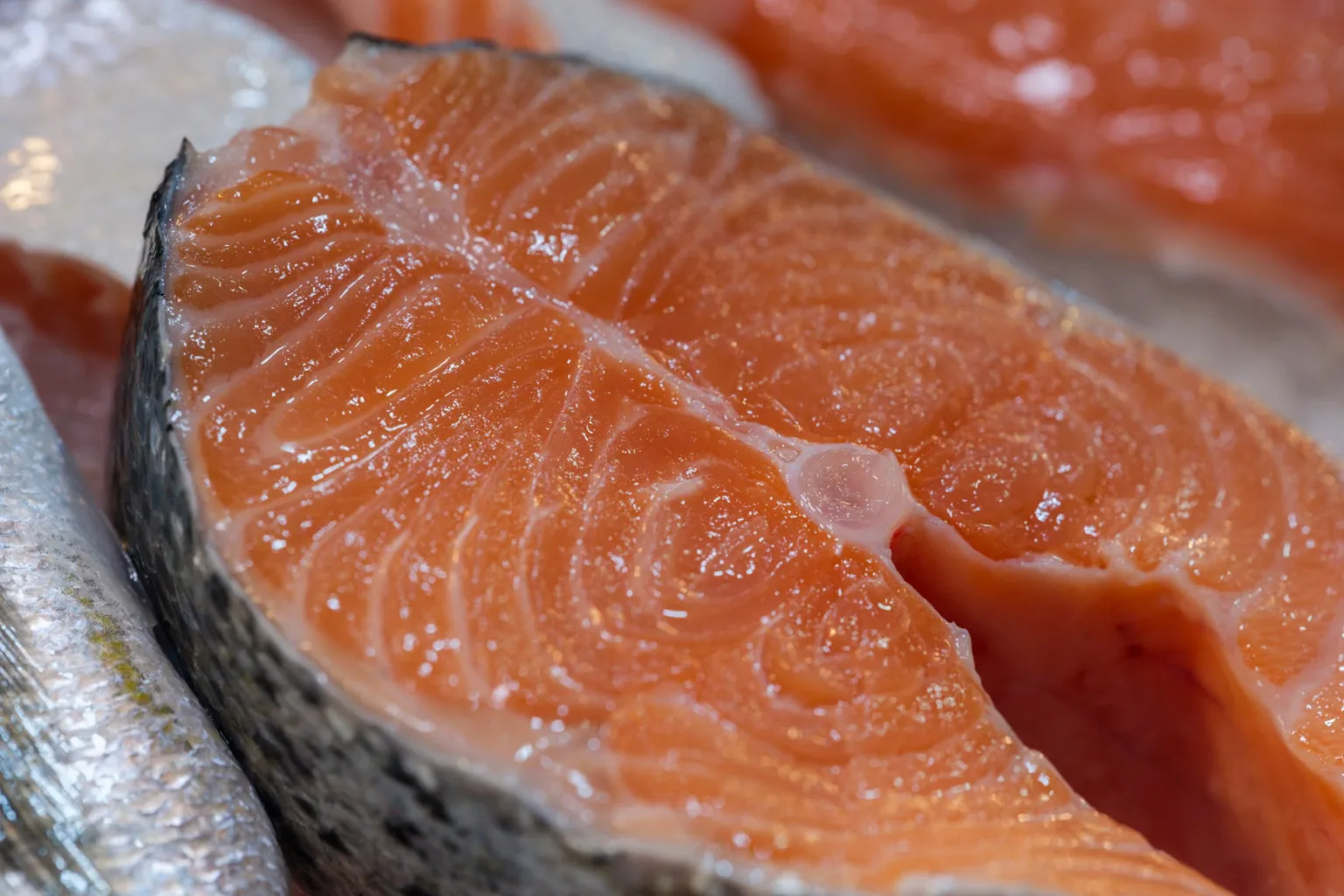
Whole salmon is the fish sold intact rather than already cut into fillets or steaks. Its flesh is commonly pink or orange, though the shade can vary. It is versatile: cook it whole in the oven or divide it into portions for other dishes. If you buy it whole, ask the fishmonger to clean it, or remove the viscera promptly at home. Shiny skin and eyes, firm flesh, and a fresh, sea-like smell are useful signs to check when buying. Salmon belongs to the fish allergen group, so it is not suitable for people who must avoid fish.
When to use it
Choose a whole salmon when you want a centerpiece for an oven-roasted meal, control the size of your portions, or prepare different cuts for more than one dish. It suits a shared meal and can also be divided into steaks or fillets for pan-searing, sauces, or cooking en papillote. The cut and part of the fish can influence the preparation: steaks work well with sauce, while fillets suit the pan or grill. No single season is specified here for all whole salmon sold in markets.
How to use it
Keep the fish cold until preparation, and ask for it to be cleaned if you do not plan to clean it yourself. To roast it whole, place it in a baking dish; mushrooms and spring onions can be used alongside it, with a little oil and white wine for aroma. Alternatively, portion the fish: steaks can be served with a simple sauce, while fillets can be pan-seared or grilled. Steaming, cooking en papillote, and adding salmon to a stew with potatoes, onion, pepper, and tomato are other options. Match the method to the cut and follow applicable food-safety guidance; do not assume that marinating or briefly searing makes raw fish safe to serve.
Flavour and texture
Salmon has tender flesh and a distinctive flavor, with a moist texture when properly cooked. Its color can range from pink to orange and is not, by itself, proof of quality. Keeping the skin on can help a portion hold together on the grill. Oil, herbs, citrus, and mild sauces complement its flavor without overwhelming it.
How to choose it
Look for taut, shiny skin, bright eyes, lustrous scales, and firm flesh. The gills should look sound, and the smell should be fresh and sea-like rather than strong or unpleasant. If buying a whole fish, check that its size suits your recipe and ask the fishmonger to clean it if desired. Flesh color can vary, so do not use color as your only measure of quality.
Storage
Fresh salmon keeps for a short time: plan to use it within one or two days and keep it refrigerated in the meantime. If you buy it whole, removing the viscera promptly helps get it ready to store or cook. Follow the storage directions on the label and local food-safety advice. If you cannot use it soon, do not rely on smell or appearance to extend its storage period.
Substitutions
If you cannot find whole salmon, salmon fillets or steaks can work in many preparations; adapt the cooking method to the cut and thickness. They are not identical in presentation or cooking time: a whole fish cooks differently from portions. Choose the format that best suits the recipe and follow guidance for that product.
Common mistakes
Do not choose a fish based only on how deep its color is; flesh color can vary. Avoid leaving a whole salmon uncleaned longer than necessary or treating fresh fish as a long-life product. Do not replace a whole fish with fillets without adapting the preparation, and do not assume a marinade replaces precautions for serving raw fish.
Safety and allergens
Salmon is fish and can trigger reactions in people with a fish allergy. Keep it refrigerated, handle it carefully, and follow applicable food-safety guidance. Do not serve salmon raw or undercooked without first following validated guidance for that use.
Culinary uses
- main course
- oven-roasted centerpiece
- ingredient for stews
Recommended techniques
- roasting
- grilling
- pan-searing
- steaming
- cooking en papillote
- stewing
Pairs well with
- dill
- garlic
- thyme
- citrus
- mushrooms
- spring onions
- potatoes
- cream cheese
Frequently asked questions
How can I recognize fresh whole salmon?
Look for shiny skin and scales, bright eyes, firm flesh, and a fresh smell that is not unpleasant.
How can I cook whole salmon?
Roast it whole, or portion it for grilling, pan-searing, steaming, cooking en papillote, or adding to a stew.
How long can fresh salmon be kept?
The available recommendation is to use it within one or two days and keep it refrigerated, while also following its label directions.
Sources and review
Automatically researched, cross-checked and validated content. Sources consulted:
- ¿Por qué la muerte es origen de miedos y tabúes? doi.org
- Client Challenge doi.org
- The Essential Glossary of Cooking Terms for the Culinary Arts - Escoffier escoffier.edu
- Foeniculum vulgare - Wikipedia, la enciclopedia libre es.wikipedia.org
- Agencia Española de Seguridad Alimentaria y Nutrición aesan.gob.es
- Nutrition Education Materials for Food Pantries | UNL Food | Nebraska food.unl.edu
- Home food preservation | Servicio de Extensión de OSU extension.oregonstate.edu
- Para la ciudadanía aesan.gob.es
- Ingredientes del alimento que consume el salmón: ¿Por qué son importantes los ingredientes marinos? | Global Salmon Initiative globalsalmoninitiative.org
- Salmón - Gastronomía Vasca: Escuela de Hostelería Leioa gastronomiavasca.net
- El salmón: propiedades y beneficios - Compesca compesca.com
- Home Page - National Center for Home Food Preservation nchfp.uga.edu
- Trucos y consejos para cocinar salmón | Consumer consumer.es
