- Category
- Vegetables
- State
- Fresh
- Usual unit
- cup
What it is
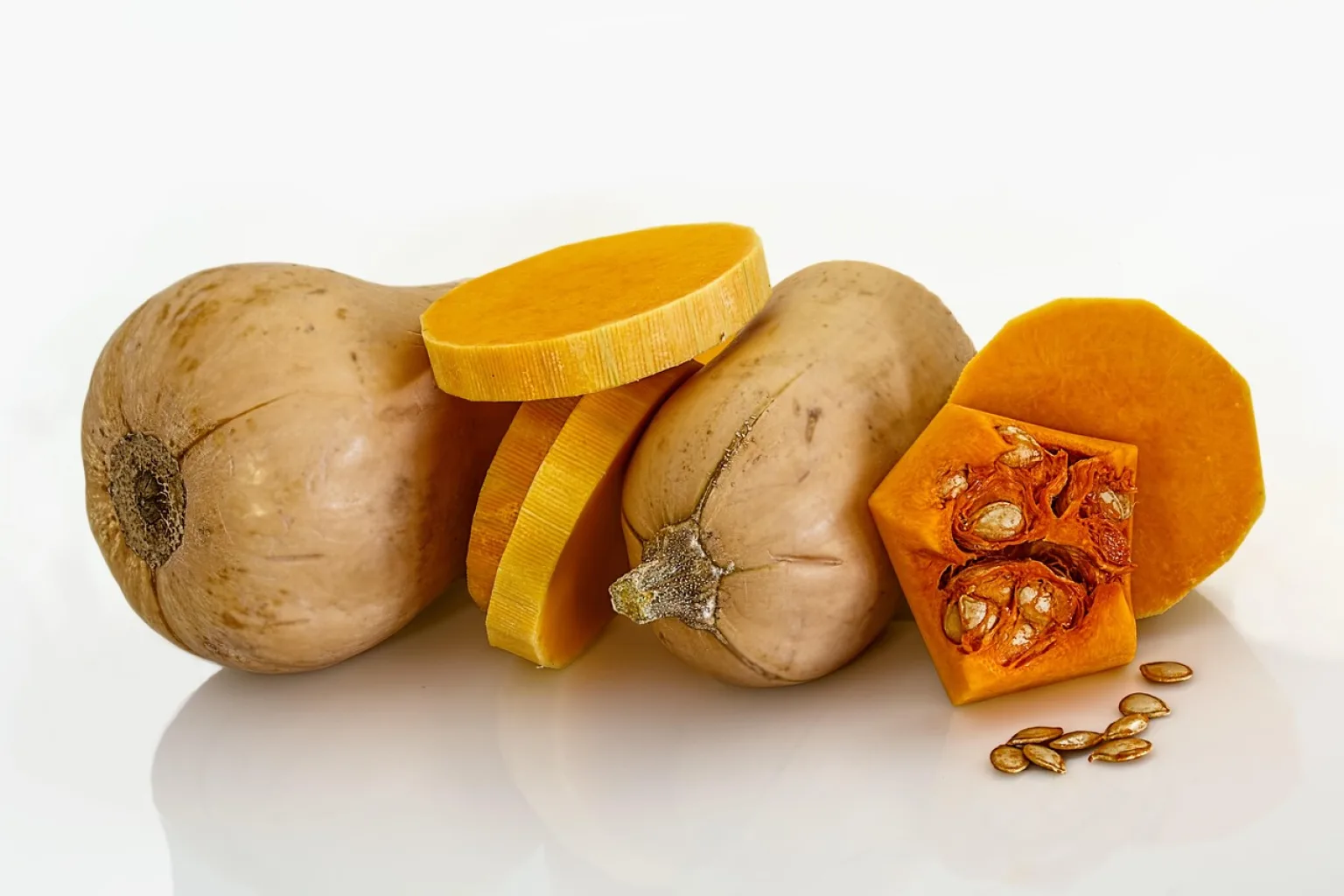
Winter squash is a common culinary name for several edible squash varieties. Some are Cucurbita moschata, while the broader squash group includes other species and cultivars, so the name does not identify one exact variety. Shapes and skin colors vary, and the flesh can range from pale yellow or mustard to deep orange. It is usually firm when raw and softens during cooking; some varieties break down readily into a creamy texture. Winter squash is sold fresh, whole or cut. The cooked flesh is used in both savory and sweet dishes, and the seeds are also eaten in some preparations. This profile focuses on the squash flesh and on practical ways to use it.
When to use it
Choose winter squash when you want body, color and a soft texture in soup or stew, or flesh that can be mashed or blended into a purée. It also works in desserts such as custards or pies, and in savory dishes with onion or spices. Mature winter squash is generally firm and has hardened skin, unlike tender summer squash harvested young. Because common names can cover different varieties, consider the flesh and the result you want rather than assuming every squash will cook or taste the same.
How to use it
Wash the squash carefully under running water, and use clean hands, work surfaces and utensils. Remove the seeds and cut the flesh into pieces sized for your recipe; peel it if the skin will not be used or is too hard for the preparation. Cook the pieces until tender by boiling, steaming, baking or stewing. For purée, blend the cooked flesh and drain excess liquid if the mixture is too wet. Add it to soups and stews to give them body, or use it in desserts. To freeze squash, cook it until soft first; it can be frozen as purée or as prepared blanched cubes. Follow a suitable freezing procedure for the form you choose.
Flavour and texture
The flavor of winter squash is mild, but it varies by variety and maturity. The flesh is usually firm when raw and softens as it cooks; some varieties break down easily and become creamy. Color ranges from pale yellow or mustard to deep orange. Water, sugar and starch levels can also affect the finished texture, so sweetness and density are not identical from one squash to another.
How to choose it
For winter squash, look for a mature specimen that feels firm and has hardened skin; do not rely on the common name alone, since it can refer to different varieties. If buying a cut piece, check that the flesh looks firm and has no visibly damaged areas. Some squash sold as calabaza has thick, deep-orange flesh, but color varies by cultivar and does not identify a variety on its own. If you want a particularly dense texture or sweet flavor, choose a squash intended for cooking and assess the result when prepared.
Storage
For longer keeping, squash flesh can be frozen after cooking. Remove the seeds, cut the flesh and cook it until soft; then mash or blend it, drain excess liquid and cool it before packing for the freezer. Prepared blanched cubes can also be frozen. Use freezer-suitable containers or bags, and leave headspace if the freezing method calls for it. No storage duration is specified here; for other storage conditions, follow the seller's or package's directions.
Substitutions
You can replace winter squash with another firm-fleshed winter squash or with kabocha, keeping in mind that sweetness, moisture and texture may differ. Common names can cover more than one squash in some markets, so compare the flesh and intended use. Adjust added liquid if the substitute releases more moisture, and cook it until tender before making purée.
Common mistakes
Do not assume that every squash sold under a regional name is the same variety; the name may be generic. Nor should you treat mature winter squash like tender summer squash: winter varieties have hardened skin and firm flesh. When making purée, account for excess cooking liquid so the result does not become watery. For freezing, cook the flesh until soft rather than freezing it raw using a method intended for a different vegetable.
Safety and allergens
Wash squash under running water before cutting or cooking it. Keep hands, work surfaces and utensils clean. When preparing squash for freezing, follow the procedure suited to the form you are freezing, whether purée or cubes.
Culinary uses
- Base for soups and stews
- Ingredient for purées and desserts
Recommended techniques
- Boiling
- Steaming
- Baking
- Stewing
Pairs well with
- Onion
- Broth
- Spices, including curry spices
Frequently asked questions
Is winter squash one specific variety?
No. Winter squash is a broad culinary name covering different varieties. Their shape, skin, flesh color and cooked texture can vary.
How can I cook winter squash?
Boil, steam, bake or stew it until tender. Then use the cooked flesh in soups, stews, purées or desserts.
Can I freeze winter squash?
Yes. One method is to cook it until soft and freeze it as purée or as prepared cubes. No storage duration is specified here.
Estimated nutrition
- Fat
- 0.1 g
- Saturates
- 0.05 g
- Carbohydrate
- 6.5 g
- Sugars
- 2.76 g
- Fibre
- 0.5 g
- Protein
- 1 g
- Salt
- 0 g
Sources and review
Automatically researched, cross-checked and validated content. Sources consulted:
- Client Challenge doi.org
- Calabaza - Wikipedia, la enciclopedia libre es.wikipedia.org
- HS1495/HS1495: Harvest and Handling of Calabaza (Tropical Pumpkin) ask.ifas.ufl.edu
- Imagining Sabor repositories.lib.utexas.edu
- Vamos a Conservar Alimentos: Calabazas y Calabacines extension.psu.edu
- Determinación de Calidad y Cambios Microbiológicos en ... scholar.uprm.edu
- Cooking From Home stonybrook.edu
- turismo y desarrollo de la comunidad mapa.gob.es
- Development of Local Food Production for Food Service in the ... purdue.edu
- Improving Childhood Nutrition in Rural Dominican Republic corescholar.libraries.wright.edu
- Auyama: Cómo Cocinar y Guía Esencial cocinadominicana.com
- Auyama o calabaza: un rompecabezas en el huerto – Esnobismo gourmet esnobgourmet.com
- Auyama: qué es, para que sirve y de dónde viene esta verdura tan popular elespectador.com