- Category
- Vegetables
- State
- Fresh
- Usual unit
- unit
What it is
A bell pepper is a sweet pepper from the species Capsicum annuum in the nightshade family. It is typically broad, with thick flesh and a mild flavor rather than the heat associated with many chilies. Bell peppers are sold green, red, yellow, and orange; color relates to ripeness and may come with differences in sweetness. They can be eaten raw or cooked and are also sold frozen, dried, or preserved. Here, “fresh” refers to a whole or cut pepper that has not been processed for preservation.
When to use it
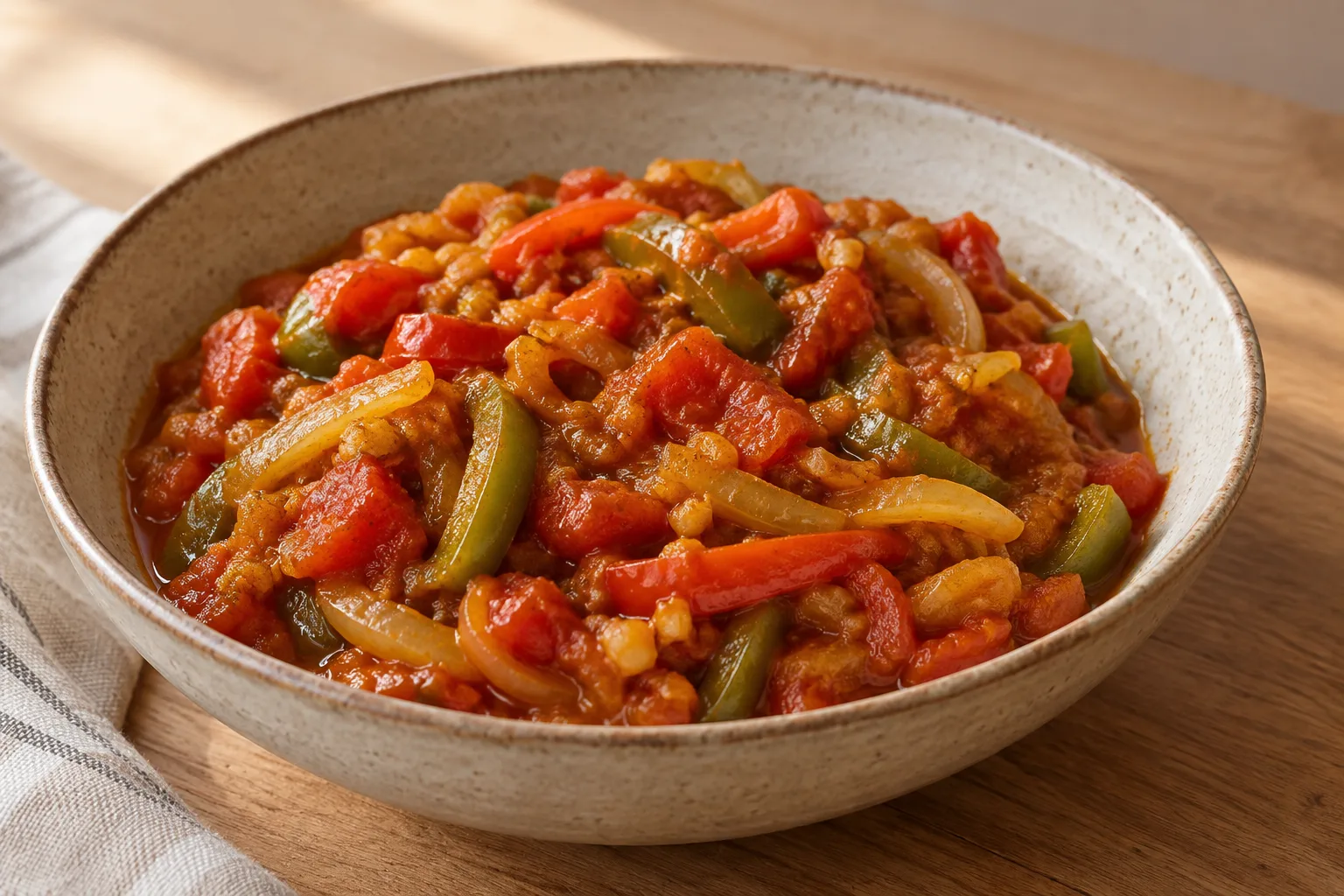
Use bell pepper raw when you want color, crunch, and volume in salads, gazpacho, or crudités. Choose it for cooking when roasting, grilling, frying, or adding to a sauté base, stew, or casserole; heat softens the flesh and brings out its flavor. It can also contribute to a sauce or filling. Different colors let you adjust a dish’s appearance and sweetness, although the choice ultimately depends on taste and what is available.
How to use it
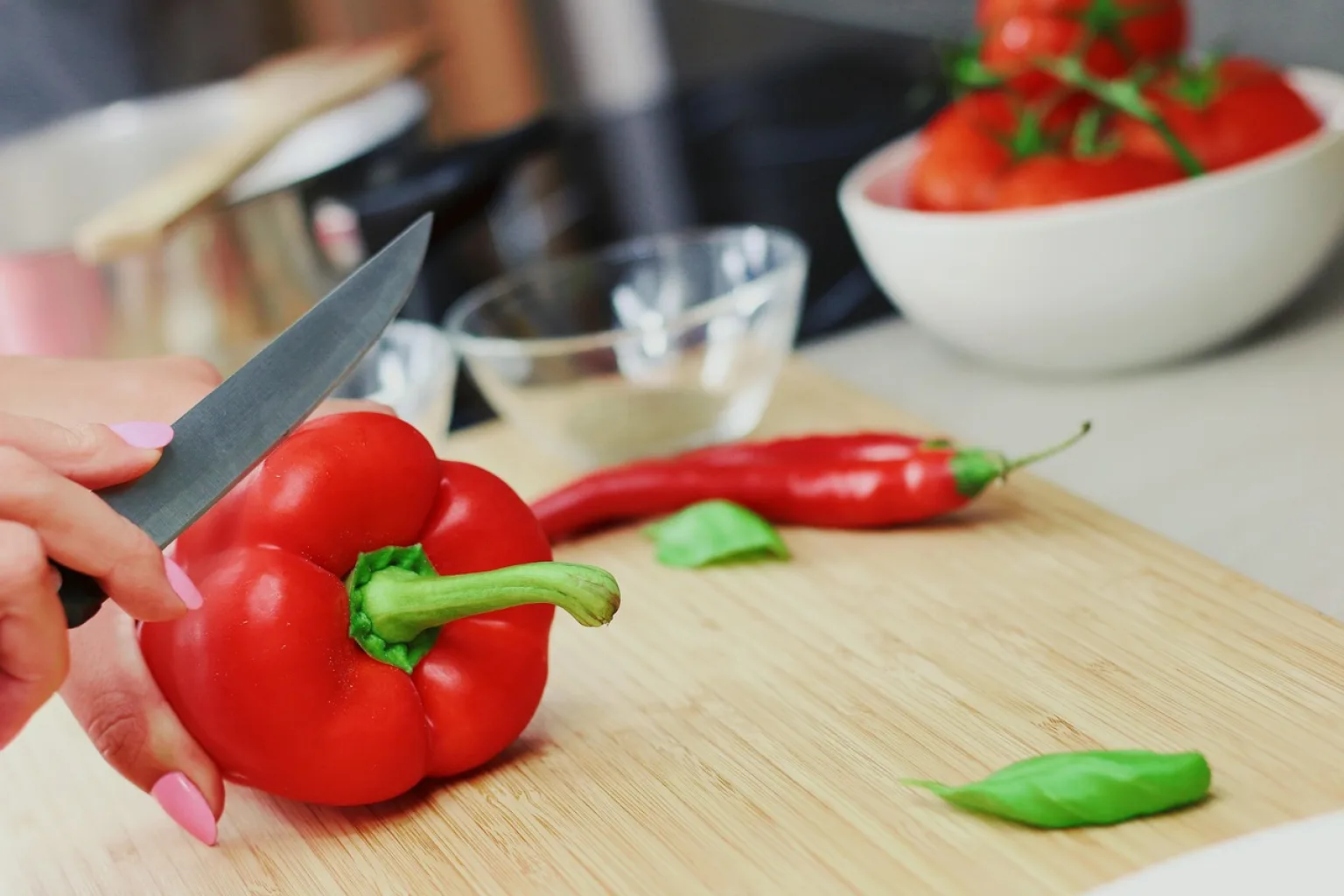
Wash the pepper under running water, rubbing the surface with a clean vegetable brush. Cut around the stem, remove it, and discard the seeds and inner membranes; then slice or dice the pepper to suit the recipe. For a raw dish, cut it thinly for salads or serve it as crudités. To cook it, roast, grill, or fry it, or add it to stews and casseroles. It also works in sautéed vegetable bases, sauces, pasta dishes, and fillings. To freeze, wash the pepper, remove the stem, seeds, and membranes, cut it as needed, and freeze the pieces in a single layer before transferring them to a freezer-safe bag.
Flavour and texture
Bell peppers are generally mild and sweet, without the characteristic heat of many hot peppers. Fresh flesh is usually thick and firm, with a crisp bite when raw and a softer texture after cooking. Green peppers tend to be less sweet than peppers that have ripened to other colors; the exact flavor varies by variety and individual pepper.
How to choose it
Choose peppers that feel firm, with smooth, glossy skin and no soft spots or bruises. A green, firm stem is a useful visual sign when selecting them. Bell peppers come in several colors; choosing green or a more mature color can change the sweetness, so consider the dish and your preference. Avoid damaged peppers, particularly if you plan to preserve or freeze them.
Storage
The available information does not establish a storage period for a whole fresh pepper, so a specific number of days should not be assumed. For freezing, wash and cut the pepper, remove the stem, seeds, and membranes, and first freeze the pieces spread in a single layer. Then transfer them to a freezer-safe bag or container and remove excess air. Thawed peppers may retain some firmness, but they are especially convenient in cooked dishes.
Substitutions
In many dishes, a green bell pepper can be replaced with a red, yellow, or orange one, keeping in mind that sweetness may differ. Another sweet pepper may work in some recipes if its shape and quantity fit. For pickles or canned preserves, do not improvise the proportions: use a tested recipe and keep its specified amounts, since changing the balance of vegetables and liquid can affect safety.
Common mistakes
Do not assume every pepper is sweet: some varieties are hot. Do not treat a fresh bell pepper as interchangeable with a dried pepper or preserved product; their texture and uses differ. Also, do not freely change the proportions in a canning or pickling recipe. Follow a tested process intended for the product.
Safety and allergens
Wash the pepper under running water and rub it with a clean vegetable brush before cutting. Peppers are low-acid foods: for shelf-stable canning or pickling, use only tested recipes and the specified equipment and process; do not improvise home canning. Keep unclean utensils separate from ready-to-eat food.
Culinary uses
- crujiente o dulce protagonista en ensaladas y crudités
- ingrediente aromático y sustancioso en guisos, sofritos y salsas
Recommended techniques
- comer crudo, en tiras o dados
- asar al horno o a la parrilla
- freír o saltear
- añadir a guisos y estofados
Pairs well with
- tomate y cebolla
- pasta y salsas cremosas
- pescado, como el bacalao
- carnes y guisos
Frequently asked questions
Are bell peppers hot?
Bell peppers are considered sweet and mild, unlike hot pepper varieties. Common names can vary, so check the variety if heat would affect the dish.
Can bell peppers be eaten raw?
Yes. Wash them well, remove the stem, seeds, and membranes, and cut into strips or dice for salads, gazpacho, or crudités.
Can bell peppers be frozen without blanching?
Yes. Sweet peppers can be frozen raw: wash them, remove the stem and seeds, cut them, and freeze in a single layer before packing in a freezer-safe container. They are especially useful in cooked dishes.
Estimated nutrition
- Fat
- 0 g
- Saturates
- 0 g
- Carbohydrate
- 4.71 g
- Sugars
- 2.35 g
- Fibre
- 1.2 g
- Protein
- 1.18 g
- Salt
- 0 g
Sources and review
Automatically researched, cross-checked and validated content. Sources consulted:
- Client Challenge doi.org
- Variedades de pimientos más populares y algunas recetas con ellos hola.com
- El pimiento rojo:¿ una verdura o un condimento? - Grupo Gastronómico El Almirez ggelalmirez.com
- Preserving peppers | OSU Extension Service extension.oregonstate.edu
- How to Freeze Sweet, Bell and Hot Peppers | UNL Food | Nebraska food.unl.edu
- Macarrones a la Crema 1946 (Macaroni with Cream) - lacocina.utsa.edu
- Conservando los Coloridos Pimientos del Huerto extension.psu.edu
- Pimiento morrón: Usos en la cocina según la variedad | Cocinatis cocinatis.com
- Pueblo County Food System Assessment Consumers ... foodsystems.colostate.edu
- Septiembre: Sabrosos pimientos morrones | Consumer consumer.es
- GastroWiki - Blog sobre Gastronomía gastroalianza.es