- Category
- Vegetables
- State
- Fresh
- Usual unit
- unit
What it is
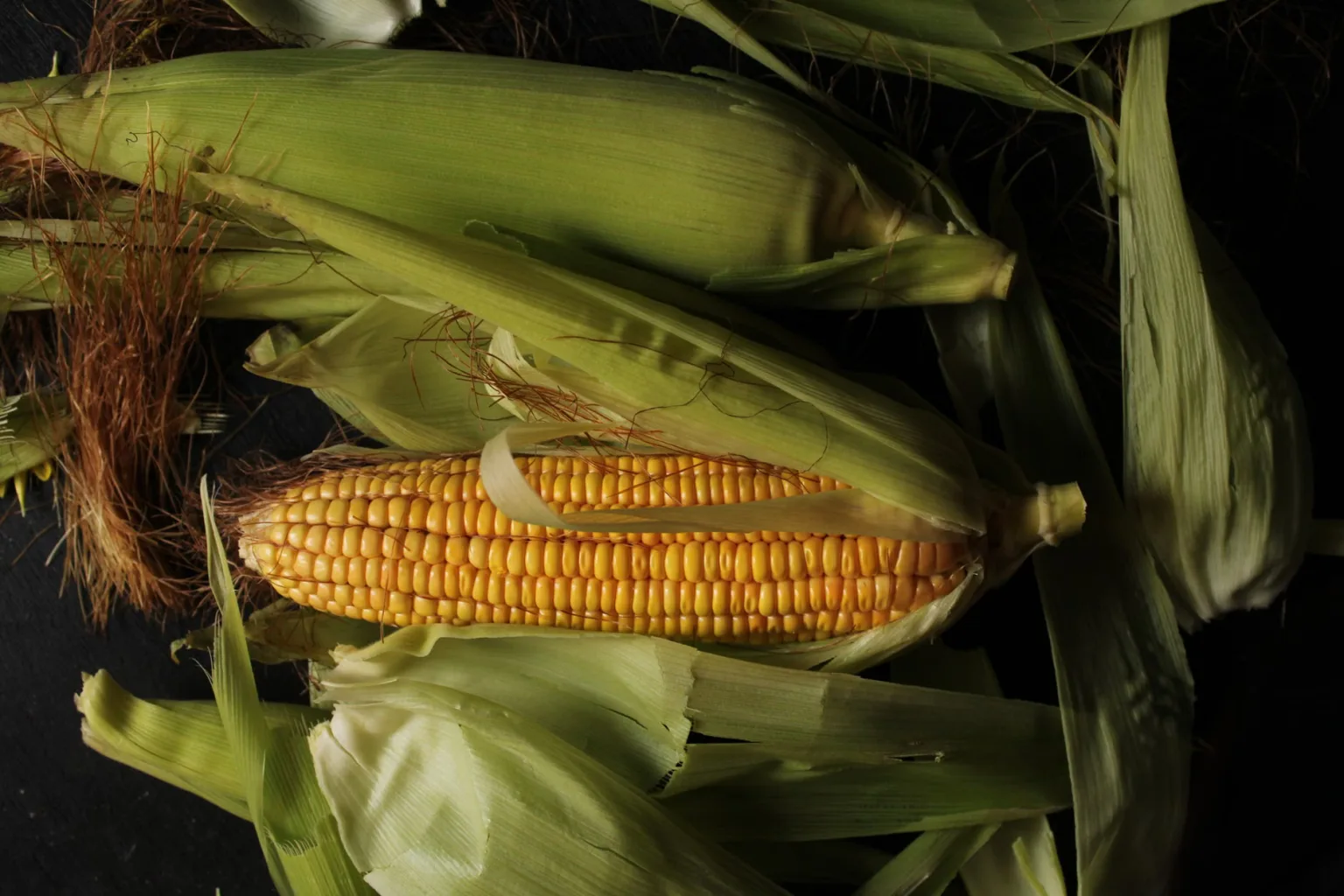
A corn cob is the ear of the corn plant, with rows of kernels attached to a central core. When it is served whole as a vegetable, it is usually sweet corn harvested while the kernels are still tender. The ear can be cooked and eaten as is, or the kernels can be removed and used in other dishes. This fresh, tender product is different from dry corn grown for milling or other grain uses: people buy fresh corn on the cob for its kernels and prepare it as part of a meal. It is sold with its green husks and silky strands, or already husked, and its color and sweetness can vary by type. Here, “corn on the cob” means fresh sweet corn, not canned kernels or a dried corn product.
When to use it
Choose corn on the cob when you want a simple side that can be served whole, or when you want freshly cooked kernels for salads, soups, stews, rice dishes, and sautés. Fresh sweet corn works well in casual meals and grilled spreads; you can also cut the kernels from an ear and fold them into another dish. Pick fresh ears when tender texture and the characteristic sweetness of sweet corn matter to the meal. If whole ears are unavailable or convenience is more important, frozen or canned kernels can replace fresh kernels in many recipes, though they do not provide the same whole-cob presentation.
How to use it
Remove the husks and silky strands shortly before preparing the corn. Rinse the ear under cold running water, and break or trim the stalk if you want an easier end to hold. To boil, place it in boiling water and cook until the kernels are tender; a university extension guide gives about 5–6 minutes as a guide, though size and maturity can vary. You can also steam, roast, grill, or brown the ear in a pan. Serve it whole, or let it cool enough to handle and cut the kernels from the cob for salads, soups, stews, rice dishes, or sautés. Add butter, salt, pepper, or spices to taste. When removing kernels, avoid scraping forcefully into the hard central core.
Flavour and texture
Fresh sweet corn usually tastes sweet and vegetal, with juicy, tender kernels when it is harvested and stored well. Sweetness and firmness can vary with variety, maturity, and time since harvest. Cooking softens the kernels; grilling or roasting adds browned, toasted areas. An older or less tender ear may be firmer and less sweet. Canned and frozen corn can taste and feel different from fresh corn, so the different forms should not be expected to be identical.
How to choose it
Look for ears with bright green husks and plump, evenly spaced kernels that appear firm. If the husks are intact, avoid ears with very dry or badly damaged leaves. When you can see the kernels, check that they do not look noticeably damaged or shriveled. Kernel color varies, so a good ear does not have to be yellow. Buy an amount you expect to use soon, and handle the ears gently to avoid crushing the kernels.
Storage
Refrigerate fresh ears and use them soon for the best quality. A university extension guide gives one to two days as a storage period: ears with husks can be kept uncovered in the refrigerator, while husked ears should be refrigerated tightly wrapped. Remove the husks and silk when you are ready to cook, then rinse the ear under cold running water. For longer storage, follow a tested freezing or canning procedure; home canning corn requires a pressure canner.
Substitutions
In salads, soups, rice dishes, and stews, replace the kernels from a fresh ear with sweet-corn kernels from a frozen or canned product, adjusting the amount to suit the recipe. Drain canned corn and cook frozen corn as directed on its package. These options do not replace the serving experience of a whole ear eaten from the cob. Flavor and texture can differ between fresh, frozen, and canned corn.
Common mistakes
Avoid choosing ears with very dry husks if you want kernels in good condition, and do not leave fresh ears unrefrigerated for several days when refrigeration is available. Remove the silk and rinse the ear before cooking. Do not assume every ear needs exactly the same cooking time: size and maturity matter. When cutting off kernels, avoid scraping forcefully into the hard central core.
Safety and allergens
Wash your hands and use clean surfaces and utensils. Remove the husks and silk, rinse the corn under cold running water, and refrigerate ears promptly if you will not use them. For home canning, use only a tested pressure-canning procedure; do not improvise the method.
Culinary uses
- Fresh vegetable served on the cob
- Sweet kernels for salads, soups, stews, rice dishes and sautés
Recommended techniques
- Boiling
- Grilling or roasting
- Steaming
- Cutting kernels from the cob
Pairs well with
- Butter
- Salt and black pepper
- Chili or other spices
- Salads, soups and rice dishes
Frequently asked questions
How do I choose fresh corn on the cob?
Look for green husks and plump, firm, evenly spaced kernels. Kernel color can vary by type.
How long can fresh corn on the cob be kept in the refrigerator?
A university extension guide gives one to two days. Keep it refrigerated and tightly wrap ears that have already been husked.
Can frozen or canned corn replace fresh corn on the cob?
Yes. Frozen or canned kernels work in many recipes, such as salads, soups, and rice dishes, but they do not replace a whole ear served on the cob.
Estimated nutrition
- Fat
- 0.71 g
- Saturates
- 0 g
- Carbohydrate
- 24.3 g
- Sugars
- 5.71 g
- Fibre
- 2.9 g
- Protein
- 2.86 g
- Salt
- 0 g
Sources and review
Automatically researched, cross-checked and validated content. Sources consulted:
- ¿Por qué la muerte es origen de miedos y tabúes? doi.org
- Food & Nutrition | Colorado State University Extension foodsmartcolorado.colostate.edu
- Maíz Dulce - KSRE Bookstore bookstore.ksre.ksu.edu
- Maíz: qué es, tipos y beneficios bonviveur.com
- Maíz dulce: propiedades, calorías, tipos y cómo utilizarlo en la cocina | Gastronomía & Cía gastronomiaycia.com
- Maíz dulce, el cereal sin gluten que puedes disfrutar como una deliciosa verdura: propiedades, beneficios y cómo cocinarlo en casa directoalpaladar.com
- Vamos a Conservar Alimentos: Maíz dulce extension.psu.edu
- Maíz dulce (Spanish) - National Center for Home Food Preservation nchfp.uga.edu
- "Determination of home techniques for storing and conserving food in th" by Marisol Caicedo Barrios scholarsarchive.byu.edu
- Harvest baby corn from your own garden this summer | Servicio de Extensión de OSU extension.oregonstate.edu
- Mazorca de maíz - Spend Smart Eat Smart spendsmart.extension.iastate.edu
- Fiesta del Maiz - Arizona Arts arts.arizona.edu
- Mazorca de maíz - Wikipedia, la enciclopedia libre es.wikipedia.org
- El maíz, un alimento muy versátil | Huercasa huercasa.com