- Category
- Vegetables
- State
- Fresh
- Usual unit
- leaves
What it is
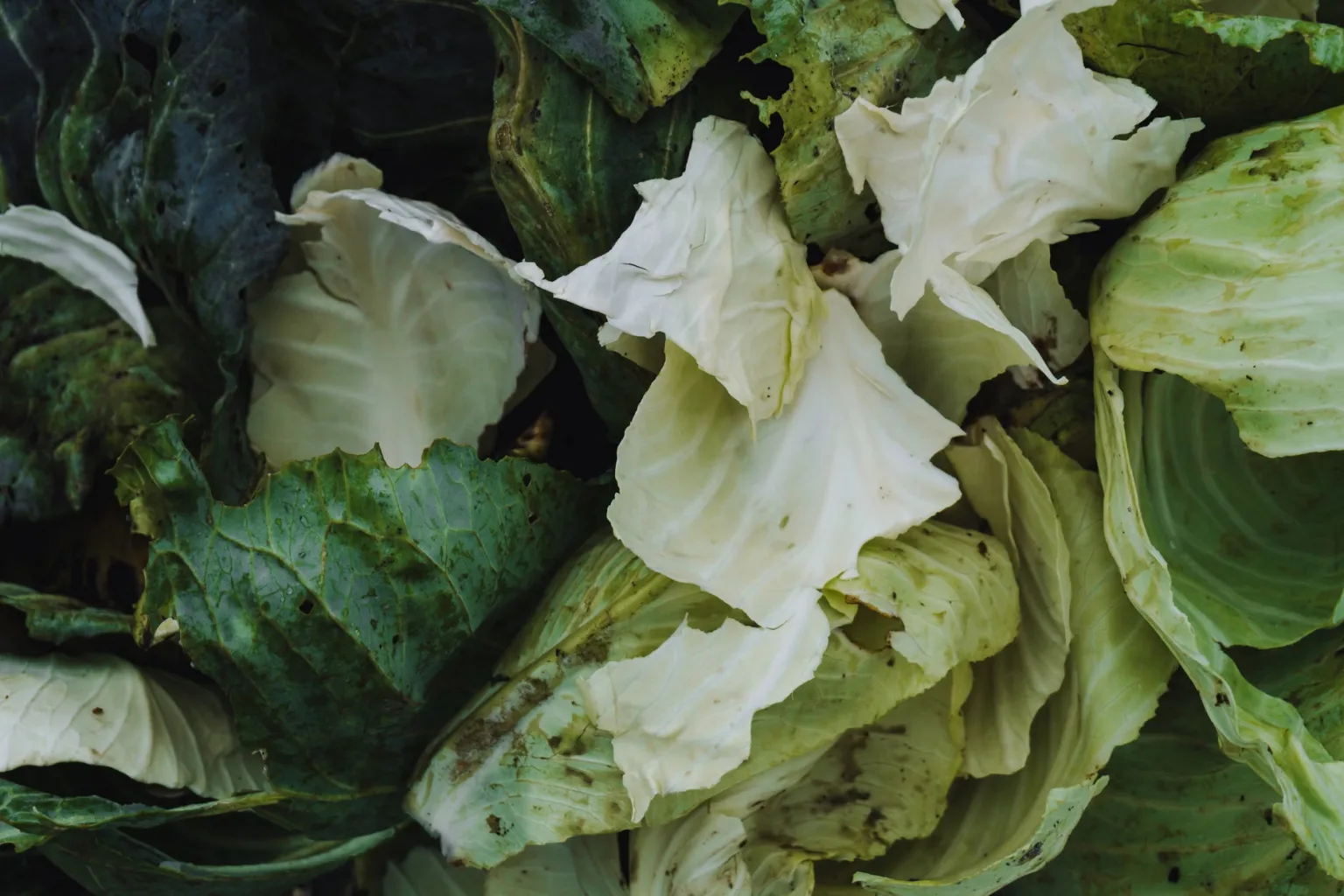
Large cabbage leaves are the broad, whole leaves of different cabbages, including green, curly and Chinese cabbage. They are both an ingredient and an edible wrapper for filled dishes. Their shape, thickness and flexibility vary by variety: some leaves are tender and easy to fold, while others have a firmer central rib. Use them whole, cut them into strips or arrange them as a lining for a mould. Trimming the toughest part of the rib can make a leaf easier to handle and fold.
When to use it
Use large leaves when you want to serve a filling in individual parcels, prepare vegetable, meat or fish rolls, or line a mould before adding a mixture. Whole leaves can also give structure to a preparation that will be turned out and sliced. If you do not need a leaf to hold a shape or enclose a filling, cut it into strips and add it to soup or a cooked vegetable dish.
How to use it
Select large, intact leaves and wash them before preparation. To make them easier to fold, blanch them until softened; the time depends on the variety and thickness. Drain them thoroughly and let them cool enough to handle. If the central rib is very firm, trim it in a V shape without cutting through the leaf. Put the prepared filling in the centre, fold in the sides and roll the leaf into a parcel. Alternatively, arrange whole leaves in a mould or slice them finely for soup. Briefly blanching the leaf does not, by itself, cook the filling inside.
Flavour and texture
Flavor and texture vary with the cabbage variety: leaves may be mild or more pronounced, smooth or curly, and the central rib is generally firmer than the surrounding leaf. Blanching makes leaves more flexible for folding; finely sliced leaves blend readily into soups and cooked vegetable dishes.
How to choose it
Choose a cabbage with several large, intact, flexible leaves if you plan to make wraps or line a mould. Look for leaves without extensive tears or visibly damaged areas. Chinese cabbage leaves can be particularly tender and easy to handle, though large leaves from common or curly cabbage can also work.
Storage
Keep fresh cabbage refrigerated and separate leaves only when you are ready to use them, so the rest of the head helps protect them. If you have already removed the leaves, keep them refrigerated and protected from dirt. Wash them before preparation and discard any that are visibly spoiled; no specific storage duration is established here.
Substitutions
One large-leaf cabbage variety can stand in for another, including Chinese, common or curly cabbage. Choose leaves that are broad and intact. Thicker leaves may need more preparation to fold, while smaller leaves may not hold the same amount of filling.
Common mistakes
Do not force a cold, stiff leaf to fold, as it may tear. Trim the central rib if it makes handling difficult, and drain leaves well so the filling does not become watery. Do not assume that briefly blanching the cabbage will cook the filling too.
Safety and allergens
Wash leaves before eating or preparing them, and use clean hands and utensils. For filled leaves, make sure the filling is cooked or otherwise sufficiently prepared before wrapping; blanching the leaf does not necessarily cook the inside.
Culinary uses
- Wrapping fillings in individual parcels
- Lining a mould for a layered vegetable, meat or fish preparation
- Adding sliced leaves to soups and cooked vegetable dishes
Recommended techniques
- Blanching to soften whole leaves for shaping
- Trimming the thick central rib to make leaves easier to fold
- Rolling or folding leaves around a prepared filling
- Shredding leaves into fine strips for soup
Pairs well with
- Vegetable fillings
- Cooked meat fillings
- Fish and seafood fillings
- Rice and noodles
- Beans, lentils or tofu
Frequently asked questions
Which kinds of cabbage leaves work for wraps?
Large leaves from common cabbage, curly cabbage or Chinese cabbage can work. Their shape and flexibility vary by variety.
Do I need to blanch leaves before filling them?
Blanching can soften leaves and make them easier to fold. Check that they are pliable and drain them well before adding the filling.
Can I use cabbage leaves in soup?
Yes. Stack, roll and finely slice the leaves, then add them to soup or another cooked vegetable dish.
Sources and review
Automatically researched, cross-checked and validated content. Sources consulted:
- ¿Por qué la muerte es origen de miedos y tabúes? doi.org
- The Essential Glossary of Cooking Terms for the Culinary Arts - Escoffier escoffier.edu
- Tipos de coles y cómo cocinar esta gran verdura del invierno (con receta de 'trinxat' incluida) huleymantel.com
- Nutrition After Your Transplant - Health Online healthonline.washington.edu
- UCCE efforts improve quality of and demand for fresh ... ucanr.edu
- EFNEP Hispanic Heritage Recipes | Community Nutrition | Extension/College of Agriculture, Health & Natural Resources | University of Connecticut communitynutrition.cahnr.uconn.edu
- Vegetative plant parts | Servicio de Extensión de OSU extension.oregonstate.edu
- The Happy Kitchen: Community Designed Cooking Classes digital.library.unt.edu
- Para la ciudadanía aesan.gob.es
- Vamos a Conservar Alimentos: Fermentación— Col Fermentada (Chucrut) y Pepinillos extension.psu.edu
- - YouTube youtube.com
- HOJAS DE COL RELLENAS - Dietista nutricionista en Pamplona, Adriana Oroz adrianaoroznutricion.com
- Col rizada | HerbaZest herbazest.com
- Cocinar las hojas de la col | Consumer consumer.es