- Category
- Fruit
- State
- Dry
- Usual unit
- cup
What it is
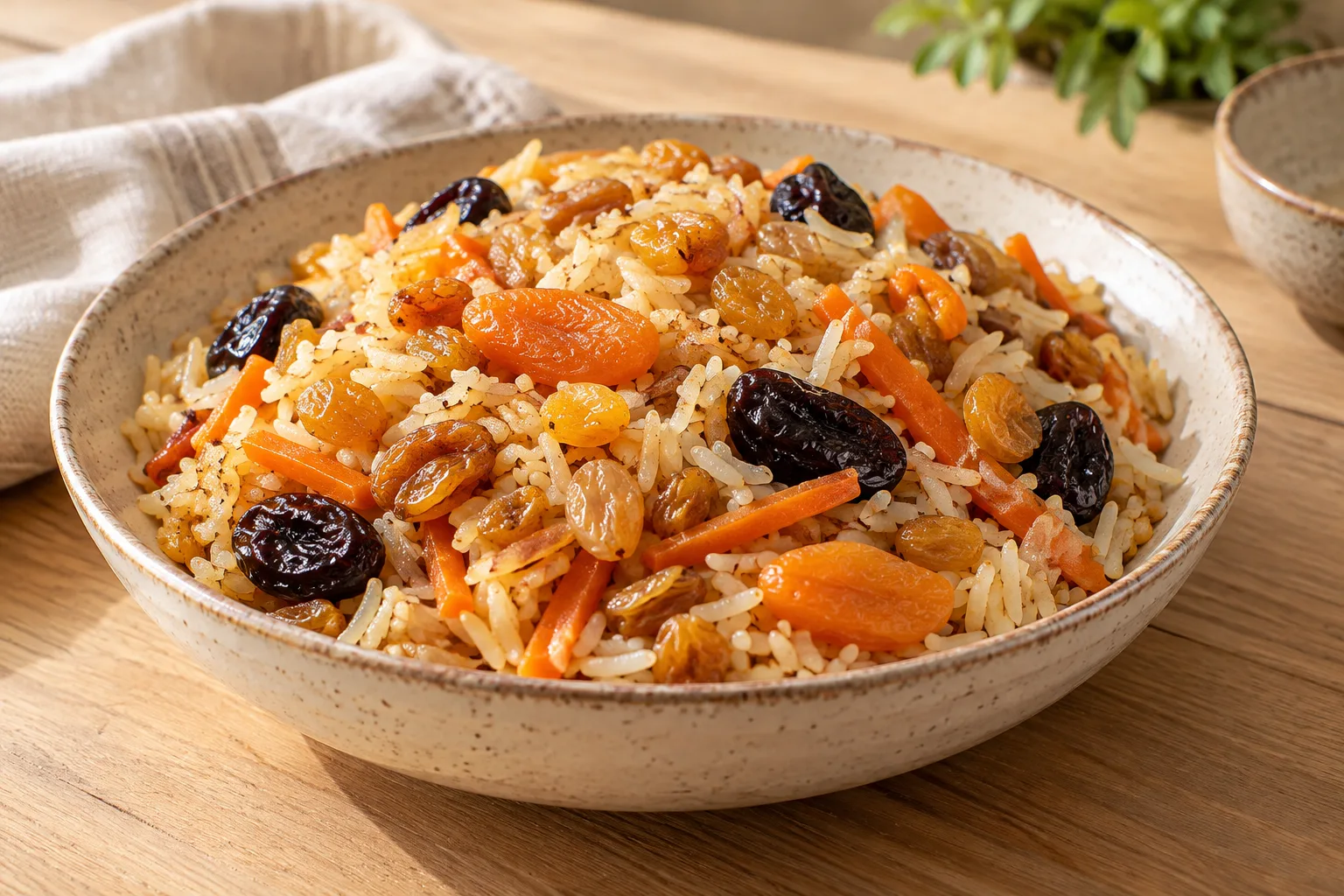
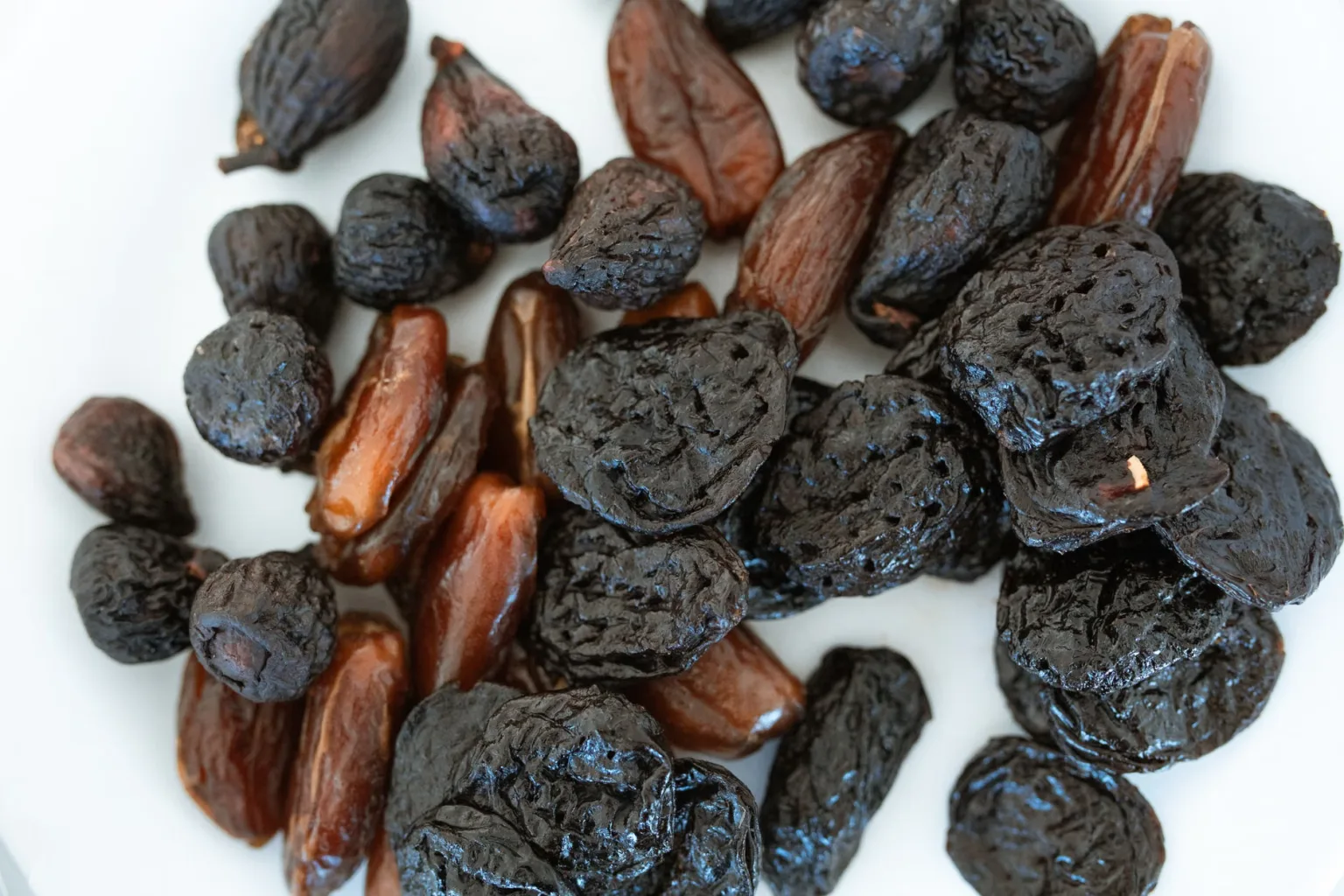
Prunes are plums from which much of the water has been removed through drying. The result is a dry fruit with a more concentrated sweetness and a different texture from a fresh plum; it may be tender and fleshy or firmer and chewier, depending on the product. Prunes are sold with or without pits. They can be eaten as they are, chopped into a recipe or rehydrated for a softer, juicier texture. Their natural sweetness works in both sweet dishes and sweet-savoury combinations. They are not interchangeable with fresh plums without adjustment: their lower moisture content affects how they behave in batters, stews and other recipes.
When to use it
Use prunes when you want fruity sweetness and a chewy bite, or a sweet contrast in a savoury meat dish. They work particularly well with game, poultry and pork, and can also be served on their own or with nuts, toasted cereals and other fruit. In desserts, chopped prunes can add sweet pieces to cakes, fruit preparations or cereal mixes. If a recipe needs a softer, juicier fruit, rehydrate them before adding; if the dish contains plenty of liquid or they will cook in a sauce, you can add them without soaking first.
How to use it
Check whether the prunes contain pits and remove them before chopping or serving when necessary. Eat them as they are, cut them into pieces for a batter, or add them to a fruit or meat preparation. For a softer texture, soak them in a liquid that suits the recipe; alternatively, warm them gently while covered with liquid until softened. The soaking liquid can contribute flavour to a sauce if it suits the dish. You can also simmer prunes gently in a light syrup or add them to a stew. Add them with the desired sweetness and texture in mind, and do not assume they will replace fresh plums without changing the recipe's moisture.
Flavour and texture
Prunes taste sweet and fruity, with a more concentrated character than fresh plums. Their flesh is often tender and fleshy, though some pieces are firmer or chewier; moisture and texture vary by product. Rehydrating makes them softer and juicier. In savoury dishes, their sweetness provides a contrast to meat and other salty ingredients.
How to choose it
Choose an intact, sealed package with a clearly visible use-by or best-before date. The fruit is often dark, fleshy and slightly glossy, but size and texture vary by product. If you want to use them straight from the pack, check whether they are pitted and read the ingredient list to see whether anything else has been added. Avoid packages that are damaged or show obvious signs of moisture or deterioration.
Storage
Keep prunes in a tightly closed container and follow the storage directions on the package, as they can differ between products. A cool, dry place is suitable when the label allows it. If the package says to refrigerate after opening, follow that direction and reseal the pack to limit exposure to air. Check their appearance and smell before use; discard them if there are clear signs of deterioration.
Substitutions
Fresh plums can provide a similar fruity note, but they contain more moisture and have a different texture; adjust the recipe's liquid and cooking as needed. In rice pudding or another dessert that can accommodate dried fruit, raisins can serve a similar role, though their flavour and texture are not the same. No swap is exact: consider whether the dish depends on the prunes' concentrated sweetness or their tender consistency.
Common mistakes
Do not treat prunes as though they contain as much moisture as fresh plums: they may make a recipe drier or sweeter than expected. Check for pits before serving or chopping. If you want a very soft texture, adding them dry to a quick-cooking dish may not be enough; soak them first or allow them to soften during cooking. Taste before adding more sweetener.
Safety and allergens
Check the package and follow its storage directions. Do not eat the product if the package is damaged or the prunes show clear signs of deterioration.
Culinary uses
- Sweet ingredient in desserts and compotes
- Sweet-and-savoury ingredient for meat dishes
- Snack or addition to cereals and fruit mixes
Recommended techniques
- Use as-is, chopped or whole
- Rehydrate in a liquid before adding when a softer, juicier texture is wanted
- Simmer gently in a preparation such as a light syrup
Pairs well with
- Game, poultry and pork
- Nuts and toasted cereals
- Other fruit and savoury foods
Frequently asked questions
Are prunes fresh plums?
Prunes are dried plums, so they have less moisture and a more concentrated sweetness and texture than fresh fruit.
Do I need to rehydrate prunes before cooking?
Not always. Add them directly to dishes with enough liquid or cooking time; soak them first if you want them softer and juicier.
What foods pair well with prunes?
They add a sweet contrast to game, poultry and pork. They are also used in desserts and can be served with nuts, toasted cereals and other fruit.
Estimated nutrition
- Fat
- 0 g
- Saturates
- 0 g
- Carbohydrate
- 65 g
- Sugars
- 32.5 g
- Fibre
- 5 g
- Protein
- 2.5 g
- Salt
- 0.03 g
Sources and review
Automatically researched, cross-checked and validated content. Sources consulted:
- Client Challenge doi.org
- The Essential Glossary of Cooking Terms for the Culinary Arts - Escoffier escoffier.edu
- Arroz con leche - Wikipedia, la enciclopedia libre es.wikipedia.org
- Nutrition After Your Transplant - Health Online healthonline.washington.edu
- Aplicaciones de la Biotecnología en Seguridad Alimentaria aesan.gob.es
- Nutrition Education Program extension.purdue.edu
- Comité Científico aesan.gob.es
- Ciruela- Gastronomía - Región de Murcia Digital regmurcia.com
- Motivos por los que tomar ciruelas pasas según una nutricionista - Revista Mia miarevista.okdiario.com
- ✅ Las #ciruelas pasas... - Oftalvist. Clínicas oftalmológicas google.com
- ¿Por qué comen nuestros muertos? | OpenAlex openalex.org
- Ciruelas Pasas Guisadas | Cook for Your Life cookforyourlife.org
- Cómo hacer ciruelas pasas en casa paso a paso psbproduccionvegetal.com