Documentary synthesis prepared with AI assistance. It does not replace specialist review or certify kitchen testing. · Updated 31 October 2026
Coast, rivers and forests
Brunei occupies a small stretch of Borneo’s northern coast beside the South China Sea. Its territory is divided into two parts by Malaysia, and the eastern district of Temburong is associated with rivers and forested surroundings. These settings provide useful context for the country’s foodways, but they do not define a single uniform diet: urban food stalls, household cooking and community traditions all contribute to what people eat.
Rice and noodles are familiar foundations of meals, accompanied by fish, chicken, meat or vegetables. Coconut and chilli recur in flavouring, while preparations such as ambuyat and nasi katok offer recognisable points of entry into Brunei’s food culture. Many dishes also belong to a wider Southeast Asian repertoire. Their presence in Brunei is best understood through local ways of making and serving them, rather than by treating every shared preparation as exclusive to one country.
A cuisine shaped by exchange and locality
Brunei’s food culture reflects the connections of Southeast Asia. Descriptions of its cuisine identify Malay, Chinese and Indian influences, alongside close culinary similarities with neighbouring countries. Rice and noodles, coconut, chilli and preparations familiar across the region appear in this shared landscape. These connections are not evidence that any one community or country owns every dish: recipes travel, change in kitchens and stalls, and acquire meaning through the ways people prepare and eat them locally.
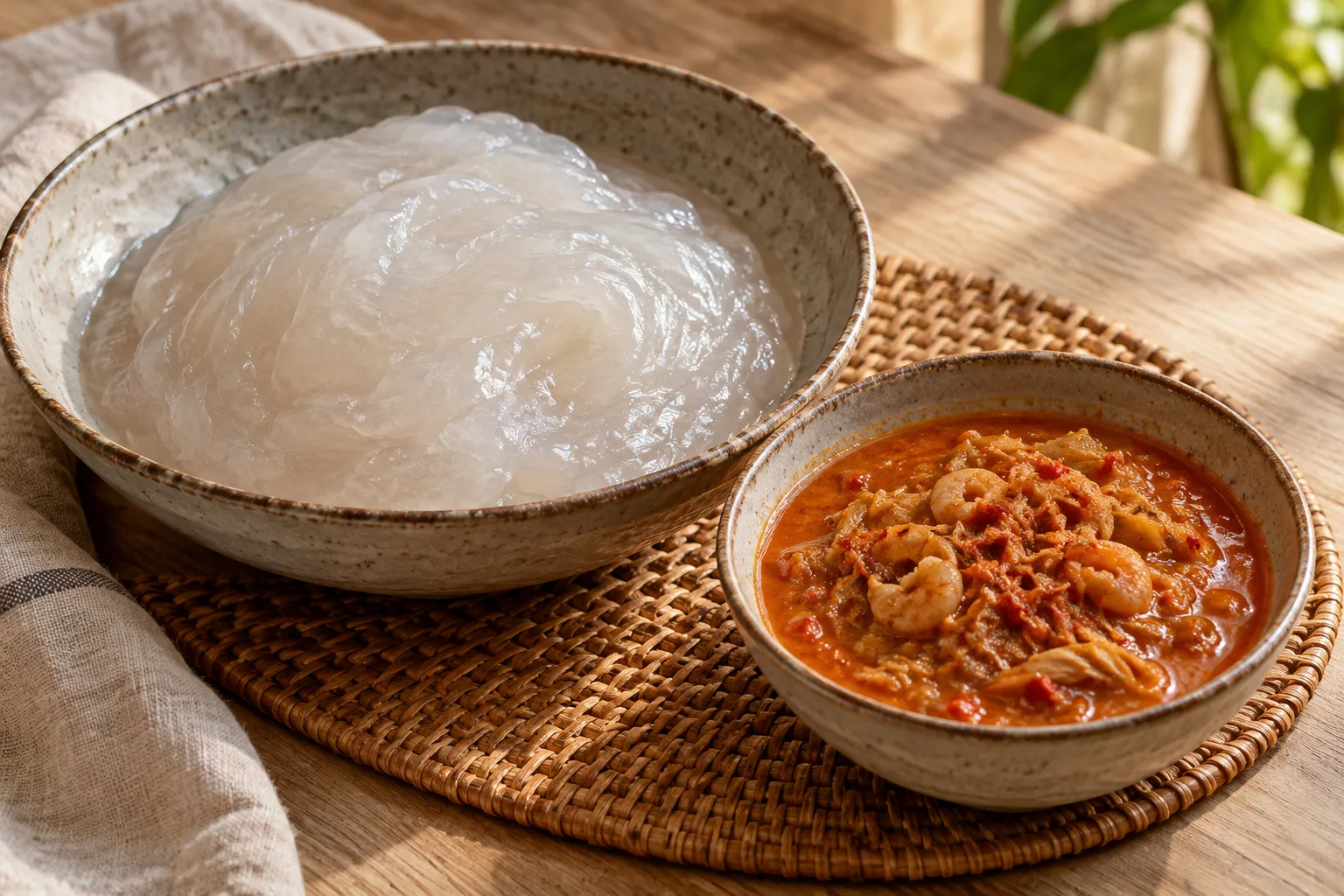
Ambuyat stands out as a preparation associated particularly with Brunei. Its base is starch from the sago palm, transformed with hot water into a glossy, elastic mass. Rather than attaching an unverified single origin story to the dish, it is more useful to note its distinct ingredients and serving style. In Temburong, food practices are also presented as part of local cultural heritage. A community culinary experience there shares cooking methods and ingredients with visitors, linking contemporary food tourism to the transmission of local knowledge.
Rice, sago, coconut and local ingredients
Rice is a staple, served plainly or in preparations such as nasi katok and nasi lemak. Noodles provide another common base. Fish and seafood, chicken and beef feature in descriptions of meals, while vegetables appear as accompaniments or in their own dishes. The country’s culinary landscape is diverse; these ingredients should not be taken to describe every household or community in the same way.
Coconut milk and chilli are widely noted flavouring ingredients. Ginger, garlic, galangal, turmeric and lemongrass also appear in descriptions of regional cooking associated with Brunei. Sago starch, obtained from the sago palm, gives ambuyat its characteristic texture. In Temburong, wild paku pakis fern shoots are gathered as part of a documented culinary outing. Rice flour, glutinous rice and palm sugars are among the ingredients used in kuih and other sweets. A specific example is kuih cincin, made with red-palm and brown sugar and rice flour before frying. These ingredients invite many transformations, but they do not all belong in one dish.
Mild starch, vivid sauces and varied textures
Ambuyat is mild in flavour, so the sauce and accompanying dishes provide much of the contrast. Its texture is central to the experience: the sago becomes sticky, stretchy and elastic when mixed with hot water. The sauce known as cacah can be sharp or pungent, with versions described as combining chilli with fermented shrimp products; some include tempoyak, fermented durian. These bold tastes stand against the relatively neutral starch rather than being built into it.
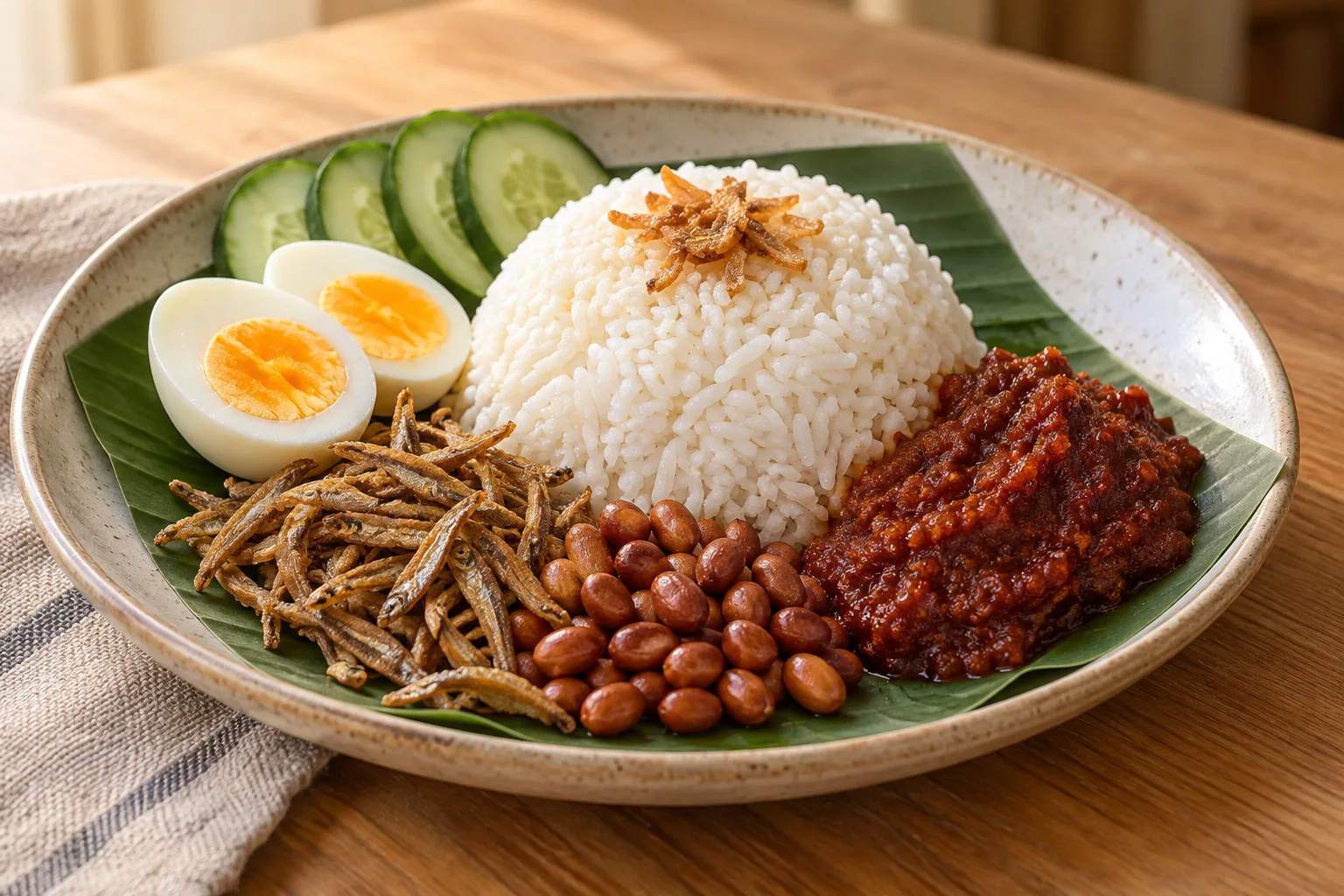
Other Bruneian meals bring together different kinds of richness and heat. Coconut milk lends rice or sauces a creamy quality, while sambal can contribute pronounced chilli flavour. Nasi lemak, a dish shared with neighbouring food cultures, pairs coconut rice with accompaniments such as anchovies, peanuts, cucumber and egg; the exact combination can vary. Kuih offer another range of sensations, from tender or chewy rice-based sweets to the crisp exterior of a fried ring-shaped kuih cincin. The overall picture is one of contrasts, not a single national level of sweetness or spice.
Gatherings, transmission and community foodways
Food traditions are sustained through households and community occasions, as well as through opportunities to prepare and share dishes beyond their usual setting. Some heritage foods associated with particular families or communities are made mainly for family events or kenduri, communal feasts, and may be less visible in everyday food markets. Brunei’s gastronomy events and community participation have been used to bring less familiar dishes to wider attention and to encourage younger people to learn the stories and skills attached to them.
Kuih are part of a broader Southeast Asian food vocabulary and appear in festivities including Hari Raya and Chinese New Year. That shared presence does not mean every type has the same role or preparation in Brunei. A more locally specific example comes from Temburong, where a community culinary experience includes Iban-style chicken cooked in bamboo, gathering paku pakis, and learning to make wajid Temburong. Such activities make the transfer of knowledge visible: participants encounter particular ingredients, methods and local explanations, rather than an abstract idea of a single national cuisine.
Stirring starch, cooking in bamboo and shaping sweets
Ambuyat shows how a simple ingredient changes through careful handling. Sago starch is combined with hot water and stirred until it becomes glossy and elastic. It is served with cacah and other dishes, and a two-pronged bamboo utensil called a chandas can be used to gather and wind a portion. The technique and the utensil belong to this particular way of serving ambuyat; they are not general features of every Bruneian meal.
Other documented preparations call for different methods. In Temburong’s culinary experience, chicken is cooked inside bamboo, and wajid is cooked and wrapped as a glutinous-rice sweet. Kuih demonstrate further variation: kuih cincin is shaped as a ring, coated with rice flour and deep-fried, while many Southeast Asian kuih are made from rice or glutinous-rice ingredients and are steamed rather than baked. These methods show how a dish’s form and texture depend on its ingredients and preparation. They are examples from a varied repertoire, not a checklist of techniques used in every household.
Food stalls, accompanied dishes and shared meals
Markets and food stalls make prepared meals and snacks part of everyday eating. Bandar Seri Begawan’s Gadong Night Market is one documented place to encounter food for sale; food markets are also described in other localities. Nasi katok—rice served with fried chicken and sambal—is a straightforward, widely available meal found at restaurants, markets and food stands. Its place in the food landscape rests on that accessibility, not on a claim that it belongs only to ceremonial occasions.
Ambuyat is served with a sauce and other dishes, which may include vegetables, fish or meat. The starch and its accompaniments together form a meal of contrasting flavours and textures. Nasi lemak offers a different arrangement: coconut rice alongside items such as sambal, anchovies, peanuts, cucumber and egg, with additional accompaniments in some versions. Kuih may be eaten as snacks and can appear at family or festive gatherings. These examples show more than one way of eating in Brunei: a quick meal bought from a stall, a starch served with several dishes, or sweets shared on an occasion. What appears on the table varies with the preparation and setting.
A glossary of Bruneian food terms
These terms name specific ingredients, dishes or ways of serving food. Some also circulate beyond Brunei, so their meanings are best understood through the preparation described here.
- Ambuyat: A sticky, elastic preparation made by mixing sago starch with hot water. It has a mild flavour and is served with sauce and other dishes.
- Cacah: A dipping sauce for ambuyat. Descriptions include versions with chilli and fermented shrimp ingredients; some contain tempoyak.
- Chandas: A two-pronged bamboo utensil used to wind up a portion of ambuyat.
- Nasi katok: Rice served with fried chicken and sambal, sold at Bruneian food stalls and other outlets.
- Nasi lemak: Rice cooked with coconut milk and served with accompaniments such as sambal, anchovies, peanuts, cucumber and egg. It is shared across regional food cultures.
- Kuih cincin: A ring-shaped sweet made with red-palm and brown sugar and rice flour, then deep-fried.
- Wajid Temburong: A local example of wajid, a sweet made with glutinous rice and included in a documented community culinary experience in Temburong.
One country, many cuisines
Temburong
Brunei’s eastern district is documented through its river and forest setting and a community culinary experience that shares local food practices. Participants travel upriver, gather wild paku pakis fern shoots, and learn to prepare bamboo-cooked chicken associated with the Iban community, as well as wajid Temburong, a glutinous-rice sweet. Temburong was historically more difficult to reach from Bandar Seri Begawan by land; a bridge has made access easier and helped connect urban residents with local traditions.
Cook