Documentary synthesis prepared with AI assistance. It does not replace specialist review or certify kitchen testing. · Updated 11 November 2026
A country read through its food bases
Ghana’s foodways are easier to understand as a meeting of distinct preparations than as a single national menu. Across the country, meals often pair a substantial base with soup, stew, fish, or another accompaniment. The base may be a fermented maize preparation, a soft cooked dough, rice and beans, or pounded roots. Each has its own texture and method; the names should not be treated as interchangeable simply because several are served with sauces.
The coast is closely associated with fishing and with maize preparations such as kenkey, while accounts of waakye point to northern connections as well as its broader popularity. Other well-documented foods, including fufu and yam eto, show how roots and plantain can be cooked, pounded, and served in very different ways. These are useful routes into the country’s culinary diversity, not strict boundaries: dishes travel, and their ingredients and accompaniments vary.
A Ghanaian meal may bring together the mild, dense character of a starch-rich base and the sharper, hotter or more savory notes of a soup, pepper sauce, or fish. In kenkey and banku, fermentation contributes a recognizable sourness. In waakye, the color and flavor come from cooking rice and beans with plant material. In eto, mashed yam or plantain is enriched with oil and served with accompaniments. Following these transformations reveals more than a list of famous dishes: it shows how preparation, texture, and pairing shape the meal.
Ingredients, exchange and culinary change
Ghanaian food reflects long histories of movement and exchange, but individual dishes should not be assigned a precise origin when the available evidence does not establish one. Maize and cassava are important in modern preparations such as banku and kenkey. Historical accounts of banku note that both crops reached Africa after transatlantic contact, and suggest that earlier cereal preparations may have used millet or sorghum. The comparison is a reminder that familiar recipes are shaped by changing ingredients as well as inherited methods; it does not establish a single, continuous recipe from an earlier grain dish to present-day banku.
Peanuts provide another clear example of an ingredient with a history of movement. They originated in South America and became widely adopted in African cooking after reaching the continent through trade. In Ghana, groundnuts are ground into a rich soup base, used with ingredients such as onion, tomato and pepper, and paired with fufu or rice balls. Their current place in the pantry is therefore part of a broader history of exchange, rather than evidence that the crop originated in Ghana.
The movement of dishes is also visible in everyday eating. Waakye is associated with northern Ghana in accounts of its history, yet is described as widely eaten across the country. Kenkey is linked with Ga and Fante communities, with different names and wrapping practices associated with those traditions. These examples suggest a history of culinary circulation, while preserving distinctions in language, preparation, and community practice. They offer a more careful account than claiming that one food, or one community, represents the whole national cuisine.
Grains, roots, legumes and fish
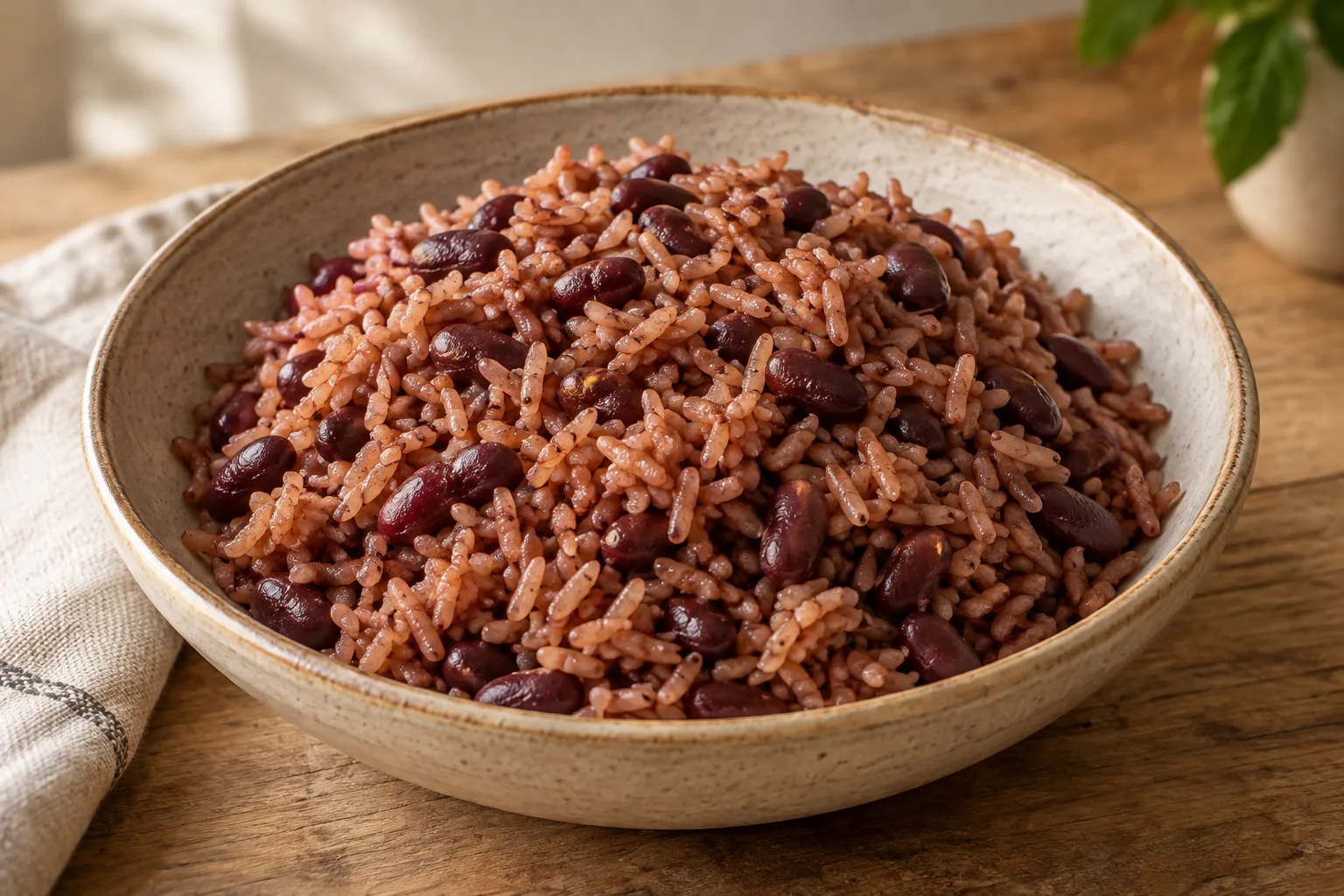
Maize is central to several Ghanaian bases. It is fermented for kenkey and, often alongside cassava, for banku. Cassava also appears as gari, a coarse dried granule served with other foods. Rice and beans form the core of waakye: black-eyed peas are common in recipe accounts, and the cooked grains take on a reddish-brown color when prepared with waakye leaves, commonly identified as sorghum leaf sheaths. Recipes and descriptions vary on the exact beans or leaves used, so those variations should be understood as versions rather than as a universal formula.
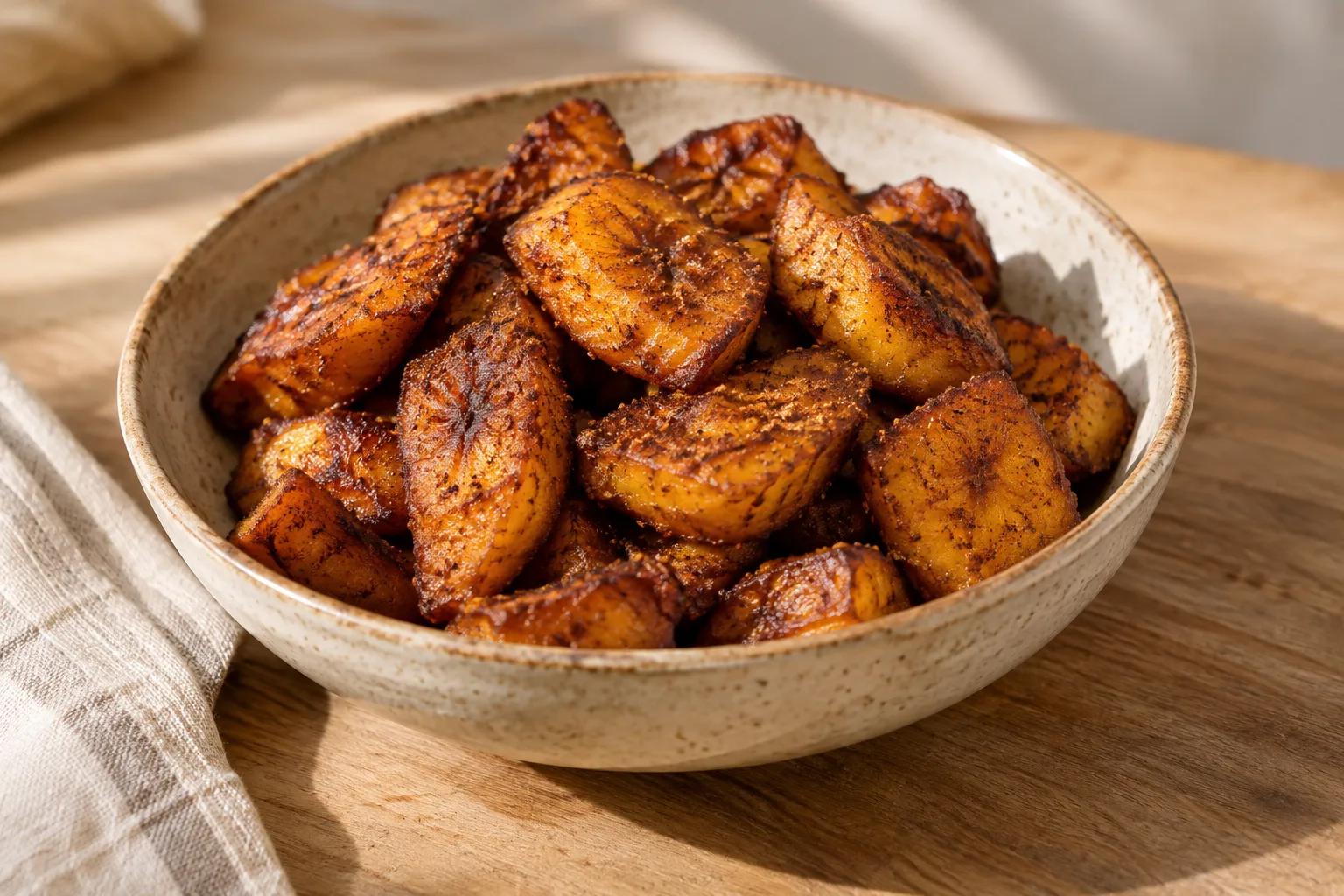
Yam, cassava, and plantain offer different routes to a soft or firm starch base. Boiled yam can be pounded for eto; cooked roots and plantain can be pounded together for fufu. Ripe plantain is also cut, seasoned, and fried as kelewele, while less ripe plantain is used in other preparations. Groundnuts bring a different kind of substance: ground into a paste or soup base, they make nkate nkwan, a dish commonly paired with fufu or omo tuo.
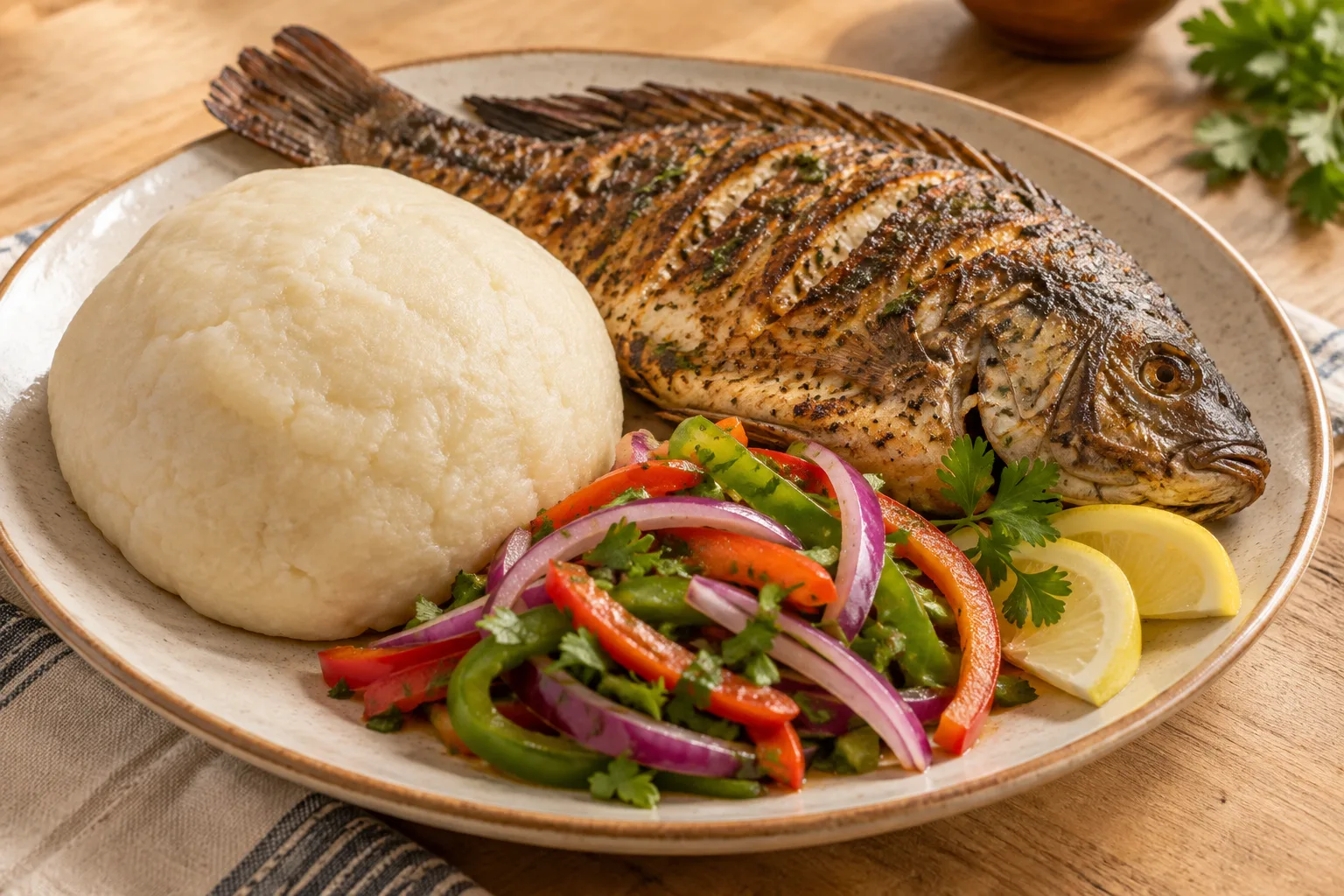
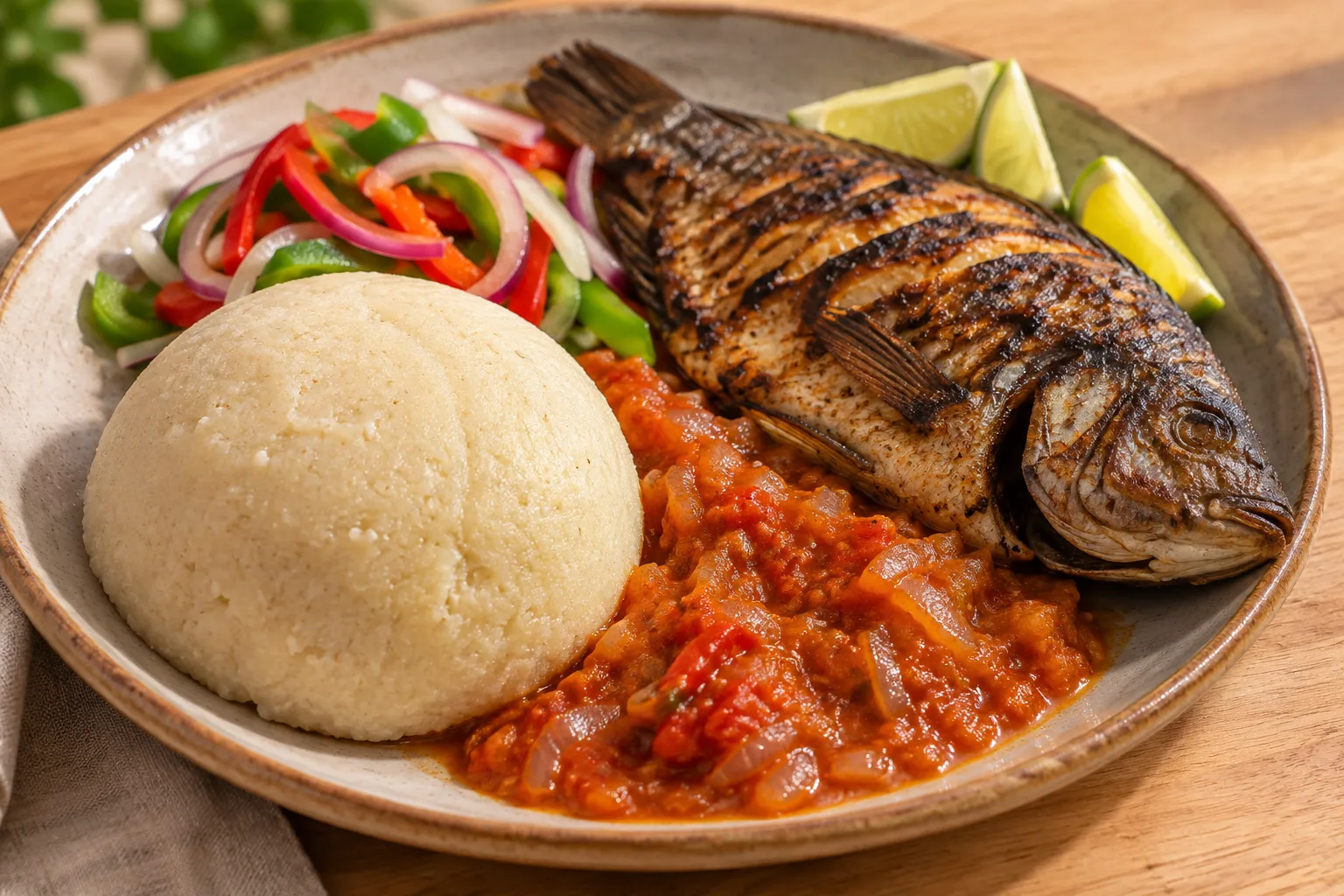
Fish is an important partner to coastal maize dishes. Fried fish is a familiar accompaniment to kenkey, and grilled tilapia is served with banku in a well-known pairing. Fish may be fresh, smoked, or dried in dishes and sauces. Pepper, tomato, onion, and ginger contribute to sauces and stews; shito adds a distinctive pepper-and-fish dimension to many plates. Kelewele draws on ginger and hot pepper, while palm oil appears in preparations such as red red and some versions of eto. Together, these ingredients support meals that balance starch, savory sauce, heat, and contrasting textures.
Sourness, heat and contrasting textures
Fermentation gives kenkey and banku much of their distinctive character. Kenkey, made from fermented maize, has a sour edge that pairs naturally with fish and pepper. Banku is also associated with an acidic flavor, often from fermented maize and cassava dough. Both are dense, but they are not the same preparation: their ingredients, shaping, and cooking differ. The acidity is one part of the meal’s balance, set against the savory richness of fish or stew and the fresh bite of peppers and onions.
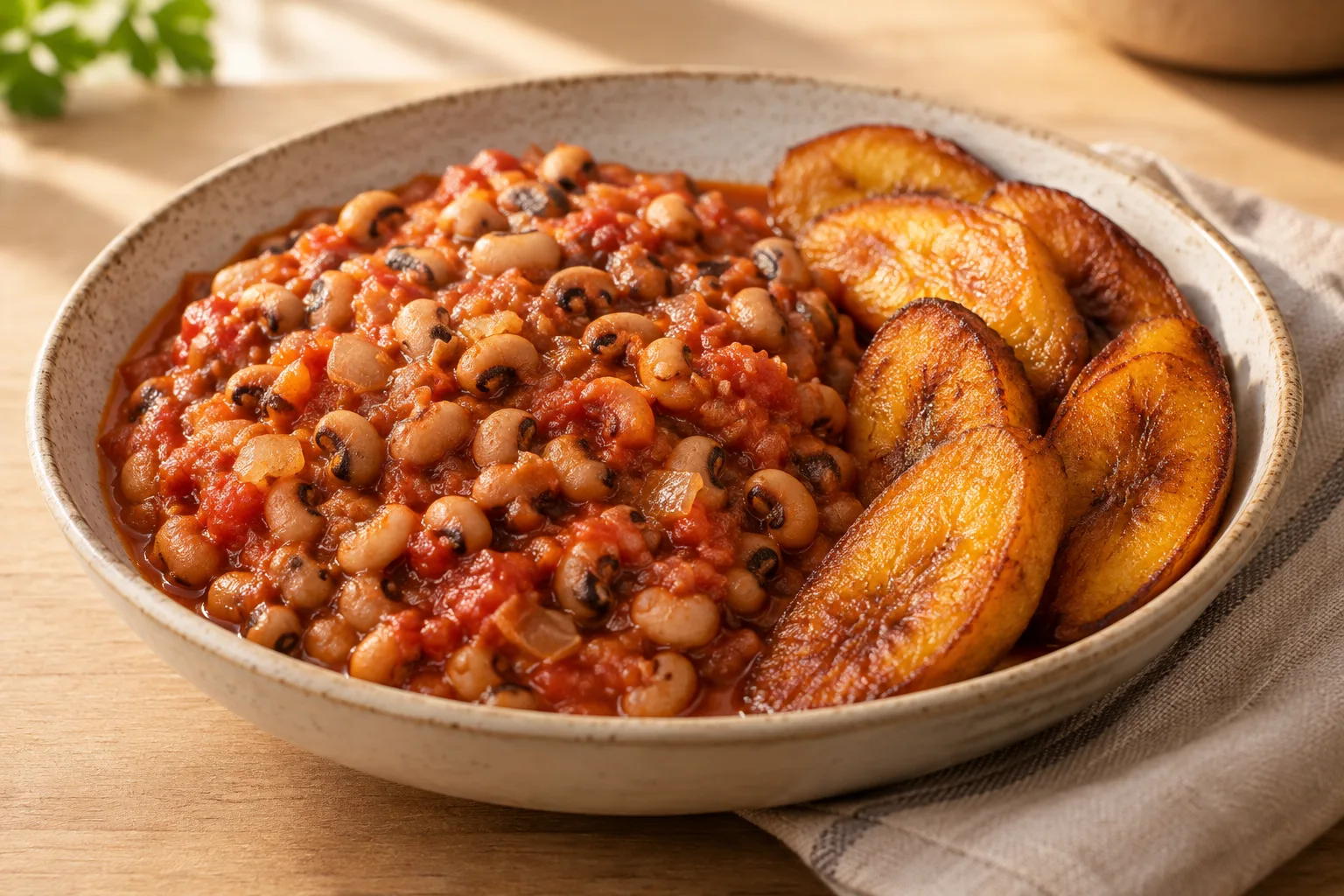
Other Ghanaian foods build contrast in different ways. Waakye combines tender rice and beans, with waakye leaves giving the cooked mixture its characteristic deep reddish-brown appearance. It is often served with several accompaniments rather than as a complete plate on its own. Kelewele contrasts sweet ripe plantain with ginger and pepper; its browned, fried surfaces give way to a soft interior. In red red, a tomato-based sauce and beans meet fried plantain, with palm oil commonly contributing color and richness.
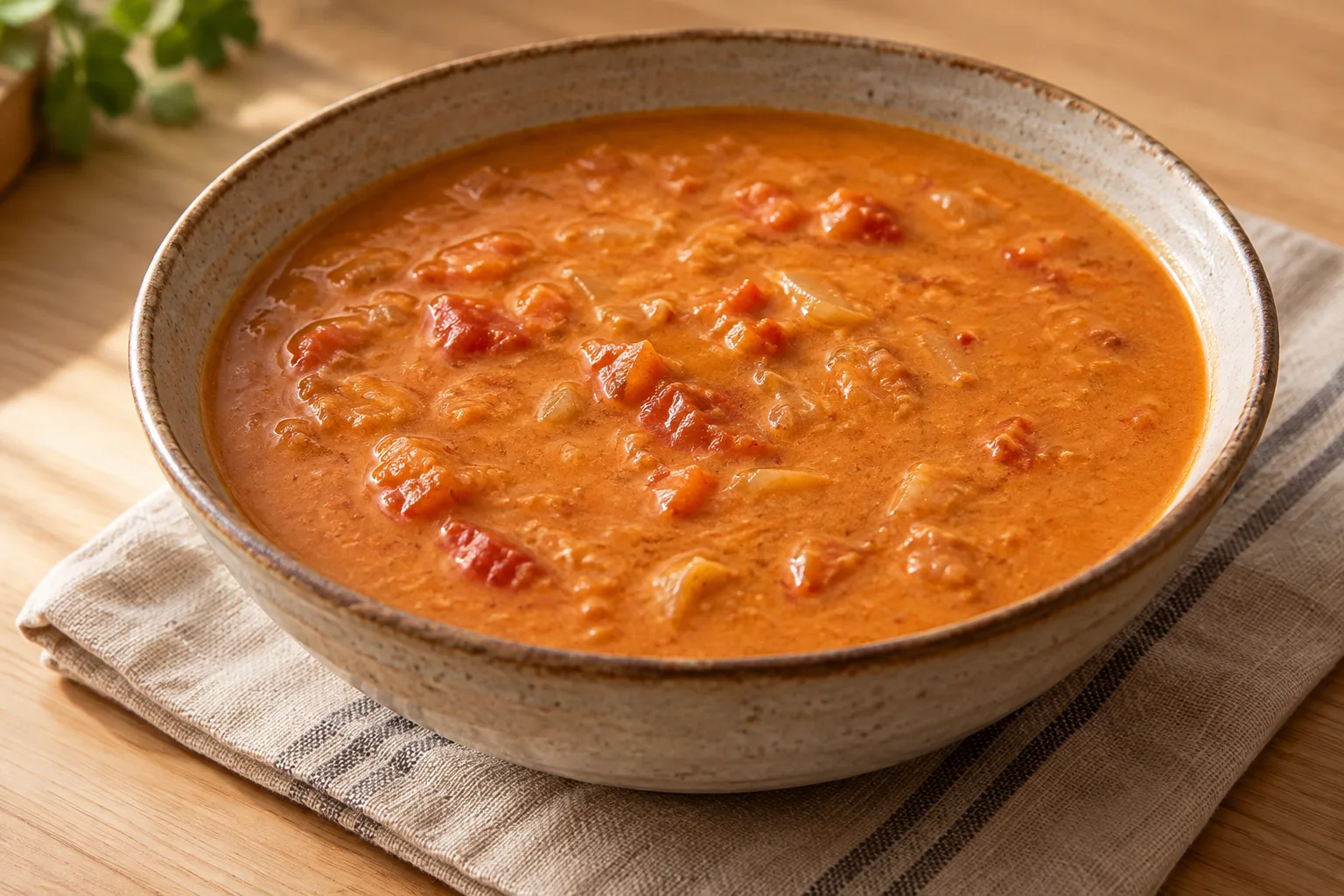
Groundnut soup has a thick, rounded quality from the peanut base, while fufu or omo tuo gives it a soft starch to scoop or accompany it. These pairings show how texture matters as much as seasoning: a smooth or elastic base sits alongside soup, a crisp fried element, or fish with a firmer bite. Heat levels and ingredients differ between cooks and dishes. Pepper is prominent in many versions, but no single level of heat or one fixed set of seasonings defines every Ghanaian meal.
Everyday food and occasions of sharing
Food traditions in Ghana include everyday meals as well as dishes associated with particular occasions. Waakye is widely described as a popular street food, eaten at different times of day and assembled with a choice of accompaniments. A serving may combine rice and beans with stew, pepper sauce, egg, fish, fried plantain, or gari. The range of additions makes the dish adaptable to appetite and availability, and helps explain why a familiar base can yield very different plates.
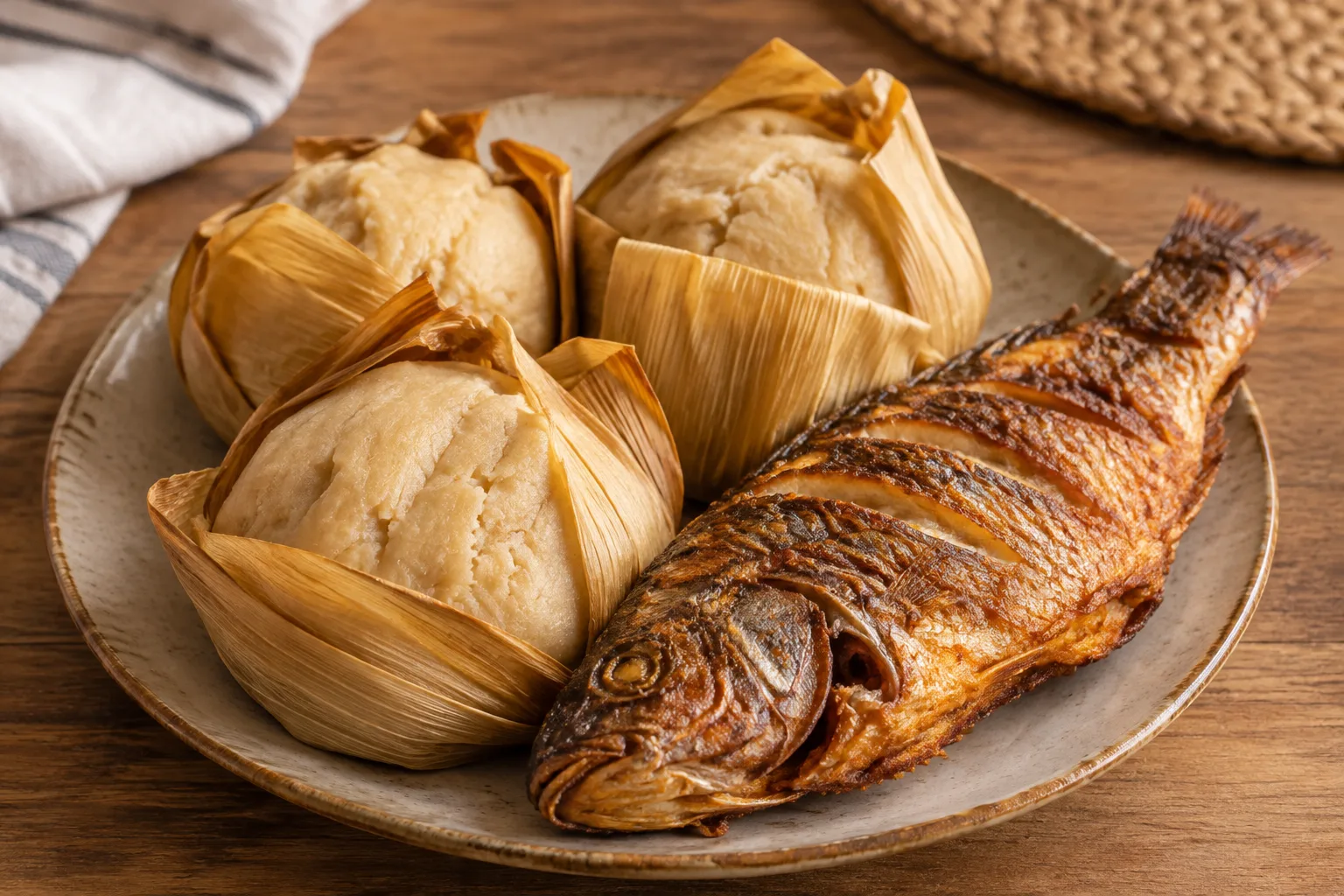
Kenkey is a year-round food associated especially with Ga and Fante traditions. Its extended preparation, including fermentation and cooking in a wrapper, makes advance preparation useful. It is commonly served with fish and pepper sauce. Different names and wrappers are part of its documented variation: komi is associated with Ga usage, while dokono is associated with Fante usage; accounts describe dry maize leaves in one form and plantain leaves in another. These distinctions are meaningful, but they do not make one version the sole expression of kenkey.
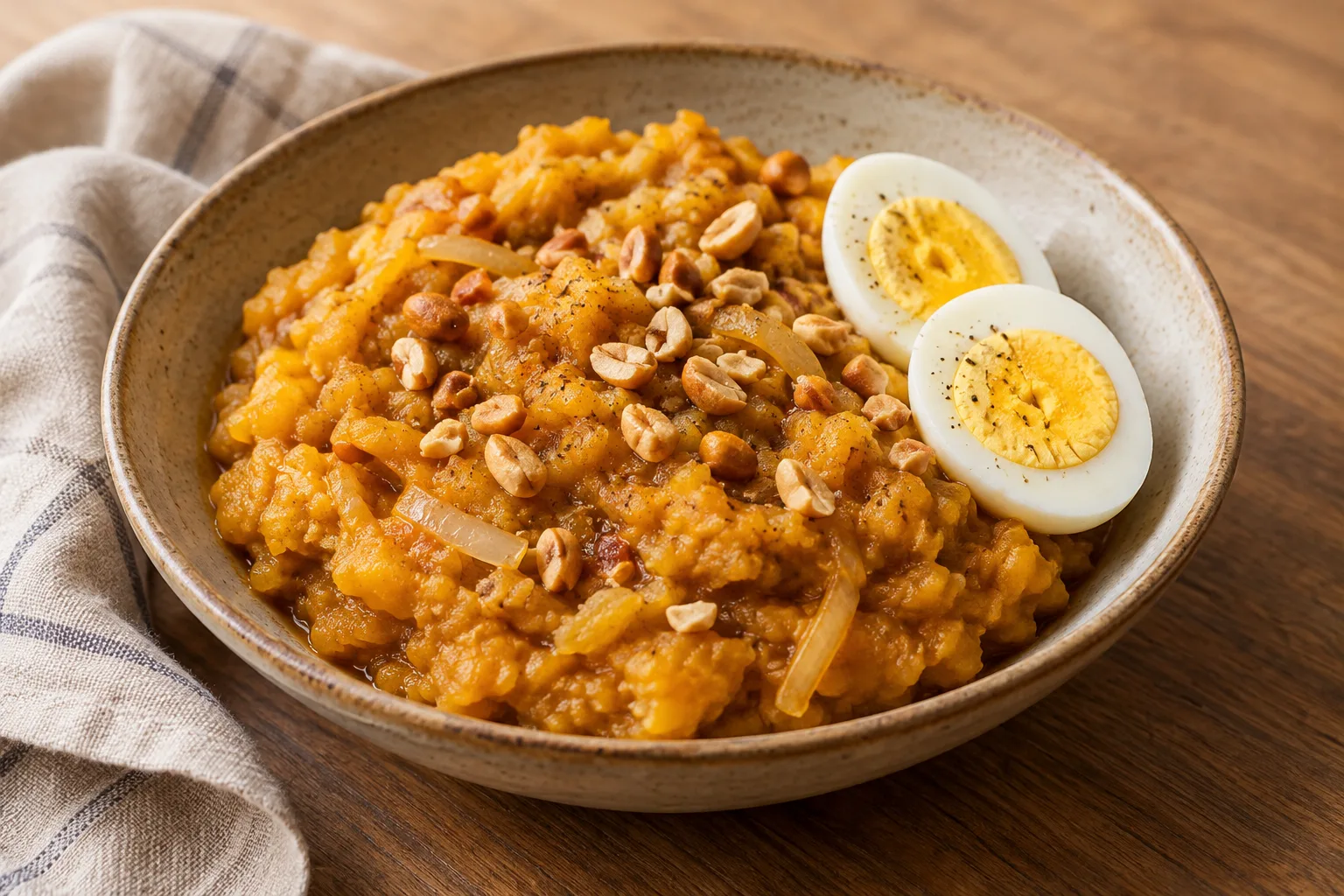
Eto is connected in food accounts with special occasions, including naming ceremonies, weddings, birthdays, and other celebrations. It is made from mashed yam or plantain, and is served with items such as hard-boiled egg, roasted groundnuts, or avocado. Accounts also describe its role in Ashanti yam-harvest observances and the sharing of newly harvested yam. Such occasions are specific traditions, not a template for every meal in Ghana. Across these examples, food can be prepared for routine eating, bought from a vendor, or made and shared for an event, with distinct customs attached to particular dishes and communities.
Fermenting, pounding, cooking and frying
Fermentation is a defining transformation in both kenkey and banku. For kenkey, maize dough is fermented, divided, partly cooked, then combined and portioned. The portions are wrapped and cooked through. Wrapping contains the dough during cooking and is part of the preparation’s identity; the type of leaf can differ between documented Ga and Fante versions. Banku is commonly made from fermented maize dough combined with cassava dough, then cooked in a pot while being stirred and worked into a cohesive mass. It is served without the same wrapped final cooking used for kenkey.
Pounding is central to the texture of fufu and eto. Fufu is made by cooking starchy roots, often with plantain in some versions, then pounding until the mixture becomes smooth and elastic. Eto begins with cooked yam or plantain that is mashed, sometimes with oil and other additions. A traditional mortar and pestle are associated with eto; the names asanka and tapoli appear in accounts of Ghanaian pounding equipment. These tools make the repeated crushing and mixing visible parts of the process.
Other techniques create contrasting finishes. Waakye is cooked with beans and waakye leaves, which color the cooking liquid and grains. Kelewele is seasoned before frying, so ginger and pepper cling to the plantain as it browns. Fish may be fried or grilled to serve with kenkey or banku. Across these methods, the choice between boiling, pounding, fermenting, wrapping, steaming, and frying is not incidental: it determines whether the result is sour, elastic, tender, browned, or firm.
Bases, sauces and the shared plate
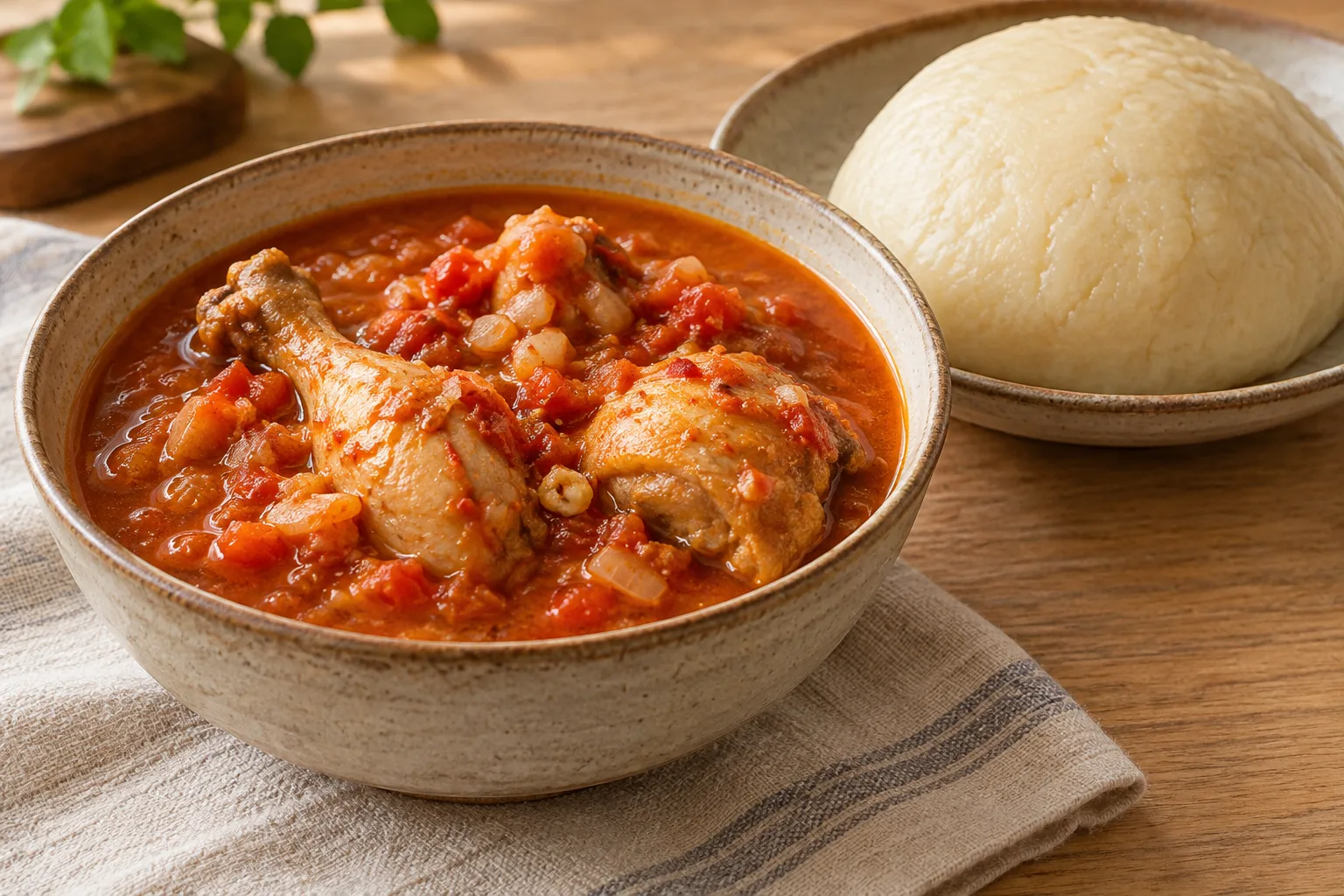
Many Ghanaian meals are organized around a substantial base and a soup, stew, or sauce. This structure appears in different forms: banku with grilled tilapia and pepper sauce; kenkey with fried fish and shito; fufu with a soup such as nkate nkwan; and omo tuo with groundnut soup. The base is not merely a side dish. Its density and texture affect how the sauce is eaten and how each mouthful comes together.
A plate of waakye often works differently from a simple base-and-soup pairing. The rice and beans may be served with several additions, such as stew, shito, egg, fish, fried plantain, or gari. The combination can be assembled according to the seller’s offering and the eater’s choice. Red red offers another complete pairing: a bean stew served with fried ripe plantain. Kelewele may be eaten as a snack or used as an accompaniment, rather than always forming part of a large meal.
Some of these foods are commonly eaten with the hands. In that style of eating, a small piece of a soft base can be shaped or pressed to pick up soup or sauce. That approach is associated in descriptions of banku and fish, but it should not be generalized into a rule for every household or every dish. Serving practices vary with context, food, and personal preference. The dishes described here can appear in home cooking, vendor meals, or celebratory settings; their shared feature is the attention given to the relationship between a base and what accompanies it.
A glossary of Ghanaian dishes and ingredients
These names identify particular preparations, not interchangeable categories. A dish may have variations in ingredients, consistency, or accompaniments, so the description here gives a useful starting point rather than a single compulsory version.
- Banku: A cooked, cohesive dough commonly made from fermented maize and cassava. It is served with foods such as grilled fish, pepper sauce, or okra stew.
- Fufu: A soft, elastic base made by cooking and pounding starchy roots, often including cassava or yam, and sometimes plantain. It is commonly served with soup or stew.
- Gari: Coarse dried cassava granules used as an accompaniment, including with bean dishes.
- Kenkey: Fermented maize dough portioned, wrapped, and cooked. Ga and Fante forms are associated with different names and wrapping leaves; fish and pepper sauce are common partners.
- Kelewele: Ripe plantain seasoned with ginger and hot pepper, then fried. It may be eaten as a snack or as an accompaniment.
- Nkate nkwan: Ghanaian groundnut soup, commonly served with a starch base such as fufu or omo tuo.
- Omo tuo: Soft balls of cooked rice served with soup, including groundnut soup.
- Waakye: Rice and beans cooked with waakye leaves, which give the dish a reddish-brown color. It is often served with a selection of sauces and other accompaniments.
- Eto: Mashed yam or plantain, associated with special occasions and served with accompaniments such as egg, groundnuts, or avocado.
Together, these terms describe a cuisine organized not only by ingredients but by transformations: fermentation, pounding, frying, and the meeting of a base with soup, sauce, or fish.
One country, many cuisines
Accra and the Coast
Coastal foodways are documented through maize-based kenkey and its pairings with fish and pepper sauce. Kenkey is associated with Ga communities and is widely eaten in Accra; Fante preparations also have a distinct name and wrapping tradition. Waakye is another familiar urban food, often served with a range of accompaniments.
Forest Belt and Ashanti
The Ashanti connection is especially visible in accounts of yam harvest observances and the sharing of newly harvested yam. Eto, made from mashed yam or plantain and served with accompaniments such as egg or groundnuts, is also associated with Akan and Ga food traditions. These documented practices give the entry a focus on yam and celebratory eating.
Northern Ghana
Waakye has documented northern associations and is also eaten widely beyond the north. Its defining combination of rice and beans is cooked with waakye leaves, often identified as sorghum leaf sheaths, which color the grains reddish brown. This dish provides a concrete point of connection without implying that it represents every northern food tradition.
Cook