Documentary synthesis prepared with AI assistance. It does not replace specialist review or certify kitchen testing. · Updated 31 October 2026
An island pantry shaped by land and sea
The Dominican Republic’s varied landscapes meet in its food: agricultural valleys, mountains, dry vegetation zones, and coastlines all contribute ingredients and local specialties. Rice, beans, plantains, and root vegetables recur across the country, while fish, shellfish, and coconut are especially visible in coastal cooking. These patterns offer a useful map of the cuisine, but they do not divide it into sealed regional systems: many familiar dishes travel widely, and household versions differ.
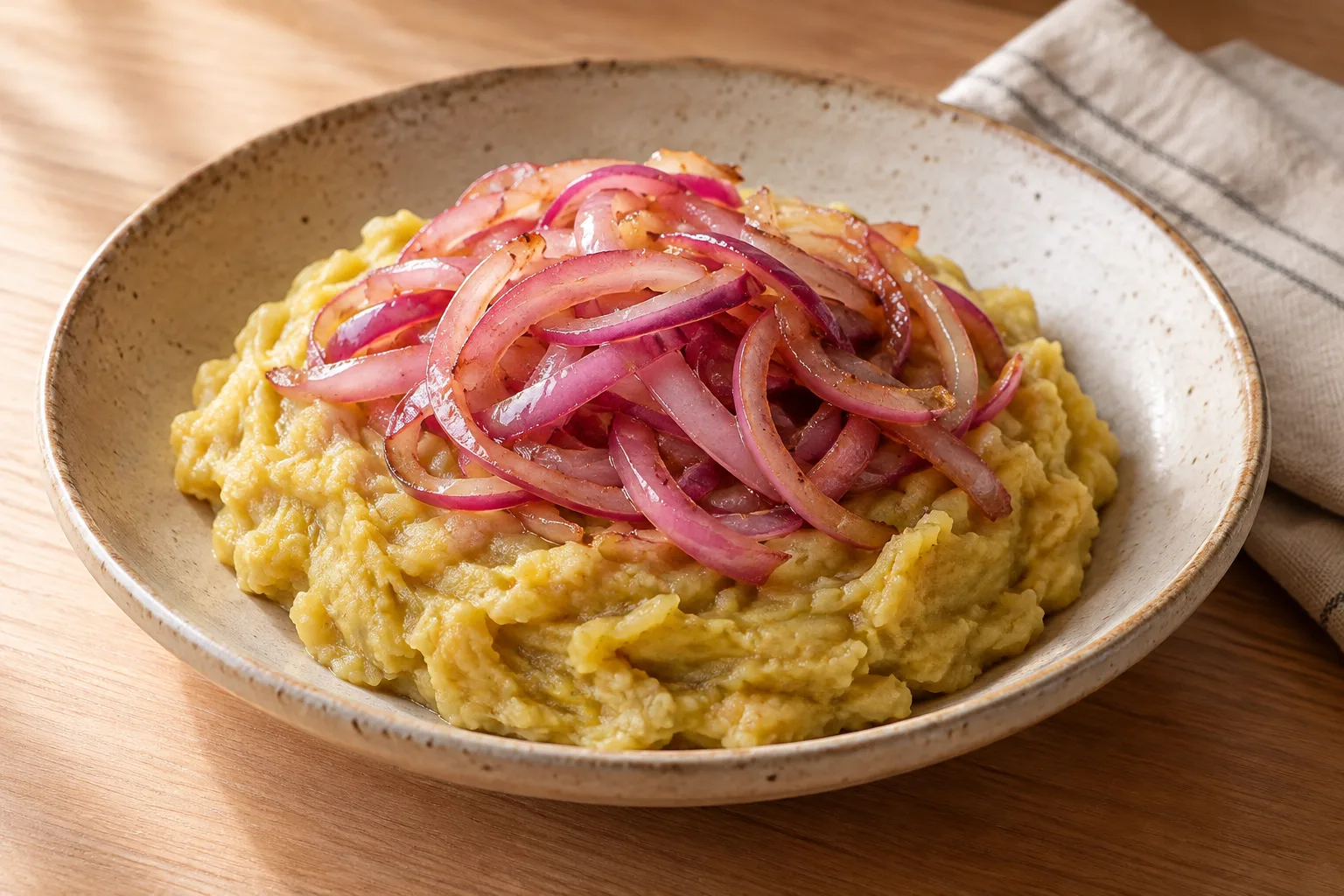
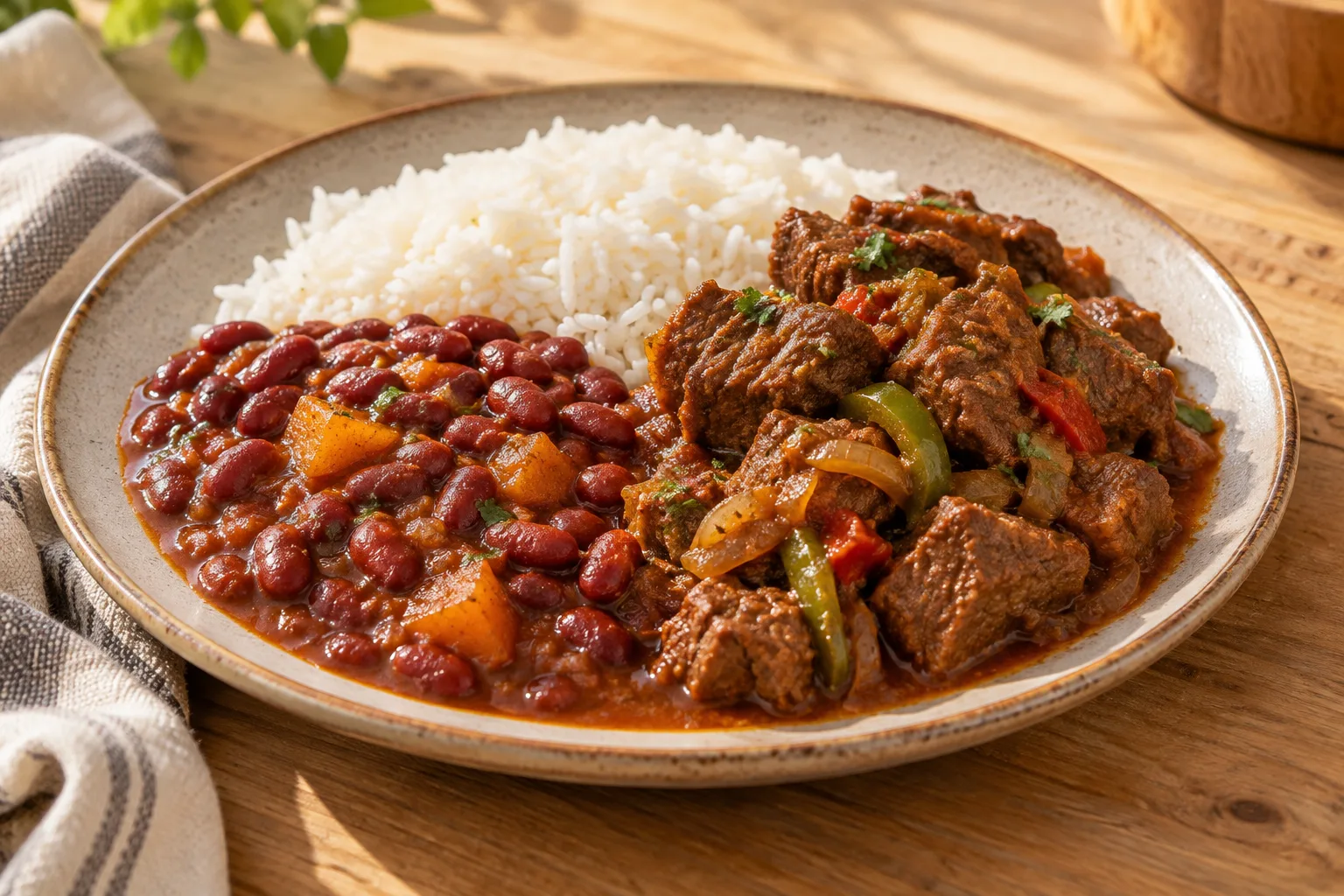
Two everyday combinations make that shared culinary vocabulary easy to recognize. La bandera brings white rice, stewed beans, and stewed meat together on one plate. Mangú, made by boiling and mashing green plantains, is strongly associated with breakfast, often served with fried cheese, salami, and eggs as los tres golpes. Both dishes draw on ingredients that appear in many other preparations, too.
Regional cooking adds more specific accents. The northwest is associated with spicy braised goat and coastal seafood; the Cibao with corn dishes such as buche perico and guanimo; and the south with chenchén, goat, and fish. These are documented associations rather than an exhaustive account of local foodways. The country’s cuisine is best understood through both its broadly shared staples and the distinct preparations that communities connect to particular places.
A history of exchange and adaptation
Dominican food reflects successive cultural encounters rather than a single point of origin. Taíno foodways are associated with crops and preparations including cassava, corn, chili, and casabe, a thin bread made from cassava. Spanish colonization brought ingredients such as rice and livestock, which became part of local cooking. African heritage also forms an important part of the cuisine’s history, visible in culinary practices and preparations that developed within the island’s changing society. These contributions are intertwined in present-day cooking rather than neatly separated by dish.
The pantry itself shows how introduced ingredients can become everyday staples. Rice, for example, is central to la bandera and appears in many other combinations; beans are served separately or cooked together with rice as moro. Plantains are used in preparations such as mangú and tostones. Such foods may be shared across the Caribbean or Latin America, while Dominican names, serving customs, and local versions give them particular meanings in the country.
Later migration added further layers. The Dominican quipe adapts kibbeh, a preparation associated with Middle Eastern cooking, and is linked in the evidence to Lebanese immigration. This example is a reminder that culinary exchange continued beyond colonial-era encounters. It is more accurate to describe Dominican cuisine as a changing record of borrowing, adaptation, and daily practice than to assign every familiar dish a single, exclusive origin.
Staples, produce, and transformations
Rice, beans, green plantains, and cassava form a practical core of the Dominican pantry. White rice accompanies stewed beans or meat; beans may be prepared as a stew or combined with rice in moro. Green plantains are boiled and mashed for mangú, or sliced and fried for tostones. Cassava is eaten cooked and processed into casabe. These ingredients are not limited to one recipe: each supports a range of textures and ways of serving.
The country’s documented pantry extends well beyond those staples. It includes corn, sweet potato, yautía, pumpkin, tropical fruit, cacao, coffee, and sugarcane. Chicken, beef, pork, and goat appear in stews and celebratory preparations. Coastal cooking includes fish and seafood, with coconut used in some fish and shellfish dishes. The exact combinations depend on the preparation and place; coconut is a regional accent, not a defining ingredient in every coastal meal.
Several regional foods show how a single ingredient can take different forms. In the Cibao, corn is used in buche perico, a stew with vegetables and pumpkin, and in guanimo, a cornmeal preparation cooked in leaves. Santiago Rodríguez is particularly associated with casabe production. Montecristi’s coastal cuisine includes lambí, or conch. Together, these foods connect ingredients to specific preparations and local knowledge without suggesting that any one ingredient defines the whole country.
Soft mashes, crisp rice, and seasoned stews
Dominican meals often pair mild, filling staples with more intensely seasoned dishes and contrasting textures. White rice offers a quiet base for beans and stewed meat, while concón—the toasted rice layer that forms at the bottom of the pot—adds a crisp, browned contrast. Mangú is soft and smooth when freshly mashed; tostones are fried plantain slices with a firmer, crisp surface. These contrasts can appear in a single meal, but they do not amount to one fixed flavor profile for the entire cuisine.
Stews build flavor through seasoning and slow cooking. The northwest’s chivo liniero is described as spicy and richly seasoned, with oregano and hot peppers. In the Cibao, buche perico combines corn, vegetables, and pumpkin. Fish and shellfish provide a different savory register, and some coastal preparations pair seafood with coconut. These examples show how seasoning and texture are tied to a particular dish and its setting, rather than prescribed uniformly across the country.
Sweet preparations have their own place in the repertoire. Habichuelas con dulce is a sweet bean preparation associated with Lent and Holy Week. Cibao-style arepa may be sweet, made with cornmeal, milk, and raisins, or savory. The contrast between a crisp accompaniment, a smooth mash, a stew, and a sweet dish is one way to appreciate the range of Dominican cooking without reducing it to a single dominant taste.
Daily cooking, holidays, and shared knowledge
Food marks both ordinary routines and occasions for gathering. Mangú is especially associated with breakfast, often accompanied by fried cheese, salami, and eggs. La bandera, made with rice, beans, and stewed meat, is a familiar everyday meal. These are recognizable patterns, not fixed schedules or requirements: people’s meals vary by household, preference, and place. Familiar dishes continue through everyday preparation as well as through more formal celebrations.
Several foods have clear seasonal or festive associations. Habichuelas con dulce is prepared during Lent and Holy Week. Pasteles en hoja and roasted pork are associated with Christmas. Sancocho, a substantial stew of meat and tubers, is shared at celebrations and family gatherings. The dishes connect food with particular moments of the year, but they should not be treated as obligatory rituals practiced identically in every home.
Culinary knowledge also passes through routine work: knowing how a family prepares a stew, how to handle cassava for casabe, or how a regional dish is seasoned. In the Cibao, preparing arepa in a covered pot with heat above and below is associated with the saying “like the arepa: fire above and fire below,” used for being caught between pressures. Such details preserve links between a food, a technique, and local expression. Contemporary culinary projects reinterpret traditional ingredients and dishes alongside household cooking, showing that transmission can involve both continuity and change.
Boiling, mashing, frying, and cooking in leaves
Methods in Dominican cooking respond to the ingredient and the dish. For mangú, green plantains are boiled until tender and then mashed into a soft preparation. Tostones begin as sliced plantain that is fried, flattened, and fried again. Beans are simmered with seasonings as a stew, while meat may be braised for an everyday plate or roasted for a holiday meal. In sancocho, meats and root vegetables cook together in a substantial stew.
Corn offers a different set of forms. Guanimo is a cornmeal preparation cooked inside leaves; corn husks are described as one wrapping, with plantain leaves also used by some cooks. Arepa cibaeña is cooked in a covered caldero, with hot coals both beneath it and on the lid. The method is closely linked to the regional preparation and to the expression about fire above and below. These details describe particular dishes rather than a general cooking rule.
Cassava’s transformation into casabe is another distinctive process, and Santiago Rodríguez is noted for its production. A wooden pilón is used to pound ingredients for mofongo, a plantain preparation also eaten in the Dominican Republic. Taken together, these examples reveal a repertoire that includes boiling, mashing, frying, braising, roasting, cooking in leaves, and cooking with heat above and below. The appropriate method and utensil depend on what is being made.
Plates for everyday meals and occasions
A meal may be organized around a staple and several accompaniments. In la bandera, white rice, stewed beans, and meat share the plate; salad or fried plantain may also be served. Moro combines rice and beans in one preparation. Mangú is often a breakfast centerpiece and may be served with the three accompaniments named in los tres golpes. These combinations are useful reference points, not a universal menu that every household follows.
The table also changes with place. In Montecristi, stewed lambí may be served with rice or tostones. Northwest-style chivo liniero is associated with accompaniments including moro, fried plantain, and avocado. In the Cibao, buche perico may take the place of stewed beans and be served with white rice. Coastal fish and seafood dishes add further options, including preparations with coconut. The combinations reflect specific documented dishes and do not prescribe one way of eating throughout each region.
Occasions can call for larger, more substantial foods. Sancocho is associated with family gatherings and celebrations, while Christmas meals include pasteles en hoja and roasted pork. Sweet beans mark the Lenten and Holy Week season. These foods may be made for sharing, but no single serving arrangement or observance applies to every family. Everyday plates and festive dishes together show how Dominican cooking moves between practical daily meals, seasonal foods, and meals prepared for a group.
A glossary of dishes and ingredients
These terms refer to particular preparations and ingredients found in Dominican cooking. Some are widely familiar; others are strongly associated with a region. Names and versions can vary between households, so the definitions identify documented forms without implying that every cook uses one exact recipe.
- Arepa cibaeña: A cornmeal preparation associated with the Cibao. A popular sweet form includes milk and raisins; it is cooked in a covered pot with heat above and below. It is also called torta in the region.
- Bandera: A meal of white rice, stewed beans, and stewed meat, recognized as a familiar everyday combination.
- Buche perico: A Cibao corn stew with vegetables and pumpkin, often served with white rice.
- Casabe: A thin cassava bread with a long history in the region; Santiago Rodríguez is associated with its production.
- Chivo liniero: A spicy, braised goat preparation associated with the northwest and seasoned with oregano and hot peppers.
- Concón: The toasted rice layer left at the bottom of a cooking pot.
- Guanimo: A cornmeal preparation cooked wrapped in leaves, associated with the Cibao.
- Habichuelas con dulce: A sweet preparation of beans associated with Lent and Holy Week.
- Mangú: Green plantains boiled and mashed; commonly served at breakfast, often with los tres golpes.
- Tostones: Plantain slices fried, flattened, and fried again, often served as an accompaniment.
One country, many cuisines
La Línea and the Northwest
La Línea includes Montecristi, Dajabón, Mao, and Santiago Rodríguez, with coastal areas as well as zones of dry tropical vegetation. Its documented specialties include chivo liniero, a spicy braised goat seasoned with oregano and hot peppers, and coastal seafood such as Montecristi’s stewed lambí, or conch. Santiago Rodríguez is also associated with casabe production. These foods represent specific regional connections, not a complete inventory of the area’s cooking.
Cibao
The Cibao valley is described as an agricultural area with fertile land, mountains, and a moderate climate. Santiago de los Caballeros is identified as a principal urban center, alongside places including La Vega, Moca, and Bonao. Regional preparations include buche perico, a corn, vegetable, and pumpkin stew, and guanimo, cornmeal cooked in leaves. The name torta is used for arepa in the Cibao.
The South
The available regional descriptions associate southern Dominican cooking with assertive flavors, goat, fish, and chenchén. They establish a useful, limited set of culinary markers, but do not detail specific provinces, preparation methods, or a single southern version of these foods. The description therefore stays with those documented associations rather than treating the South as one uniform cuisine or adding unsupported local distinctions.
The East and Coastal Cuisines
Descriptions of the eastern region emphasize coconut and seafood, while coastal cooking more broadly includes fish and shellfish prepared with coconut or in Creole-style stews. Fried fish and stewed conch are also part of the documented coastal repertoire. These are broad associations rather than a single recipe or a uniform regional menu; rice, plantains, and root vegetables remain part of the wider national pantry.
Cook