Documentary synthesis prepared with AI assistance. It does not replace specialist review or certify kitchen testing. · Updated 12 November 2026
A cuisine between highlands and the Red Sea
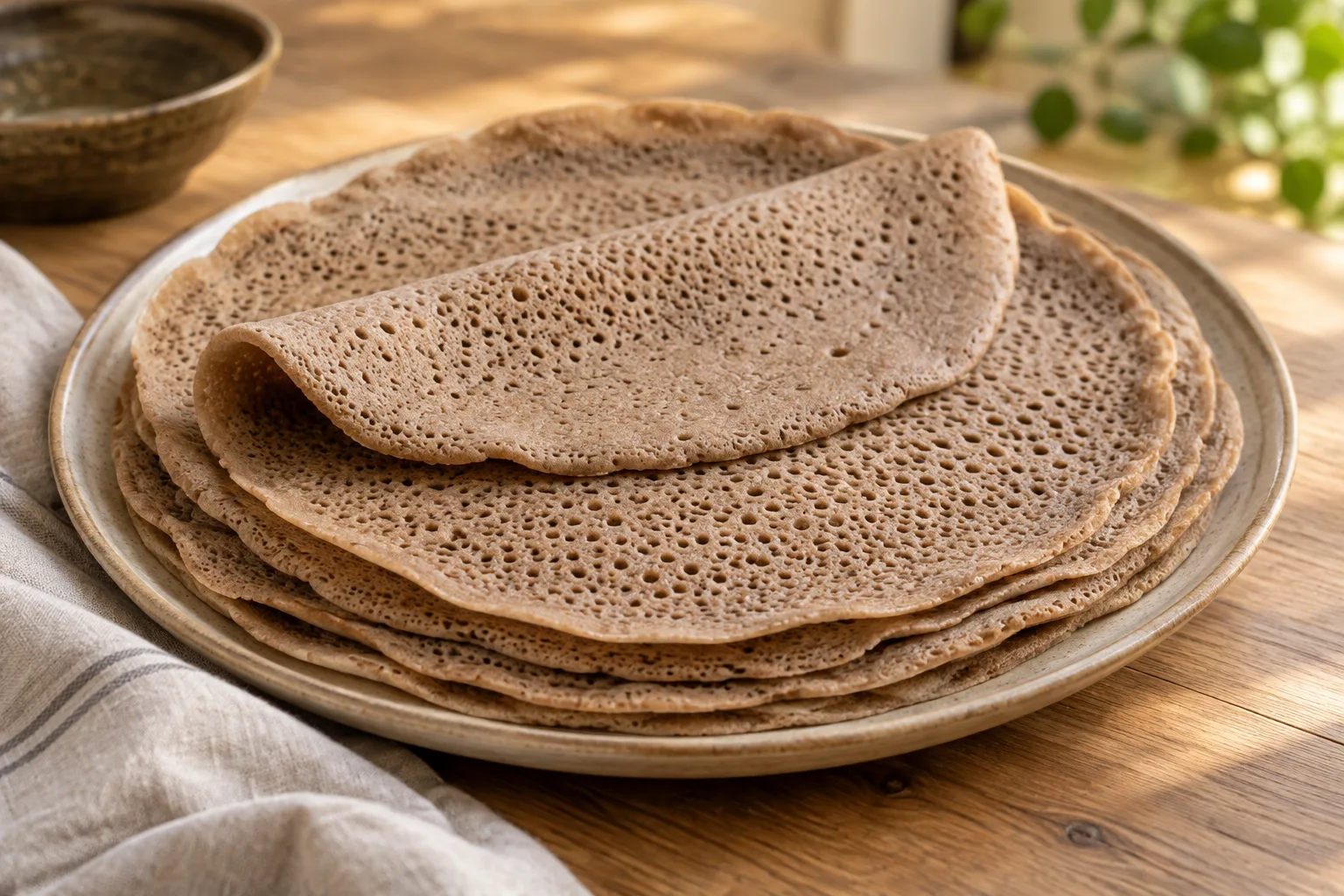
Eritrea lies in the Horn of Africa along the Red Sea, and its food reflects varied landscapes and communities rather than one fixed national menu. Across many meals, injera, a soft fermented flatbread, is served with tsebhi: stews made with meat, fish, pulses, or vegetables. These dishes share familiar ingredients and techniques with neighboring cuisines, while local habits and available grains shape how they are prepared and eaten.
The country’s highlands are associated with grain-based breads and stews; a distinct lowland preparation, akelet, is a thick wheat porridge. Coastal accounts describe fish and other seafood, though their place in everyday meals can vary by locality. Eritrean cooking also includes pasta and other foods shaped by Italian contact. These strands belong to a varied culinary landscape, not a single recipe tradition or an unchanged fusion formula. The dishes in this atlas are examples documented for Eritrea and particular communities, not claims that every household eats alike.
Shared histories and culinary exchanges
Eritrean and Ethiopian cuisines have close, long-standing connections, and a number of dishes and methods are shared across present-day borders. Injera with stews is one prominent example. Similarity does not establish an exclusive origin for a dish: zigni, a meat stew seasoned with berbere, has close culinary relatives in the wider Horn of Africa. The names used for preparations can also differ between languages and communities.
The Red Sea has connected Eritrea with surrounding regions. Accounts of coastal food describe influences associated with Ottoman-era contact, while Italian colonial rule left visible culinary traces, including pasta dishes and local adaptations of Italian foods. Such influences entered a food culture that also rests on local grains, pulses, breads, and seasonings; they do not explain it on their own. A broad description of national cuisine can therefore point to exchange while preserving the distinction between documented practices and claims about who first created a dish. Historical and community-specific detail remains important, especially when a preparation is shared across borders.
Grains, pulses, spices, and aromatic fats
Grains provide the base for breads and porridges. Injera is commonly described as a teff flatbread, but wheat, sorghum, and other grains also appear in accounts of its preparation. The grain used can depend on local practice and availability. In the lowlands, akelet is made by cooking wheat flour with water into a thick porridge. Kitcha, a flatbread, can be torn into pieces for the breakfast dish kitcha fit-fit.
Lentils, fava beans, chickpeas, and other pulses appear in stews and pastes. Shiro begins with ground pulses cooked into a smooth sauce; hilbet is a legume paste, commonly described with lentils and fava beans. Vegetables named in Eritrean stews include leafy greens, potatoes, cabbage, pumpkin, and okra. Tomatoes and onions form part of some meat and vegetable preparations.
Berbere is a variable spice blend, often combining chile with ingredients such as garlic, ginger, coriander, cumin, fenugreek, cardamom, or cinnamon. Tesmi is clarified butter aromatized with onion, garlic, and spices; oil is also used in cooking. Neither blend has a single fixed formula across homes and dishes.
Tang, heat, and contrasting textures
The gently sour character of fermented injera balances the savory sauces served with it. Its flexible, porous surface takes up stew, while the bread itself remains substantial enough to tear and fold around a mouthful. Fermentation time and grain choice can affect the bread’s flavor and texture; descriptions include both teff-based versions and breads made with other cereals.
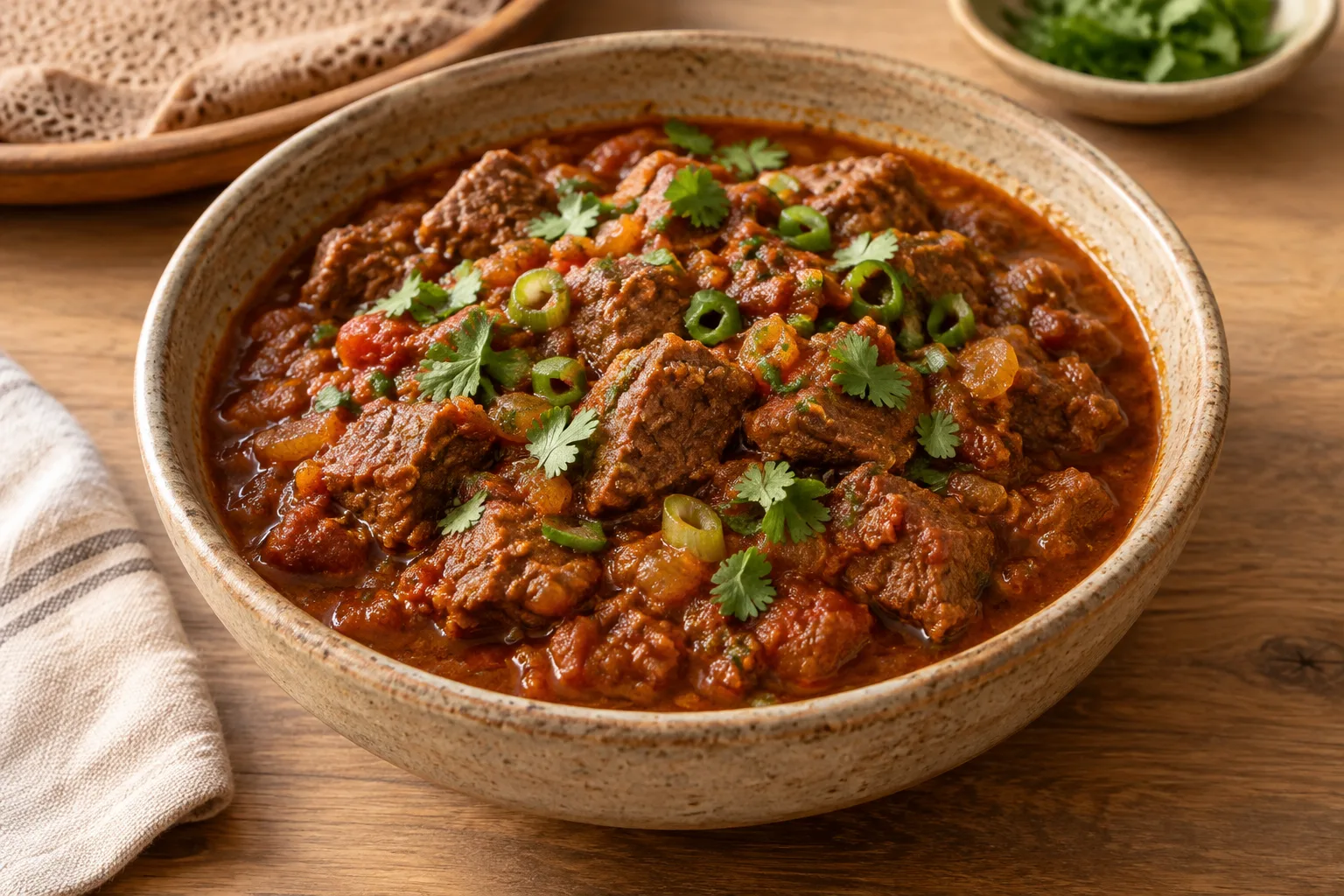
Berbere can give stews a deep red color, aromatic warmth, and considerable heat, but not every Eritrean dish is fiery. Alicha is described as a milder stew made without berbere. Other dishes rely on the earthy flavor of pulses, vegetables, or gently seasoned fats. A zigni sauce combines meat and spices with tomato in many descriptions; by contrast, ground-pulse shiro becomes smooth and thick as it cooks. Lentils may soften into a stew, while hilbet is served as a paste rather than a dish of whole pieces.
These differences make texture as important as seasoning: tender meat, creamy pulse sauces, soft bread, and crisp or tender vegetables can meet in one meal. The exact heat level and spice mix are variable, so “spicy” should not be treated as a universal description of every plate.
Breakfasts, fasting foods, and hospitality
Breakfasts include kitcha fit-fit, torn bread mixed with oil or spiced butter and seasoning, often served with plain yogurt. It may also be prepared with leftover stew. Another morning dish, ga’at or akelet, is a thick flour porridge. Descriptions place butter and berbere in a hollow at its center, with milk or yogurt served around it. Ingredients and accompaniments vary, and the names can overlap in usage.
Pulses and vegetables are important in meals prepared for Christian fasting periods, when animal products are avoided. Documented examples include lentil stews and shiro. These foods are also part of wider cooking traditions; a vegetable dish is not necessarily tied to a fast, and religious practice differs among people and communities.
Coffee is closely associated with welcoming visitors and gathering. Descriptions of its preparation include roasting and grinding beans, brewing in a clay jebena, and serving the drink to guests. Suwa, a fermented grain drink, and mies, a fermented honey drink, are also documented, though their use varies. These practices offer specific examples of hospitality rather than a single ritual followed everywhere.
Fermentation, grinding, and slow cooking
To make injera, flour and water are mixed into a pourable batter and left to ferment. A retained portion of an earlier batch may be used as a starter. Fermentation gives the bread its characteristic tang and helps create a bubbly surface. The batter is poured onto a hot, broad cooking surface, often called a metad or mitad, and the bread is commonly cooked on one side, with a cover used to set its upper surface with steam. Household methods and grains differ, so there is no need to assume one procedure describes every version.
Other preparations rely on milling and stirring. For shiro, ground pulses are gradually incorporated into liquid and cooked until the sauce becomes even and thick. Berbere may be made from ground spices, sometimes toasted, with ingredients and proportions changing by recipe. Clarifying butter and infusing it with aromatics produces tesmi.
Stews such as zigni are cooked until meat is tender and the sauce has taken on the flavor of tomato and seasoning. Thick porridges such as ga’at require sustained stirring as flour and water cook together. Each technique transforms common ingredients in a different way: fermentation brings acidity, grinding creates smooth sauces, and slow cooking softens meat and melds flavors.
The shared platter and the meal’s rhythm
A meal built around injera may be arranged on a large shared platter, with stews and accompaniments set over the bread. Diners tear off pieces and use them to gather sauce, vegetables, pulses, or meat. In this setting the bread is at once food, the surface beneath the dishes, and a utensil. Shared eating is widely described, but the particular serving arrangement and eating habits can differ between households, restaurants, and communities.
A platter might include zigni alongside vegetable or pulse dishes, allowing diners to combine different flavors. Simpler meals can center on one stew and bread, while breakfasts may feature porridge or kitcha fit-fit. The presence of several dishes does not imply that every meal is elaborate or that each household follows the same menu. Descriptions of eating with the right hand are specific customs reported in some accounts, not a basis for treating every person’s practice as identical.
Coffee can extend a visit beyond the meal, with preparation and serving forming part of the welcome offered to guests. Coastal meals may include fish and other seafood, but their frequency depends on place and availability. The shared table is a documented mode of eating, not a requirement that every occasion follow one ritual.
A vocabulary of Eritrean foods and practices
These terms name preparations and ingredients documented in Eritrean food traditions. Usage and recipes vary across communities and households; a name should not be taken to mean that there is one standardized version.
- Injera: Fermented, soft flatbread, often made with teff and also documented with other grains. It accompanies stews and can be used to gather food.
- Tsebhi: A broad term for stews, including preparations made with meat, fish, pulses, or vegetables. Zigni is a well-known spiced meat stew served with bread.
- Berbere: A changeable blend of spices, often containing chile and aromatics such as garlic, ginger, coriander, or fenugreek.
- Shiro: A smooth, thick stew made from ground pulses, such as chickpeas or fava beans.
- Hilbet: A paste made from legumes, commonly described with lentils and fava beans.
- Kitcha fit-fit: Torn pieces of flatbread mixed with fat and spices, often served with yogurt at breakfast.
- Ga’at / akelet: Thick flour porridge, described with a central hollow for butter and berbere and sometimes served with milk or yogurt.
- Jebena: A clay pot used to brew and serve coffee. Suwa: A fermented drink made from grain.
One country, many cuisines
Highlands
Accounts of highland food connect Tigray-Tigrinya communities with injera made from teff, wheat, or sorghum and served with stews. The documented repertoire includes meat, pulse, and vegetable preparations, often seasoned with berbere. These are broad regional associations, not a claim that every locality or household follows an identical recipe.
Lowlands
A documented lowland preparation is akelet, a thick porridge made by cooking wheat flour with water. It may be served with a hollow holding butter and berbere, with milk or yogurt alongside. This is one concrete example of foodways distinct from meals centered on injera and stew; the available descriptions do not support finer divisions within the lowlands.
Red Sea Coast
Coastal Eritrea is associated with fish and other seafood, and Massawa is specifically described with stews featuring okra and spring onion. The Red Sea setting also connects coastal food histories with wider regional exchange. These references document a litoral tradition but do not establish that the same seafood dishes are eaten in every coastal community or island.
Cook