Documentary synthesis prepared with AI assistance. It does not replace specialist review or certify kitchen testing. · Updated 12 November 2026
Landscapes and the foods they sustain
Finland’s food culture is best understood through its varied landscapes and communities rather than as a single national menu. The Baltic coast and southwestern archipelagos connect meals with maritime fishing; inland lakes offer freshwater fish; and northern Lapland is associated with reindeer, Arctic char, wild berries and foraged mushrooms. Forests and waters have long been important sources of food, alongside cultivated grains and domestic animals.
Some preparations have travelled far beyond their places of association. Karelian pies, for example, are now familiar across Finland, while kalakukko remains closely identified with Savo. Dark rye bread, fish soups and dairy preparations offer further points of connection without making regional differences disappear. The cooking described here ranges from portable pastries and market foods to slow-baked dishes and seasonal ingredients. Its character comes not from one defining flavour, but from the ways people make use of local products and preserve or prepare them for different meals.
Food shaped by exchange and change
Finnish food reflects influences from both east and west. Documented comparisons connect western and Scandinavian foodways with pickled fish, crisp or hard breads, cheese and smoked meat, while eastern connections include blinis, mushrooms, sour milk and curd cheeses. These are strands of exchange, not proof that any one dish belongs exclusively to a single neighbouring culture. Karelia is especially important in the history of movement: people displaced from the region after wartime territorial changes carried food practices into other parts of Finland.
The history of the pantry also reaches well beyond modern dietary trends. Broad beans, or härkäpapu, were eaten in Finland by at least the seventh or eighth century and remained among the commonly used vegetables until the late nineteenth century. They went into soups, porridges, stews and patties. More recently, public food policy and dietary recommendations have helped shape eating habits, while regulation of alcohol sales has been part of the country’s social history. Finnish food culture continues to change with everyday life, migration and institutions rather than remaining a fixed inheritance.
Rye, freshwater fish, dairy and forest harvests
Rye is central to a number of Finnish preparations: it becomes dense everyday bread, the thin shell of a Karelian pie, or the casing around the filling of kalakukko. Barley and oats also belong to the grain pantry. Potatoes and other root vegetables appear in soups, stews and accompaniments, while dairy is used in porridges, baking and cheese-making.
Fish varies with geography and preparation. Salmon appears in creamy lohikeitto; vendace is fried, and herring may be pickled or served with new potatoes. Fish can also be smoked, salted or cured. Forest produce includes berries such as lingonberries and cloudberries, as well as mushrooms. Fresh or preserved, these bring different uses to savoury meals and desserts. The northern pantry includes reindeer and Arctic char; coastal and archipelago menus highlight smoked fish, shellfish and potatoes. Broad beans add another documented strand: historically they were used in dishes from soup to patties. Taken together, these ingredients show a pantry shaped by land, water, season and methods for making food last.
Sour rye, fresh herbs and berry contrasts
Finnish flavours often let the main ingredients remain clear rather than relying on elaborate seasoning. In ruisleipä, rye can give bread a dark colour, dense crumb and distinctly sour taste. Karjalanpiirakka contrasts a thin rye crust with soft rice porridge; a topping of munavoi, made with boiled egg and butter, adds richness. In lohikeitto, salmon and potatoes meet a creamy broth, while leek and dill provide aromatic notes.
Other dishes balance savoury foods with the brightness of berries. Lingonberries accompany reindeer and meat dishes, bringing a tart counterpoint; cloudberries are paired with leipäjuusto, a mild cheese with a firm, slightly squeaky texture. Smoked or cured fish adds a deeper flavour than fresh fish, while pickled herring combines fish with an acidic preparation. These pairings are not a single national formula: they belong to specific foods and contexts. Their variety is one way to understand Finnish cooking, from the hearty enclosed filling of a Savo fish pie to the clean, herbal finish of a bowl of salmon soup.
Seasonal occasions and food learned at home
Food traditions are passed on through observation and participation as well as through written instructions. Family and friends may gather around meals to talk and exchange news; remembered dishes can carry associations with birthdays, holidays and people. Historical accounts describe women as often bearing primary responsibility for cooking at home, while men taught practices such as fishing and hunting and the foods connected with them. This documents a past division of labour, not a rule for all Finnish households today.
Some occasions are closely tied to particular ingredients. New potatoes and herring are associated with summer and Midsummer meals, while Christmas memories include rice porridge and, in one recorded family recollection, a lucky almond. These examples illustrate particular practices rather than a universal holiday menu. The summer and autumn harvests also connect cooking with berries and mushrooms, which can be eaten fresh or preserved. Karelian pies appear both as everyday food and at celebrations. Such traditions can travel and change: a familiar dish may be served far from its regional home, while each household adapts how and when it is shared.
Baking, simmering, smoking and preserving
Different dishes reveal the range of Finnish cooking techniques. For karjalanpiirakka, rye dough is rolled thin, filled with rice porridge and folded around the filling before baking; egg butter is served on top. Kalakukko uses a rye crust to enclose fish and pork, then is baked slowly as a substantial closed pie. In a different form of baking, leipäjuusto is curdled and then baked, producing a cheese with a browned surface.
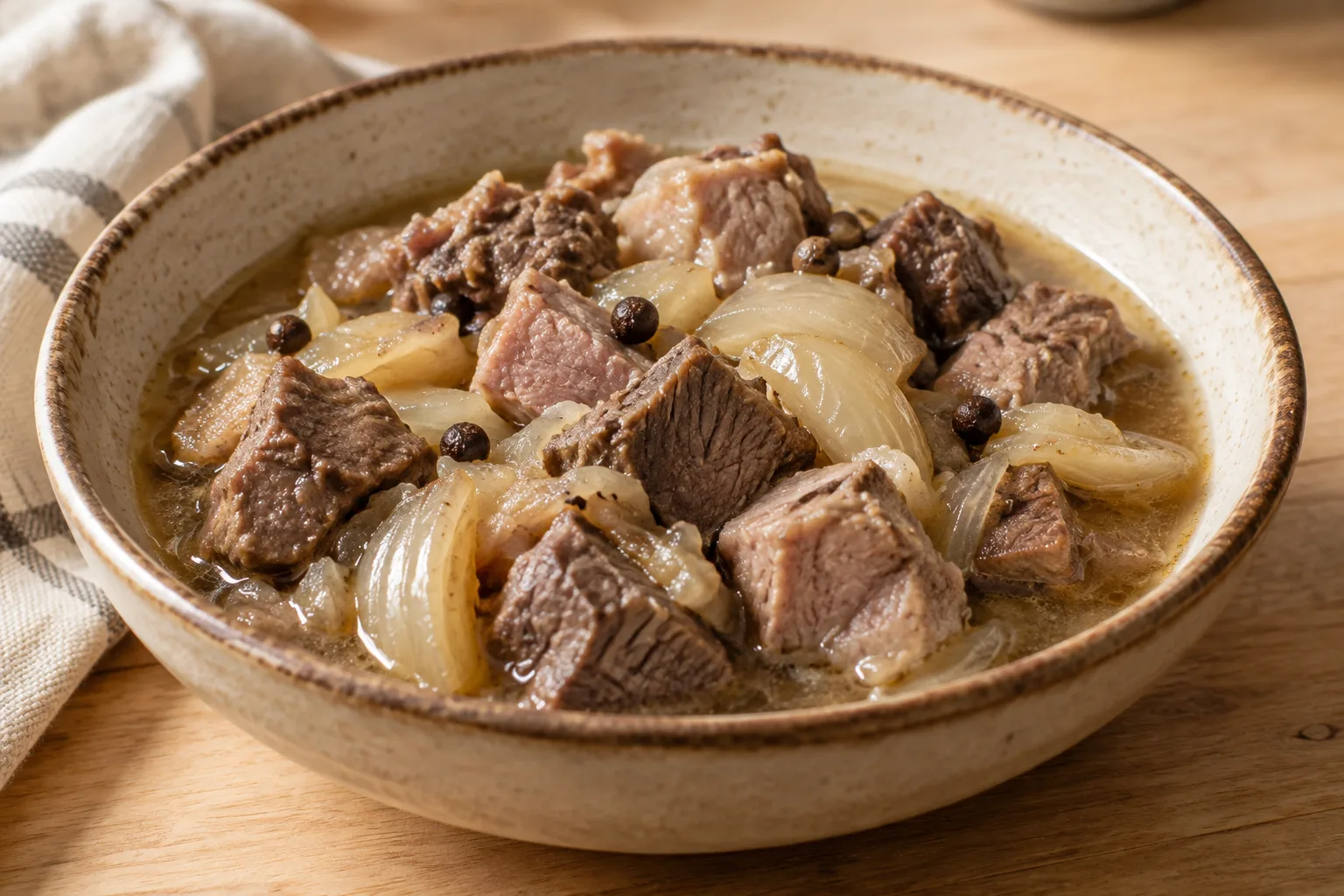
Soups bring fish and vegetables together through simmering. Lohikeitto combines salmon, potatoes, leek and dill in a creamy preparation. Reindeer for poronkäristys is cut into thin slices and sautéed with onion, then served with mashed potatoes and lingonberries. Fish preservation includes smoking, curing, salting and pickling; berries and mushrooms can also be stored for later use. These methods respond to the properties of particular ingredients and dishes. They do not amount to one defining utensil or technique shared by every region, and preparations vary between households.
From everyday bread to meals shared by the water
The Finnish table includes foods suited to different scales of eating. Rye bread is an everyday staple as well as an accompaniment to meals; crispbread, cheese, butter and fish offer familiar ways to serve it. A Karelian pie can be a portable snack, a bakery or café food, or part of a breakfast. A bowl of salmon soup makes a warming meal, while kalakukko is substantial enough to eat on its own. These examples describe uses, not a fixed course order.
Seasonality also shapes occasions. New potatoes and herring mark a summer combination, and fried vendace is associated with lake-region markets and summer eating. Along the coast and archipelagos, meals may feature smoked fish and shellfish; northern menus can draw on reindeer, Arctic char, berries and mushrooms. Modern regional tasting events bring local ingredients together in menus designed around particular landscapes, but they are specific experiences rather than a template for home dining. In homes and public settings alike, meals offer a way to share food and conversation, while the ingredients and preparations change from one place and occasion to another.
A glossary of Finnish foods
These names refer to particular products and preparations, several of which have regional associations while also being eaten beyond their home areas.
- Karjalanpiirakka: Karelian pie, made with a thin rye crust and traditionally filled with rice porridge; often served with egg butter.
- Munavoi: A topping of boiled egg and butter, commonly paired with Karelian pies.
- Lohikeitto: Creamy salmon soup with potatoes, leek and dill.
- Ruisleipä: Rye bread, often dark, dense and sour; näkkileipä is crisp rye bread.
- Kalakukko: A Savo fish pie enclosed in rye dough, with fish and pork in the described preparation.
- Poronkäristys: Thinly sliced reindeer sautéed with onion, commonly served with mashed potatoes and lingonberries.
- Leipäjuusto: Mild baked cheese with a firm texture, often served with cloudberries or cloudberry jam.
One country, many cuisines
Karelia
Karelia is associated with karjalanpiirakka, a thin rye pastry traditionally filled with rice porridge and often topped with egg butter. Potato and carrot fillings are also described as variations. Karelian stew, karjalanpaisti, is another preparation linked to the region. These dishes are now encountered more widely, and their regional association does not imply that Finnish food is uniform or that shared practices have only one origin.
Savo
Savo is linked with kalakukko, a substantial pie in which rye dough encloses fish and pork. Descriptions identify fish such as perch or salmon and note the dish’s slow baking; it can be eaten as a meal on its own. This provides a specific regional point of reference without suggesting that the pie, its ingredients or its preparation represent every part of Finland.
Lapland
Lapland is associated with reindeer, Arctic char, wild berries and foraged mushrooms. One preparation linked to the north is poronkäristys: thin slices of reindeer sautéed with onion and served with mashed potatoes and lingonberries. Contemporary regional menus also draw on northern fish and forest ingredients. These examples describe documented foods, not a complete account of Lapland’s communities or their varied foodways.
Coast and archipelagos
Finland’s coast and southwestern archipelagos are presented as maritime food landscapes. Smoked fish, shellfish and potatoes feature in descriptions of coastal menus, alongside cured fish and archipelago bread in a contemporary tasting menu. These foods connect particular meals with the Baltic shoreline and its islands, but the evidence does not support treating the coast as one uniform culinary tradition.
Cook