Documentary synthesis prepared with AI assistance. It does not replace specialist review or certify kitchen testing. · Updated 12 November 2026
A small territory between the Rock and the sea
Gibraltar stands beside the Strait of Gibraltar, with Andalusia close across the border and the Mediterranean shaping the territory’s wider setting. Its food reflects this position, but not as a fixed or uniform catalogue. British and Andalusian Spanish influences meet with traditions associated with Malta, Genoa, Portugal and North Africa, among others. The result is a home cuisine in which familiar regional preparations have been adopted, adjusted and passed on within local families.
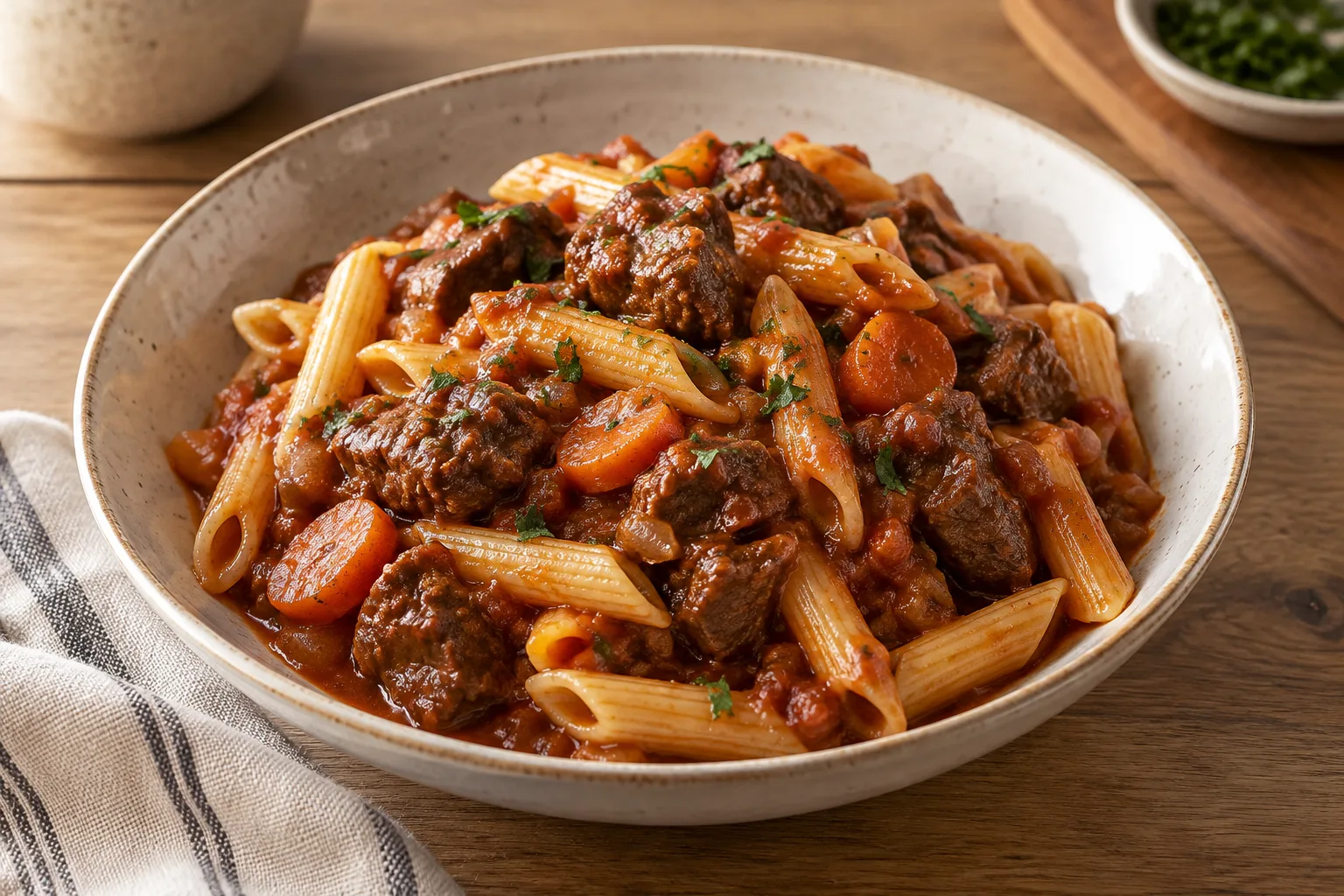
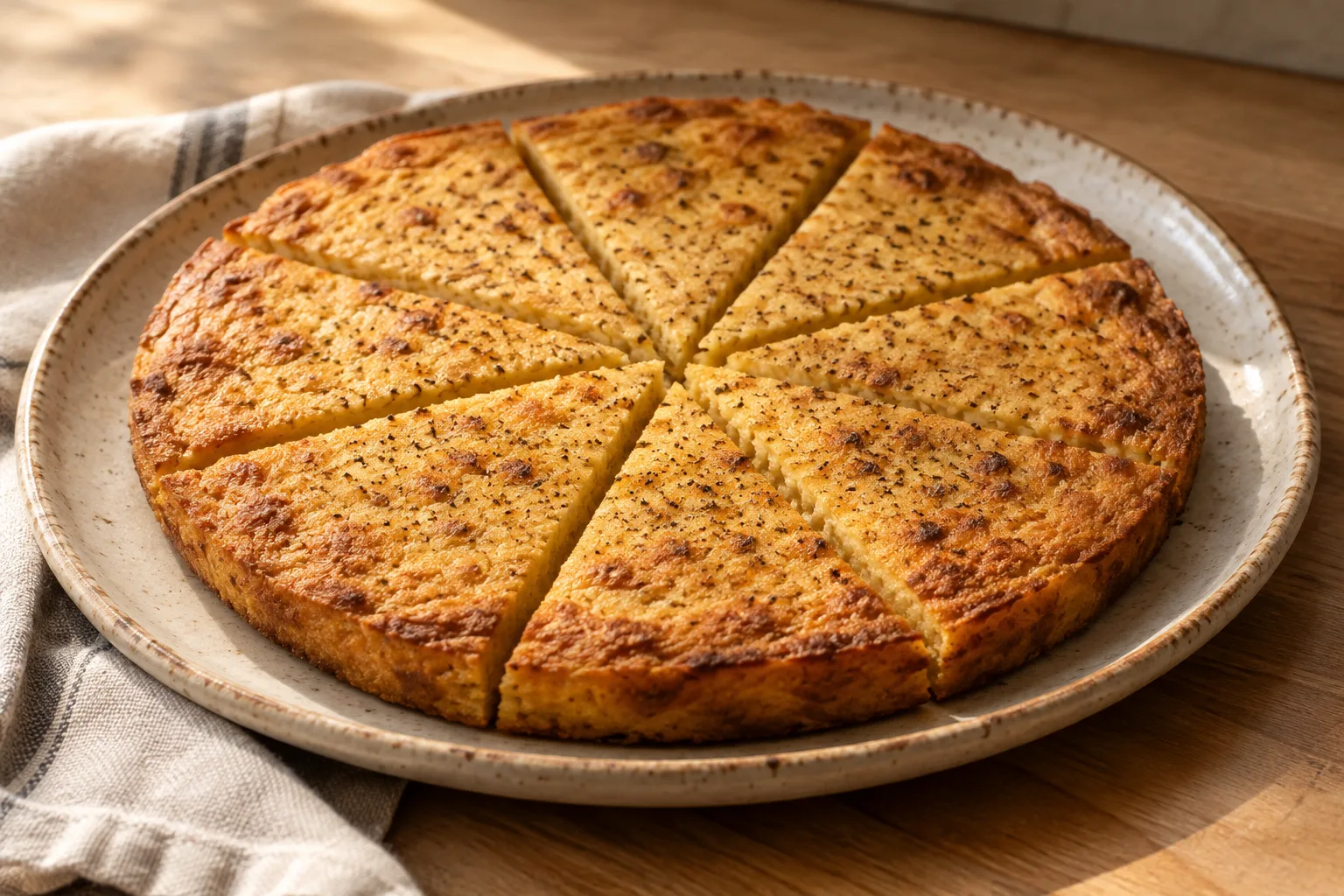
Several dishes have become especially recognisable: calentita, a baked chickpea-flour preparation; panissa, a chickpea mixture cooked, set and fried; rosto, pasta with tomato and meat; and torta de acelgas, a savoury chard pie. These are different kinds of food, not variations on one recipe. Pasta dishes and festive baking sit alongside fish, meat and vegetables prepared for everyday meals.
Gibraltar’s small scale makes the territory a useful frame for describing this culinary tradition, but it does not mean every household cooks alike. Recipes change from family to family, and the shared foodways of nearby communities do not erase local adaptations. The cuisine is best understood as a borderland tradition made at home, shaped by contact, movement and household practice rather than by a single canonical menu.
Migration, contact and the making of family recipes
Gibraltar’s culinary history is linked to its long relationship with neighbouring Andalusia and to British rule, established in the early eighteenth century. The territory also became home to people from a range of Mediterranean communities. Local accounts identify influences including Maltese, Genoese, Portuguese, Spanish and North African traditions. Traders from Italy, Malta and North Africa brought goods to the British fortress, while Spanish and Portuguese immigration contributed to a repertoire with roots in nearby regions as well as farther afield.
These connections help explain why local dishes can resemble foods elsewhere around the Mediterranean. Calentita, for example, belongs to a wider family of chickpea-flour preparations that includes Genoese farinata and Nice socca. Similarity is evidence of culinary kinship, however, not proof of one exclusive route or origin. Accounts of the dish’s arrival differ, so it is more careful to describe its relationships than to assign it a single documented point of origin.
Households also shaped what endured. Recipes were often transmitted orally, with cooks relying on approximate measures, memory and adjustment rather than a standard written formula. Written versions preserve particular family interpretations, not an authoritative rulebook. In this way, Gibraltar’s food history is both a story of contact among communities and a record of domestic decisions: what ingredients were available, what a household preferred and how a familiar dish was made its own.
Chickpea flour, pasta, vegetables and fish
Chickpea flour is one of the pantry ingredients most closely associated with Gibraltar’s named specialities. In calentita, it is mixed with water, olive oil, salt and black pepper, then baked. Panissa uses a related mixture but transforms it differently: it is cooked while being stirred until thick, left to set, cut into pieces and fried. The shared ingredient does not make the dishes interchangeable; their preparation gives them distinct forms and textures.
Pasta anchors another part of the household repertoire. Rosto is commonly described as penne or macaroni with tomato sauce and meat; carrots, onion and garlic appear in recorded versions, while mushrooms may be included or omitted. Meat choices and finishing touches vary. Fideos al horno is a baked pasta dish, with a meat sauce and, in some versions, a topping of cheese or béchamel. Vegetables also feature in torta de acelgas, a savoury pie associated with chard.
The broader domestic table includes fish, meat and vegetables, rather than only the dishes most often named as local specialities. A family account describes buying fresh fish weekly and gathering to eat it together; that is a particular household memory, not a rule for all residents. Together, these ingredients show how everyday foods and distinctive preparations form a repertoire grounded in both ordinary cooking and family preference.
Legume richness, tomato and contrasting textures
Texture is central to the differences between Gibraltar’s best-known savoury preparations. Baked calentita sets into portions with a browned surface and a dense, tender chickpea interior. Its seasoning is simple: olive oil, salt and black pepper complement the legume rather than masking it. Panissa begins as a thick cooked paste; once set and fried, it has a firmer shape and a crisp exterior. Both are based on chickpea flour, yet one is baked as a batter and the other is cooked, set and fried.
In rosto, tomato sauce coats the pasta and meat. Carrots can add sweetness, while mushrooms, when used, bring an earthier note. Some household versions include wine; others differ in meat, vegetables, stock or cheese. There is no single combination that should be treated as mandatory. Baked fideos al horno brings a different effect: pasta and sauce held together beneath a top layer that may be cheese or béchamel.
The chard filling in torta de acelgas offers a savoury, vegetable-led counterpoint to the richer pasta dishes. Seasonal sweets broaden the range further: pan dulce is a fruit-and-nut bread associated with Christmas, while japonesa is fried dough filled with a custard-like cream. The repertoire moves between hearty, legume-based, sauced, baked and sweet preparations rather than relying on one defining flavour.
Family transmission and seasonal baking
The household is an important setting for keeping recipes alive and adapting them. Oral instructions may leave room for experience: a family story about learning rice pudding by phone describes a cook stirring while a grandmother guided the process by the mixture’s texture. This is a specific example of teaching through conversation and observation, not a claim that every Gibraltar family follows the same method. Such stories help explain why recorded recipes can differ from one another without one version necessarily cancelling out the rest.
Some foods are linked to particular points in the year. Torta de acelgas is associated with Easter. Bollo de hornazo, a sweet, relatively dry bread, is described as an Easter food and is also eaten at Christmas in Gibraltar; pan dulce, with fruit and nuts, is linked to Christmas. These are documented seasonal associations, not a complete calendar of local celebration.
Food also appears in public gathering. Gibraltar’s Calentita festival began in 2007 and brings attention to the territory’s gastronomy and diverse community. Its public celebration complements rather than replaces the quieter transmission of recipes in homes. Family meals, festive baking and a food festival represent different scales of sharing: recipes can be preserved at home, prepared for a seasonal occasion or encountered in a wider community gathering.
Resting, stirring, baking and frying
The preparation of calentita depends on resting and baking. Chickpea flour is combined with water, oil and seasoning, and the mixture is left for several hours or, in some versions, overnight. It is then poured into an oiled baking dish and cooked until set and browned. The wait before baking and the use of the oven are characteristic of this preparation; it is not made by frying the batter in a pan. It is cut into portions and commonly served hot.
Panissa follows a longer sequence at the stove. Its chickpea mixture is stirred as it cooks until it thickens into a paste. After setting, it is sliced or cut into pieces and fried in olive oil. This sequence creates a firm piece suitable for frying and distinguishes panissa from the oven-baked calentita, even though their ingredients overlap.
For rosto, pasta is cooked separately in some household methods and then combined with a tomato-and-meat sauce; other recorded versions cook the pasta in the sauce. Carrots and other additions, the meat selected and the amount of liquid can vary. Fideos al horno is finished in the oven, where its top layer of cheese or béchamel can melt and bind the surface. These techniques make use of ordinary kitchen equipment—mixing bowl, saucepan, pot, frying pan and baking dish—while allowing room for family-specific practice.
From a shared home meal to a public food festival
Gibraltar’s dishes can serve different roles at the table. Calentita is eaten hot in cut portions as a snack or starter and is also described as an accompaniment to soups and stews. Fried panissa offers another chickpea-based preparation. Rosto and fideos al horno are more substantial pasta dishes, while torta de acelgas is a savoury pie with a vegetable filling. The names point to distinct foods, not a prescribed sequence of courses.
Family meals may be arranged around a plentiful main dish served in a shared vessel. One account of home cooking emphasises generous portions and the importance of flavour over elaborate presentation. Another family memory centres on fresh fish bought at the market and eaten together. It recalls one family’s Friday practice, including its connection to the custom of avoiding meat on Good Friday; it should not be generalised into a universal weekly routine. Christmas breads and Easter baking bring other foods into the calendar.
The public setting offers a different way to encounter local food. Calentita festival gathers residents and visitors around dishes and the influences represented in Gibraltar’s community. Domestic meals and public events both make food a way to share, but neither requires every household to prepare a dish in exactly the same way. The table holds both common references and personal versions.
A vocabulary of Gibraltar dishes
These names refer to specific preparations found in Gibraltar’s culinary repertoire. Some have close relatives elsewhere, but the descriptions below identify the local forms documented here rather than claiming one fixed recipe for every home.
- Calentita: A chickpea-flour mixture baked with water, olive oil, salt and black pepper, then cut into portions and served hot. It belongs to a wider Mediterranean family of chickpea-flour preparations.
- Panissa: Chickpea mixture cooked while being stirred until thick, left to set, cut and fried. Its method and finished texture distinguish it from calentita.
- Rosto: Pasta, commonly penne or macaroni, served with tomato sauce and meat. Carrots and mushrooms appear in some descriptions; family versions differ in ingredients and finish.
- Fideos al horno: A baked pasta dish with meat sauce and other variable ingredients; some versions have a cheese or béchamel topping.
- Torta de acelgas: A savoury chard pie associated with Easter in descriptions of Gibraltar’s food traditions.
- Bollo de hornazo and pan dulce: Sweet breads linked with seasonal eating. Bollo de hornazo is associated with Easter and Christmas, while pan dulce, often made with fruit and nuts, is linked to Christmas.
- Japonesa: Fried sweet dough filled with custard-like cream, described as a snack or teatime confection.
Taken together, the vocabulary shows how Spanish names, Mediterranean connections and household variations coexist in Gibraltar’s food culture.
One country, many cuisines
Gibraltar
Gibraltar is documented as a single culinary setting rather than as a territory divided into distinct food regions. Its home cooking brings together British and Andalusian Spanish influences with traditions associated with Malta, Genoa, Portugal and North Africa. Calentita, panissa, rosto and torta de acelgas are among the named dishes, while family recipes vary in ingredients and method. The available evidence supports describing the territory as a whole, not mapping separate regional cuisines within it.
Cook