Documentary synthesis prepared with AI assistance. It does not replace specialist review or certify kitchen testing. · Updated 12 November 2026
An Island Cuisine in the Western Pacific
Guam, called Guåhan in CHamoru, is the largest and southernmost island in the Mariana Islands, in the western Pacific. Its food culture is closely associated with the Indigenous CHamoru people and with the island’s continuing cultural life. Guam’s position amid Pacific routes and its history of contact with outside powers have shaped a cuisine with local continuities and multiple influences; no single influence explains the whole table.
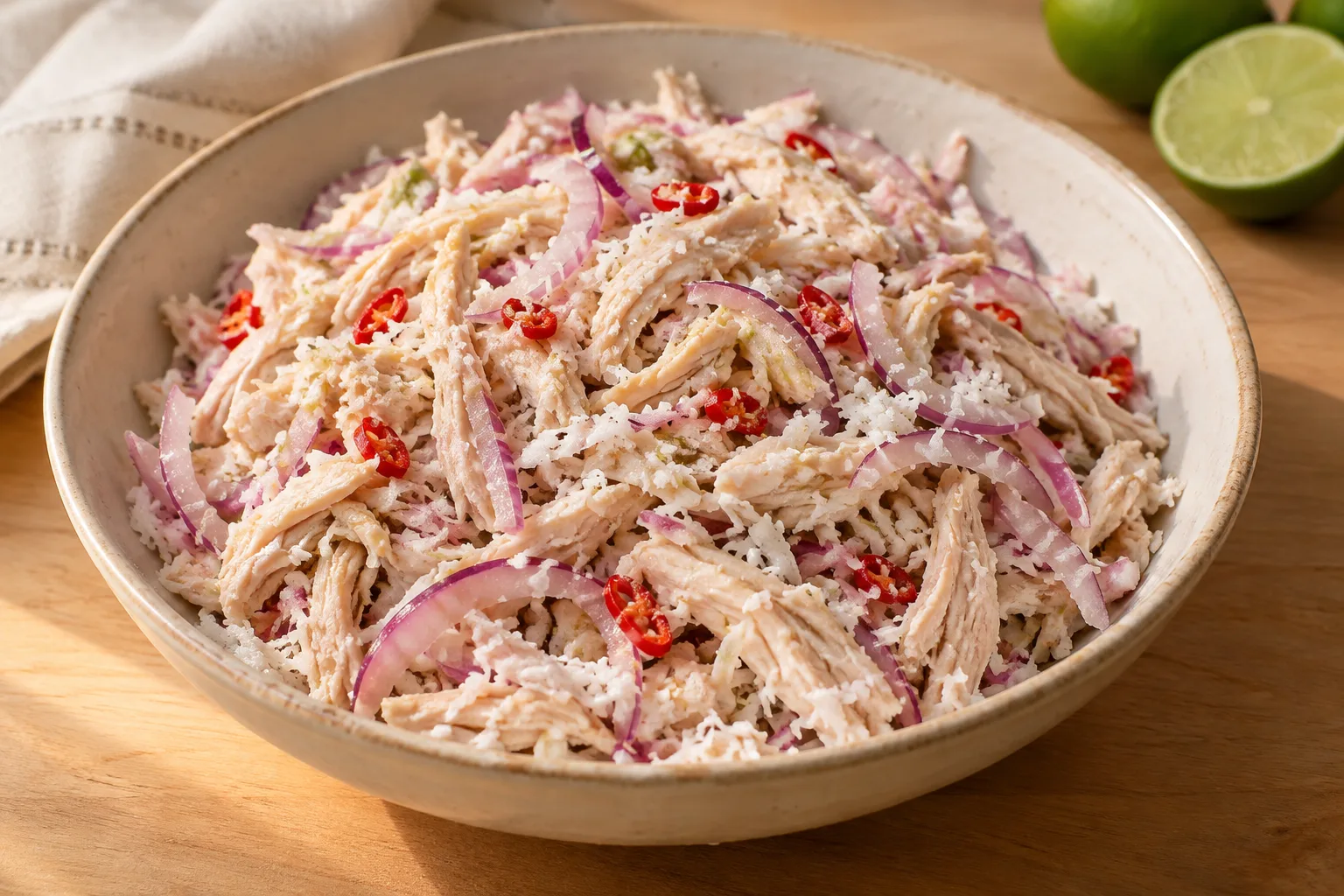
A meal may bring together rice colored with annatto, grilled meat, a coconut-rich stew, and a bright chile-and-citrus condiment. Kelaguen offers another familiar combination: protein mixed with citrus, scallions, chile, salt, and often grated coconut. Its form changes with the main ingredient and family practice. The defining point is not a fixed menu but the way ingredients and preparations meet.
Food is also social. Family gatherings and celebrations are occasions for sharing dishes prepared in quantities for a group. Grilled foods, rice, sauces, and preparations such as kelaguen can appear together, though there is no compulsory menu. Guam’s cuisine is best understood through particular dishes and practices, alongside the island’s wider history of exchange.
Maritime Connections and Local Adaptation
The Magellan expedition reached Guam in 1521. Spanish colonial rule lasted for more than three centuries, and Guam was connected to routes linking Mexico and the Philippines. After the Spanish-American War of 1898, the island became a United States territory. These documented political and maritime connections provide context for the movement of ingredients, names, and culinary forms, but do not make every dish the product of a single outside source.
Some preparations with Spanish-derived names took on distinct local forms. In the eskabeche described for Guam, lightly fried fish is cooked with onion, green pepper, and turmeric in a liquid that includes tuba vinegar, made from fermented coconut sap. The dish’s local method and ingredients distinguish it from simply reproducing a Spanish preparation. Latiya, too, is related to Spanish custard traditions but is served in Guam as cream over a sponge-cake base, often with cinnamon.
The island’s contacts with the Philippines and other parts of the Pacific are part of this longer story. A CHamoru cultural history includes both adaptation and continuity, and the evidence supports describing particular exchanges rather than claiming exclusive origins for dishes whose histories are complex or uncertain.
Coconut, Rice, Citrus, and Annatto
Coconut appears in several forms in Guam’s documented cooking. Fresh or grated coconut is mixed into some kelaguen, while coconut milk gives dishes such as tinaktak a rich, creamy sauce. The combination is practical as well as distinctive: coconut can contribute texture to a citrusy preparation or body to a simmered stew. The ingredients in any given version vary, so these uses describe common preparations rather than a universal formula.
Rice is a central accompaniment and also appears in sweets. For CHamoru red rice, known as hineksa’ aga’ga, annatto seeds release their color into water that is then used to cook the rice. Garlic and onion can add savory depth. Red rice is associated with family gatherings and celebrations, and it accompanies a range of main dishes.
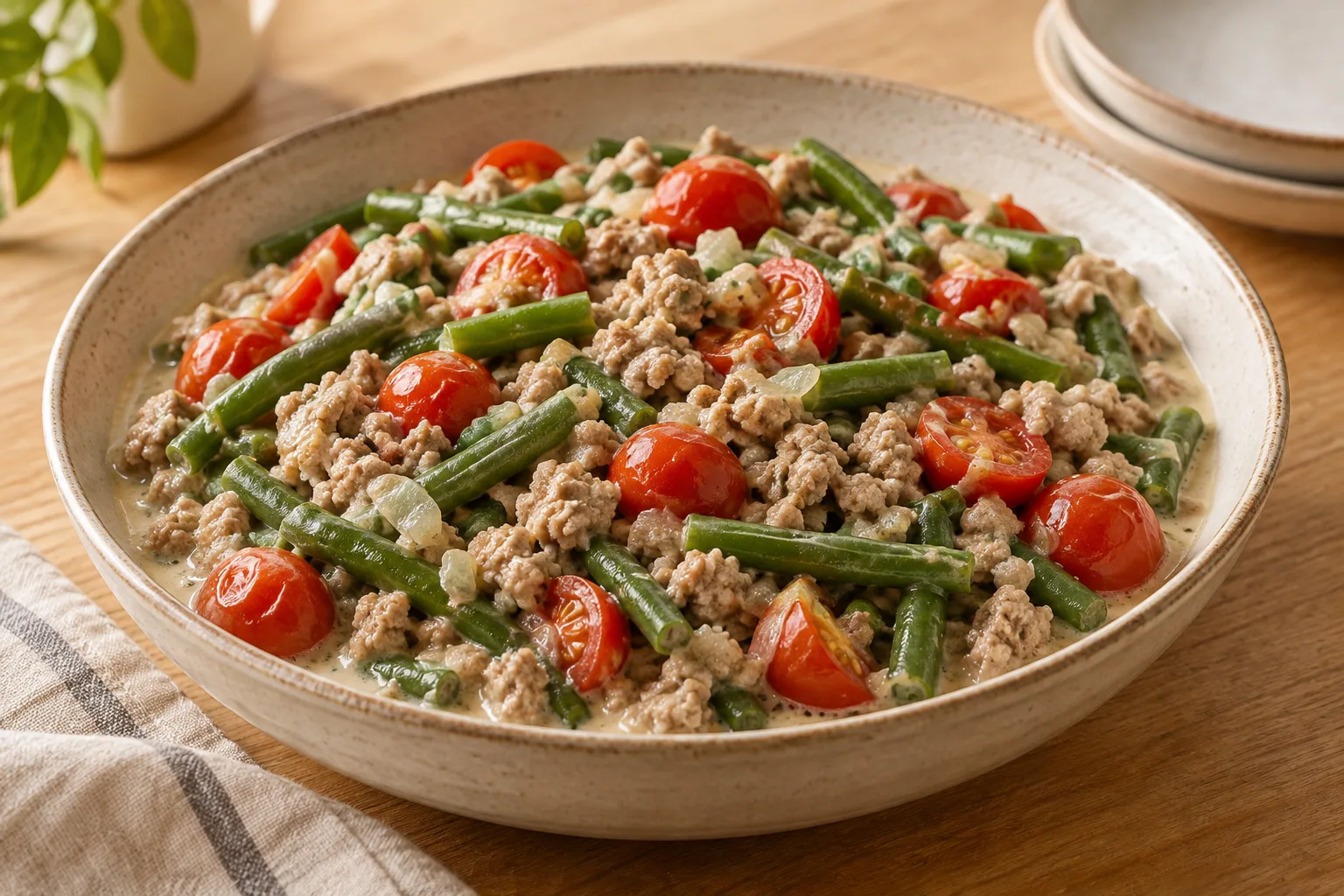
Citrus juice, especially lemon or lime, brings sharpness to kelaguen. Donne’, the CHamoru word for chile, adds heat; scallions and salt are also used. Fina’denne’ may combine soy sauce with vinegar or citrus, onion, and chile. Tinaktak commonly brings together ground meat, green beans, tomatoes, and coconut milk. Titiyas, a flatbread, can be made with corn or wheat flour, with some versions including coconut milk. Together these ingredients show a pantry shaped by local practice and exchange.
Citrus, Chile, Smoke, and Cream
A recognizable flavor contrast in CHamoru cooking is citrus acidity with chile heat and coconut richness. In kelaguen, lemon or lime juice meets donne’, scallions, salt, and often grated coconut. The result can be sharp and fresh, with a moist, textured mixture. The balance varies: a family may adjust the amount of citrus, chile, or coconut to suit the protein and the desired consistency.
Grilling contributes a different character. CHamoru barbecue and grilled chicken can develop browned, smoky notes, which sit well beside rice and a salty or acidic fina’denne’. This condiment can be made with soy sauce, vinegar or citrus, onion, and chile, with its heat and sharpness changing from one version to another. It is a flexible table seasoning rather than a single standardized recipe.
In tinaktak, coconut milk creates a creamy sauce around meat and vegetables. Tomatoes give a brighter counterpoint, while green beans can retain some firmness. Red rice, colored with annatto, is relatively mild beside these more pronounced flavors. The contrast between smoky grilled foods, creamy stew, and citrusy kelaguen helps explain the variety of a meal without reducing Guam’s cooking to one flavor profile.
Gatherings, Celebrations, and Foodways
Sharing food is an important part of CHamoru social life. Family gatherings and celebrations are documented occasions for serving red rice, kelaguen, and grilled meats in portions suited to a group. Chicken kelaguen is associated with communal meals, while red rice is a familiar accompaniment at gatherings and celebrations. Barbecue is both a way of cooking and a setting for eating together, often outdoors.
Foodways are also carried through family cooking and adaptations of familiar dishes. Titiyas can accompany kelaguen or other foods, and may serve in place of bread. Its flour and flavor can vary: versions are described with corn or wheat flour, and some include coconut milk. Latiya, with cream served over sponge cake and often finished with cinnamon, is prepared at Christmas and other special occasions. These examples show how a recognizable dish can persist while its ingredients or presentation change.
Guam commemorates the 1521 encounter with the Spanish expedition on March 6 through a historical reenactment. That observance recalls a historical episode; it should not be treated as a general food festival or assumed to represent how all families celebrate. The everyday transmission of cuisine is visible in shared meals, family versions of dishes, and the continued preparation of local foods.
Grilling, Chopping, Mixing, and Simmering
Kelaguen illustrates how preparation can be as important as a list of ingredients. For chicken kelaguen, the chicken is cooked first, commonly by grilling or boiling, then shredded or finely cut and mixed with citrus, scallions, chile, salt, and often coconut. Citrus seasons the mixture and affects its texture, but it should not be relied on to cook chicken safely. Cook chicken thoroughly before mixing it into kelaguen, and handle seafood safely as well.
Grilling gives meat browned surfaces and smoky flavor; the cooked meat may then be shredded for kelaguen or served as barbecue. Tinaktak uses a different sequence. Aromatics such as onion and garlic are sautéed, the ground meat is browned, and vegetables and coconut milk are added. A gentle simmer allows the sauce to come together. The timing affects the vegetables: green beans may be left with some bite rather than cooked until very soft.
For red rice, annatto seeds are steeped or infused in water to release color before the rice is cooked in that liquid. Titiyas begin as a dough made with corn or wheat flour, with coconut milk present in some versions. Grilling, chopping, sautéing, mixing, and simmering produce different textures and flavors; methods and proportions can vary among cooks.
Accompaniments and Ways of Serving
Accompaniments connect the different dishes on a CHamoru table. Red rice, colored with annatto, can be served with meat, fish, or other main dishes. Titiyas provides a flatbread alongside foods such as kelaguen. Kelaguen may also be served with rice or wrapped in a tortilla. A bowl of fina’denne’ lets diners add saltiness, acidity, or heat to grilled meats, rice, and other foods according to preference.
At a barbecue, grilled meat may be served with rice and sauces, while kelaguen offers a citrusy counterpart. Tinaktak is served hot, often over rice, so its coconut sauce and vegetables accompany the grains. Such a meal can move between smoky, creamy, and bright flavors without requiring a fixed sequence or prescribed combination.
What appears on the table depends on the occasion, the household, and available ingredients. The documented pattern is one of substantial dishes and adaptable accompaniments, not a mandatory menu. Guam’s contemporary food culture also includes foods from other traditions present on the island. The CHamoru preparations described here remain specific and recognizable within that wider setting, while shared eating provides a setting for their continued use.
A Short Glossary of Guam Foodways
These terms name particular ingredients and preparations documented in Guam. Spellings may vary; the descriptions refer to recognizable uses rather than one unchanging recipe.
- Kelaguen: A preparation of protein mixed with citrus, chile, scallions or onion, salt, and often grated coconut. Chicken is cooked before mixing; other versions use different proteins.
- Hineksa’ aga’ga: CHamoru red rice. Annatto colors the rice, which is commonly served as an accompaniment and at gatherings.
- Fina’denne’: A table condiment that may combine soy sauce, vinegar or citrus, onion, and chile. Its saltiness, acidity, and heat vary.
- Titiyas: CHamoru flatbread made with corn or wheat flour; some versions include coconut milk. It can be served with kelaguen and other dishes.
- Tinaktak: A savory stew commonly made with ground meat, vegetables such as green beans and tomatoes, and coconut milk. Versions can use different proteins.
- Latiya: A Guam dessert of cream served over a sponge-cake base, often with cinnamon; it is related to custard traditions.
- Donne’: The CHamoru word for chile, used to describe the ingredient that brings heat to dishes and condiments.
One country, many cuisines
CHamoru Community of Guam
CHamoru foodways are a documented part of Guam’s cultural life and include preparations such as kelaguen, red rice, titiyas, and tinaktak. These dishes are shared at gatherings and celebrations, with versions that can differ by family and ingredients: kelaguen can use different proteins, while titiyas may be made with corn or wheat flour and sometimes coconut milk. This entry describes a documented culinary community, not an internal territorial division of the island.
Cook