Asia · Eastern Asia

Hong Kong SAR China

Hong Kong’s food culture has Cantonese roots and a long history of migration, trade and exchange. Rice, seafood, roast meats and gently seasoned steamed dishes sit alongside dim sum, street snacks and the adapted breakfasts of neighbourhood cafés. Rather than a single, uniform cuisine, the territory’s foodways bring together distinct communities, local routines and influences from beyond the region.

Food and eating habits

How people eat in Hong Kong SAR China

50 indicators exploring everyday meals, ingredients and food culture. Information is completed progressively from documented evidence.

0 of 50 indicators with documented information

Not all data are comparable: food supply, purchases and intake are different measures. Check the period, population and method for each finding. Qualitative descriptions do not establish percentages or amounts.

Timing and company

0/8
Timing and company — Hong Kong SAR China
IndicatorFindings and context
Meal times Awaiting research
Meals per day Awaiting research
Meal duration Awaiting research
Daily energy distribution Awaiting research
Weekdays and weekends Awaiting research
Eating at home and away Awaiting research
Cooking frequency Awaiting research
Eating together Awaiting research

Pantry and recipes

0/2
Pantry and recipes — Hong Kong SAR China
IndicatorFindings and context
Most consumed ingredients Awaiting research
Ingredient prevalence in recipes Awaiting research

Cereals and plant foods

0/6
Cereals and plant foods — Hong Kong SAR China
IndicatorFindings and context
Cereals and cereal products Awaiting research
Bread Awaiting research
Pulses Awaiting research
Vegetables Awaiting research
Fruit Awaiting research
Potatoes, roots and tubers Awaiting research

Protein foods

0/5
Protein foods — Hong Kong SAR China
IndicatorFindings and context
Meat Awaiting research
Fish and seafood Awaiting research
Eggs Awaiting research
Milk and dairy products Awaiting research
Protein sources Awaiting research

Fats, flavours and condiments

0/3
Fats, flavours and condiments — Hong Kong SAR China
IndicatorFindings and context
Cooking fats Awaiting research
Herbs and spices Awaiting research
Sauces and condiments Awaiting research

Meal composition

0/6
Meal composition — Hong Kong SAR China
IndicatorFindings and context
Breakfast composition Awaiting research
Main meal composition Awaiting research
Dinner composition Awaiting research
Appetisers and snacks Awaiting research
Desserts and sweets Awaiting research
Portion sizes Awaiting research

Techniques and equipment

0/5
Techniques and equipment — Hong Kong SAR China
IndicatorFindings and context
Cooking techniques Awaiting research
Vegetable preparation Awaiting research
Food preservation Awaiting research
Fermented foods Awaiting research
Kitchen equipment Awaiting research

Drinks

0/3
Drinks — Hong Kong SAR China
IndicatorFindings and context
Everyday drinks Awaiting research
Coffee and tea preparation Awaiting research
Drinks with meals Awaiting research

Nutrition and dietary patterns

0/3
Nutrition and dietary patterns — Hong Kong SAR China
IndicatorFindings and context
Energy and nutrients Awaiting research
Salt and sugars Awaiting research
Dietary patterns Awaiting research

Shopping, prices and waste

0/7
Shopping, prices and waste — Hong Kong SAR China
IndicatorFindings and context
Food expenditure Awaiting research
Cost of a common basket Awaiting research
Cost of specific meals Awaiting research
Grocery shopping locations Awaiting research
Shopping frequency Awaiting research
Prepared food and delivery Awaiting research
Household food waste Awaiting research

Seasons and celebrations

0/2
Seasons and celebrations — Hong Kong SAR China
IndicatorFindings and context
Seasonal produce Awaiting research
Celebration food Awaiting research
Explore its cuisines

Hong Kong: Cantonese Foundations and a Port City's Many Tables

Documentary synthesis prepared with AI assistance. It does not replace specialist review or certify kitchen testing. · Updated 12 November 2026

A coastal territory with many foodways

Hong Kong lies on the southern coast of China, beside the Pearl River estuary. Its territory includes Hong Kong Island, Kowloon, the New Territories and numerous outlying islands; hills and coastline sit close to dense urban neighbourhoods and harbours. This geography helps explain the visibility of seafood and fishing communities, but does not by itself account for the range of food found here. Cantonese cooking is a major foundation, alongside traditions associated with Hakka, Teochew, Hokkien and Shanghainese communities and wider international exchange. These are not interchangeable strands: they represent different food traditions living alongside one another. Rice anchors many home meals, while shops, cafés, restaurants and street stalls offer other rhythms of eating. Steamed fish, roast meats, dim sum, milk tea and café breakfasts each illuminate a different part of the city’s culinary life. No single dish stands for all Hong Kong food; together, everyday meals and shared restaurant traditions show how local practices have developed within a port city shaped by movement and encounter.

A port shaped by movement and exchange

Before becoming a British colony in 1841, Hong Kong was a coastal settlement associated with fishing and trade. Opening the port drew merchants and travellers, while its proximity to Guangzhou supported movement of people and Cantonese food traditions. Restaurants serving elaborate meals grew alongside simpler everyday eating; historically, dining out was not equally accessible to all households. The city’s food history therefore includes both public restaurant culture and home cooking. After the Second World War, changes in population and broader contact with Western habits added further layers. Refugees arriving after the Chinese Civil War in 1949 included people from regions beyond Cantonese-speaking Guangdong, bringing other culinary traditions into the city. The growth of industrial work also increased demand for affordable, convenient meals. Cha chaan tengs developed as part of this urban food landscape, adapting Western-associated ingredients and formats to local tastes. Egg tarts and Hong Kong-style milk tea became familiar parts of it. These developments did not replace Cantonese cooking; they joined it in a changing, international city. Hong Kong’s cuisine is best understood as a history of continuing adaptations, not as a sealed tradition or a single origin story.

Rice, seafood and seasoning

Rice is a staple in many home meals, served with roast meats, vegetables or other dishes, and used in preparations such as congee and rice-flour rolls. A more substantial example is glutinous rice wrapped in lotus leaf. It may combine rice with meat, mushrooms, seafood, Chinese sausage and salted egg yolk; the leaf gives the parcel an aroma, while the sticky rice holds the filling together. Hong Kong’s coastal setting is also visible in seafood and in preserved products. Tai O is associated with dried seafood, salted fish, shrimp paste and sauces, foods that reflect ways of keeping marine ingredients and concentrating their flavour. Fresh fish, meanwhile, may be served whole and steamed with ginger and scallions. Common Cantonese seasonings include soy sauce, oyster sauce, sesame oil, rice wine, garlic and ginger. Fermented black beans add a deep, savoury note in some fish and vegetable dishes. Marinades for char siu—Cantonese roast pork—can bring together soy and hoisin sauces, rice wine, spices and sweetness. These ingredients form a repertoire, not a fixed pantry list that every household or restaurant uses in the same way.

Freshness, savouriness and contrasting textures

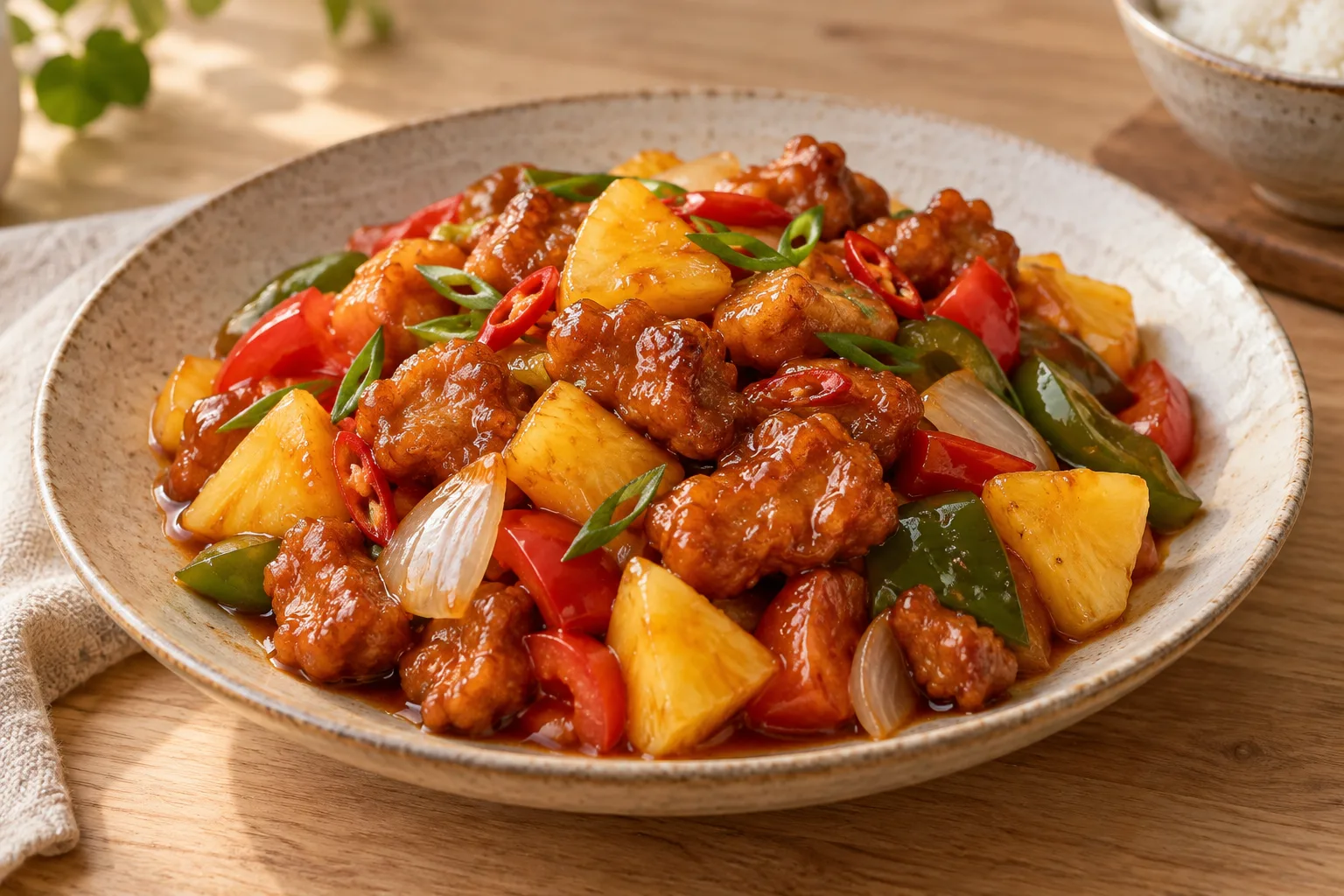
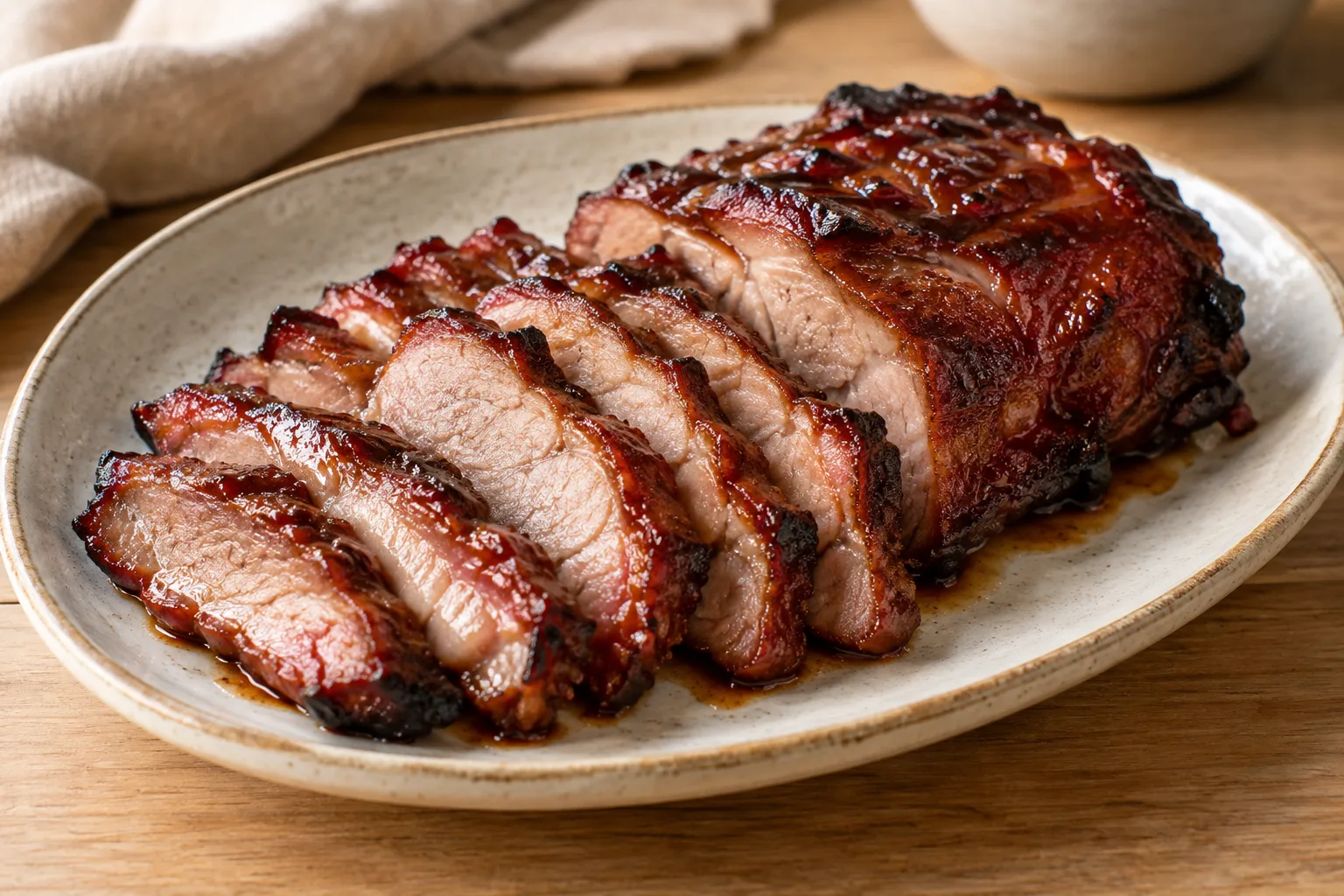
Many Cantonese preparations use seasoning to complement rather than overwhelm the main ingredient. A whole fish steamed with ginger and scallions can retain a delicate character, with a light soy dressing adding savouriness. A stronger contrast comes from fermented black beans with garlic, sometimes accompanied by chilli, in dishes such as steamed eel. The resulting range—from mild fish to pronounced fermented notes—can appear across a meal without implying one mandatory flavour profile. Roast pork offers a different balance: char siu is marinated, roasted and glazed, producing tender meat with a glossy, caramelised surface and a sweet-savoury taste. Cantonese sweet-and-sour pork also balances acidity and sweetness, though recipes and restaurant versions vary. Some preparations use rice vinegar and fresh fruit such as pineapple; no single formulation represents every kitchen. Texture matters as much as flavour. Rice-flour rolls are smooth and flexible, shrimp dumplings tender, and roast meats may contrast a soft interior with a browned exterior. The bo lo bao, or pineapple bun, pairs a soft crumb with a crisp, sweet topping. Its name describes the cracked, pineapple-like appearance of the crust, not a pineapple filling. These contrasts arise from ingredients, shaping and cooking as well as seasoning.

Tea, dim sum and food shared on occasions

Yum cha—taking tea—brings tea together with dim sum in a meal commonly enjoyed with others. The small portions make it possible to order several kinds of food for the table: examples include pork siu mai, shrimp dumplings and buns filled with roast pork. Tea and a succession of small dishes give the meal a different pace from choosing one individual main course. Dim sum is part of a broader restaurant culture, and its forms of service vary by establishment. Hong Kong restaurants have also served elaborate meals and catered family occasions; wedding banquets became part of the work of restaurant venues. Such meals show how food can organise gatherings without implying that every household marks celebrations in the same way. Culinary knowledge is transmitted in ordinary settings too: homes, roast-meat shops, bakeries, cafés and street stalls all contribute to the city’s food life. Familiar café breakfasts and baked goods are part of that everyday repertoire. Chinese-calendar occasions and seasonal dishes are also present, but practices differ among families and communities. It is more accurate to describe these shared and varied settings than to assign one uniform festive menu or ritual to the whole territory.

Steam, roast, stir-fry and simmer

Steaming suits both delicate whole fish and many dim sum items, yielding moist fish and tender dumpling fillings. Rice-flour rolls begin as a thin batter that is steamed into flexible sheets, served plain or wrapped around fillings such as shrimp or roast pork. Bamboo baskets are associated with dim sum service, though the dishes and equipment used vary. Wok stir-frying offers a quicker way to cook ingredients: vegetables can be moved rapidly over heat before sauce and other components are added. Roast meats follow another method. For char siu, pork is marinated, roasted and glazed until the outside is glossy and caramelised. Specialist roast-meat shops traditionally display meats hanging, while home cooks can adapt the roast to an oven. Cantonese cooking also includes preparations that rely on time rather than speed. Slow-cooked soups and stews are part of the repertoire, and a clay pot can be used for dishes cooked gradually, distributing heat as the ingredients soften. Boiling, frying and braising also occur. The cooking method is chosen to suit the dish: steaming for fish or dumplings, roasting for pork, quick wok cooking for a stir-fry, and longer cooking for soups and stews.

From café breakfasts to meals for the table

Hong Kong’s eating places accommodate different schedules and occasions. A cha chaan teng serves a practical café repertoire that may combine eggs, toast, ham, rice, noodles and tea with milk. Macaroni soup in a clear broth with ham or another meat is a recognised breakfast; toast and egg sandwiches are other familiar options. These dishes adapt ingredients and formats associated with Western food rather than simply reproducing a British meal. At yum cha, by contrast, diners often order several small dishes with tea for the table. Rice-flour rolls, dumplings and filled buns can be shared, with conversation continuing as dishes arrive. Roast meats may be bought from specialist shops, served over rice or combined with vegetables; char siu can also fill buns or accompany noodles. Seafood meals connect the wider city to coastal places such as Tai O and Sai Kung, though the setting and menu vary. Home meals often centre on rice with dishes prepared in different ways, while eating out and takeaway are also prominent. Street stalls, neighbourhood restaurants and banquet venues add further settings. There is no single table protocol for every occasion: the pace and choice of food depend on where people eat and who is gathering.

A glossary of local dishes and dining

Local terms help distinguish a dish, style of service or kind of eating place. Romanised Cantonese names are often used alongside English descriptions, and the same broad name can cover variations among restaurants and households.

  • Dim sum: Small Cantonese dishes, including shrimp dumplings, siu mai and roast-pork buns, often eaten with tea.
  • Yum cha: A meal or gathering centred on drinking tea and eating dim sum, commonly in company.
  • Char siu: Cantonese roast pork, usually marinated and glazed to give the surface a sweet-savoury, caramelised finish.
  • Siu mei: Cantonese roast meats; the selection can include char siu, roast duck or goose, and roast pork.
  • Cha chaan teng: A Hong Kong-style café serving an everyday menu that may include milk tea, toast, eggs, rice, noodles and macaroni soup.
  • Congee: Rice cooked into a soft porridge, eaten plain or with savoury additions such as pork or preserved egg.
  • Bo lo bao: A soft bun topped with a sweet, crisp crust whose cracked appearance resembles a pineapple; the name does not mean it contains pineapple.

One country, many cuisines

Tai O

Tai O is a fishing town on an island in Hong Kong. Its documented food traditions include dried seafood, salted fish, shrimp paste and sauces, products associated with preserving marine ingredients and concentrating their flavours. Lotus-leaf-wrapped glutinous rice is also prepared there; possible fillings include meat, mushrooms, seafood, Chinese sausage and salted egg yolk. The dish is found more widely in Hong Kong and should not be treated as exclusive to Tai O.

Cook
Read as an article ↗
Places and communities

One country, many cuisines

An initial selection of regions to explore. Culinary boundaries may differ from administrative divisions.

Hong Kong SAR China

Tai O

Tai O is a fishing town on an island in Hong Kong. Its documented food traditions include dried seafood, salted fish, shrimp paste and sauces, products associated with preserving marine ingredients and concentrating their flavours. Lotus-leaf-wrapped glutinous rice is also prepared there; possible fillings include meat, mushrooms, seafood, Chinese sausage and salted egg yolk. The dish is found more widely in Hong Kong and should not be treated as exclusive to Tai O.

Cook
Recipes connected with Hong Kong SAR China

Each recipe documents one version. Geographic associations do not imply an exclusive origin.

Hong Kong char siu
Image generated by the Kitchenpause team
550 minIntermediate

Hong Kong char siu

Cantonese roast pork with a sweet-savoury marinade, a honey glaze and a caramelized surface. Serves 8; hands-on preparation takes about 10 minutes, in addition to 8 hours of marinating.

View recipe

Sources consulted

Read the sources and each document’s scope. A heritage inscription concerns a particular practice, not all of a country’s cuisine.

  1. Hong Kong’s National Dish and Cantonese Influence | Remitly www.remitly.com/blog/en-au/food/national-dish-of-hong-kong/ remitly.com Consulted: October 30, 2026
  2. 49 Cantonese/ Hong Kong Recipes 2026 - Greedy Girl Gourmet www.greedygirlgourmet.com/best-easy-cantonese-recipes-hong-kong/ greedygirlgourmet.com Consulted: October 30, 2026
  3. Hong Kong cuisine - Wikipedia en.wikipedia.org/wiki/Hong_Kong_cuisine en.wikipedia.org Consulted: October 30, 2026
  4. 63 Chinese Cuisines: the Complete Guide chinesecookingdemystified.substack.com/p/63-chinese-cuisines-the-complete chinesecookingdemystified.substack.com Consulted: October 30, 2026
  5. A Culinary Journey Through Hong Kong – The Spicery thespicery.com/blogs/travel-blog/a-culinary-journey-through-hong-kong?srsltid=AYCX9vLmE0lWc6… thespicery.com Consulted: October 26, 2026
  6. Recipes | Lee Kum Kee Home | HONG KONG hk.lkk.com/en/recipes hk.lkk.com Consulted: October 27, 2026
  7. Authentic Chinese Recipes | Lee Kum Kee Recipes uk.lkk.com/recipes uk.lkk.com Consulted: October 30, 2026
  8. 100+ Hong Kong Recipes: Easy & Delicious Ideas - Cookpad cookpad.com/eng/search/hong%20kong cookpad.com Consulted: October 30, 2026
  9. Mrs P's Kitchen www.mrspskitchen.net/category/food-blog/hong-kong-chinese-cuisine/ mrspskitchen.net Consulted: October 30, 2026
  10. A Culinary Journey Through Hong Kong – The Spicery thespicery.com/blogs/travel-blog/a-culinary-journey-through-hong-kong?srsltid=AYCX9vJfe36blY… thespicery.com Consulted: October 26, 2026
  11. Classic Hong Kong food: Local dishes and street food snacks to try expatliving.net/hong-kong/classic-hong-kong-food-local-dishes-street-food-snacks/ expatliving.net Consulted: October 26, 2026
  12. A Culinary Journey Through Hong Kong – The Spicery thespicery.com/blogs/travel-blog/a-culinary-journey-through-hong-kong?srsltid=AYCX9vJFCgW8X3… thespicery.com Consulted: October 26, 2026
  13. Cocina china por regiones | CocinaSinReceta.com www.cocinasinreceta.com/tecnicas/cocina-china-por-regiones/ cocinasinreceta.com Consulted: October 27, 2026
  14. A Culinary Journey Through Hong Kong – The Spicery thespicery.com/blogs/travel-blog/a-culinary-journey-through-hong-kong?srsltid=AYCX9vKqSbhzqh… thespicery.com Consulted: October 26, 2026
  15. A Culinary Journey Through Hong Kong – The Spicery thespicery.com/blogs/travel-blog/a-culinary-journey-through-hong-kong?srsltid=AYCX9vKf5BYImA… thespicery.com Consulted: October 26, 2026
  16. Gastronomía de Hong Kong - Wikipedia, la enciclopedia libre es.wikipedia.org/wiki/Gastronom%C3%ADa_de_Hong_Kong es.wikipedia.org Consulted: October 30, 2026
  17. A Culinary Journey Through Hong Kong – The Spicery thespicery.com/blogs/travel-blog/a-culinary-journey-through-hong-kong?srsltid=AYCX9vK37eHCoF… thespicery.com Consulted: October 27, 2026
  18. A Culinary Journey Through Hong Kong – The Spicery thespicery.com/blogs/travel-blog/a-culinary-journey-through-hong-kong?srsltid=AYCX9vI1WIRa__… thespicery.com Consulted: October 27, 2026
  19. Enviar una carta de España a RAE de Hong Kong (China) | PieterPost pieterpost.com/es/enviar-una-carta-de-espana-a-rae-de-hong-kong-china/ pieterpost.com Consulted: October 27, 2026
  20. A Culinary Journey Through Hong Kong – The Spicery thespicery.com/blogs/travel-blog/a-culinary-journey-through-hong-kong?srsltid=AYCX9vL17rAOA7… thespicery.com Consulted: October 27, 2026
  21. A Culinary Journey Through Hong Kong – The Spicery thespicery.com/blogs/travel-blog/a-culinary-journey-through-hong-kong?srsltid=AYCX9vJK7YLWmu… thespicery.com Consulted: October 27, 2026
  22. Hong Kong Food Guide: 37 Famous Local Dishes You Should Try hivelife.com/hong-kong-food-guide/ hivelife.com Consulted: October 30, 2026
  23. A Culinary Journey Through Hong Kong – The Spicery thespicery.com/blogs/travel-blog/a-culinary-journey-through-hong-kong?srsltid=AYCX9vIsyQdUKK… thespicery.com Consulted: October 27, 2026
  24. Hong Kong Style Char Siu Pork schoolofwok.co.uk/tips-and-recipes/hong-kong-char-siu schoolofwok.co.uk Consulted: October 27, 2026
  25. Classic Cantonese-Style Char Siu l Recipes l Lee Kum Kee Home | HONG KONG hk.lkk.com/en/recipes/classic-cantonese-style-char-siu hk.lkk.com Consulted: October 27, 2026
  26. Chinese Char Siu (BBQ Roast Pork) Recipe www.mrspskitchen.net/chinese-char-siu-bbq-roast-pork-%E8%9C%9C%E6%B1%81%E5%8F%89%E7%87%92/ mrspskitchen.net Consulted: October 27, 2026
  27. Food & Culture China Journey: A Chef-Led 2026 Guide – Chinatourly chinatourly.com/pages/interest-food-culture?srsltid=AYCX9vLJ5O_KQslayUtuEmuzSSVHENIcKehEuKgS… chinatourly.com Consulted: October 28, 2026
  28. Food in China: Regional Dishes, Historic Restaurants & Dining Tips www.advantour.com/china/food.htm advantour.com Consulted: October 29, 2026
  29. Food & Culture China Journey: A Chef-Led 2026 Guide – Chinatourly chinatourly.com/pages/interest-food-culture?srsltid=AYCX9vIG_81p196rRq5z4v7VrUzC584Ra6d4fcFY… chinatourly.com Consulted: October 29, 2026
  30. A Culinary Journey Through Hong Kong – The Spicery thespicery.com/blogs/travel-blog/a-culinary-journey-through-hong-kong?srsltid=AYCX9vJXBveuJB… thespicery.com Consulted: October 30, 2026
  31. Romancing Home: Sweet & Sour Hong Kong | Springer Nature Link doi.org/10.1057/9781137529442_6 doi.org Consulted: October 30, 2026
  32. Sweet and sour pork recipe by Tony Tan | Gourmet Traveller www.gourmettraveller.com.au/recipe/mains/sweet-and-sour-pork-14234/ gourmettraveller.com.au Consulted: October 30, 2026
  33. Home | Taste Hong Kong | Hong Kong Tourism Board tastehk.discoverhongkong.com/en tastehk.discoverhongkong.com Consulted: October 30, 2026
  34. Postres chinos: los dulces más típicos de China y cómo hacerlos en casa okdiario.com/recetas/postres-chinos-18479934 okdiario.com Consulted: October 30, 2026
  35. TPV para restaurantes en RAE de Hong Kong (China) — Ewity POS ewity.com/es/hong-kong/restaurants ewity.com Consulted: October 30, 2026
  36. General Outline of the Hong Kong Special Administrative Region_Ministry of Foreign Affairs of the People's Republic of China www.mfa.gov.cn/eng/wjb/zzjg_663340/gats_665294/xgxw_665296/202406/t20240606_11405838.html mfa.gov.cn Consulted: October 30, 2026
  37. Special Administrative Region - HKETO Brussels www.google.com/goto?url=CAESnwEB6zswFSIBS_GLoa0NAyYE-N7PKmP1PR7ZjZjgCgPTXfyeCXLlMKvpFnghvNPB… google.com Consulted: October 30, 2026
  38. Hong Kong Palace Museum | “A Movable Feast: The Culture of Food and Drink in China” Special Exhibition Opens at the Hong Kong Palace Museum on 19 March www.hkpm.org.hk/en/about/press-release/a-movable-feast-the-culture-of-food-and-drink-in-chin… hkpm.org.hk Consulted: October 30, 2026
  39. Hong Kong Museum of History - 2014_past_05 hk.history.museum/en/web/mh/exhibition/2014_past_05.html hk.history.museum Consulted: October 30, 2026
  40. Hong Kong - Wikipedia, la enciclopedia libre es.wikipedia.org/wiki/Hong_Kong es.wikipedia.org Consulted: October 30, 2026

We use session and security technologies to provide our features. Only with your permission do we load Google Analytics to measure visits and Google Maps on Contact. Choose separately, reject or accept both.

Withdraw either permission here. Withdrawing analytics reloads the page to unload the running tag.

Cookie policy