Documentary synthesis prepared with AI assistance. It does not replace specialist review or certify kitchen testing. · Updated 12 November 2026
An island cuisine shaped by place and exchange
Haiti occupies the western part of Hispaniola, an island it shares with the Dominican Republic. Its varied landscapes include mountains, valleys, and coastal communities; cooking draws on crops from inland areas as well as fish and seafood found along the shore. The range of local ingredients and specialties makes Haitian cuisine better understood as a family of related foodways than as one uniform menu.
Often described as Creole, Haitian cooking reflects Indigenous Caribbean, African, French, and Spanish influences, with Levantine influence also documented. These histories did not produce a simple or identical blend everywhere. Cooks developed their own combinations of ingredients and methods, and regional foods retain particular identities. Across many meals, rice, beans, corn, and roots provide familiar foundations, while stews, sauces, and condiments bring variation.
The phrase manje peyi, or “food of the country,” evokes a broad repertoire rather than a fixed dish. A meal might center on rice and beans, creamy cornmeal, a vegetable stew, or fish, with seasonings and accompaniments varying by household and place. Shared names and ingredients connect these meals without erasing their differences.
History, migration, and culinary memory
Before European colonization, Taíno communities lived on Hispaniola. Spanish settlement began in the late fifteenth century, followed by the destruction of much of the Indigenous population through violence, forced labor, and disease. France established control over the western part of the island, where plantation agriculture—including sugar, coffee, cotton, and cacao—depended on the enslavement of Africans. The Haitian Revolution ended French colonial rule, and Haiti became independent in 1804. This history is essential context for understanding how foodways developed under unequal conditions and through adaptation and resistance.
Haitian cuisine is not adequately explained by listing cultural influences as if each contributed a separate, unchanged ingredient. Taíno history forms part of the Caribbean context for foods such as cassava and corn; African and European histories, as well as later exchanges, also shaped cooking. A community of Arab descent and Levantine culinary influence are documented in Haiti, too. Across these encounters, people made food with available crops and passed on changing practices over generations.
The history of joumou soup carries a specific meaning. A pumpkin soup once reserved for slave owners became a dish Haitians claimed after independence, and it is now associated with freedom and dignity. That history belongs to this particular dish and should not be treated as a single explanation for the many traditions that make up Haitian cuisine.
A pantry of grains, roots, greens, and seafood
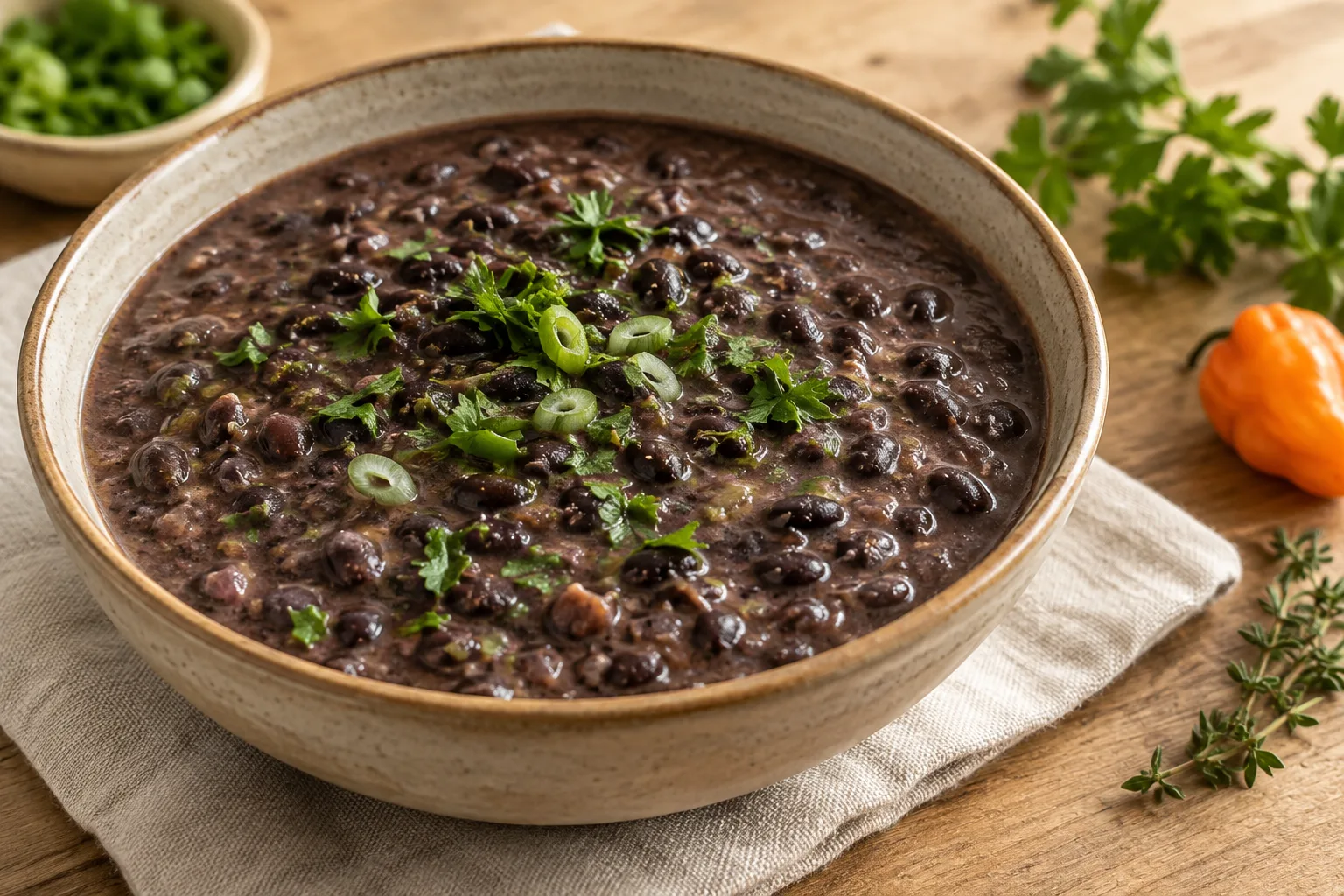
Rice and beans are central ingredients, appearing together in dishes such as diri kole ak pwa and in sauces served with rice or cornmeal. Corn is ground and cooked into mayi moulen, a soft, substantial dish. Cassava becomes kasav, a flat cake that can be eaten with avocado or peanut butter. Breadfruit, plantains, sweet potatoes, yams, and taro add further options, whether cooked as accompaniments or transformed into dishes such as Grand’Anse tonmtonm.
Vegetables include cabbage, carrots, onion, tomato, okra, chayote, watercress, and lalo, the Haitian name for jute leaves. Beans may be served whole or made into a sauce. Coastal foodways include fish and seafood such as crab, conch, and lobster; smoked or salted fish also appears in the pantry. Meat used in Haitian dishes includes pork, chicken, goat, and beef. Cashews are especially associated with dishes in the north.
Ingredients are preserved and prepared in different ways: fish may be smoked or salted, while meat can be marinated, dried, braised, or fried. Epis, a seasoning mixture of herbs, peppers, garlic, and other aromatics, is used across a range of dishes. Citrus and vinegar contribute to marinades and pickled accompaniments. These are shared resources for many preparations, not a single mandatory formula.
Herbs, heat, acidity, and contrasting textures
Many Haitian preparations combine herbs with garlic, onion, citrus, and peppers. Epis brings together aromatics used to season different foods, including meat, fish, rice, and stews. Thyme and parsley are among the herbs cited in Haitian cooking, while cloves and star anise appear in some preparations. The exact blend and degree of heat vary; a strongly seasoned dish does not mean every Haitian meal has the same level of pepper.
Acidity and crunch are particularly clear in pikliz, a spicy pickled mixture commonly made with cabbage, carrots, and hot peppers in vinegar. Served alongside rich meats or fried foods, it adds a sharp, crisp contrast. Citrus also appears in marinades and sauces. Sweet or starchy ingredients such as plantain, sweet potato, corn, and breadfruit provide other kinds of balance alongside savory, aromatic dishes.
Textures are as varied as the seasonings. Mayi moulen is soft and creamy; fried griyo has browned edges; pikliz stays crisp; and tonmtonm is made by pounding breadfruit. Rice can be plain or cooked with beans and aromatics. These contrasts describe a repertoire of distinct dishes rather than a fixed sequence of flavors at every meal.
Food, family, and occasions of sharing
Soup joumou is prepared and eaten on January 1, Haiti’s Independence Day, as the first meal of the year. It is also a traditional Sunday breakfast. Made with pumpkin, vegetables, plantain, meat, pasta, and spices, the soup has a particular connection to independence and collective dignity. Its preparation is described as a family and community effort: women coordinate activities, children help prepare ingredients, and farmers and artisans contribute through their work. This is a documented tradition centered on one dish, not a rule for every Haitian celebration.
Sunday meals and year-end gatherings are also occasions for sharing food. Christmas falls on December 25, and January 2 is observed as Ancestors’ Day; families and communities may mark these dates in different ways. In Haiti and the diaspora, holiday meals can combine familiar dishes with household variations and foods shared with friends or neighbors. Griyo, fried pork, and its accompaniment pikliz are among the well-known foods that may appear at gatherings.
Culinary knowledge is transmitted through repeated household practice: preparing ingredients, seasoning, cooking, and sharing food. Breakfast foods such as akasan, a thick corn-based preparation, and kasav are part of this everyday repertoire. The traditions of a cuisine therefore include both public occasions and the regular meals through which families maintain preferences, skills, and local food names.
Pounding, simmering, browning, and frying
Methods follow the ingredient and the dish. Breadfruit is pounded to make tonmtonm, a specialty of Grand’Anse served with an okra sauce. Cornmeal is cooked into mayi moulen, while cassava is transformed into kasav. A pilon, a tool for pounding, is associated with the preparation of breadfruit. These processes turn crops into filling bases with textures very different from whole grains or boiled roots.
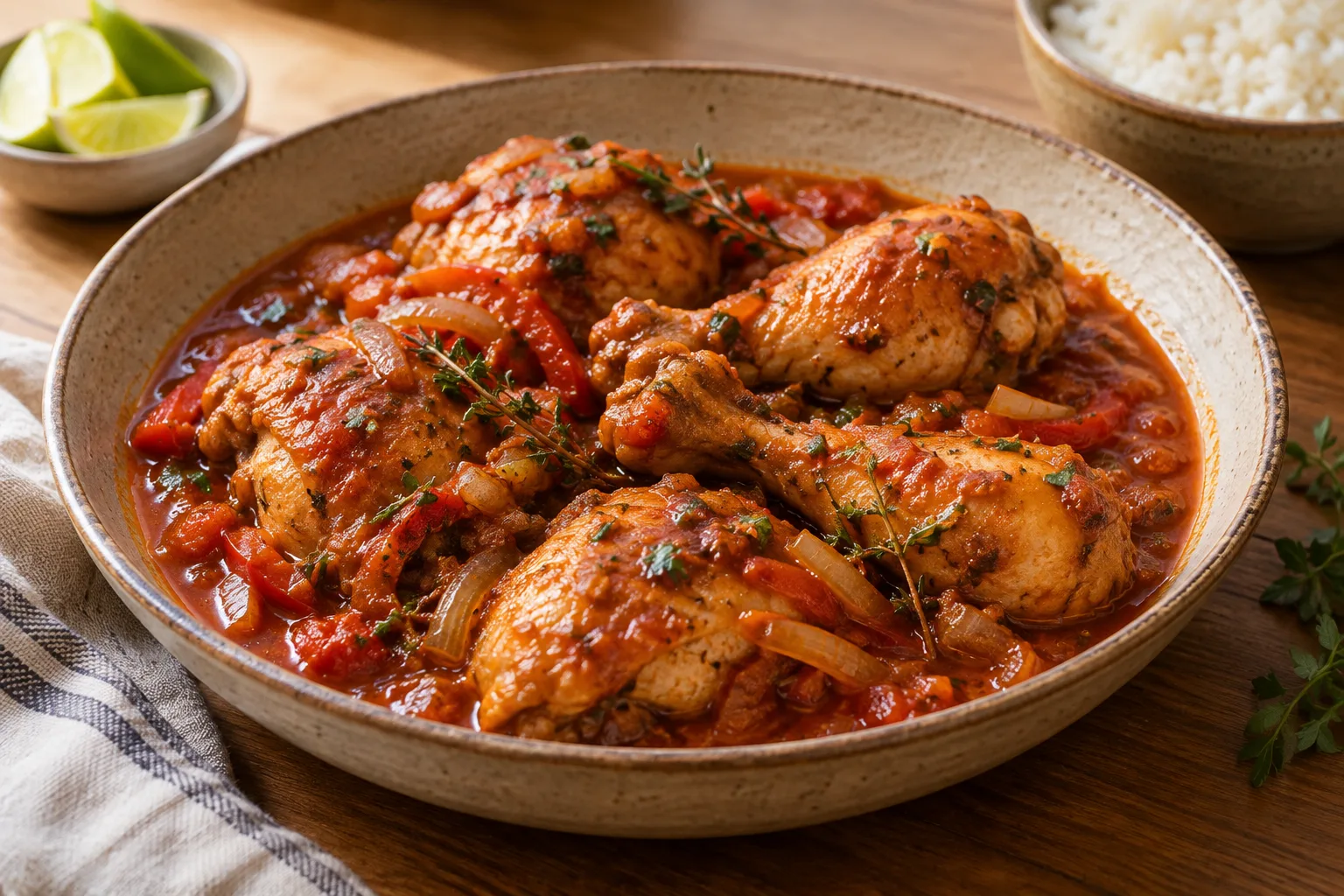
Stewing is another important approach. Lalo is made by cooking jute leaves with vegetables, garlic, and seasonings, sometimes with fish or meat; in Montrouis, a version with sea crab is noted. Chicken and other meats may be cooked in sauce. In a documented method for poul nan sòs, chicken is browned before simmering with aromatics and sauce, though preparations vary from one cook or household to another.
Braising and frying create the contrasting qualities of griyo: pork is seasoned and cooked until tender, then fried until browned. Tassot is made by seasoning and drying meat before frying it. Fish may be fried, grilled, or stewed, particularly in coastal food traditions. Joumou is cooked as a substantial soup in a large pot. The pots and other utensils used for the communal preparation of that soup are part of its documented practice.
Everyday plates, accompaniments, and shared meals
A meal may be arranged around rice or cornmeal, with beans, a sauce, or a vegetable stew, and sometimes meat, fish, or additional vegetables. Diri kole ak pwa pairs rice with beans; rice flavored with djon-djon, a dark mushroom, is another known preparation. Mayi moulen offers a different base for bean sauce or vegetable stew. These foods are not bound to one required combination: ingredients and accompaniments depend on the meal and the household.
Condiments can make a plate more lively. Pikliz is commonly served with meat and fried foods, and griyo is often paired with it or with cabbage salad. Tassot may be served with fried plantain. Coastal meals can include fish or seafood with rice, plantain, or roots such as yam and taro. These pairings are examples from a varied repertoire, not a universal menu.
Breakfast has its own foods, including akasan and kasav. Joumou has a distinctive place as the first meal on Independence Day and as a traditional Sunday breakfast. Other meals may be simple or elaborate, depending on availability and occasion. At gatherings, cooking and eating can bring family and community members together; everyday plates, too, help sustain familiar tastes and practices.
A glossary of Haitian foods and preparations
Names for Haitian foods may appear in Haitian Creole or French spellings. The entries below refer to specific preparations and ingredients in the broader culinary repertoire; they do not imply that every cook uses one identical recipe.
- Akasan: A thick, corn-based breakfast preparation, which may be served with ingredients such as sugar, cinnamon, or coconut milk.
- Diri kole ak pwa: Rice with beans, a familiar combination in Haitian meals.
- Djon-djon: A dark mushroom used to flavor rice and other preparations.
- Epis: A mixture of herbs, garlic, peppers, and other aromatics used for seasoning.
- Griyo: Pork that is marinated, cooked until tender, and fried; it is often served with pikliz.
- Joumou: Pumpkin soup with vegetables, plantain, meat, pasta, and spices, associated with January 1 and Sunday breakfast.
- Kasav: A flat cake made from cassava, eaten with accompaniments such as avocado or peanut butter.
- Lalo: A stew made with jute leaves and other ingredients; a version with sea crab is noted in Montrouis.
- Mayi moulen: Cornmeal cooked into a soft, creamy dish that can accompany sauces and stews.
- Pikliz: A crisp, spicy pickled vegetable accompaniment, commonly served with rich or fried foods.
- Tonmtonm: Pounded breadfruit, a Grand’Anse specialty served with okra sauce.
One country, many cuisines
Grand’Anse
Grand’Anse, whose capital is Jérémie, is known for tonmtonm: breadfruit pounded into a substantial preparation and served with an okra sauce. The department is also associated with konparèt, a thick, sweet biscuit made with flour, sugar, and milk. These specialties identify particular regional foods without claiming to represent every dish eaten in Grand’Anse.
Ouest and Petit-Goâve
Petit-Goâve, in the Ouest department, is noted for dous makòs, a very sweet milk-based confection with a slowly melting texture. It is one documented local specialty, not a complete account of the department’s cooking or evidence that the sweet is exclusive to the area.
Nord and Cap-Haïtien
Cap-Haïtien and the surrounding north are particularly associated with cashew-based dishes. One example is chicken cooked with cashews in a tomato-based sauce. The North Department is also identified as an important area for cashew cultivation in Haiti; these links point to notable products and preparations rather than exclusive regional ownership.
Artibonite
Artibonite is identified with rice cultivation and lalo, a stew made from jute leaves with vegetables, garlic, and seasonings, sometimes cooked with fish or meat. In Montrouis, a coastal version with sea crab is highlighted. Together, these references show the region’s combination of agricultural and coastal foods without reducing its cooking to a single dish.
Cook