Documentary synthesis prepared with AI assistance. It does not replace specialist review or certify kitchen testing. · Updated 12 November 2026
Land, livelihoods, and a varied food culture
Mongolia’s food culture is closely associated with pastoral livelihoods, livestock, and seasonal change. A country of extensive steppe, desert, and mountain environments, it has food traditions shaped by the availability of animal products and by the practical demands of moving through large distances. Meat, milk, and flour feature prominently in many documented meals, but they do not describe every household’s diet or every local practice.
Sheep, goats, cattle, horses, and camels appear in accounts of Mongolian food and pastoral life. Their milk and meat are transformed into quite different foods: fermented drinks, dried curds, boiled meat, dumplings, and noodles cooked with meat. Flour-based foods add variety in shape and texture, from handmade noodles to fried pastries. Vegetables also appear in some dishes, although their use and availability vary.
This atlas focuses on named foods, documented occasions, and practices tied to particular communities. It avoids treating one festival dish or one regional account as a complete portrait of the country. The Gobi documentation, for example, offers a specific view of food traditions and their relationship to an arid landscape, rather than a template for all of Mongolia.
Pastoral continuities and documented exchanges
The most clearly documented historical context for many Mongolian foods is the long-standing importance of herding and the knowledge required to use and preserve livestock products. Milk may be fermented, cooked, or dried; meat may be cooked fresh or preserved. Such transformations make the pantry more than a list of ingredients: they record practical knowledge shaped by seasonal conditions and passed on within communities. The available material does not establish a single origin date or exclusive birthplace for the dishes described here.
There is also evidence of food and culinary knowledge moving through wider historical settings. A medieval court cookbook compiled in 1330 and preserved in a later manuscript records a food culture shaped by exchange across the Mongol Empire, including influences associated with the Islamic heartland. That record concerns courtly food and historical contact; it should not be used to assign a simple origin to a present-day dish or to collapse the different histories of court and pastoral cooking.
More recent heritage work documents transmission as an active community practice. In 2025, a workshop in Dalanzadgad brought together cultural officers, heritage bearers, and community representatives from four Gobi provinces to document local foodways. Its focus on preparation, landscape, livelihoods, and intergenerational knowledge illustrates how culinary traditions are recorded and sustained today.
Milk, meat, flour, and preserved foods
Milk and meat form two prominent parts of the documented pantry, alongside wheat flour and foods made from it. Milk is not a single ingredient in practice: it can be used fresh, heated, fermented, or dried into products with different textures and keeping qualities. Airag is fermented mare’s milk; tarag is a yogurt; aaruul is dried curd; and urum is a thick cream that forms on heated milk. These names refer to distinct products, not interchangeable versions of one dairy food.
Meat from sheep, goats, cattle, horses, and camels appears in the source material, with particular ingredients varying by dish and place. Borts, strips of air-dried meat, is a documented preservation food. The 2025 Gobi documentation also records seasonal meat preservation alongside dairy processing and fermentation. These accounts connect food preparation to local conditions without implying that every community uses the same schedule or method.
Flour provides the basis for dumpling wrappers, noodles, and fried breads. Onion appears in several meat fillings and noodle dishes; carrots, cabbage, potatoes, and other vegetables feature in some preparations. These additions are dish-specific rather than a fixed national combination. Rice is present in some accounts, including as an addition to milk tea, but the dishes described here more often foreground flour, meat, and dairy.
Savory meat, fermented dairy, and contrasting textures
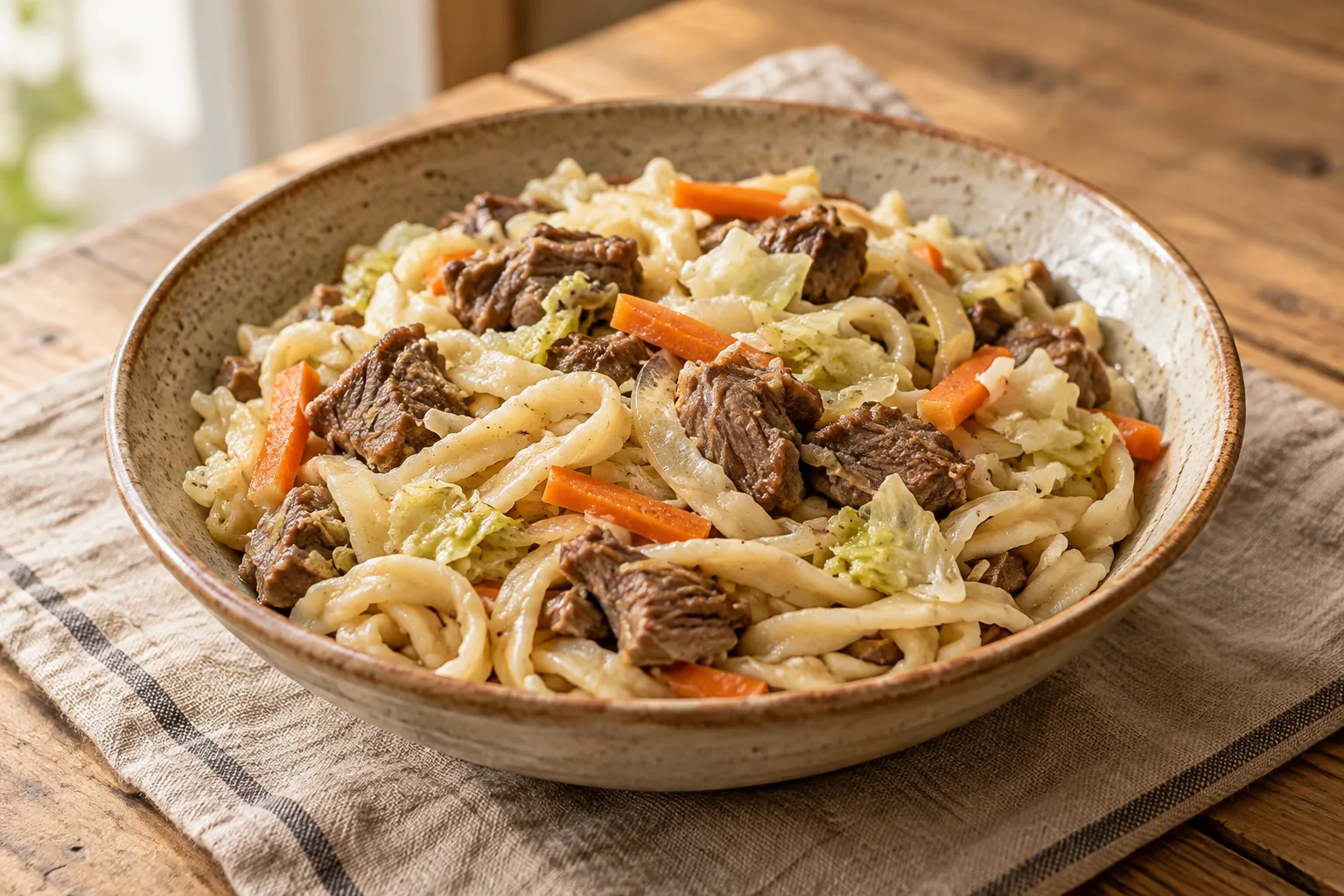
Many named dishes have a direct, savory profile in which meat is seasoned simply, often with salt and onion. What distinguishes them is not only flavor but also texture and cooking method. Buuz encloses a meat filling in dough and cooks it with steam, leaving a tender wrapper. Khuushuur is a filled pastry fried until its exterior is crisp. Tsuivan combines noodles with meat and, in some versions, vegetables in a covered pan. These are separate preparations, not merely alternate names for a single meat-and-dough dish.
Dairy adds sour, creamy, and firm textures to the range. Fermented airag and tarag contrast with the thick cream of urum and the firmer, dried curd of aaruul. The taste and texture of these products can differ with the milk and preparation used. They are part of a broad dairy repertoire, rather than evidence of one uniform flavor profile.
Suutei tsai, salted milk tea, brings tea and dairy together as a warm drink that can also be made more substantial with additions such as rice, meat, or small dumplings in some accounts. Meanwhile, khorkhog is defined by cooking meat in a closed vessel with heated stones. Calling it simply a barbecue misses the particular method that gives the dish its identity.
Festival foods and knowledge passed between generations
Food takes a visible role in Tsagaan Sar, the Mongolian Lunar New Year. Buuz, steamed meat dumplings, are associated with the celebration and prepared for festive meals. Uuts, a large sheep-meat preparation, and ul boov, a layered pastry, are also described as foods served for the occasion. These examples show a festive table with both substantial meat dishes and carefully presented foods; they do not establish one identical celebration in every home.
Khuushuur is associated with Naadam, Mongolia’s national festival, and is widely described as a festival food. Its familiar fried, filled form can also be eaten outside festival settings, so the association should not be read as exclusivity. The specific food traditions of a celebration may vary between families and communities.
Food knowledge is transmitted through making and sharing as well as through named occasions. The documented Gobi project brought heritage bearers and community representatives together to record preparation and local food traditions. Its account emphasizes connections with livelihoods and landscape, and the roles of communities, including women and young people, in keeping knowledge active. This is a living process: preserving a tradition does not require every cook to follow an identical version.
Fermenting, drying, steaming, and cooking with stones
Mongolian foodways include several distinct ways to transform and cook foods. Fermentation gives milk a new form in products such as airag, made from mare’s milk, and tarag. Drying preserves meat as borts: the meat is cut into strips and air-dried. The sources document these practices but do not establish one procedure or timetable that applies in every locality.
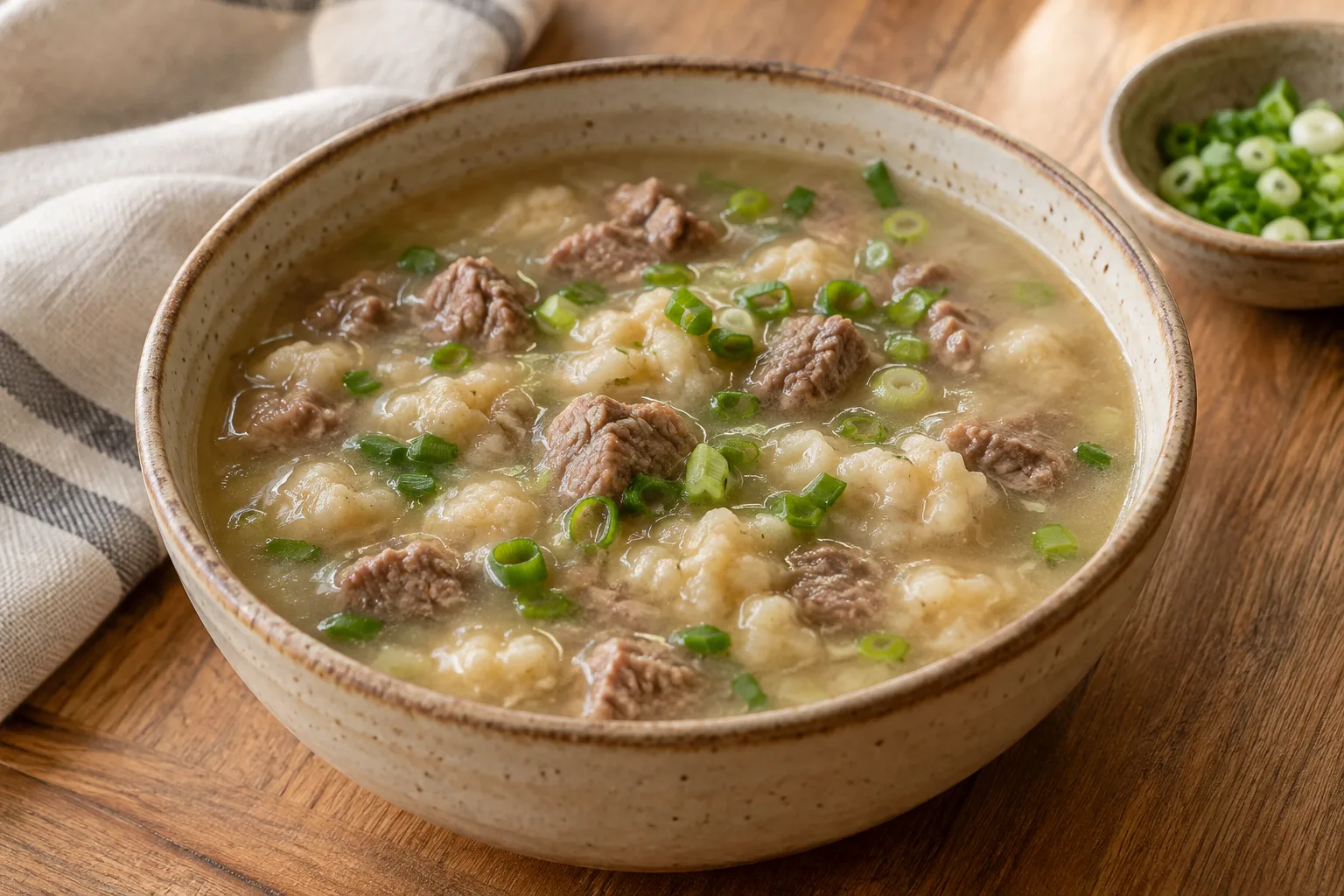
Flour dough is rolled or shaped for noodles and filled pastries. Buuz are cooked with steam; khuushuur is fried; and tsuivan brings noodles and meat together in a covered cooking vessel. Bantan is a thick soup made with meat broth and flour or small pieces of dough. These methods produce markedly different results from a shared pantry of meat and flour.
Stone cooking is a particular technique, not a general synonym for cooking outdoors. In khorkhog, heated stones and meat are placed in a closed container. In boodog, the heated stones are placed inside the animal’s skin, according to the documented descriptions. Both methods involve very hot stones and require careful handling. Other transformations include heating milk to form a cream layer, as in urum. Each technique is best understood on its own terms.
Everyday meals and occasions for sharing
An everyday meal may bring together tea, dairy, and flour foods, while another meal may center on meat, noodles, or soup. Suutei tsai—salted milk tea—is a familiar drink and may be served with boortsog, a fried flour food. Some accounts describe adding rice, meat, or small dumplings to milk tea, making it more substantial. This flexibility is a feature of the documented practice, not a compulsory recipe or fixed meal order.
Other meals have their own forms: tsuivan combines noodles and meat; bantan is a thick meat-and-flour soup; and buuz and khuushuur place a filling inside dough. These foods can be shared, served individually, or eaten in different settings. The sources do not support a single rule for which dishes must accompany one another or how a meal must be arranged across the country.
Festivals create particular occasions for serving foods. Tsagaan Sar brings buuz and other festive dishes into family gatherings, while khuushuur is associated with Naadam. Outside these occasions, offering tea and food is also described as part of hospitality. The most grounded account of Mongolian dining therefore comes from these concrete foods and occasions, rather than from a universal table ritual.
A glossary of Mongolian foods
These terms refer to particular foods or preparations described in the sources. Transliteration into the Latin alphabet can vary; the definitions identify the foods without implying that every family makes them in precisely the same way.
- Aaruul: Dried curd or milk product, firm in texture and made as part of Mongolia’s varied dairy repertoire.
- Airag: Fermented mare’s milk, a drink associated with pastoral knowledge and community transmission.
- Bantan: Thick soup made with meat broth and flour or small pieces of dough.
- Borts: Strips of meat dried in the air for preservation.
- Boortsog: Fried flour food served as an accompaniment in some accounts of tea and hospitality.
- Buuz: Meat-filled dough dumplings cooked with steam and associated with Tsagaan Sar.
- Khorkhog: Meat cooked in a closed vessel with heated stones.
- Khuushuur: A filled meat pastry cooked by frying and associated with Naadam.
- Suutei tsai: Salted milk tea, sometimes served with food or made more substantial with additions.
- Tsuivan: A noodle dish prepared with meat and, in some versions, vegetables in a covered vessel.
- Urum: Thick cream collected from the surface of heated milk.
These names bring together drinks, preserved foods, everyday meals, and festival preparations. Their presence here does not mean that a food is exclusive to one region or that all versions are identical.
One country, many cuisines
Gobi
Food traditions documented in the Gobi are connected with an arid landscape and local livelihoods. A 2025 workshop in Dalanzadgad brought together cultural officers, heritage bearers, and community representatives from Umnugovi, Dornogovi, Dundgovi, and Govisumber provinces. Its participatory work recorded local food practices and explored their relationships with landscape and intergenerational transmission. Documented themes include dairy processing, fermentation, seasonal meat preservation, and the use of wild plants adapted to dry environments. This evidence describes a specific regional focus, not a complete account of every community in the Gobi or a map of uniform culinary boundaries.
Cook