Documentary synthesis prepared with AI assistance. It does not replace specialist review or certify kitchen testing. · Updated 12 November 2026
A small territory with many food traditions
Macao lies on the western bank of the Pearl River Delta, where the river meets the South China Sea. The territory includes the Macao Peninsula and the former islands of Taipa and Coloane, now joined by urban growth. Its location close to Guangdong places Cantonese foodways firmly in everyday life, while its long history as a trading port brought people, provisions and culinary knowledge from Portugal and other places connected by sea. Geography helps explain the range of foods found here, but it does not make every dish part of one blended cuisine.
Cantonese, Portuguese and Macanese cooking are distinct traditions that share the same urban setting. Macanese food is a local cuisine with its own history of adaptation, rather than simply a combination of two parent cuisines. At a meal in Macao, dim sum may sit within the wider Cantonese dining tradition, bacalhau may recall Portuguese practices, and minchi may be identified as Macanese. Restaurants and food businesses also represent other regional and international cuisines, so the territory’s culinary life is broader still.
The range can be seen in ingredients as well as dishes. Rice, fish, vegetables, pork and chicken are associated with the productive Pearl River Delta; salted cod, olives and olive oil, cured meats and Madeira wine are linked to Portuguese provisions. Coconut, spices and fermented shrimp paste point to further movements and local adaptations. Their presence varies by recipe: there is no single list that defines every Macanese meal.
Macao was named a UNESCO Creative City of Gastronomy in 2017, and Macanese cuisine is designated as intangible heritage by the local government. These recognitions refer to the importance of food and culinary identity in Macao; they do not mean every meal follows one tradition or that the territory’s Cantonese and other cuisines are simply versions of Macanese cooking. The city is best understood through its coexistence of foodways, and through the specific histories of the communities and preparations that keep them in circulation.
Port, migration and culinary exchange
Portuguese traders established a presence in Macao in the mid-sixteenth century, and the city became an important trading hub linking China with Portuguese maritime networks. Ships carried goods and people between Macao and ports connected with India, Southeast Asia, Africa and other parts of the Portuguese-speaking world. Food history followed those routes, but not as a one-way transfer: travellers brought provisions and skills, and cooking changed as these met the ingredients and practices available in southern China.
The local setting mattered. Rice, fish, vegetables, pork and chicken were plentiful in the Pearl River Delta, and Cantonese food was part of the city’s culinary environment. Alongside these foods, Portuguese-associated provisions included salted cod, cured meats, olives and olive oil, and Madeira wine. Spices also travelled through wider trade networks. Over time, ingredients and techniques were adapted in households and other settings; the resulting Macanese repertoire reflects many connections, not a simple Portuguese dish list placed on a Chinese table.
Accounts of Macanese cooking give particular attention to household practice and the role of women in carrying culinary knowledge across generations. This is important context for understanding why recipes may be known through families and why versions of familiar dishes can differ. It should not be taken to mean that every dish has one identifiable maker, one route of transmission or a single origin. Macao’s history includes different communities and movements, and the ingredients in a dish alone do not prove a precise journey or exclusive source.
Macao’s culinary history also sits alongside the wider food culture of Guangdong. Cantonese snacks were sold in the city, and Cantonese cooking remains prominent in the territory. The distinction between local Macanese food and Cantonese food is useful, while their long proximity helps explain shared ingredients and techniques. Macao’s food culture continues to accommodate Portuguese restaurants, Cantonese tea and dim sum, Macanese household dishes and other cuisines. Its history is therefore not a finished story of fusion, but a record of contact and continuing culinary coexistence.
Rice, seafood, spices and preserved foods
Macao’s pantry brings together ingredients familiar in the south of China with foods associated with Portuguese cooking and wider maritime exchange. Rice is a central staple, and the Pearl River Delta supplies a context rich in fish, vegetables, pork and chicken. These are not exclusive to Macanese cuisine: they also belong to the local setting in which Cantonese cooking is especially visible. The same market can support several culinary traditions without making them interchangeable.
Salted cod, called bacalhau in Portuguese, is a conspicuous Portuguese-associated ingredient. It can be prepared in different ways, including roasted preparations and dishes with cream. Cured meats, olives, olive oil and Madeira wine are also associated with provisions carried through Portuguese networks. Potatoes, onions and eggs appear in some dishes that bring together ingredients of different histories. Their use depends on the preparation, rather than serving as a fixed formula for Macanese food as a whole.
Spices and aromatic ingredients add further variety. Macanese preparations may include turmeric, cinnamon, pepper, cloves or other spices; coconut milk is another ingredient associated with the local repertoire. Some recipes combine several of these with ingredients more commonly associated with Chinese cooking, including soy sauce and garlic. The proportions and combinations vary between dishes and households. A dish such as galinha à Africana is known for a spiced chicken preparation with versions involving coconut and peanuts, while minchi centres on minced meat and is commonly served with rice and potatoes.
A particularly telling condiment is balichão, a fermented shrimp paste used in some Macanese cooking. It shows how preserved seafood can be part of a local culinary vocabulary, but it is not present in every dish. Preserving, curing and fermenting ingredients extends their use and contributes distinctive savoury notes. Rather than treating the pantry as a checklist, it is more accurate to think of it as several overlapping stores of ingredients: local produce, Cantonese staples, Portuguese-associated provisions and foods connected with broader Asian and maritime exchange. Each recipe draws from these stores in its own way.
Savory depth, spice and contrasting textures
There is no single flavour profile that describes everything eaten in Macao. Cantonese dishes, Portuguese preparations and Macanese recipes have their own ingredients and methods, even when they appear in the same restaurant or meal. Within Macanese cooking, some dishes are notably aromatic or richly seasoned: spices may meet soy sauce, garlic, fermented seafood, coconut or cured meats. The balance depends on the recipe and the cook, and not every dish uses all of these flavours.
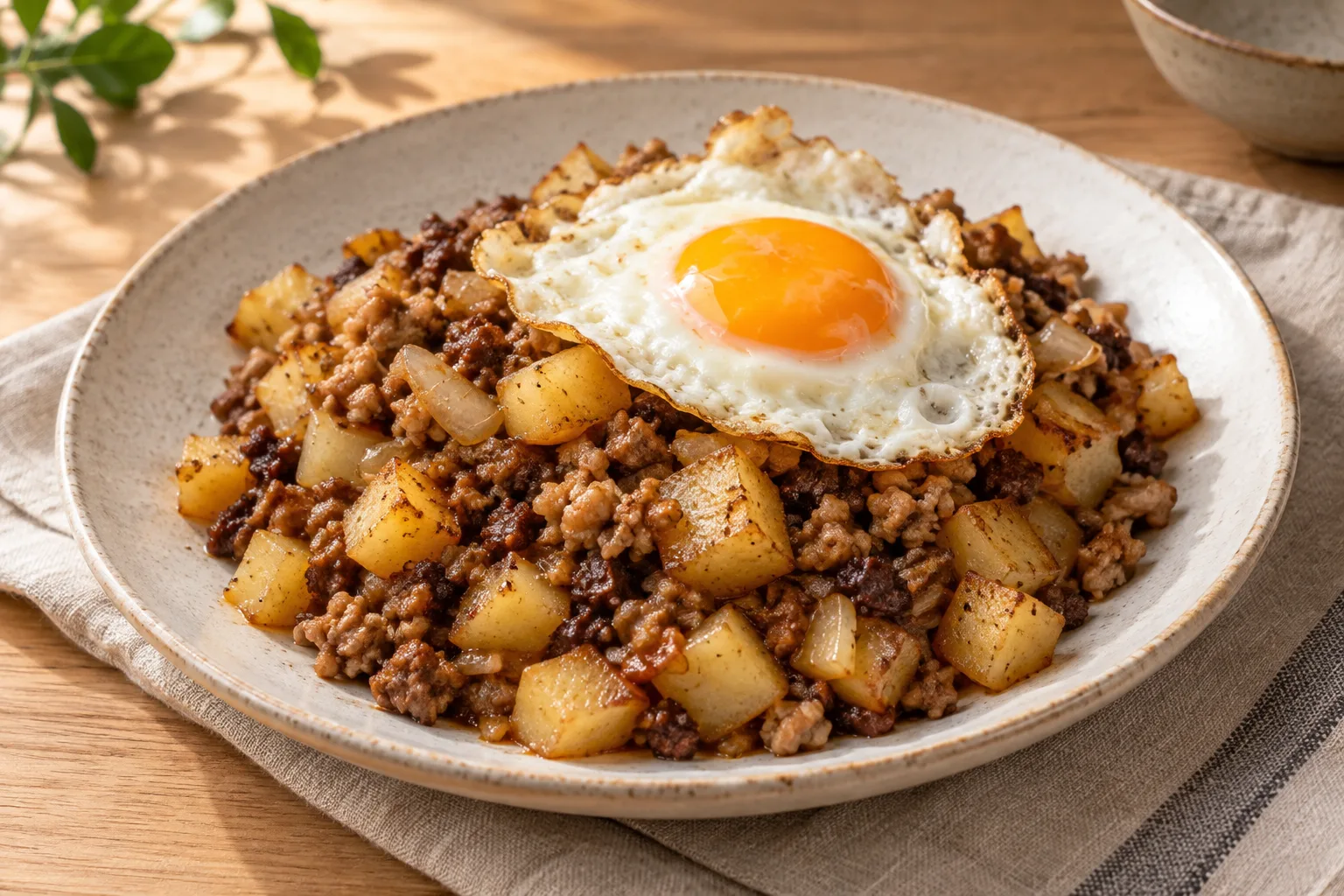
Minchi offers a clear example of how texture and seasoning work together. It is made with minced meat, often with onion and seasoning, and commonly served with rice and potatoes; many versions include a fried egg. The meat is cooked until loose rather than shaped into a patty, while potatoes may be fried or browned separately. The savoury seasoning, tender meat and crisp or golden potato give the plate contrasts, and the egg can add a soft, rich element. Household versions differ, so one arrangement should not be treated as a universal standard.
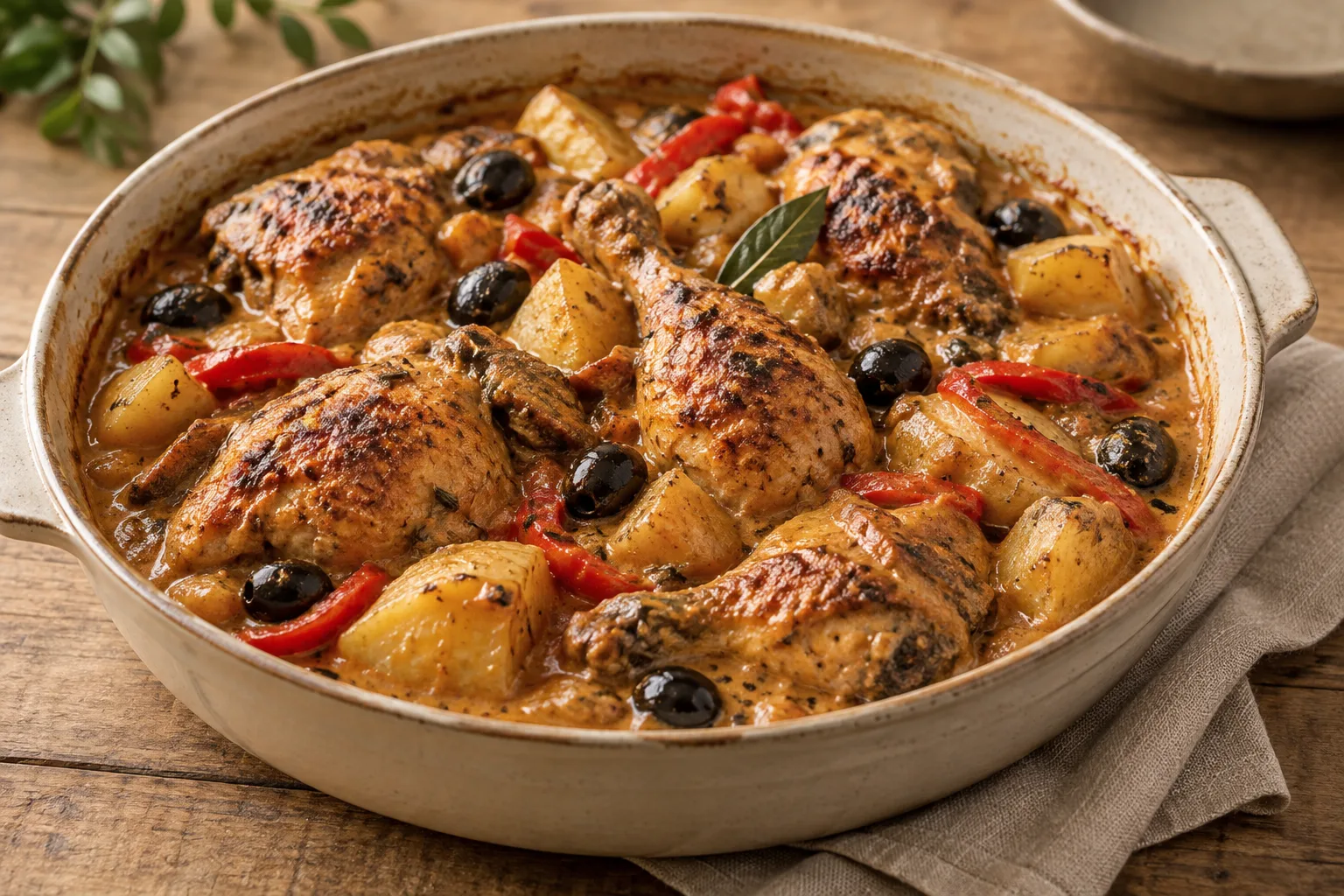
Galinha à Africana is another recognisable Macanese preparation. It is associated with spiced chicken, and versions may have a sauce involving coconut and peanuts. The chicken may be browned, grilled or roasted, and the sauce can be more or less prominent. The result can combine spice, savoury chicken and a creamy or nutty texture, though the details are not fixed across kitchens. Its name does not make it a representative sample of every African or Portuguese food tradition; it is a specific preparation in Macao’s local repertoire.
Cantonese dim sum presents a different set of contrasts. Dumpling wrappers may be tender or partly translucent; fillings can include shrimp or pork, and dishes may be steamed, fried or served in soup. Tea accompanies the meal and brings its own aromas and textures. Salted cod dishes and Portuguese-style sweets offer still other experiences. Macao’s culinary character is therefore better found in the meeting of distinct tastes and methods than in a single signature seasoning. The variety is a feature of its food culture, not a reason to flatten its dishes into one flavour rule.
Household knowledge, festivals and transmission
Macanese culinary knowledge has been transmitted through domestic cooking as well as through restaurants and community settings. Household recipes may be closely associated with particular families, and the same named dish can have different versions. Minchi is often described as a much-loved comfort food, with family members attached to their own preparation or to a version learned from an older relative. This variation is part of a living tradition: it need not be resolved into a single authoritative recipe to be understood or shared.
Macao’s food traditions coexist with Chinese and Christian calendars and with the customs of different communities. Participation in Chinese New Year and Christian celebrations is documented, but this does not establish that every family marks the occasions in the same way. Christmas foods associated with Macanese households include a fish pie containing nuts and olives, lacassá soup and a Christmas cake. Such examples show how festive dishes may draw on distinct culinary memories; they are not a menu that can be assumed at every celebration.
Public gatherings also create opportunities for food and culinary knowledge to circulate. Macao hosts gastronomy-related events, including the Macao Food Festival, which brings together local and international chefs and participants. The Lusofonia Festival promotes cultural exchange among Portuguese-speaking countries and regions, and food is one dimension of that exchange. These events sit alongside everyday cooking and eating; they do not replace the household practices through which recipes are maintained and changed.
The designation of Macanese cuisine as local intangible heritage and Macao’s membership in the UNESCO Creative Cities Network for Gastronomy underline the cultural significance attached to food. The city’s gastronomy initiatives include interest in education, training and exchange, especially for younger people. This attention to transmission is relevant because culinary knowledge is carried not only in ingredient lists, but in repeated practice and family memory. At the same time, culinary heritage remains diverse and evolving. New cooks may keep familiar preparations in circulation while changing details, and communities may share food without claiming one exclusive origin for every dish.
Wok, steamer, oven and household adaptation
Cooking in Macao draws on techniques found in its different food traditions. Cantonese methods such as wok-frying and steaming are part of the local culinary environment; Portuguese-associated preparations include roasting and baking. These are not exclusive markers of one cuisine, nor does one utensil define Macanese cooking. A technique becomes meaningful in relation to the particular dish, ingredients and habits in which it is used.
In minchi, minced meat is cooked in a pan or wok with seasonings and aromatics, and the potatoes are often fried or browned separately. The meat is broken up as it cooks, giving the finished dish its loose, hash-like texture. It is commonly served with rice and may be topped with a fried egg. Some versions use a mixture of meats, while others use one kind; seasoning and additions vary. The sequence and exact details are not uniform across families.
For galinha à Africana, preparations commonly involve seasoning or marinating chicken and then browning, grilling or roasting it. Versions with a coconut- and peanut-based sauce may cook the chicken and sauce together or serve the sauce more separately. These variations produce different textures and degrees of richness. They should be understood as variations of a dish rather than evidence that one exact method is required in all Macanese kitchens.
The broader cooking landscape includes steaming dim sum in baskets, frying small dishes, roasting meat and baking preparations. A bamboo steamer is associated with Cantonese dim sum, while a wok is useful for stir-frying; neither alone stands for the whole of Macao’s food culture. Home cooks select tools according to the preparation, and local dishes can bring together methods and ingredients associated with different culinary histories. This practical flexibility helps explain how a recipe can retain a recognisable name while being adapted to household preferences. Techniques in Macao are thus best discussed as a repertoire, not a single canon: cooking methods overlap, while the character of each dish depends on how they are applied.
Tea, small dishes and meals to share
The way people eat in Macao depends on the food tradition and occasion. In Cantonese restaurants, yum cha brings tea together with dim sum, a range of small dishes often eaten for breakfast or lunch. A table may include steamed shrimp dumplings, pork siu mai, buns filled with barbecued pork, turnip cake or other bites. Some are steamed, others fried or served in soup. The variety allows diners to share dishes and choose among different wrappers, fillings and textures.
Tea is part of this dining experience, rather than simply a drink added afterwards. Cantonese restaurants may offer several kinds of tea, including oolong, green and black teas; pu’er is particularly associated with dim sum meals in Macao. The selection and service depend on the establishment. The term yum cha itself points to the pairing of tea and eating, but does not imply that every meal in the territory follows the same format.
Macanese home-style meals can be more direct and complete. Minchi is commonly served over or alongside rice, with potatoes and often an egg, bringing meat and starches together on one plate. Galinha à Africana may be served with potatoes or other accompaniments, while bacalhau provides a Portuguese-associated option prepared in different styles. A meal may include more than one culinary tradition, but sharing a table does not erase the distinctions among them.
Eating outside the home adds further possibilities, from tea houses and Portuguese or Cantonese restaurants to street-food stalls and bakeries. Pork-filled breads and Portuguese-style pastries are among the foods associated with the city. Pastéis de nata and serradura, a cream-and-crumb dessert, illustrate the presence of Portuguese-linked sweets that have become familiar in Macao. Family meals, restaurant outings and public food events are all ways of encountering the territory’s cuisines. No single dining ritual defines them all: the form of the table changes with the cuisine, the setting and the people eating together.
A glossary of Macao’s dishes and food terms
These terms identify particular ingredients, dishes and ways of eating found in Macao. Their definitions describe commonly documented uses, not one fixed recipe for every household or restaurant.
- Minchi: A Macanese dish of minced meat, commonly served with rice and potatoes and often topped with a fried egg. Meat, seasoning and preparation vary by family. Its loose, savoury mixture distinguishes it from a shaped meat patty.
- Galinha à Africana: A Macanese chicken preparation seasoned with spices. Some versions include a sauce made with coconut and peanuts; the chicken may be grilled, browned or roasted. Methods and levels of heat or richness differ.
- Bacalhau: Portuguese for salted cod, an ingredient associated with Portuguese culinary tradition. In Macao, cod may be roasted or served in preparations with cream.
- Balichão: A fermented shrimp paste used as a condiment in some Macanese dishes. It is a specific ingredient in the local repertoire, not a seasoning used in every meal.
- Dim sum: A selection of small Cantonese dishes, including dumplings and buns with varied fillings. They may be steamed, fried or served in soup, and are commonly eaten with tea.
- Yum cha: A Cantonese tea-and-dim-sum meal, often enjoyed as breakfast or lunch. The term describes a dining practice, not a single set menu.
- Serradura: A Portuguese-associated dessert made with cream and crushed biscuits, whose crumbly layers give it a sawdust-like appearance.
- Pastel de nata: A Portuguese-style custard tart with pastry, widely familiar in Macao. Its presence reflects a Portuguese-linked sweet tradition within a city with many other dessert cultures.
The vocabulary itself reflects Macao’s multilingual food culture: Portuguese names remain attached to some ingredients and preparations, while Cantonese terms describe dishes and dining practices familiar in the region. Naming can help distinguish a dish’s history, but it does not by itself establish a single origin or an unchanging recipe. Minchi is the clearest example of variation within a shared name: families may favour different ingredients or seasoning while recognising the same dish. Likewise, galinha à Africana refers to a particular Macanese preparation, not to all chicken dishes with spices. These distinctions make the glossary a guide to specific foods rather than a claim that one list can represent every table in Macao.
One country, many cuisines
Macao
Macao occupies the western bank of the Pearl River Delta, where the river reaches the South China Sea. The documented territory includes the peninsula and the former islands of Taipa and Coloane, now joined by urban growth. Cantonese food is prominent because of Macao’s proximity to Guangdong, while the city’s history as a Portuguese trading hub shaped distinct Macanese cooking and sustained Portuguese-associated foods such as salted cod. Minchi and galinha à Africana are recognised Macanese preparations; dim sum belongs to the Cantonese tradition also found in the territory. The evidence supports treating Macao as one culinary area here, rather than dividing it into local food regions without documented distinctions.
Cook