Documentary synthesis prepared with AI assistance. It does not replace specialist review or certify kitchen testing. · Updated 12 November 2026
An island territory and a varied food culture
The Northern Mariana Islands are a Pacific island territory north of Guam, part of the Mariana Islands but politically distinct from Guam. Saipan, Tinian, and Rota are among its principal islands; Saipan is the administrative centre, and Saipan and Tinian are noted as major ports. These are not merely points on a map: food accounts from Saipan and Rota record local dishes, ingredients, and places to eat, while Tinian appears in accounts of kelaguen and the region’s wartime history.
Chamorro food is a central reference, not a complete label for every meal. The territory’s food culture also includes influences and dining traditions associated with Filipino, Japanese, Chinese, Korean, and other communities. Chamorro dishes use seafood, chicken, coconut, rice, citrus, taro, and tropical fruit in varied ways. A sharp, fresh marinade, a coconut-rich stew, a coloured rice side, and a baked sweet can all belong to the same broad culinary landscape without being interchangeable or present in every household.
History, migration, and culinary exchange
Chamorro people have a long history in the Marianas. European arrival and Spanish rule brought major changes: historical accounts describe Spanish colonial and missionary activity beginning in the sixteenth century, and the name Marianas became established during the Spanish period. The Northern Mariana Islands later passed through further periods of outside government and occupation. This layered history is useful context for understanding a cuisine shaped by contact, but it does not mean every dish can be assigned to a single outside source.
Accounts of Saipan describe Chamorro culture as influenced by Spanish, Japanese, and American presence. They also record the arrival and lasting popularity of Spam, associated with its supply by the U.S. military during the Second World War. Contemporary food descriptions reflect further migration and contact: Filipino, Japanese, Chinese, and Korean options are part of the territory’s dining scene. Similarities between Chamorro dishes and foods elsewhere in the Pacific can point to exchange, but do not by themselves prove a single origin. Guam, though part of the wider Marianas, is a separate jurisdiction; descriptions of Chamorro food there are related evidence, not proof that every practice is identical in the Northern Mariana Islands.
Coconut, rice, citrus, and island produce
The ingredients most often named in descriptions of Chamorro food in the Northern Mariana Islands include coconut, rice, lemon or lime, seafood, chicken, taro, and fresh fruit. Coconut is notably versatile: grated coconut appears in kelaguen, coconut milk forms the base of some stews, and coconut milk is used in flatbread. These are different uses of the same ingredient, not a single standard preparation. Rota’s food descriptions also highlight taro, breadfruit, fish, crab, and other seafood, alongside tropical fruit such as mango and papaya.
Rice has a visible place in the meal, especially red rice coloured with annatto, also called achiote. Other pantry ingredients vary with the dish: vinegar and soy sauce flavour estufao, while onions and hot peppers appear in kelaguen descriptions. Donni’ is the Chamorro word for chile in one account of the cuisine. The ingredients listed here should be understood as a documented repertoire rather than a claim that every household has the same supply or that every recipe uses all of them. Rota is specifically noted for coconut crab, while Saipan accounts describe several kinds of kelaguen.
Bright marinades, savoury stews, and varied textures
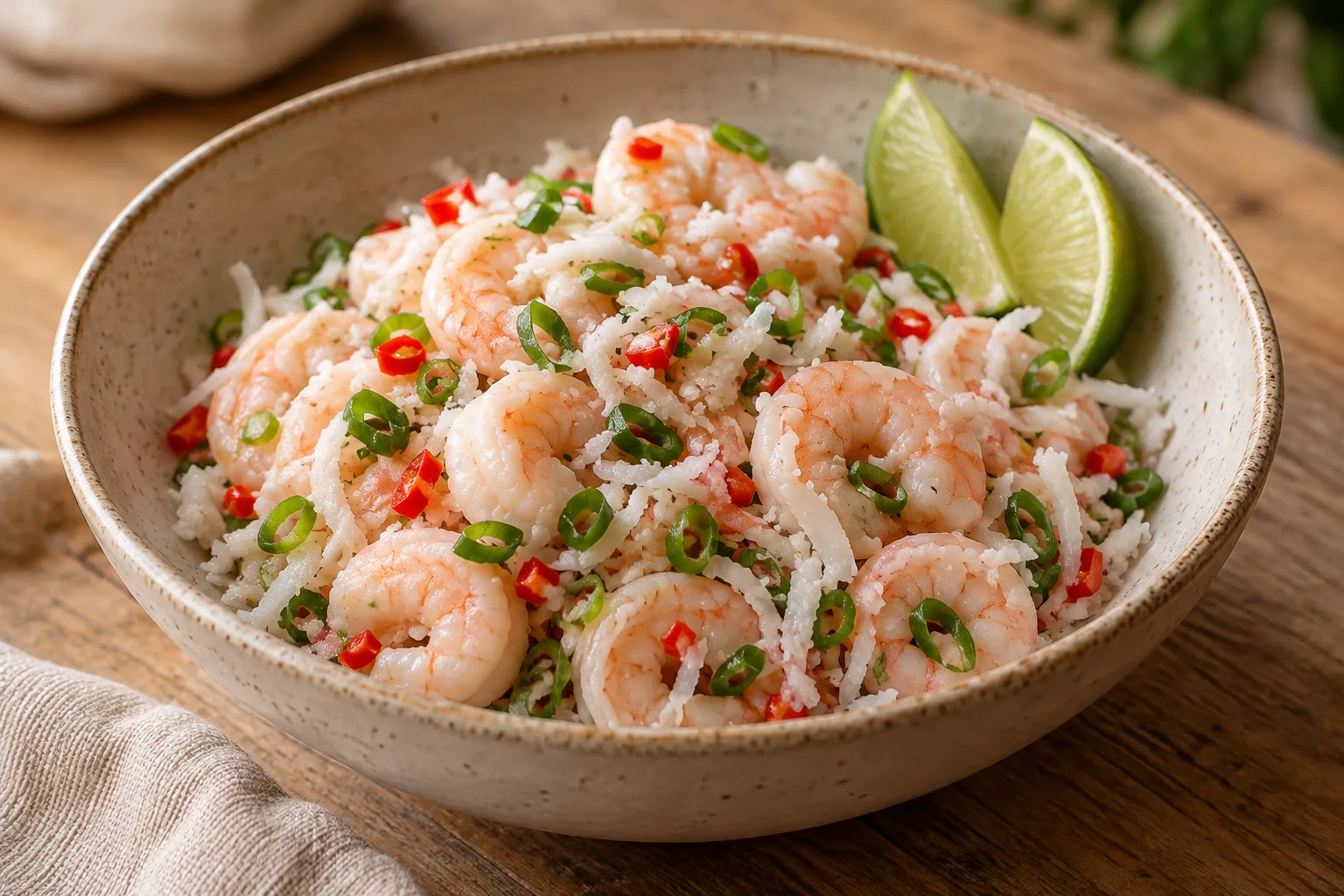
Several Chamorro preparations are built around contrasts. Kelaguen combines chopped meat or seafood with citrus, grated coconut, onion, and hot pepper. The citrus makes the flavour bright and sharp; coconut lends sweetness and a soft, rich texture, while pepper adds heat. Documented versions include chicken, shrimp, fish, and beef. Preparation varies: an account of chicken kelaguen uses cooked chicken, and a Saipan shrimp version blanches the shrimp before mixing it with lemon, coconut, and chilli. The name therefore signals a family of preparations, not one fixed method.
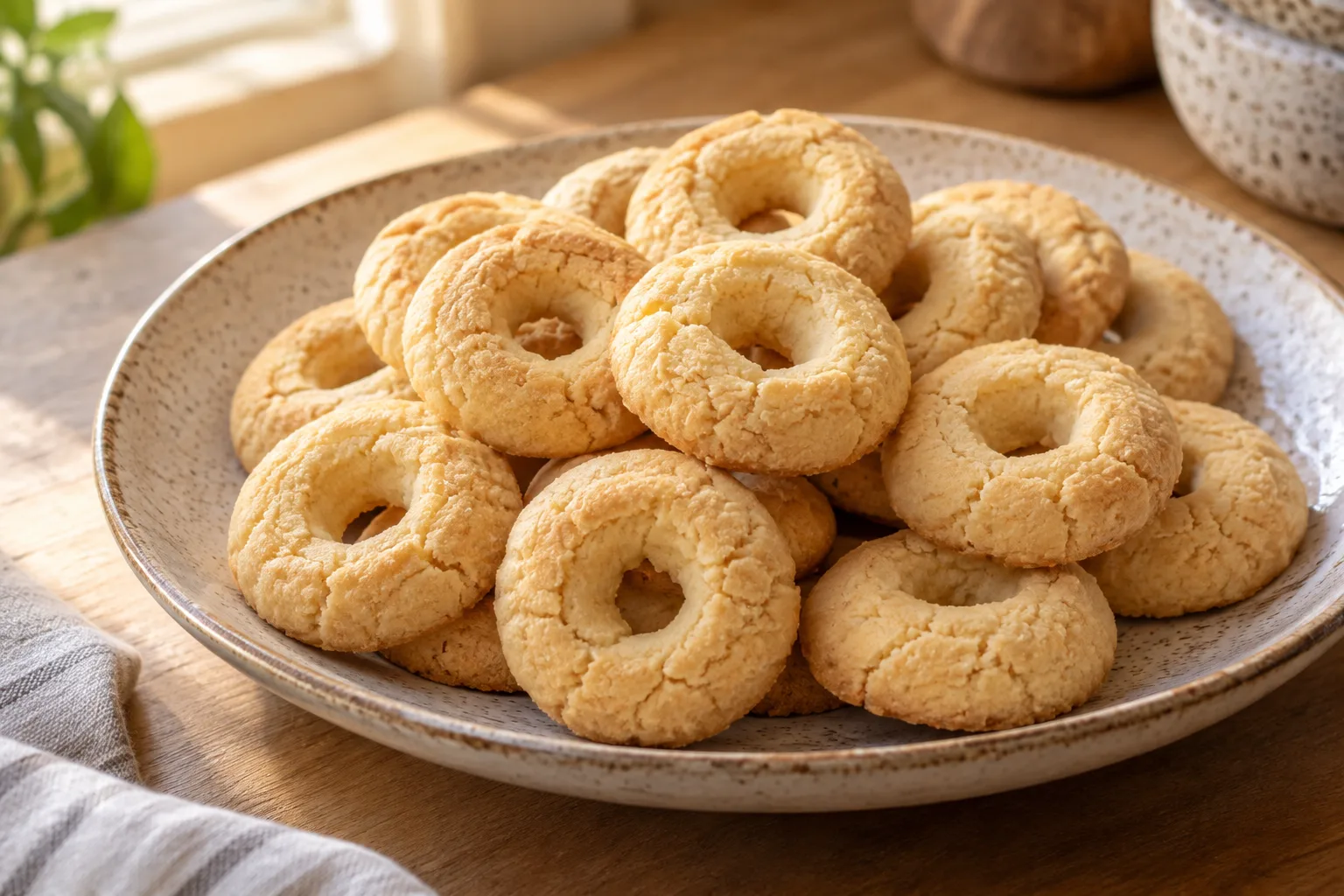
Tinaktak provides a different balance: beef is cooked with coconut milk, often with garlic, onion, and tomato, and it is commonly served with rice. Estufao, a meat stew prepared with vinegar and soy sauce, is described as tender and savoury. Fish escabeche pairs fried fish with a vinegar-based sauce and vegetables. Accompaniments and sweets add further contrast: coconut titiyas is a slightly sweet flatbread, while rosketti are notably crumbly cookies made with corn starch. Taken together, these dishes show a range from tangy and fresh to creamy, savoury, and delicately brittle.
Celebrations, family cooking, and shared food
Food appears in accounts of family meals and festive gatherings, but no single celebration menu should be treated as universal. Red rice is described as a familiar accompaniment at barbecues, parties, and other gatherings. Riyenu, a potato-based preparation with minced meat and additional ingredients, is associated with festivities and holidays and may accompany roast pork, turkey, or ham. A cucumber salad with onion, garlic, soy sauce, vinegar, and salt is also recorded as a festive side. These examples show how dishes can mark a gathering through repetition and sharing, without requiring every family to serve the same spread.
The making and passing on of recipes are also part of food’s social life. Accounts of rosketti describe Chamorro families shaping the dough in different forms and making the cookies for sharing; a family account connects preparing them with teaching a child about Chamorro heritage. In Saipan, kelaguen is reported as an appetiser in chicken, beef, and shrimp versions. Rota’s food scene is associated with local vendors and family-run establishments, where hospitality accompanies Chamorro dishes and seafood. Such accounts illuminate particular places and experiences; they do not prescribe how all households celebrate or cook.
Mixing, simmering, steaming, and baking
Methods differ with the dish. For kelaguen, ingredients are chopped and mixed with citrus, coconut, onion, and pepper. One account describes chicken cooked before it is shredded; the Saipan shrimp preparation blanches the shrimp before combining it with lemon and seasonings. These versions show why it is better to describe the method for a particular dish than to assume that all kelaguen is prepared identically. The citrus marinade gives the dish its characteristic tang, while the cited shrimp preparation includes a separate cooking step.
Stews use slower heat: tinaktak cooks beef in coconut milk, while estufao simmers meat with vinegar and soy sauce until tender. Fish escabeche begins with fried fish, then adds a vinegar-based sauce and vegetables. Annatto colours the water used to cook red rice. Tamales gisu are made with corn meal and corn flour; the two-colour masa is wrapped in banana leaf or foil and steamed. Rosketti take a different kind of care: the dough is shaped by hand, sometimes into coils or small flattened forms, and baked until the edges are only lightly golden. These methods produce an assortment of textures rather than one defining cooking style.
Rice, sides, and meals to share
A meal may bring together a main dish, rice, and smaller preparations with contrasting textures and flavours. Red rice is a common companion to Chamorro meat dishes and barbecue. Coconut titiyas offers a soft, slightly sweet flatbread alongside rice or other foods. Kelaguen may be served as an appetiser, and a Saipan account describes shrimp kelaguen with coconut flatbread. These combinations place tangy or spicy dishes beside milder starches, but the sources do not establish a single formal order for serving them.
Festive tables may include red rice and riyenu, with the latter served alongside or as a stuffing for roast meats. A cucumber salad is another documented accompaniment. In Rota, accounts describe seafood, kelaguen, barbecue, and local vendors; in Saipan, several kelaguen varieties are noted. Everyday dining also reflects the range of communities on the islands, with Chamorro food alongside Filipino and other Asian cuisines. Sweets such as rosketti, brojas, and lantiyas appear in accounts of local bakeries and home cooking; rosketti are also described as a treat to enjoy with coffee or tea. The mix depends on household, occasion, and what is available, rather than a fixed island-wide sequence.
A short vocabulary of dishes and ingredients
These names identify particular dishes or ingredients recorded in descriptions of Chamorro food and the Northern Mariana Islands. Recipes can vary between families, and a dish found across Chamorro communities is not necessarily exclusive to one island.
- Kelaguen: Chopped meat or seafood mixed with citrus, grated coconut, onion, and pepper. Chicken, shrimp, fish, and beef versions are described; preparation steps differ.
- Tinaktak: Beef cooked with coconut milk, often with garlic, onion, tomato, or other vegetables; commonly served with rice.
- Estufao: A meat stew cooked with vinegar and soy sauce until tender.
- Donni’: The Chamorro word for chile, used in descriptions of spicy marinades and condiments.
- Titiyas: A flatbread; coconut titiyas is described as slightly sweet and served as an alternative or accompaniment to rice.
- Rosketti: A Chamorro cookie made with corn starch and other ingredients. Its fragile, crumbly texture is distinctive, and it may be shaped by hand into coils or flattened forms.
- Red rice: Rice coloured with annatto, also called achiote, and served as an accompaniment at meals and gatherings.
One country, many cuisines
Northern Mariana Islands archipelago
Saipan, Tinian, and Rota provide documented examples of food within this Pacific island territory. Accounts describe Chamorro dishes such as kelaguen, alongside seafood, coconut, rice, and festive preparations. Saipan is associated with chicken, beef, and shrimp kelaguen; Rota is noted for coconut crab, seafood, and local food vendors. These are place-specific examples, not evidence of rigid culinary boundaries or identical practices on every island.
Cook