Documentary synthesis prepared with AI assistance. It does not replace specialist review or certify kitchen testing. · Updated 12 November 2026
Geography and a diverse food landscape
Papua New Guinea occupies the eastern half of the island of New Guinea and includes nearby islands north of Australia. Its mountains, interior valleys, lowlands, coasts and islands support different crops and food resources. The result is not one uniform national menu, but many local foodways shaped by what grows, can be gathered, or is available from land and sea.
Much everyday cooking centres on starchy crops and vegetables. Sweet potato, taro, cassava, yams, bananas and sago appear among the documented staples. Fish and other seafood matter particularly in coastal settings, while meat is used in some dishes and pork is commonly associated with special occasions. Coconut is more prominent in many coastal preparations than in the Highlands.
These are broad patterns, not fixed regional rules. Communities and households may combine ingredients differently, and the same food can be prepared in more than one way. Mumu, kokoda and saksak are recognisable examples, but they are starting points for exploring a much wider variety of local cooking rather than stand-ins for every cuisine in the country.
Cultivated foods, arrivals and exchange
People have lived in the region for tens of thousands of years; one account places early human arrival on the islands around 42,500–45,000 years ago. Food history is also a history of cultivation and adaptation. Many households rely on locally grown foods, and root crops, bananas and sago remain important staples. Such long-standing knowledge sits alongside later changes in crops, trade and political rule.
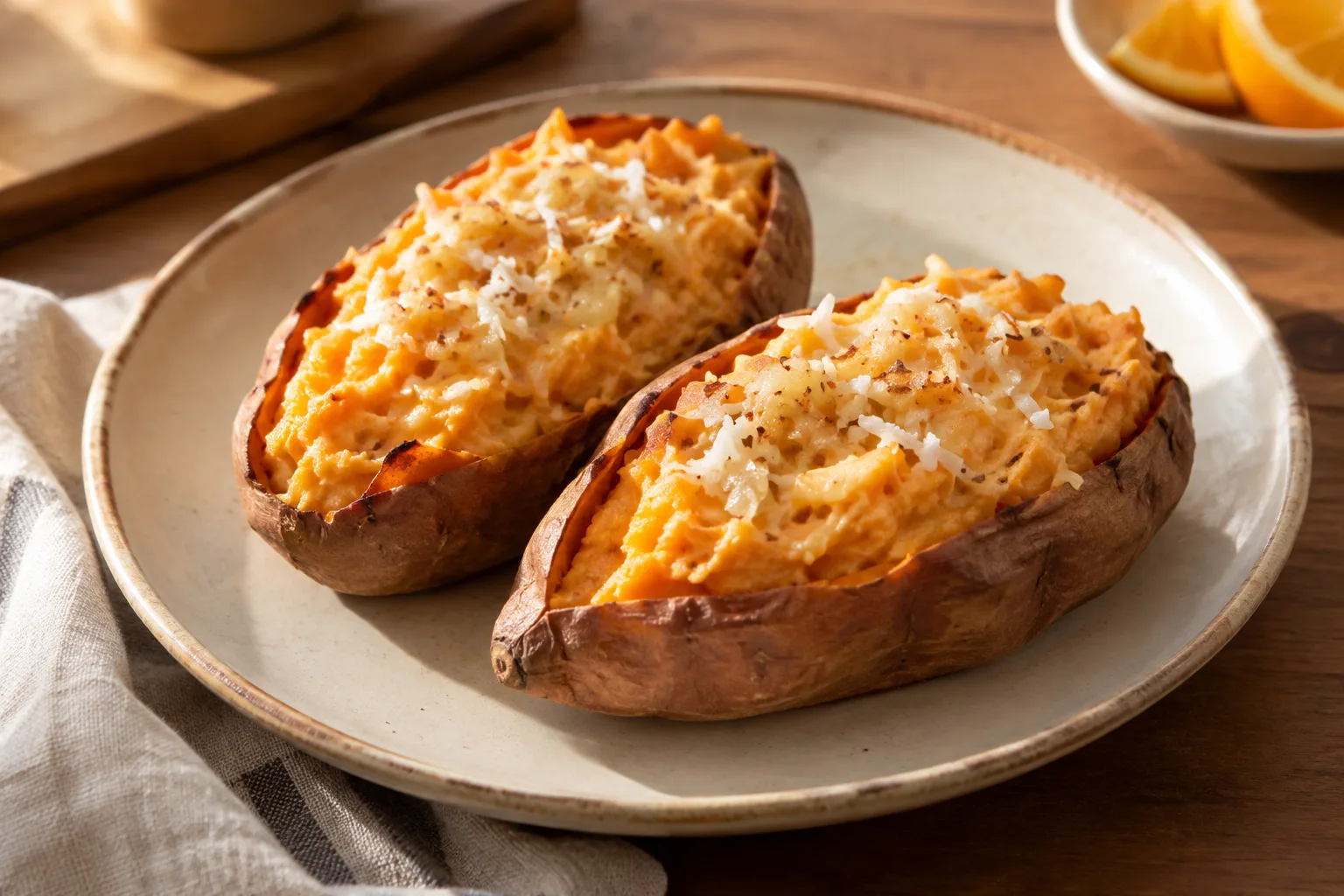
The sweet potato, called kaukau, is a striking example of an introduced crop becoming central to local diets. Accounts place its arrival in the eighteenth century and describe its rapid adoption. It is now used as a staple and prepared in different forms, including cooked whole or mashed. Its role shows how foodways can incorporate an arrival and make it part of everyday life without losing their local character.
European contact began in the sixteenth century, and European settlers brought livestock and crops in the nineteenth century. During the 1880s, the territory was divided between German and British administration; after the First World War, present-day Papua New Guinea came under Australian control. Independence followed in 1975. These events provide context for exchange and change, but they do not explain the many distinct community food traditions. Kokoda, a fish preparation also found in Fiji, is one example of culinary forms shared across Pacific settings rather than an exclusive national origin.
Staples, greens and coastal ingredients
The pantry begins with foods that supply starch and substance. Kaukau is sweet potato; other documented staples include taro, cassava, yam, banana, breadfruit and sago. Sago is starch extracted from the sago palm and can be processed into flour or used in dishes with different textures. Availability and preferred preparations vary, so this is a guide to ingredients rather than a universal household list.
Leafy vegetables and other edible greens accompany these staples. Kumu is used in some descriptions as a general term for edible greens. Fish and seafood contribute to meals in coastal areas, while chicken and pork appear in some preparations. Pork is often reserved for celebrations rather than treated as an everyday staple. Coconut flesh, milk and cream are especially prominent in many coastal dishes; the Highlands are described as making less use of coconut cream.
A useful way to map the pantry is by role:
- Starchy foundations: kaukau, taro, cassava, yam, banana and sago.
- Greens and vegetables: local leaves and shoots, including foods grouped under kumu in some accounts.
- Sea and animal foods: fish and seafood in coastal diets, with chicken or pork used in particular dishes and occasions.
- Coconut: water, flesh, milk or cream, with cooking uses especially noted in coastal areas.
Coffee is an important crop grown mainly in the Highlands and is widely consumed. These ingredients connect household meals to gardens, local environments and regional patterns of exchange.
Starch, sweetness, acidity and richness
Many documented preparations draw their character from the ingredients and their cooking rather than from a single standard seasoning blend. Sweet potato and ripe banana bring natural sweetness; sago gives a starchy, sometimes gelatinous or chewy quality. Coconut milk and cream add richness to dishes in which they are used, while leafy vegetables provide a contrasting component alongside starches.
Kokoda brings a different balance: fish is marinated with lime or another citrus and served with coconut milk, sliced onion and, in some descriptions, herbs. The combination places citrus acidity beside coconut richness. It is a particular preparation, not a template for all seafood cooking in the country. Saksak, made with sago and mashed banana and often coconut milk, is described as sweet and slightly chewy; its leaf wrapping and steaming also shape its texture.
Cooking methods create further contrasts. Slow cooking in a covered earth oven can leave ingredients tender and moist, while cooked or baked kaukau may remain whole or be mashed. A sago mixture can become a firm or gelatinous food depending on how it is prepared. These contrasts—soft and chewy, mild and sweet, fresh and rich—come from different ingredients and techniques, not from one national flavour profile.
Cooking together and marking occasions
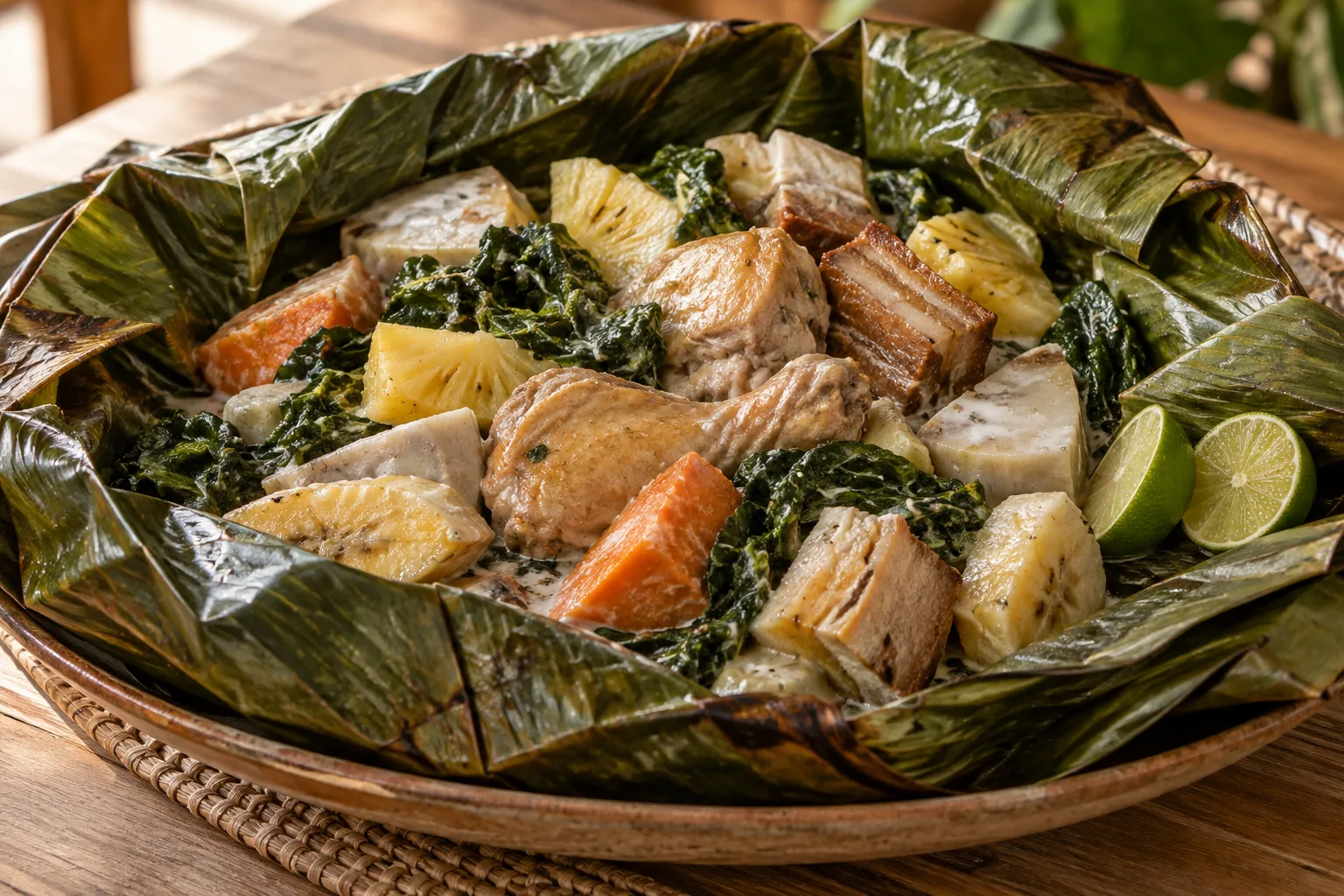
Mumu is a traditional earth-oven method used to cook substantial quantities of food. It is associated with gatherings and celebrations in accounts of Papua New Guinea cooking, though it is not restricted to one occasion or performed in exactly the same way everywhere. Ingredients may include root crops, bananas, leafy greens and meat; some versions use coconut milk, while others do not. Pork has a particular place as celebratory food, including at Christmas feasts.
Preparing a mumu can involve many steps: heating stones, arranging food and leaves, and covering the oven so that heat is retained. Its scale makes it suitable for cooking for a group, and accounts describe the work as involving family or community participation. Those descriptions support the communal dimension of the cooking, but not a single set of roles, ritual or sequence shared by every community.
Everyday knowledge is transmitted through handling local ingredients as well: preparing sago, cooking greens and making use of a harvest. Saksak, for example, is described as a breakfast food or sweet snack in some accounts. A feast and a quick everyday food belong to different occasions, yet both show how local ingredients can be transformed in ways that are familiar within particular households and communities.
Earth ovens, leaf parcels and open fires
A mumu begins with a pit and heated stones or coals. Leaves line or wrap the food, which is placed in the heated space and covered to hold warmth while it cooks slowly. Root crops, vegetables and, in some versions, meat are layered or arranged together. Ingredients, order and moisture differ between preparations; coconut milk may be added for a wetter style, while other versions cook without it. The term mumu can refer both to the oven method and to food prepared using it.
Other documented methods include cooking over an open fire, wrapping food in leaves, and placing food directly in the fire. Clay pots and green bamboo are used in some areas. Sago also requires processing: its starch can be mixed with hot water to form a gelatinous food, or combined with other ingredients and cooked in a leaf wrapping. In the Sepik, nangu is described as a hot-water sago preparation.
A modern oven can produce a cooked dish inspired by mumu, but it does not reproduce the earth oven’s heated stones, pit or leaf arrangement. Household equipment and urban cooking have changed alongside traditional methods. The useful distinction is between an adaptation and the specific method: both may cook similar ingredients, but they use different ways of delivering and retaining heat.
Everyday meals, feasts and drinks
Meals depend on what a household grows, gathers, catches or obtains. A starchy food such as kaukau, taro or sago may be served with cooked greens and, depending on place and availability, fish or meat. The sources do not establish one timetable or meal pattern for the whole country, so familiar dishes are best understood by their ingredients and reported uses rather than as a fixed national menu.
Several preparations illustrate different settings. Kol pis no rais pairs rice with fish, often canned tuna, and may include vegetables; it is described as a practical lunch or dinner. Saksak is associated in some accounts with breakfast or a sweet snack. Talautu, a dessert combining coconut, pineapple, citrus and coconut milk, is another documented sweet preparation. Mumu’s long cooking process and generous scale suit group meals and celebrations.
Drinks include kulau, the water of a green coconut, as well as coffee, tea and beer. Coffee is grown chiefly in the Highlands and is consumed more widely; tea was introduced during the British colonial period. These drinks and dishes show the range between garden-based staples, coastal ingredients and foods shaped by later crop and beverage histories. They are examples of documented choices, not a mandatory sequence or menu for every table.
A glossary of foods and preparations
Local food names can have different uses across languages and communities. These concise definitions identify the products and preparations described in accounts of Papua New Guinea cooking; they do not represent the country’s full linguistic range.
- Kaukau: Sweet potato, an important staple. It can be cooked whole or mashed; one documented preparation combines it with coconut, onion, garlic and ginger.
- Sago: Starch extracted from the sago palm. It is used in dishes such as pancakes, puddings and dumplings, and can be made into a gelatinous preparation.
- Mumu: An earth oven using heated stones or coals, and also the food cooked by this method. Leaf-wrapped ingredients are cooked slowly in the covered pit.
- Saksak: A sago-based dumpling commonly described with mashed banana and coconut milk, wrapped in banana leaf and steamed.
- Kokoda: Fish marinated with citrus and served with coconut milk and other ingredients such as sliced onion; a related preparation is also found in Fiji.
- Nangu: A gelatinous sago food described in the Sepik, made by mixing sago with very hot water.
- Kumu: A term used in some accounts for edible leafy vegetables and greens.
- Kulau: The water of a green coconut, consumed as a drink.
The names here are practical reference points. Their inclusion does not imply that every term is used uniformly throughout Papua New Guinea.
One country, many cuisines
Highlands
The Highlands are documented as an area where sweet potato and other root crops are cultivated and leafy greens feature in meals. Coffee is grown here, and descriptions distinguish Highlands cooking from many coastal patterns by noting less reliance on coconut cream. These are broad tendencies, not a uniform menu for all communities or households.
Coastal and Gulf Areas
In coastal areas, fish and other seafood contribute to diets alongside starchy foods such as sago. Coconut milk and cream are prominent in many coastal preparations compared with the Highlands; accounts also note the importance of vegetables in the Gulf. These points describe documented patterns and should not be taken as rules for every locality.
Sepik
The Sepik is documented in connection with sago and a preparation called nangu: a gelatinous food made by combining sago with very hot water and eaten as a starchy staple in meals. This specific example identifies one regional use of sago; it does not claim to be the only preparation there or to represent every community in the Sepik.
Cook