Documentary synthesis prepared with AI assistance. It does not replace specialist review or certify kitchen testing. · Updated 31 October 2026
A Levantine landscape of related foodways
Palestinian cuisine belongs to the eastern Mediterranean and the wider Levant, a region in which neighboring communities share ingredients, techniques and many kinds of dishes. Its food is not a single fixed menu. The available descriptions distinguish inland and coastal patterns and refer to village, city and family kitchens, each shaped by what is cultivated, sold and prepared locally. Galilee is associated with rice and varieties of kibbeh; West Bank descriptions include taboon bread, rice and meat; and coastal foodways include fish and lentils. These are documented tendencies, not rules that describe every household.
The pantry connects food to agriculture. Olive oil, wheat, herbs and seasonal produce recur in accounts of Palestinian meals. Bread can be a staple in its own right, an accompaniment or the base that catches the oil and juices of a dish. Markets bring together fresh produce, spices, olives and sweets, while bakeries connect everyday eating with the work of preparing and selling bread. The combination of these elements makes it possible to understand both ordinary meals and dishes prepared for gatherings without treating them as separate, unrelated cuisines.
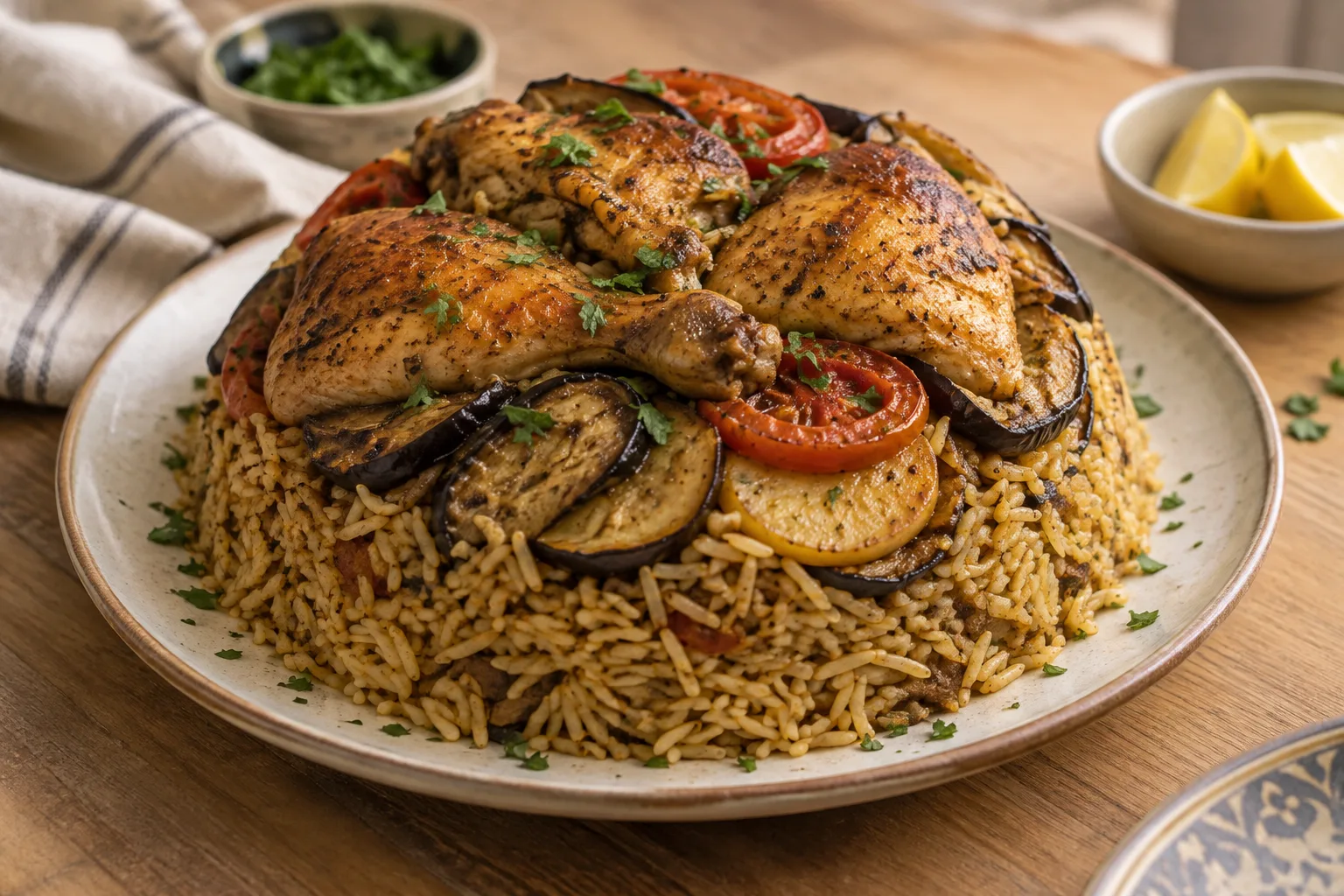
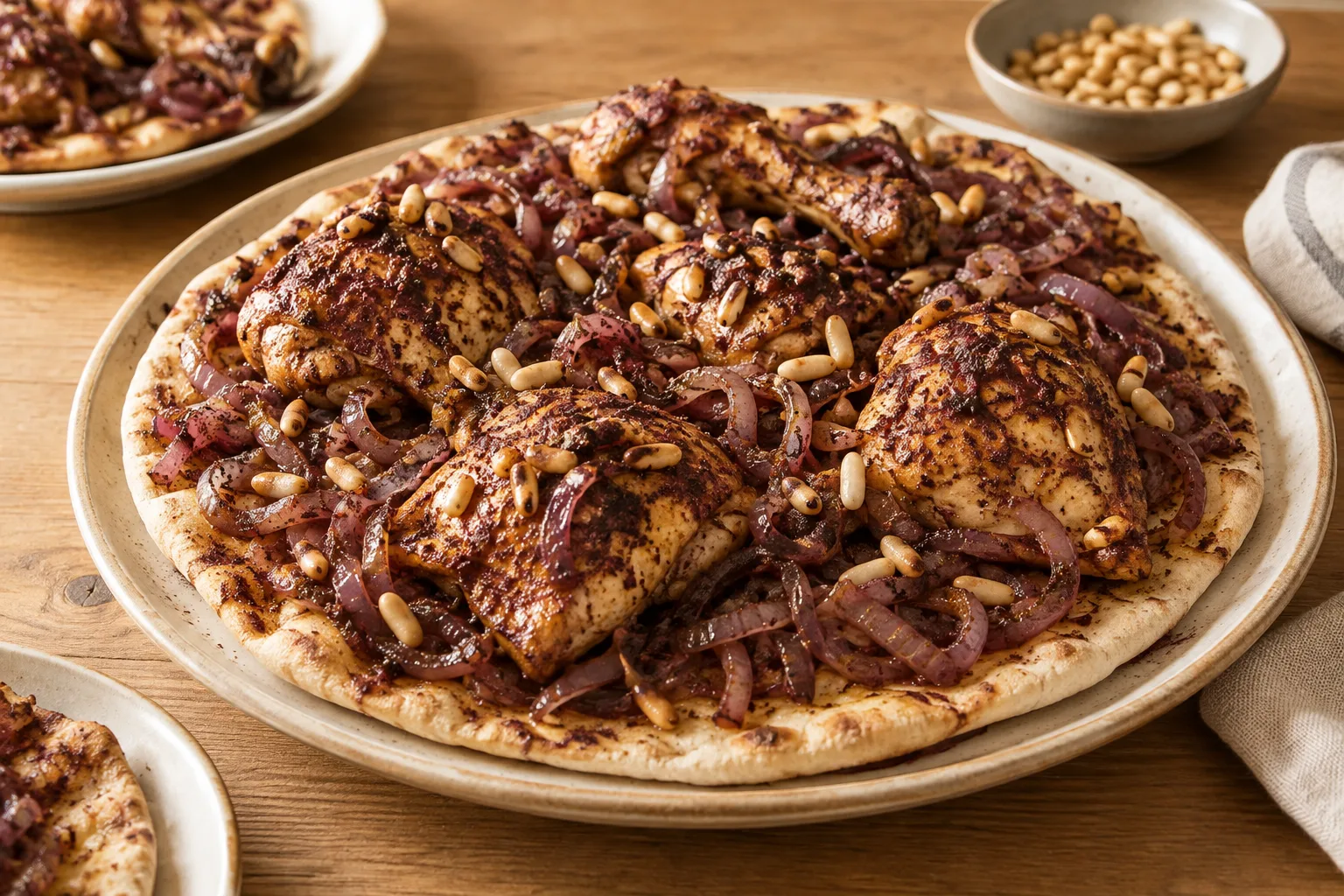
Two preparations offer especially clear examples of this range. Musakhan combines bread, olive oil, onions and sumac; versions with chicken and toasted nuts are also documented. Maqluba layers rice with vegetables and meat, cooks them together and turns the pot out for serving. They are specific preparations with recognizable forms, yet neither stands for every Palestinian meal. Sweets, legumes, breads, fish and other household dishes belong to the larger picture too.
Palestinian foodways are also connected with neighboring Levantine cuisines through long histories of exchange. Shared forms do not erase local practice or establish exclusive origins. A careful account therefore attends to the ingredients, places, preparations and occasions documented in Palestinian kitchens, and recognizes differences between communities. Food can carry memories of home and land, including for Palestinians living in diaspora, while remaining a changing part of daily life.
Historical exchange, kitchens and food trades
The culinary history of Palestine is part of the wider history of the southern Levant. The region’s changing political and cultural connections brought different foodways into contact. Historical accounts describe influences associated with successive Arab and Islamic periods and with Ottoman rule, while noting similarities between Palestinian, Syrian, Lebanese and Jordanian cooking. These connections help explain why ingredients and dish forms cross present-day borders. They do not make a shared dish the exclusive property of one community, nor do they establish a single, unchanged recipe extending through all periods.
Descriptions of Palestine in the early twentieth century give a more concrete glimpse of food production and urban life. They record bakers preparing dough for townspeople, confectioners selling sweets such as ma’amoul and knafeh, and vendors offering sesame-coated bread. They also distinguish household or village baking from the work of town bakeries. These records show that cooking and eating relied not only on household labor but also on specialized trades and places where food was made and sold. They are evidence from a particular historical moment, rather than a complete inventory of Palestinian food.
The built environment mattered too. Historical descriptions refer to tabun and other ovens, including ovens used by several families. Such shared facilities connect bread-making with community resources as well as domestic skill. The many kinds of bread recorded in Palestine also caution against imagining a single standard loaf or one universal method of baking.
Today, food memories and practices travel with people. Palestinian cooking continues in diaspora settings, where dishes and kitchen knowledge can connect families to places of origin and to earlier generations. Written recipes, oral instruction and personal recollection each preserve different details. The evidence supports a history of exchange, local trades and ongoing transmission; it does not justify reducing the cuisine to one political narrative or claiming that every present-day household follows an unaltered historical pattern. Continuity here is visible in ingredients and remembered preparations, while variation and adaptation are also part of the record.
Ingredients, harvests and preservation
Olive oil and wheat are central reference points in descriptions of Palestinian cooking. Oil is used in cooking and served with bread, and it appears prominently in musakhan. Wheat is transformed into breads and other foods, linking fields, mills, ovens and the household table. Accounts of food markets also name olives, za’atar, sumac and fresh produce. These ingredients are familiar across the region, but their presence in Palestinian kitchens is documented in specific dishes and food practices rather than as a claim of exclusive ownership.
The mixture called za’atar is described as combining wild thyme, sesame seeds and sumac. It may be used as a seasoning on bread, alongside olive oil. Sumac also has a distinct role in musakhan, where its tartness accompanies onions, oil and bread. Sesame appears on breads and in mixtures. Together these ingredients show how a short list of pantry staples can serve different purposes: seasoning, topping, cooking fat and accompaniment.
Rice, legumes, onions, eggplant and other vegetables appear in dishes and regional descriptions. In maqluba, rice cooks in layers with vegetables and meat. In the coastal accounts, lentils and fish are noted as important foods; descriptions of Gaza refer to the use of chile and spices. These references give a sense of variation in the pantry without suggesting that any one ingredient is available or eaten by everyone at all times. Seasonal produce and market supply shape what a household can prepare.
Olive gathering and pressing also connect food to agricultural work. The resulting oil is not simply a flavoring: it has culinary importance in cooking and in serving. Pickled vegetables and market produce broaden the picture of how ingredients are kept or brought to the table, although the evidence does not support a single standardized preserving practice across the country. A useful way to read the pantry is by following an ingredient through its uses: wheat becomes bread, olives yield oil, herbs and sumac season food, and vegetables and rice form the substance of cooked dishes. The particular combinations vary by preparation, season and community.
Tart, herbal, toasted and layered flavors
Palestinian dishes draw on contrasts rather than one defining flavor profile. Olive oil brings richness, onions become sweet and soft as they cook, and sumac contributes a sharp, tart quality. Sesame offers a toasted note, while herbs add fragrance. Garlic, spices and chile occur in particular preparations and regional descriptions, but the intensity and combination are not uniform across households. The evidence supports a varied palette, not a formula that can be applied to every dish.
Musakhan illustrates how these elements work together. Bread is topped with onions cooked in olive oil and seasoned with sumac; chicken is included in documented versions, and toasted pine nuts or almonds may appear as a garnish. The bread absorbs oil and the juices of the topping, so its texture becomes part of the dish rather than merely an accompaniment. The soft onions, tart seasoning, rich oil and yielding bread form the preparation’s recognizable balance. Different presentations, including rolls made with thin bread, are also documented, and should be understood as variations rather than a single fixed form.
In maqluba, the flavors develop together as rice, vegetables and meat cook in one pot. Eggplant is one documented choice, and the final turn of the pot reveals the layers. Vegetables contribute their own textures and flavors; the cooking liquid seasons the rice. The dish is defined as much by this arrangement and presentation as by any particular spice. Versions vary in their ingredients, so the name does not prescribe one exclusive combination.
Sweet foods add another dimension. Knafeh is associated with Nablus and is described as a cheese-filled sweet pastry, while other Palestinian sweets may use dates or nuts. The regional accounts also distinguish Gaza’s more extensive use of chile and spices and coastal reliance on fish and lentils. Those descriptions are useful when read as broad patterns, not as a guarantee about every meal. In combination, they show why Palestinian food cannot be reduced to a single level of heat, a single spice blend or a single texture: bread, grains, vegetables, oil, fruit, dairy and seasonings all have distinct roles in particular dishes.
Harvest, hospitality and knowledge passed on
Food traditions connect the seasonal work of agriculture with home cooking and shared meals. Olive harvesting is one documented occasion when families and communities gather to collect fruit. Olive oil from the harvest is an important ingredient in Palestinian cooking, and musakhan is associated in Palestinian accounts with the olive-pressing season. Its bread, oil, onions and sumac bring together agricultural products in a dish that can be set out for people to share. Chicken and toasted nuts occur in versions of the preparation; this change over time is a reminder that a tradition can retain a recognizable core while its forms develop.
Meals with family and friends are described as occasions for sharing. A large platter or a communal dish can make serving part of the meal’s social character, but there is no need to imagine that every household follows one formal ritual. Recipes and preferences pass through cooking together, observation, conversation and repeated practice. Oral accounts of recipe learning emphasize that instructions may rely on judgment and description instead of precise, written quantities. That kind of transmission allows cooks to adapt seasoning and method to their own kitchens.
The sources also describe drinks made from carob, tamarind and apricot in connection with breaking the fast at sunset during Ramadan. Sweets have a place in festive eating, though the particular foods and customs depend on community and family. These examples document specific occasions without implying that all Palestinians observe them in the same way or that a particular dish is required at every celebration.
Food carries meaning beyond a meal, especially when families live away from places associated with their memories. Palestinian writing about food connects bread, coffee and familiar dishes with home and belonging. Cooking in diaspora can sustain relationships between generations and preserve words, tastes and methods even as ingredients or circumstances change. Such continuity is not a claim that food practices remain untouched. Rather, shared memory, adaptation and the passing on of culinary knowledge are all part of living tradition. Harvest work, everyday hospitality, family gatherings and observances each give food different significance, without collapsing them into one universal ceremony.
Ovens, bread and cooking in layers
Palestinian cooking draws on techniques suited to breads, grains, vegetables and meat. The tabun oven is associated with traditional bread-making, and historical accounts describe both rural ovens and ovens used by several families. Early records also distinguish village baking from town bakeries. These references establish the place of ovens and bakers in food production, but they should not be taken to mean that every household uses a tabun today. Bread forms and equipment differ, and the evidence names more than one kind of oven.
In musakhan, bread acts as both base and carrier. Onions are cooked until soft, then combined with oil and sumac; bread is covered with this mixture and, in versions that include it, chicken and toasted nuts. The bread takes up some of the oil and juices. Thin breads may also be used to roll a chicken-and-onion filling, creating a different presentation of related flavors. These methods show the practical and textural importance of bread in the dish, while leaving room for household variation.
Maqluba relies on a different sequence. Rice, vegetables and meat are arranged in a pot, cooked with liquid, then inverted onto a serving platter. The turning reveals the layers and gives the dish its familiar presentation. Eggplant is one documented vegetable; other vegetables and different meats occur in versions described in the evidence. The method brings ingredients together in one vessel and makes the final unmolding a visible part of serving.
Historical references to shared ovens point to food preparation as a collective resource as well as a domestic activity. Records of bakers and confectioners similarly place technique within an economy of food trades. Contemporary descriptions also show how written recipes can coexist with oral instruction and personal judgment. There is no single utensil or method that defines all Palestinian cuisine. Oven baking, cooking in a pot, arranging layers and using bread to hold savory toppings are specific techniques connected with particular foods, not instructions that can be generalized to every dish.
Everyday meals and food set out to share
Palestinian tables range from everyday bread and accompaniments to substantial dishes prepared for family occasions. Markets and bakeries supply breads, fresh produce, spices and sweets, while households bring these ingredients together in different ways. Olive oil and za’atar can accompany bread; vegetables and pickles may appear alongside cooked food. The evidence describes these items as part of the food landscape, but does not establish one fixed breakfast spread or an identical arrangement in every home.
Some dishes make sharing especially visible. Maqluba is cooked in layers and turned onto a platter, where the rice, vegetables and meat are presented together. Its form suits a shared meal, and descriptions associate it with family occasions. Musakhan can likewise be served on bread with onion and sumac topping, with chicken in documented versions. Bread’s ability to carry the topping and absorb juices makes it part of the meal’s substance. These examples show how a dish can be generous and communal without requiring a formal serving ceremony.
Urban markets and food trades also shape the experience of eating. Records mention bakers, confectioners and vendors, while contemporary descriptions point to food markets in cities including Nablus, Jerusalem and Bethlehem. Nablus is particularly associated with knafeh. Such places connect daily food shopping with specialized preparation and local sweets; they are part of culinary life alongside the household kitchen, rather than a substitute for it.
Occasion changes what is served. Drinks made from carob, tamarind and apricot are linked in the evidence to breaking the Ramadan fast, and sweets appear in festive contexts. Practices differ between families and communities, so these occasions should not be treated as a universal menu. A Palestinian table may be intimate or communal, everyday or celebratory, shaped by season and local supply. Its organization is best understood through concrete preparations and the people sharing them, not through an assumed single etiquette. In the diaspora, familiar foods may also serve as a link between family members and memories of home.
A glossary of Palestinian foods and terms
These terms identify ingredients, breads and preparations documented in Palestinian foodways. Spellings in English vary because names are transliterated from Arabic in different ways. A term may also cover more than one household version, so the definitions below describe recognizable forms rather than prescribe a single recipe.
- Musakhan: A preparation of bread with olive oil, onions and sumac; documented versions include chicken and toasted nuts. It is associated in Palestinian accounts with olive-harvest season. The bread is part of the dish and takes up some of the oil and juices.
- Maqluba: Literally “upside down,” a pot-cooked dish of rice layered with vegetables and meat, then inverted for serving. Eggplant is one documented vegetable, while combinations differ between versions.
- Za’atar: A seasoning mixture described as wild thyme, sesame seeds and sumac. It is used on bread, often alongside olive oil.
- Tabun: A traditional oven associated with bread baking; the name also appears in descriptions of tabun bread. Historical accounts refer to ovens in both rural and shared settings.
- Knafeh: A sweet pastry associated particularly with Nablus. The evidence describes Palestinian sweets that include cheese, dates or nuts; versions of knafeh vary.
- Sumac: A tart spice used in musakhan and as an ingredient in za’atar. Its acidity contrasts with the richness of olive oil and the sweetness of cooked onions.
- Kibbeh: A family of preparations noted in descriptions of Galilee. The term refers to varied forms rather than one regional recipe that is identical in every community.
Taken together, the terms show how Palestinian food vocabulary names ingredients, methods and dishes at different scales. Tabun points to baking equipment and bread; za’atar and sumac describe seasonings; maqluba and musakhan name preparations with recognizable structures. Their meanings are clearest when connected to the places and meals in which they are used. Shared names across the Levant do not make local practices interchangeable, and variations within Palestinian kitchens remain part of the culinary record.
One country, many cuisines
Galilee
Descriptions of Palestinian regional foodways associate Galilee with rice and different preparations of kibbeh. These references identify a regional pattern within a broader and interconnected cuisine; they do not establish that either food is exclusive to Galilee or prepared identically in every community. The available evidence supports these specific associations, rather than a comprehensive account of all foods, localities or households in the region.
West Bank
Accounts of West Bank foodways mention tabun bread, rice and meat, and place foods and markets in cities including Nablus, Jerusalem and Bethlehem. Nablus is especially associated with knafeh. These references bring together regional foods, urban trades and sweets, but do not describe every locality or household. They offer a documented view of several prominent food associations rather than a complete inventory of West Bank cooking.
Gaza and the coast
Descriptions of Gaza note a broad use of chile and spices, while coastal foodways are associated with fish and lentils. These are regional tendencies recorded in a general account of Palestinian cuisine, not fixed rules for each meal or household. The evidence supports identifying these ingredients as part of the region’s culinary profile, while leaving room for differences in family preference, supply and preparation.
Cook