Documentary synthesis prepared with AI assistance. It does not replace specialist review or certify kitchen testing. · Updated 12 November 2026
An archipelago nourished by gardens and the sea
The Solomon Islands are an island country in the Pacific, with six major islands and many smaller ones. Its dispersed geography shapes food in practical ways: traditional food systems bring together produce from home gardens and foods from the sea, while moving fresh, perishable goods between islands can be difficult and costly. The result is not one fixed menu but a varied food culture connected to local environments and access.
Accounts of the food supply name taro, cassava, sweet potato, banana, breadfruit and coconut, alongside fish and other aquatic foods. Fruit and vegetables contribute to this picture, as do imported staples and preserved products. The balance among them can differ with place and circumstance. A meal based on garden crops and fresh fish is one documented pattern, not a rule for every household.
This food landscape also changes over time. Rice, flour and convenience foods have become more accessible in some settings because they last longer and may be easier to distribute than fresh local foods. Local crops and seafood remain important to food-system initiatives and culinary collections. Understanding the cuisine therefore means considering both the island-grown pantry and the movement of food across a widely scattered country.
A changing pantry shaped by settlement and exchange
The culinary record sits within a long history of human settlement and later contact with people and goods from beyond the islands. The available accounts mention European and Asian influences, but do not establish the precise date or route by which particular ingredients or dishes entered each community. It is more accurate to describe a changing food culture shaped by exchange than to assign every preparation a single origin.
A contemporary food collection gathers recipes from across the provinces and presents local ingredients and aquatic foods as part of cultural knowledge and daily food systems. Its emphasis is on foods of the land and sea, and on traditional ways of preparing them; it does not make every recipe representative of every island. Food-system work also records how distance and unreliable transport affect the distribution of fresh garden and sea foods.
Imported rice, flour and convenience foods have gained a place in diets partly because they can be stored and transported more readily. This shift exists alongside efforts to strengthen Indigenous foods and practices, not as evidence that local cooking has disappeared. Continuity and change operate together: ingredients and methods are carried forward, while availability and everyday choices evolve.
Roots, coconut, fruit and foods from the water
Starchy crops are a prominent part of the documented pantry. Taro, cassava and sweet potato appear alongside banana and breadfruit, with rice also present in contemporary meals. These ingredients can serve as substantial parts of a meal or be transformed into preparations with different textures. Cassava, for example, is grated and combined with sweet potato and coconut milk in a pudding described as wrapped in banana leaves and cooked.
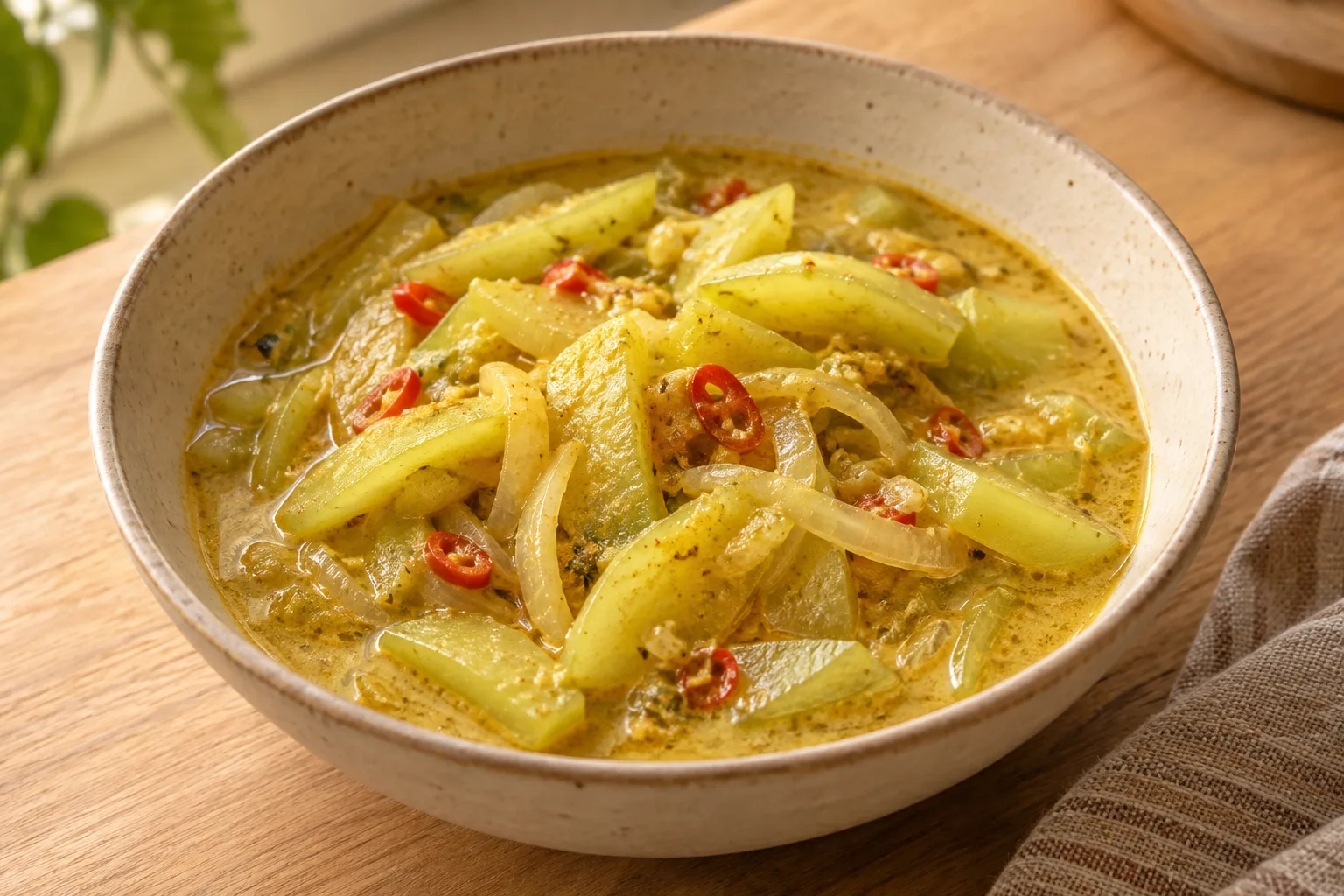
Coconut is used in both savoury and sweet preparations. Coconut milk or cream gives dishes a rich, smooth character, and it appears with vegetables and roots as well as in the green pawpaw curry. Fruit is used at different stages of ripeness: green papaya, also called green pawpaw in some English-language accounts, has firm, mild flesh that is simmered with coconut milk, onion, garlic and curry powder. Ripe papaya and other fruits are also part of the broader food landscape.
Fish and aquatic foods are central to descriptions of local food systems. Fresh foods from the sea are perishable, and transport can affect their availability. Preserved tuna, known in a recipe account as taiyo, provides another example of how stored foods enter the kitchen. Garden crops, seafood and imported or preserved goods together make up a pantry shaped by both ecology and distribution.
Creamy coconut, mild roots and tangy poi
Several documented preparations balance the mild, starchy quality of roots and vegetables with coconut, seafood or fermented flavours. Coconut milk lends smoothness to a vegetable curry, while fish may be prepared with coconut or served alongside starchy crops. These combinations are examples from the record, not a single flavour formula shared by every island or household.
Green pawpaw curry illustrates how an unripe fruit can take on the character of its cooking liquid. Its flesh is firm and mild before cooking; simmering with coconut milk, onion, garlic and curry powder softens it and brings the seasonings forward. Rice is one documented accompaniment. The dish shows a practical use for papaya before it ripens, but the evidence does not warrant assuming that every household prepares it in the same way.
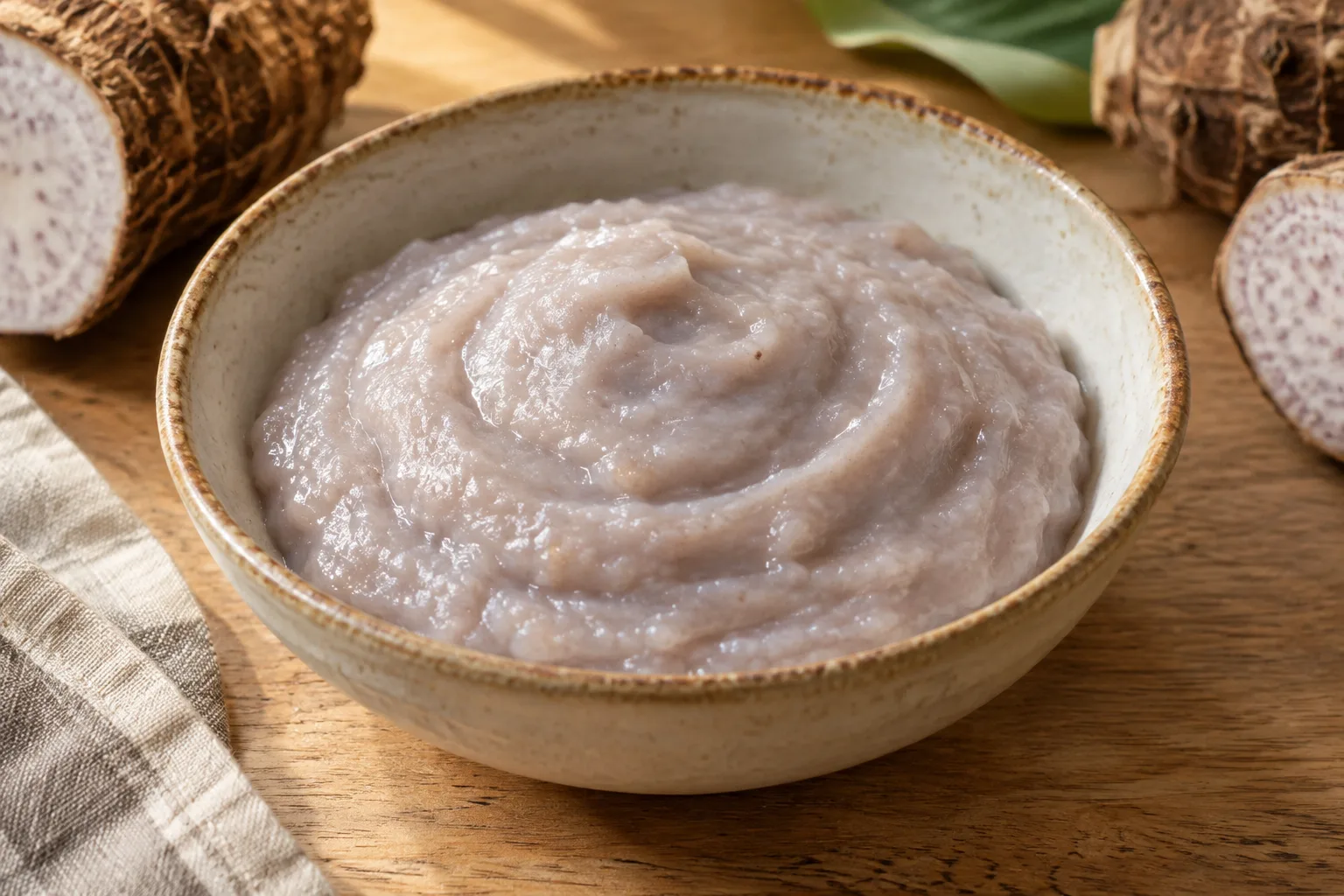
Poi offers a contrasting, tangier flavour when fermented. It is made from cooked taro that is pounded or mashed into a paste; it can be eaten fresh or left to ferment, when its taste becomes more sour. How much water is mixed in changes its consistency, from thick to more fluid. Together, these foods show a range of textures: tender roots, creamy sauces and a sour, soft taro preparation.
Food knowledge, celebrations and community work
Food is part of both daily life and social occasions, but the evidence does not support one universal celebration menu or ritual across the Solomon Islands. Poi is described as a food served at celebrations, and accounts of local food systems connect Indigenous ingredients and traditional practices with cultural continuity. These points speak to the social importance of food without making a claim that every community marks occasions in the same way.
Knowledge of garden crops, aquatic foods and their preparation is also supported through collective work. Food-system initiatives identify women’s groups, churches, local communities and food processors among the people who can contribute to strengthening local food systems. A demonstration garden planned at Nusatupe research station in Western Province is described as integrating fish and vegetable farming and showcasing ocean-based aquatic foods activities. This is a documented project, not evidence of a province-wide culinary style.
Recipes assembled from across the provinces can help preserve practical knowledge and encourage appreciation of local ingredients. Their breadth is valuable, but a collection cannot stand in for every community’s practice. Transmission is not sameness: the foods people prepare and share depend on what is grown, caught, available and meaningful in their particular setting.
Cooking roots, pounding taro and wrapping food
The techniques attached to documented dishes begin with transforming garden crops. For poi, taro is cooked until tender, then pounded or mashed with water to form a paste. It may be served soon after preparation or left to ferment, which changes its flavour. The key transformation is from cooked root to soft, cohesive food; fermentation is an option, not a requirement for every version described.
In green pawpaw curry, the unripe fruit is peeled, cut and simmered with coconut milk and seasonings until tender. A different treatment appears in cassava pudding: grated cassava and sweet potato are mixed with coconut milk, wrapped in banana leaves and cooked. The leaf wrapping is part of this particular preparation; it should not be generalized into a single method used throughout the country.
Accounts also mention boiling, baking, grilling, frying and steaming as ways foods are cooked. Fish may be grilled, and some descriptions discuss slow cooking food wrapped in leaves or cooked in an earth oven. The available material does not establish how widespread each method is in every community. These techniques are best understood through the particular ingredients and dishes with which they are documented, rather than as a uniform national repertoire.
Everyday meals, shared foods and urban vendors
A documented meal may pair a starchy food with fish, vegetables or a coconut-based preparation. Poi can be eaten by itself or serve as the substantial part of a meal alongside savoury foods. Green pawpaw curry is described with rice. These are specific ways of serving particular foods, not prescriptions for how a Solomon Islands meal must be arranged.
What reaches the table also reflects storage and transport. Fresh fish and garden produce can be difficult to move across long distances, while rice, flour and convenience foods have longer shelf lives. Households and communities therefore encounter a mix of local, imported and preserved foods. This practical context helps explain why no single list of dishes can represent every meal across the archipelago.
In Honiara, accounts describe vendors selling prepared foods such as grilled fish, meats and snacks. That provides a glimpse of urban food access, but not a complete portrait of the city’s food economy or a national street-food tradition. Celebration meals can bring people together, yet the available documentation does not establish a universal order of service, fixed festive menu or shared table ritual. The most reliable picture is one of varied meals shaped by availability and occasion.
A glossary of ingredients and preparations
These terms identify foods and transformations documented in accounts of Solomon Islands cooking. Some preparations have wider Pacific connections, so their presence here should not be taken to mean they originated exclusively in the Solomon Islands.
- Poi: A soft paste made by cooking taro and pounding or mashing it, often with water. It can be eaten fresh or fermented to develop a sour taste.
- Taiyo: A local term used in a recipe account for canned tuna, an example of preserved seafood in the pantry.
- Green pawpaw curry: A dish of unripe papaya simmered with coconut milk, onion, garlic and curry powder; it is described with rice.
- Cassava pudding: A preparation combining grated cassava, sweet potato and coconut milk, wrapped in banana leaves and cooked.
- Taro: A starchy root used in poi and in other cooked preparations. In poi, it is cooked before being mashed.
- Banana-leaf wrapping: A method used in the documented cassava pudding preparation; it describes that dish rather than a universal practice.
One country, many cuisines
Honiara
Honiara is documented as an urban setting where prepared foods, including grilled fish, meats and snacks, are sold by vendors. This supports a limited description of food available for purchase in the capital, not a distinct Honiara cuisine or a complete account of its markets and eating habits. The city’s food scene should not be treated as representative of every island or community.
Western Province
In Western Province, Nusatupe research station is identified as the site of a planned demonstration garden focused on island food systems. The project is expected to integrate fish and vegetable farming and include activities related to ocean-based aquatic foods. This documents a food-system initiative in the province; it does not establish a distinct provincial dish tradition or a full regional culinary profile.
Cook