Documentary synthesis prepared with AI assistance. It does not replace specialist review or certify kitchen testing. · Updated 12 November 2026
A table shaped by the Horn of Africa
Somalia occupies the Horn of Africa, bordered by the Gulf of Aden and the Indian Ocean. Its coastal position connects the region to maritime routes, while inland life includes pastoral communities and agricultural areas, particularly around the southern river regions. These different environments help explain why a Somali table may feature rice, meat, milk, cornmeal, vegetables, fish, or flatbread in differing combinations. They do not produce one fixed national menu.
Meals often bring together a substantial grain or bread with meat, vegetables, or broth. Aromatic spices recur across preparations, but their presence does not make every dish fiery or identical. A home might serve fragrant rice with meat, a stew alongside bread, or pasta with a richly seasoned sauce. Coastal and urban food choices can include fish, while meat and dairy have long-standing importance in pastoral foodways. The most useful starting point is variety within shared habits: familiar dishes travel across households, while ingredients, preparation, and serving choices remain flexible. Names and spellings also vary when Somali terms are written in English.
Trade, colonial history, and culinary adaptation
Somalia’s location along the Gulf of Aden and Indian Ocean has long linked it to wider trading networks. The movement of goods and people is part of the context for the use of aromatic spices, including cinnamon and cardamom. The history of a dish, however, cannot be reduced to a single outside influence: local ingredients and household practices have shaped how traded products are used and combined.
A more recent historical layer is visible in baasto, the Somali word for pasta. Pasta became established during the period of Italian colonial rule, particularly in the south, and is now prepared with Somali-style seasoned sauces and accompaniments. Somalia was divided between British-administered territory in the north and Italian-administered territory in the south during the colonial period; the territories became independent and united in 1960. This history helps explain some regional and culinary differences, but it does not define the whole cuisine. Borrowed ingredients and forms become meaningful through local use: pasta with a spiced meat sauce belongs to contemporary Somali meals alongside rice, breads, and stews rooted in other foodways.
Rice, grains, meat, breads, and aromatics
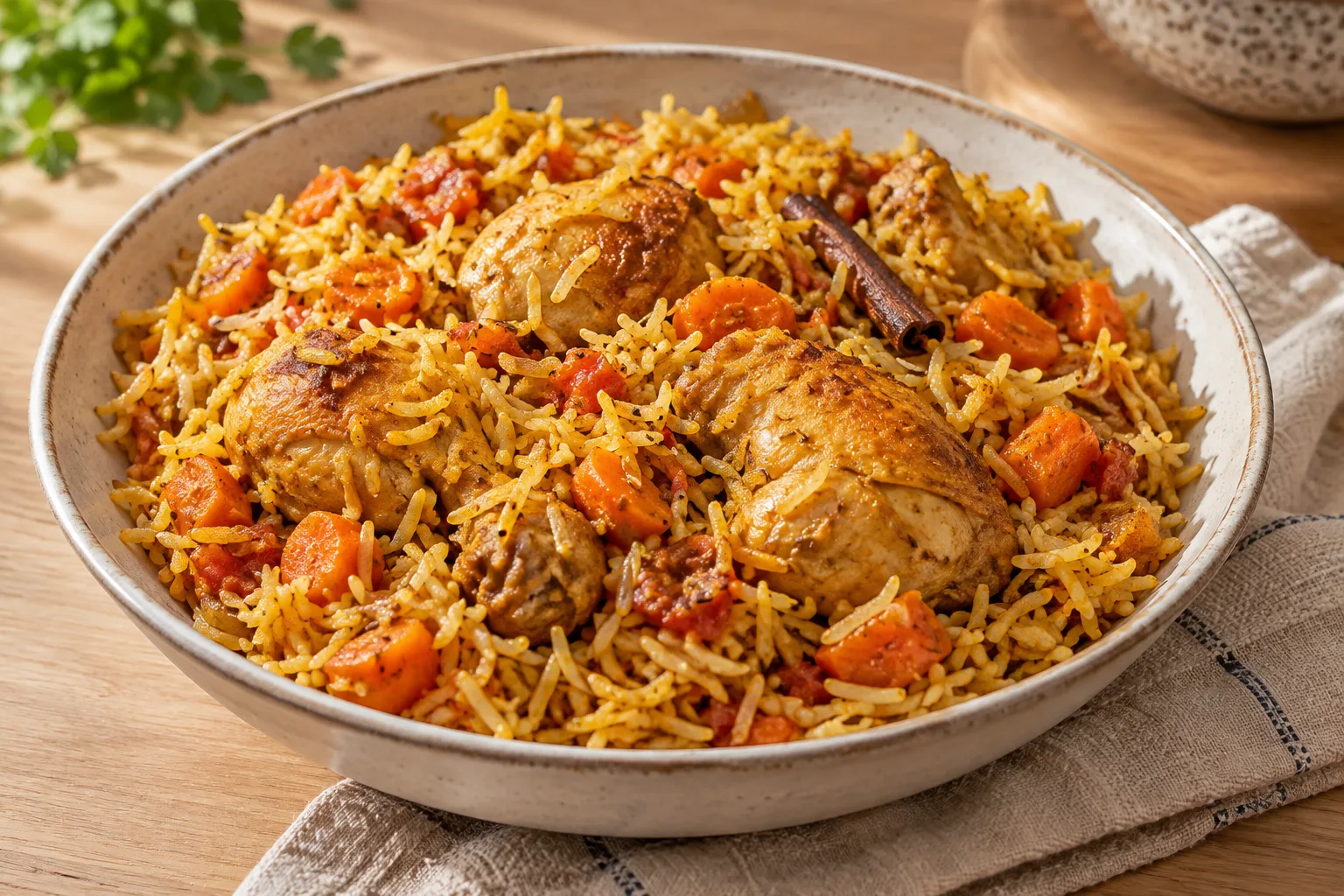
Rice, or bariis, is the base of bariis iskukaris, a seasoned rice dish cooked with meat and sometimes vegetables. In southern riverine areas, corn and sorghum are important staples; cornmeal is used for firm preparations and the thick bread muufo. Wheat appears in flatbreads and pasta. Canjeero (also called laxoox in some usage) is a thin fermented bread, while sabaayad is another flatbread commonly served with stews or meat.
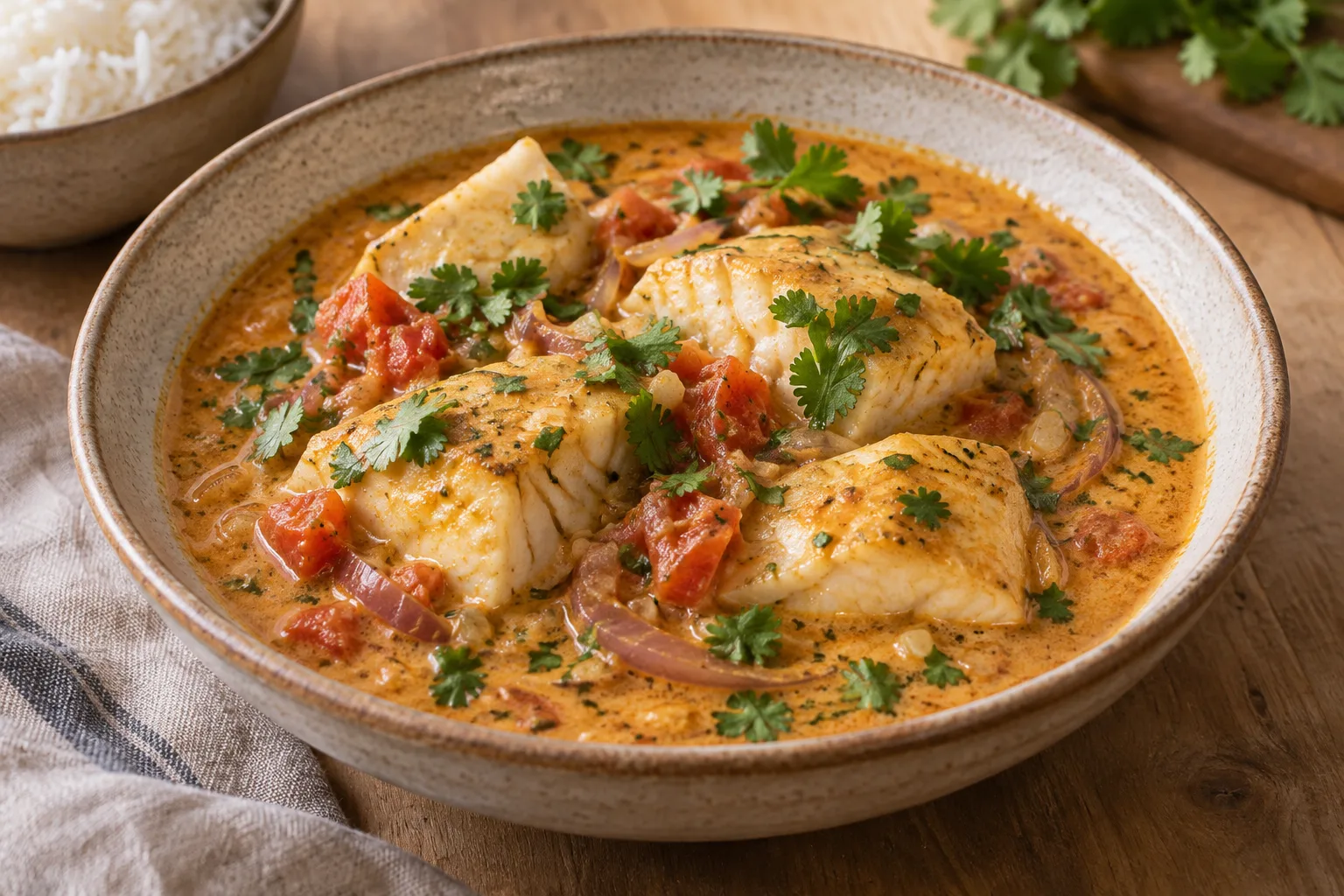
Beef, goat, lamb, and camel are among the meats described in Somali cooking. Camel milk and meat are associated with pastoral foodways. Fish is part of coastal food traditions, although it has not historically been equally central in every part of the country. Onion, garlic, and tomato form a base for many cooked dishes. The aromatic blend xawaash commonly includes cumin, coriander, black pepper, cinnamon, cardamom, cloves, and turmeric, though household proportions differ. Other pantry items include clarified butter known as subag, beans used in cambuulo, and ingredients for pasta sauces and stews. Availability and preference vary by place and household, so this pantry is a guide to documented foods, not a universal inventory.
Warm spice, savory broths, and contrasting textures
Somali dishes often build aroma from warm spices rather than relying only on heat. In xawaash, cumin and coriander give an earthy foundation, while cardamom, cinnamon, cloves, black pepper, and turmeric contribute fragrance and depth. The exact balance changes between households and uses; the blend can season rice, meat, pasta sauces, soups, or stews. Onion, garlic, and tomato add a savory, gently sweet base to many cooked preparations. Not every dish uses the full blend, and some meals are mild.
Texture is as important as aroma. Canjeero is thin, soft, and lightly tangy from fermentation; muufo is thicker and more substantial. Rice absorbs seasoning and cooking liquid, while maraq supplies a broth or stew texture. In suqaar, bite-sized meat is sautéed with vegetables. Pasta is often served with a sauce that is more stew-like and substantial than a light coating. Sweet foods offer another contrast: xalwo is a dense confection, while cambuulo pairs very soft-cooked beans with butter and sugar. The cuisine’s range includes fragrant, savory, mildly sweet, and hearty textures, rather than one uniform level of spice or richness.
Breakfasts, celebrations, and everyday transmission
Breakfast, quraac, commonly begins with Somali tea or coffee and may include bread. Canjeero can be eaten with honey or subag, or served with savory accompaniments. Malawax, a sweeter, richer flatbread, is another home breakfast food. Other documented morning foods include porridge and meat preparations. The range makes breakfast a meal that can be simple or substantial, depending on household habits and what is served alongside the bread.
Rice with meat, including bariis iskukaris, appears in both daily meals and celebrations such as weddings. Sambusa, a filled fried pastry, is associated with Ramadan as well as other festive occasions. Meat dishes also feature at special gatherings in pastoral communities. These examples describe particular occasions, not a shared ritual that every family follows. Food knowledge is carried through everyday cooking and family variation: cooks adjust seasoning, ingredients, and methods rather than relying on a single fixed formula. In diaspora as well as in Somalia, written recipes can help record preparations, while the remembered taste of a family dish remains significant. Hospitality and sharing are expressed through concrete dishes and occasions, with local and household differences preserved rather than erased.
Toasting spices, simmering stews, and cooking breads
The method for xawaash illustrates how a pantry staple is made: whole spices such as cumin, coriander, pepper, cinnamon, cardamom, and cloves may be toasted briefly until fragrant, then ground; turmeric is commonly mixed in afterward. Recipes differ, and not every household uses identical proportions. This preparation supplies a ready seasoning for distinct dishes rather than a single signature flavor applied in the same amount everywhere.
For bariis iskukaris, meat and aromatics are cooked with seasoning and liquid before rice is added to finish cooking in the pot. Versions may include chicken, goat, or lamb, and vegetables may be added. Stews and soups such as maraq simmer meat and other ingredients in broth. Suqaar uses a quicker sauté: small pieces of meat cook with aromatics and vegetables. Fermented batter gives canjeero its characteristic soft, slightly tangy result, while muufo is a thicker cornmeal bread. Pasta is boiled separately and paired with a seasoned sauce or stew. Meat preservation is also documented in muqmad or oodkac, small pieces of meat cooked in fat. These are techniques tied to specific preparations, not a single rule for Somali cooking.
Meal patterns and ways of serving
Lunch, qado, can center on rice, pasta, or bread, with meat, vegetables, or stew. A plate of bariis iskukaris may be served with a banana alongside; pasta can appear with a thick, seasoned sauce. In Mogadishu, meat and fish dishes are documented among urban food choices. In southern areas, cornmeal preparations may accompany soup or stew. These are examples of different meals, not a prescription for what all households eat at a particular time.
At breakfast, bread may be accompanied by tea, honey, butter, or savory food. Muufo is commonly eaten with soup or stew. Rice and meat may be prepared for weddings and other celebrations, while sambusa is a familiar Ramadan food. Some pasta dishes are served with banana, but this pairing is not compulsory. Drinks described in Somali food contexts include spiced tea, tamarind, and lemon-based refreshments; local availability and preference shape the choices. The serving arrangement depends on the dish and occasion: a stew may accompany bread, while rice or pasta forms the center of a meal. Daily meals and celebratory meals overlap, but the occasion, company, and household determine what is prepared and how it is shared.
Names for familiar foods and preparations
Somali food names appear in different spellings when written in other languages. The terms below identify particular ingredients and preparations; they should not be taken to mean that every household uses one fixed recipe.
- Bariis iskukaris: Seasoned rice cooked with meat, and sometimes vegetables; served for ordinary meals as well as celebrations.
- Xawaash: An aromatic Somali spice blend commonly made with cumin, coriander, black pepper, cinnamon, cardamom, cloves, and turmeric. Ratios vary.
- Canjeero / laxoox: Thin fermented flatbread, often eaten at breakfast with sweet or savory accompaniments.
- Muufo: Thick cornmeal bread associated especially with southern Somalia; served with soup or stew.
- Suqaar: Small pieces of meat sautéed with vegetables and spices, served with rice or bread.
- Maraq: A broth-based stew or soup, often prepared with meat and other ingredients.
- Baasto: Pasta, commonly served with a substantial, seasoned sauce or stew.
- Cambuulo: Very soft-cooked beans served with butter and sugar.
- Muqmad / oodkac: Small pieces of meat preserved through drying and cooking in fat.
The same name can cover family or regional variations. Knowing the terms offers a way into the foodways, while the specific ingredients and method tell more about the version on the table.
One country, many cuisines
Mogadishu and its urban surroundings
Mogadishu is associated with a varied urban table that includes rice, stews, meat, and fish. Accounts of foods in the capital also mention fruit drinks such as tamarind and lemon-based refreshments. These examples show particular foods documented in the city, not a uniform diet shared by every resident or a template for other parts of Somalia.
Southern agricultural and riverine areas
Corn and sorghum are described as staple foods in southern riverine areas, where farming also supports the availability of fruits and vegetables. The thick cornmeal bread muufo is especially associated with the south and can be eaten with soup or stew. These documented patterns distinguish an important foodway without implying that all people in the south eat the same foods.
Northern and northwestern Somalia
Regional accounts note differences in breads and dishes in the north: rooti is described as a preferred breakfast bread in the north, and fah-fah, a meat-and-vegetable soup, is associated with northern Somalia. Pasta is also documented in the northwest, as well as in the south. These examples mark food presences and preferences, not rigid culinary boundaries.
Cook