Americas · Latin America

El Salvador

Salvadoran cooking brings together corn, beans, cassava, plantain, dairy, meats, vegetables, and fruit in meals that range from market snacks to soups and celebration foods. Pupusas are a defining part of the food culture, served with tangy curtido and tomato sauce, but they belong to a broader repertoire of tamales, yuca dishes, fresh-corn cakes, breads, drinks, and sweets.

Food and eating habits

How people eat in El Salvador

50 indicators exploring everyday meals, ingredients and food culture. Information is completed progressively from documented evidence.

0 of 50 indicators with documented information

Not all data are comparable: food supply, purchases and intake are different measures. Check the period, population and method for each finding. Qualitative descriptions do not establish percentages or amounts.

Timing and company

0/8
Timing and company — El Salvador
IndicatorFindings and context
Meal times Awaiting research
Meals per day Awaiting research
Meal duration Awaiting research
Daily energy distribution Awaiting research
Weekdays and weekends Awaiting research
Eating at home and away Awaiting research
Cooking frequency Awaiting research
Eating together Awaiting research

Pantry and recipes

0/2
Pantry and recipes — El Salvador
IndicatorFindings and context
Most consumed ingredients Awaiting research
Ingredient prevalence in recipes Awaiting research

Cereals and plant foods

0/6
Cereals and plant foods — El Salvador
IndicatorFindings and context
Cereals and cereal products Awaiting research
Bread Awaiting research
Pulses Awaiting research
Vegetables Awaiting research
Fruit Awaiting research
Potatoes, roots and tubers Awaiting research

Protein foods

0/5
Protein foods — El Salvador
IndicatorFindings and context
Meat Awaiting research
Fish and seafood Awaiting research
Eggs Awaiting research
Milk and dairy products Awaiting research
Protein sources Awaiting research

Fats, flavours and condiments

0/3
Fats, flavours and condiments — El Salvador
IndicatorFindings and context
Cooking fats Awaiting research
Herbs and spices Awaiting research
Sauces and condiments Awaiting research

Meal composition

0/6
Meal composition — El Salvador
IndicatorFindings and context
Breakfast composition Awaiting research
Main meal composition Awaiting research
Dinner composition Awaiting research
Appetisers and snacks Awaiting research
Desserts and sweets Awaiting research
Portion sizes Awaiting research

Techniques and equipment

0/5
Techniques and equipment — El Salvador
IndicatorFindings and context
Cooking techniques Awaiting research
Vegetable preparation Awaiting research
Food preservation Awaiting research
Fermented foods Awaiting research
Kitchen equipment Awaiting research

Drinks

0/3
Drinks — El Salvador
IndicatorFindings and context
Everyday drinks Awaiting research
Coffee and tea preparation Awaiting research
Drinks with meals Awaiting research

Nutrition and dietary patterns

0/3
Nutrition and dietary patterns — El Salvador
IndicatorFindings and context
Energy and nutrients Awaiting research
Salt and sugars Awaiting research
Dietary patterns Awaiting research

Shopping, prices and waste

0/7
Shopping, prices and waste — El Salvador
IndicatorFindings and context
Food expenditure Awaiting research
Cost of a common basket Awaiting research
Cost of specific meals Awaiting research
Grocery shopping locations Awaiting research
Shopping frequency Awaiting research
Prepared food and delivery Awaiting research
Household food waste Awaiting research

Seasons and celebrations

0/2
Seasons and celebrations — El Salvador
IndicatorFindings and context
Seasonal produce Awaiting research
Celebration food Awaiting research
Explore its cuisines

El Salvador: Corn, Pupusas, and a Table of Shared Flavors

Documentary synthesis prepared with AI assistance. It does not replace specialist review or certify kitchen testing. · Updated 12 November 2026

A small country with a broad food repertoire

El Salvador lies in Central America on the Pacific coast and within the wider cultural region of Mesoamerica. Corn is a central ingredient, used in everyday forms as well as in foods made for sharing. The country’s cooking also draws on beans, cassava, plantain, rice, dairy, meat, vegetables, fruit, and seafood. These ingredients appear in both home meals and food sold in markets and specialist eateries.

Pupusas are among the most recognizable Salvadoran foods, but they are not a complete picture of the cuisine. The same table might include tamales wrapped in leaves, cassava served with pork and curtido, soups with meat and vegetables, fresh-corn riguas, or sweet plantain empanadas. Drinks range from corn-based atol to fruit refreshments, while coffee often accompanies baked sweets. Together, these foods show how familiar staples can become distinct preparations through different fillings, cooking methods, and occasions.

Indigenous foundations and documented exchanges

Salvadoran food belongs to a Mesoamerican setting in which corn, beans, and squash have long been important crops. Sources describe Indigenous communities, including Pipil, Maya, and Lenca peoples, in the region’s food history, alongside ingredients such as cassava, cacao, chiles, herbs, tubers, and fruit. These broad historical connections do not establish that every present-day dish is ancient or unchanged; foods and recipes develop over time.

Spanish colonization brought new animals and ingredients, including dairy products, rice, wheat, and sugarcane. These became part of a cuisine that continued to use corn and other local crops. Coffee later became an important export, with exports beginning in the nineteenth century. Sources also mention immigration from the Middle East and, to a lesser extent, southern Europe, but do not establish particular dishes as direct results of those migrations.

Pupusas are widely associated with Salvadoran identity and have a broader regional context. Accounts of their precise origins differ, so it is more accurate to describe their cultural importance than to claim an exclusive origin unsupported by consistent evidence.

Corn, beans, roots, greens, and dairy

Corn takes several forms: fresh kernels for riguas and atol, and corn dough for pupusas and tamales. Beans may be served whole, refried, as a side, or as a filling. Rice and beans also meet in casamiento. Cassava, or yuca, is boiled or fried; ripe plantain becomes a soft base for empanadas filled with custard or beans. These ingredients support both substantial meals and snacks sold by street vendors.

Cheese and cream add richness to corn dishes and other foods. Cheese may fill pupusas with beans, pork, or edible loroco flowers, or appear in quesadilla salvadoreña, a baked cheese bread rather than a stuffed tortilla. Vegetables named in descriptions of Salvadoran cooking include cabbage, carrot, tomato, onion, chile, squash, and güisquil. Chicken, pork, beef, fish, and shellfish broaden the range of dishes, while fruit, cacao, sugarcane, and coffee contribute to drinks, sweets, and daily routines. The pantry reflects local crops as well as ingredients introduced through historical exchange.

Soft masa, savory fillings, and bright accompaniments

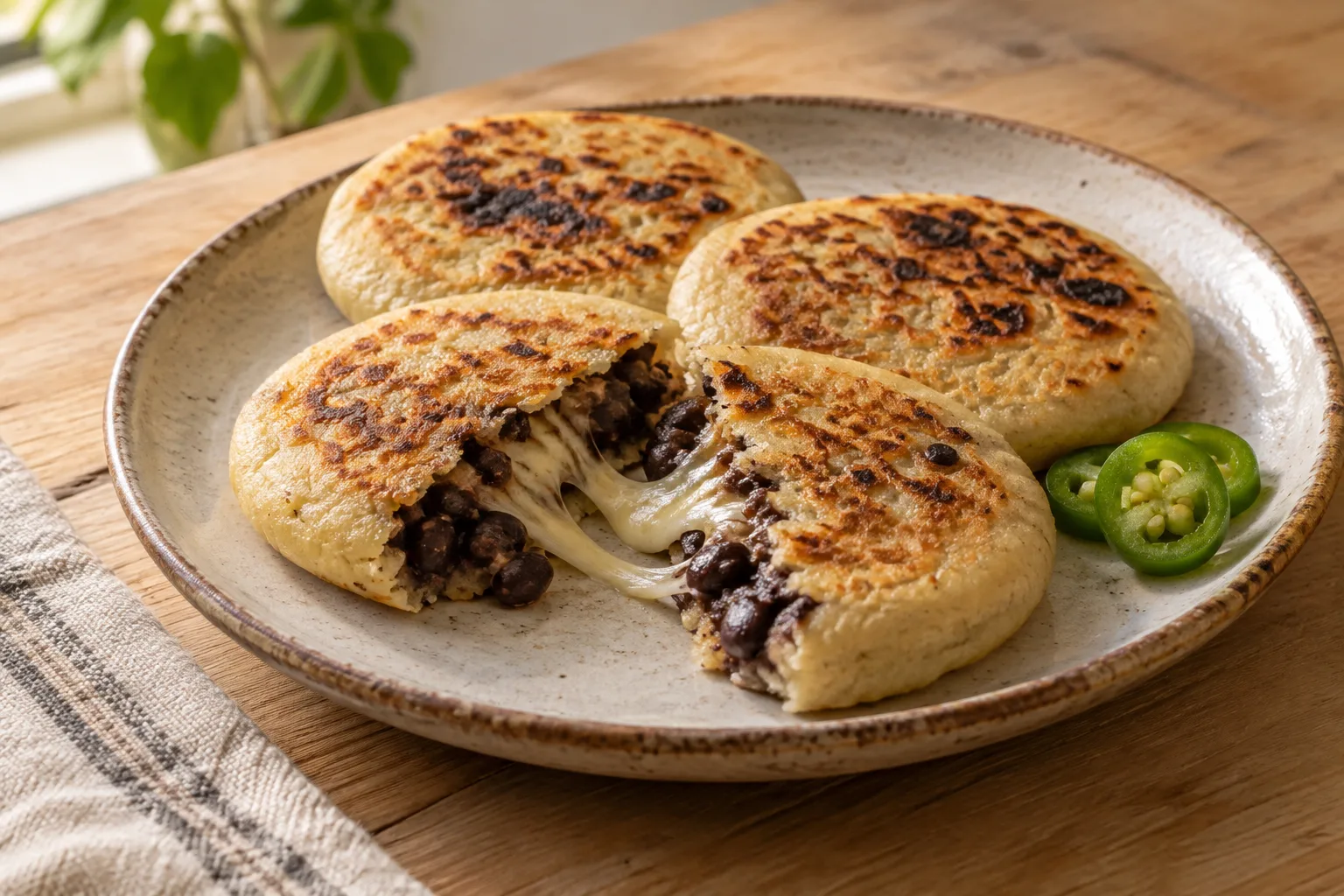
A pupusa pairs a soft, thick disk of masa with a savory filling that may be creamy, earthy, or meaty. Cheese, beans, pork, and loroco are among the documented choices; revuelta commonly combines cheese, beans, and pork. A serving is often completed by curtido, a tangy cabbage accompaniment that may include carrot and onion, and tomato sauce. The contrast is as important as the fillings: warm, tender masa against crisp vegetables, rich cheese or pork against vinegar’s sharpness.

Cassava with chicharrón brings together a mild, starchy root and fried pork, with curtido providing acidity and crunch. Ripe-plantain empanadas balance their soft sweetness with a custard or bean filling. Fresh-corn riguas have a gentle sweetness, often complemented by cheese or cream. These combinations show varied textures and balances rather than a single flavor profile.

Chile appears in some preparations, but not every dish is built around heat. The character of many familiar plates comes instead from corn, beans, dairy, meat, tomato, and acidic or pickled accompaniments. Soups offer a different register: savory broths with meat and vegetables, while leaf-wrapped tamales are soft and dense.

Celebrations, everyday food, and learning by doing

Pupusas are eaten at different times of day and sold in pupuserías and food stalls. A national day dedicated to the pupusa is observed on the second Sunday in November. The dish’s many fillings let people share a familiar format while choosing among cheese, beans, pork, vegetables, or combinations. Its popularity is important, but it sits alongside a wider repertoire of home cooking, market food, breads, drinks, and sweets.

Some foods are associated with particular celebrations. Sources connect turkey or chicken-filled panes with Christmas and other gatherings, including birthdays and weddings. Torrejas and nuégados served with syrup are associated with Holy Week in food descriptions, and turkey dishes are also mentioned for Christmas. These are documented associations, not a claim that every household follows the same calendar. Tamales, soups, and sweet foods also appear in family and festive settings.

Cooking knowledge is often passed on through watching, speaking, and practicing together. Family accounts describe learning by working alongside mothers and grandmothers and adjusting recipes through experience. A study in Cacaopera recorded traditional food plants and preparations across generations, noting concern that some species and practices may disappear. Such accounts point to food as both practical knowledge and community memory.

Shaping, filling, wrapping, boiling, and griddling

Pupusas are formed from a pliable corn dough, with some versions made from rice flour. A portion is shaped into a ball, opened to hold a filling, sealed, and flattened by hand into a thick cake. It is then cooked on a hot comal, griddle, or skillet until the masa is cooked and the surface is lightly browned. The hand-shaping method is learned through practice; the dough must remain workable enough to close around its filling.

Tamales use a different structure. Masa and filling are placed in a leaf, wrapped, and steamed. Salvadoran versions described in the sources include chicken or pork, as well as chipilín tamales and pisques filled with beans. The leaf encloses the food during cooking and is removed for eating.

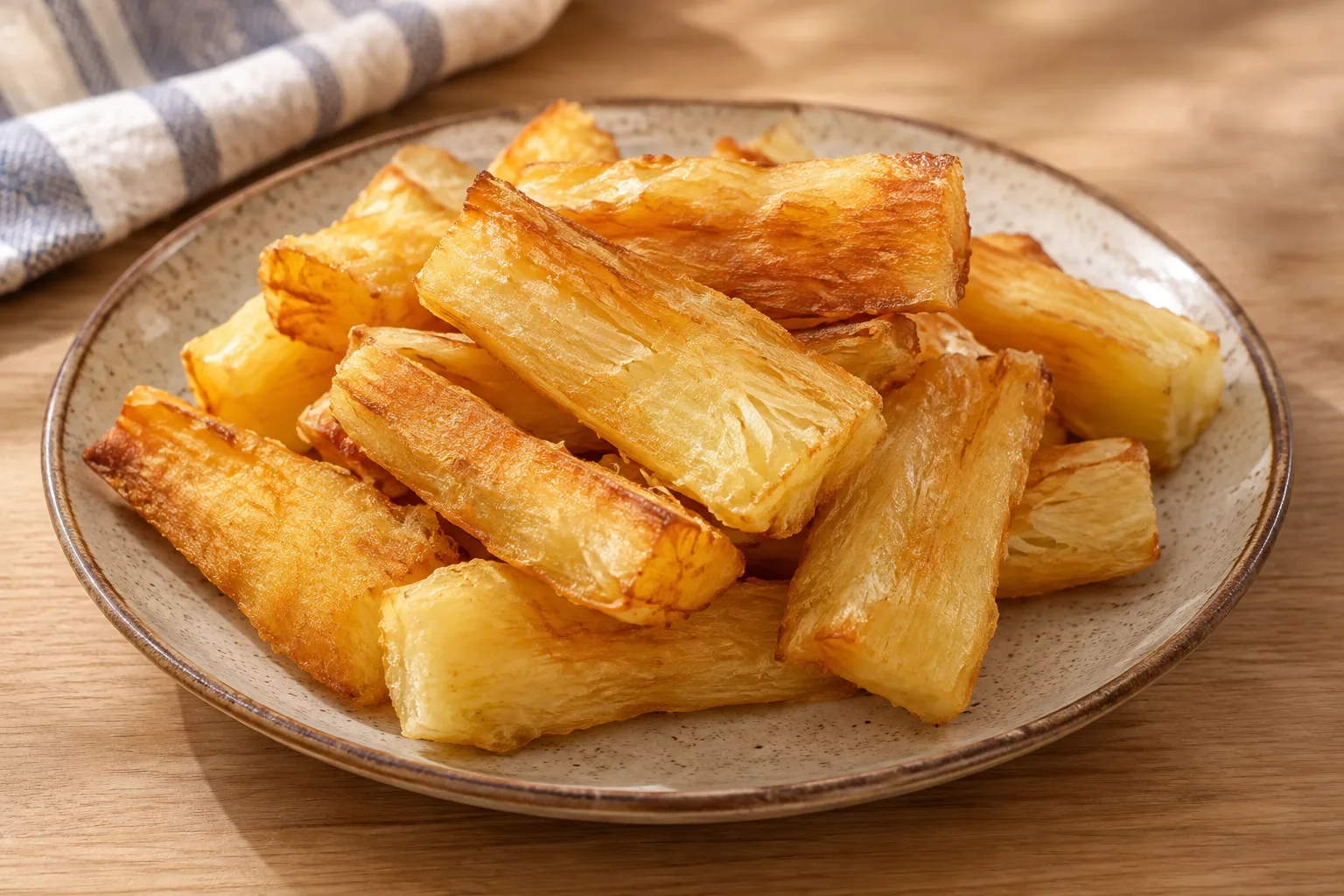
Yuca is either boiled until tender or fried for a browned exterior. Plantain empanadas use cooked, mashed ripe fruit, formed around a filling and fried. These preparations make clear that Salvadoran cooking is not defined by one utensil or method: hand shaping, wrapping in leaves, simmering, frying, and cooking on a hot surface all have places in the repertoire.

From a hot snack to a meal shared at home

A Salvadoran meal may be built around a substantial soup, a plate of cassava and pork, or a hot pupusa with its accompaniments; it may also be a snack bought from a market stall. Pupusas are served warm with curtido and tomato sauce, and can be eaten as a meal, snack, or informal supper. They are commonly ordered in different varieties at pupuserías. Eating by hand is associated with the dish, though the central pleasure is the combination of masa, filling, and bright accompaniments.

Beef or chicken soups bring meat and vegetables together in a bowl, while tamales can be sold at stalls or served at home. Panes con pollo or turkey sandwiches combine meat, bread, sauce, and vegetables, and appear in descriptions of festive meals as well as broader eating occasions. Along the Pacific coast, fish and seafood add another part of the food landscape.

Drinks accompany both meals and pauses between them: warm atol de elote, horchata de morro, and fruit refreshments such as tamarind or ensalada. Baked quesadilla salvadoreña and coffee make another documented pairing. The table’s form changes with the occasion, from a shared celebratory sandwich to a market snack or a drink and sweet bread.

A short guide to Salvadoran food names

The names below refer to particular ingredients and preparations found in Salvadoran food descriptions. Usage and details can vary by household or locality, so each definition identifies a common form rather than a single mandatory recipe.

  • Pupusa: A thick cake of corn masa, or in some versions rice dough, filled before being cooked on a hot surface. Fillings include cheese, beans, pork, and loroco.
  • Revuelta: A pupusa commonly filled with a combination of cheese, beans, and pork.
  • Curtido: A sharp, crunchy accompaniment based on cabbage, often with carrot or onion and vinegar; it is served with pupusas and other rich foods.
  • Loroco: Edible flowers from a Central American climbing plant, used with cheese as a pupusa filling.
  • Yuca con chicharrón: Boiled or fried cassava served with fried pork, commonly accompanied by curtido.
  • Rigua: A cake made from fresh corn, sometimes cooked in a banana leaf and served with cheese or cream.
  • Atol de elote: A warm, thick drink made with tender corn.
  • Quesadilla salvadoreña: A baked, sweet-savory cheese bread, often eaten with coffee; it is distinct from a stuffed tortilla.

One country, many cuisines

Olocuilta

Olocuilta is associated with pupusas made with rice flour, a local variation mentioned alongside the more widely described corn-masa form. This documents a specific connection between the place and a style of pupusa; it does not establish that all pupusas there use rice flour or describe the full range of local food traditions.

Chalchuapa

Chalchuapa, near Santa Ana, is noted for its association with yuca served with chicharrón. The dish brings together cassava, which may be boiled or fried, pork, and often a sharp cabbage accompaniment. The documented association is specific to this food and does not show that the preparation is exclusive to Chalchuapa or represents the municipality’s entire cuisine.

Cacaopera and the Lenca Indigenous Community

A study in Cacaopera, in Morazán department, recorded traditional edible plants through interviews with people from urban and rural areas and a smaller number of young people. It identified 29 plant species still used in food preparation and noted concerns about the loss of species and cooking practices. This is evidence of a specific community context, not a complete account of Lenca foodways or the department’s cuisine.

Cook
Read as an article ↗
Places and communities

One country, many cuisines

An initial selection of regions to explore. Culinary boundaries may differ from administrative divisions.

El Salvador

Olocuilta

Olocuilta is associated with pupusas made with rice flour, a local variation mentioned alongside the more widely described corn-masa form. This documents a specific connection between the place and a style of pupusa; it does not establish that all pupusas there use rice flour or describe the full range of local food traditions.

El Salvador

Chalchuapa

Chalchuapa, near Santa Ana, is noted for its association with yuca served with chicharrón. The dish brings together cassava, which may be boiled or fried, pork, and often a sharp cabbage accompaniment. The documented association is specific to this food and does not show that the preparation is exclusive to Chalchuapa or represents the municipality’s entire cuisine.

El Salvador

Cacaopera and the Lenca Indigenous Community

A study in Cacaopera, in Morazán department, recorded traditional edible plants through interviews with people from urban and rural areas and a smaller number of young people. It identified 29 plant species still used in food preparation and noted concerns about the loss of species and cooking practices. This is evidence of a specific community context, not a complete account of Lenca foodways or the department’s cuisine.

Cook
Recipes connected with El Salvador

Each recipe documents one version. Geographic associations do not imply an exclusive origin.

Salvadoran Fried Yuca
Image generated by the Kitchenpause team
15 minIntermediate

Salvadoran Fried Yuca

Yuca is peeled, cut into batons, boiled first, then fried until golden. This preparation is found in El Salvador’s cuisine.

View recipe

Sources consulted

Read the sources and each document’s scope. A heritage inscription concerns a particular practice, not all of a country’s cuisine.

  1. Gastronomía de El Salvador - Wikipedia, la enciclopedia libre es.wikipedia.org/wiki/Gastronom%C3%ADa_de_El_Salvador es.wikipedia.org Consulted: November 10, 2026
  2. International Cooking: Food from El Salvador - The Flavor Vortex www.theflavorvortex.com/international-cooking-food-from-el-salvador/ theflavorvortex.com Consulted: October 31, 2026
  3. More than Pupusas: The Best El Salvador Food - Everything El Salvador everythingelsalvador.com/best-food-el-salvador/ everythingelsalvador.com Consulted: October 31, 2026
  4. Delicious and traditional recipes from El Salvador en.recetassalvador.com/ en.recetassalvador.com Consulted: October 31, 2026
  5. Salvadoran Recipes: This Is Why You Can't Find Many Of Them! :: Latin Food Recipes and Lifestyle - Cocina wearecocina.com/blog/this-is-why-you-cant-find-many-salvadoran-recipes?srsltid=AYCX9vLgRrRfO… wearecocina.com Consulted: October 27, 2026
  6. Delicious El Salvador Cookbook. Salvadoran Recipes Passed Down for Generations - Delicious El Salvador Cookbook by Alicia Maher deliciouselsalvador.com/ deliciouselsalvador.com Consulted: October 31, 2026
  7. 26 Traditional Salvadoran Foods to Try | DelishGlobe delishglobe.com/traditional-salvadoran-foods/ delishglobe.com Consulted: October 27, 2026
  8. Salvadoran Food: A Complete Guide To El Salvador's Best Dishes voyasee.com/salvadoran-food-el-salvador-best-dishes/ voyasee.com Consulted: October 27, 2026
  9. Pupusa: a typical dish from El Salvador - ESC Projects at Open Cultural Center esc.openculturalcenter.org/2021/02/01/pupusa-a-typical-dish-from-el-salvador/ esc.openculturalcenter.org Consulted: October 27, 2026
  10. 152 recetas muy ricas de el salvador compartidas por cocineros caseros- Cookpad cookpad.com/es/buscar/el%20salvador cookpad.com Consulted: October 31, 2026
  11. Salvadoran Recipes: This Is Why You Can't Find Many Of Them! :: Latin Food Recipes and Lifestyle - Cocina wearecocina.com/blog/this-is-why-you-cant-find-many-salvadoran-recipes?srsltid=AYCX9vJpFRtGM… wearecocina.com Consulted: October 27, 2026
  12. Salvadoran Recipes: This Is Why You Can't Find Many Of Them! :: Latin Food Recipes and Lifestyle - Cocina wearecocina.com/blog/this-is-why-you-cant-find-many-salvadoran-recipes?srsltid=AYCX9vK3_XYe0… wearecocina.com Consulted: October 27, 2026
  13. Deliciosas y tradicionales recetas de El Salvador www.recetassalvador.com/ recetassalvador.com Consulted: October 31, 2026
  14. Salvadoran Recipes: This Is Why You Can't Find Many Of Them! :: Latin Food Recipes and Lifestyle - Cocina wearecocina.com/blog/this-is-why-you-cant-find-many-salvadoran-recipes?srsltid=AYCX9vL-KyEPg… wearecocina.com Consulted: October 27, 2026
  15. Recetas Salvadoreñas - El auténtico sabor de El Salvador recetassalvadorenas.com/ recetassalvadorenas.com Consulted: October 31, 2026
  16. Salvadoran Recipes: This Is Why You Can't Find Many Of Them! :: Latin Food Recipes and Lifestyle - Cocina wearecocina.com/blog/this-is-why-you-cant-find-many-salvadoran-recipes?srsltid=AYCX9vJhrbXkC… wearecocina.com Consulted: October 27, 2026
  17. Salvadoran Food: 15 Most Popular and Traditional Dishes to Try nomadparadise.com/salvadoran-food/ nomadparadise.com Consulted: October 27, 2026
  18. HELLO & WELCOME! - Hi, I'm Patricia! I was born in El Salvador, I love food, cultures and traditions. I'm sharing healthy, easy Salvadoran recipes and more! salvadorankitchen.com/ salvadorankitchen.com Consulted: October 27, 2026
  19. Salvadoran Recipes: This Is Why You Can't Find Many Of Them! :: Latin Food Recipes and Lifestyle - Cocina wearecocina.com/blog/this-is-why-you-cant-find-many-salvadoran-recipes?srsltid=AYCX9vJwdlmdY… wearecocina.com Consulted: October 27, 2026
  20. Salvadoran Recipes: This Is Why You Can't Find Many Of Them! :: Latin Food Recipes and Lifestyle - Cocina wearecocina.com/blog/this-is-why-you-cant-find-many-salvadoran-recipes?srsltid=AYCX9vI7N164l… wearecocina.com Consulted: October 27, 2026
  21. Pupusas Recipe w/ Curtido and Salsa Roja {Authentic Salvadorian Recipe] www.acozykitchen.com/how-to-make-pupusas acozykitchen.com Consulted: October 27, 2026
  22. Homemade Salvadoran Pupusas • The Curious Chickpea www.thecuriouschickpea.com/homemade-salvadoran-pupusas/ thecuriouschickpea.com Consulted: October 27, 2026
  23. Pupusas Recipe cooking.nytimes.com/recipes/1024428-pupusas cooking.nytimes.com Consulted: October 27, 2026
  24. Pupusas with Curtido & Tomato Salsa, El Salvador’s #1 Food – Familia Kitchen familiakitchen.com/pupusas-with-curtido-tomato-salsa-el-salvadors-1-dish/ familiakitchen.com Consulted: October 27, 2026
  25. National Dish of El Salvador – Pupusa - National Dishes of the World nationalfoods.org/recipes/national-dish-of-el-salvador-pupusa/ nationalfoods.org Consulted: October 27, 2026
  26. Pupusas Recipe (Salvadoran Corn Cakes) - Chili Pepper Madness www.chilipeppermadness.com/recipes/pupusas/ chilipeppermadness.com Consulted: October 27, 2026
  27. Salvadoran Pupusas As Made By Curly And His Abuelita Recipe - Tasty tasty.co/recipe/salvadoran-pupusas-as-made-by-curly-and-his-abuelita tasty.co Consulted: October 27, 2026
  28. The Cook's Cook: Salvadoran Pupusas - A Must-Try Snack www.thecookscook.com/article/pupusas/ thecookscook.com Consulted: October 27, 2026
  29. Pupusa Recipe from El Salvador - The Foreign Fork foreignfork.com/pupusas/ foreignfork.com Consulted: October 27, 2026
  30. Pupusas from Zestuous www.zestuous.com/pupusas-el-salvadorian-grilled-cheese/ zestuous.com Consulted: October 27, 2026
  31. Pupusas salvadoreñas, receta tradicional para preparar en casa bonviveur.com/es/recetas/pupusas bonviveur.com Consulted: October 27, 2026
  32. Pupusas salvadoreñas. La receta de las famosas tortillas de El Salvador recetasdecocina.elmundo.es/2024/06/pupusas-salvadorenas-receta-facil-casera.html recetasdecocina.elmundo.es Consulted: October 27, 2026
  33. Delicious and traditional recipes from El Salvador www.google.com/goto?url=CAESWgHrOzAVzV0zwqwY5BtZrc60xdvnu9KKMGCFk6aON7Yesra2qZd36GHmUuU7S0GQ… google.com Consulted: October 31, 2026
  34. Traditional Food You Must Try If You Visit El Salvador. – El Salvador in English elsalvadorinenglish.com/2025/04/09/traditional-food-you-must-try-if-you-visit-el-salvador/ elsalvadorinenglish.com Consulted: October 31, 2026
  35. Yuca Frita con Chicharrón Recipe | Harvest²Cuisine harvest2cuisine.com/ingredients/recipes/catalog/yuca-frita-con-chicharron.php harvest2cuisine.com Consulted: October 31, 2026
  36. Inventario de plantas alimenticias de uso tradicional en el municipio de Cacaopera, departamento de Morazán, El Salvador | OpenAlex openalex.org/W3049364423 openalex.org Consulted: October 31, 2026
  37. The 15 best history museums in San Salvador wanderlog.com/list/geoCategory/1654953/best-history-museums-in-san-salvador wanderlog.com Consulted: October 31, 2026
  38. Food Hall in Downtown San Salvador | Plaza Universitaria plazauniversitaria.com/en/ plazauniversitaria.com Consulted: October 31, 2026
  39. The National Museum of Anthropology in San Salvador - Not Even Past notevenpast.org/the-national-museum-of-anthropology-in-san-salvador/ notevenpast.org Consulted: October 31, 2026
  40. United Fruit Company - Wikipedia, la enciclopedia libre es.wikipedia.org/wiki/United_Fruit_Company es.wikipedia.org Consulted: October 31, 2026
  41. University Museum - Presentation www.utec.edu.sv/en/mua/presentation utec.edu.sv Consulted: November 1, 2026

We use session and security technologies to provide our features. Only with your permission do we load Google Analytics to measure visits and Google Maps on Contact. Choose separately, reject or accept both.

Withdraw either permission here. Withdrawing analytics reloads the page to unload the running tag.

Cookie policy