Documentary synthesis prepared with AI assistance. It does not replace specialist review or certify kitchen testing. · Updated 31 October 2026
A varied cuisine of the eastern Mediterranean
Syria lies in western Asia on the eastern Mediterranean, within the wider culinary and cultural landscape commonly called the Levant. Its cooking is not a single fixed menu: city traditions, household preferences, and local ingredients shape different repertoires, while many foods and techniques are shared across neighboring countries. Aleppo and Damascus are prominent culinary centers, and the coast around Latakia and Tartus offers another setting for understanding Syrian food.
A Syrian table may combine wheat and other grains, legumes, vegetables, herbs, meat, dairy, fruit, and spices. Bread is an everyday companion; small dishes can accompany a larger meal; and a stew or a preparation built around bulgur may sit alongside fresh or cooked vegetables. Kibbeh, made in many forms from bulgur and often meat, is among the best-known Syrian preparations, but it is also part of a wider Levantine tradition. Tabbouleh and other shared dishes likewise have regional variations rather than exclusive national boundaries.
The cuisine is best approached through these overlapping layers: a broad Levantine pantry, distinct urban and coastal contexts, and the choices made in individual homes. This variety explains why no single dish or flavor can stand for every Syrian community.
Historic exchange and a medieval Syrian cookbook
Syria’s position between Mediterranean and overland routes made it part of long histories of movement and exchange. Ingredients, recipes, and culinary techniques travelled through wider Arab, Persian, Turkic, and Mediterranean worlds; they were adapted to local tastes rather than simply preserved unchanged. This history helps explain shared dishes across the region, but it does not make every Levantine preparation uniquely Syrian or reduce Syrian cooking to a single outside influence.
A particularly substantial record is a thirteenth-century Arabic cookbook associated with the Ayyubid court in Syria, whose seat was Aleppo. It contains roughly seven hundred recipes and provides a window into courtly cooking of its time. Some named preparations have recognizable counterparts today, including fatayer, mulukhiyyeh, and small meat dumplings cooked with yogurt. Their forms and methods have changed: the medieval fatayer, for example, was described as a layered bread rather than necessarily the filled or topped pies familiar now. Continuity here means an evolving culinary conversation, not an unchanged recipe.
The medieval Arab culinary record is broader still, spanning many regions and documenting the movement of ingredients along trade routes. Syria belongs within that connected history. Aleppo’s commercial links and Damascus’s importance as a city under Ottoman rule also help frame their distinct urban food traditions, without implying that every present-day dish can be assigned a single historical origin.
Grains, legumes, herbs, and the Syrian pantry
Wheat takes several forms in Syrian cooking. Bulgur, made from cracked, parboiled wheat, can be soaked or incorporated into preparations such as kibbeh; in Syrian-Levantine tabbouleh it accompanies a larger quantity of finely chopped herbs. Rice and pulses, including lentils and chickpeas, contribute to filling meals, while flatbread accompanies dips, salads, and cooked dishes. These ingredients link everyday food to a broader agricultural history in the Fertile Crescent.
Vegetables and herbs bring freshness and variety. Eggplant, red pepper, tomato, and zucchini appear in the documented repertoire, with parsley and mint prominent in tabbouleh. Olive oil provides richness; lemon and pomegranate bring acidity; and pomegranate molasses can lend a sweet-sour note to savory preparations. Walnuts and pine nuts appear in dishes such as Aleppine muhammara and in meat fillings. Yogurt is used in sauces and cooked dishes, including the lamb stew shakriyeh and the dumplings known as shish barak.
Seasonings range from cumin and cinnamon to regional spice mixtures. Aleppo pepper is associated with Aleppo and is described as fragrant as well as moderately hot. These ingredients do not form a compulsory checklist for every household. The pantry changes with the recipe, the place, and the cook, and neighboring Levantine cuisines share many of its staples.
Herbal freshness, warmth, and sweet-sour contrast
Many Syrian dishes balance several flavors rather than relying on heat alone. Lemon, tomato, and pomegranate contribute acidity; yogurt gives sauces a creamy, tangy quality; and parsley and mint bring a fresh herbal character. Olive oil, meat, and nuts provide depth and richness. Spices such as cumin, cinnamon, and Aleppo pepper add warmth and fragrance, with the exact blend varying by dish and household.
Aleppo is especially associated with sweet-sour combinations. In kabab karaz, small meatballs are cooked with sour cherries; kibbeh sfarjaliyeh pairs kibbeh with quince and fresh pomegranate juice. These dishes show a particular Aleppine strand of Syrian cooking, not a flavor profile that can be applied to the whole country. Pomegranate molasses also appears in savory preparations, where its tart sweetness can complement roasted pepper, nuts, and bread.
Texture matters as much as seasoning. Muhammara is a substantial pepper-and-walnut spread, usually bound with bread and served with flatbread. Tabbouleh, by contrast, is light and finely chopped, with herbs taking precedence over bulgur. Baklava brings crisp pastry and nuts together with syrup. The result is not one uniform Syrian taste, but a repertoire in which fresh, creamy, smoky, tart, sweet, and savory elements meet in different proportions.
Hospitality, household knowledge, and occasions
Sharing is an important way Syrian meals are described and experienced. A table may include several small dishes, bread, and a substantial cooked preparation, with guests and family eating from a spread rather than treating every item as a separate course. Hospitality is expressed through the meal’s generosity and variety, though the precise dishes and customs differ from home to home. A mezze selection is flexible: it can bring together salads, spreads, pastries, cheeses, or other small portions without following a fixed formula.
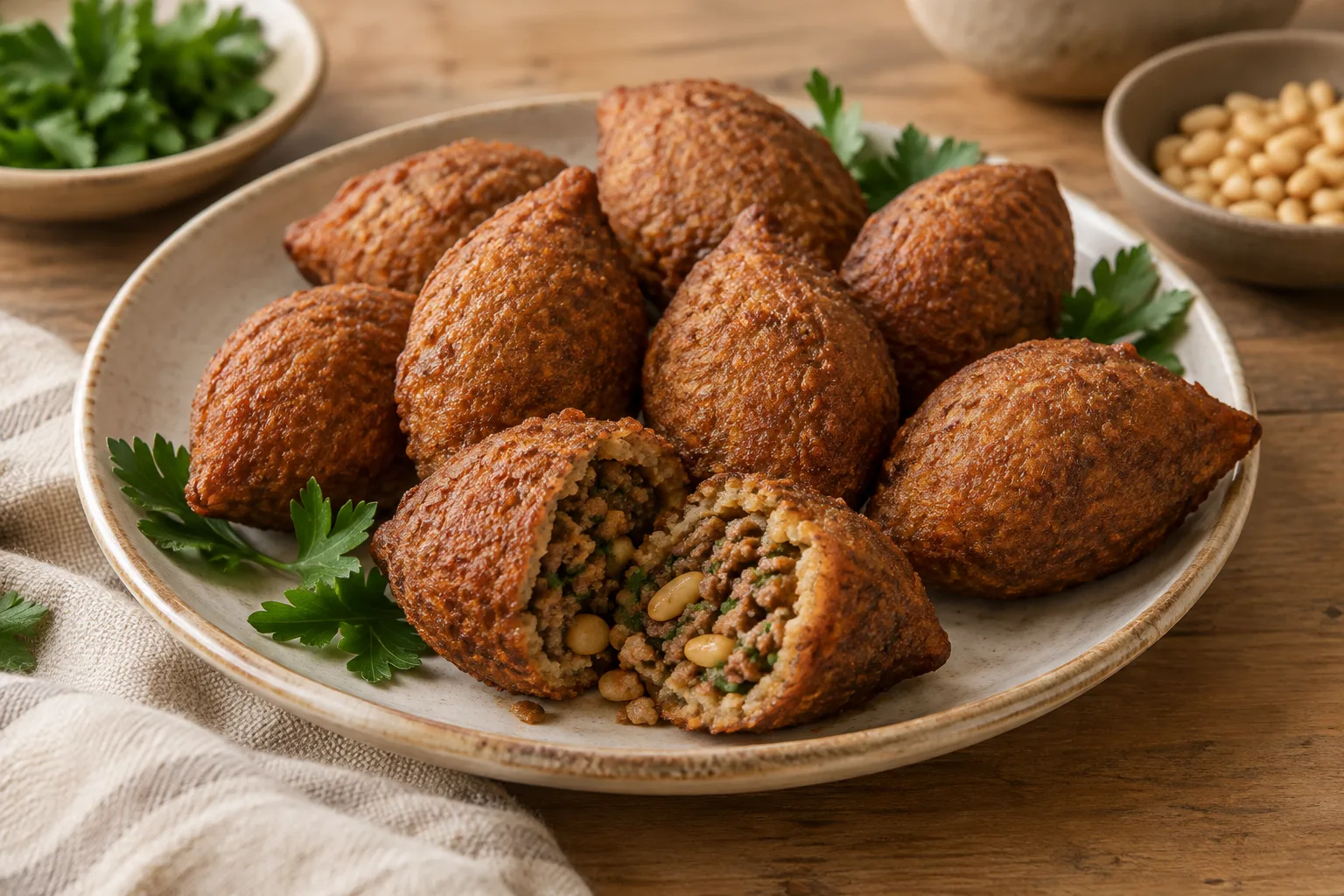
Food knowledge is also transmitted through making. Kibbeh offers a vivid example: its mixture of bulgur and meat can be shaped, stuffed, baked, fried, grilled, simmered in sauce, or prepared in vegetarian forms. Some versions, including raw kibbeh, involve different ingredients and methods. Shaping and filling pieces can take practiced hands, and the many household and regional forms keep the dish from being reducible to one standard recipe. Kibbeh appears in both everyday and celebratory contexts; it should not be treated as a food reserved only for festivals.
Breakfast can be a collection of foods rather than a single dish. Documented examples include fava beans, hummus, fatteh, labneh, cheese, olives, and manakish. Such meals show how bread, dairy, pulses, and baked dough can share the table. These are examples of a varied tradition, not a fixed breakfast served by every Syrian family.
Shaping, roasting, chopping, and slow cooking
Syrian preparations make use of both careful handwork and patient cooking. For many forms of kibbeh, bulgur and meat are worked together into a moldable mixture. It may be shaped around a seasoned filling, formed into pieces for frying, or layered in a pan and baked. Other versions are grilled, simmered in sauce, made without meat, or served raw. The technique changes the dish’s shape and texture, while the relationship between grain and filling remains central to many varieties.
Roasting creates another recognizable transformation. Roasted red peppers are combined with walnuts, bread, and seasonings for muhammara. Eggplant can be cooked until soft and blended with tahini, garlic, and lemon in a mutabal-style spread. For tabbouleh, herbs are chopped finely, and the bulgur is soaked rather than cooked in some documented preparations. These methods emphasize contrasting textures: a smooth spread, a fresh herb salad, or a crisp piece of bread for scooping.
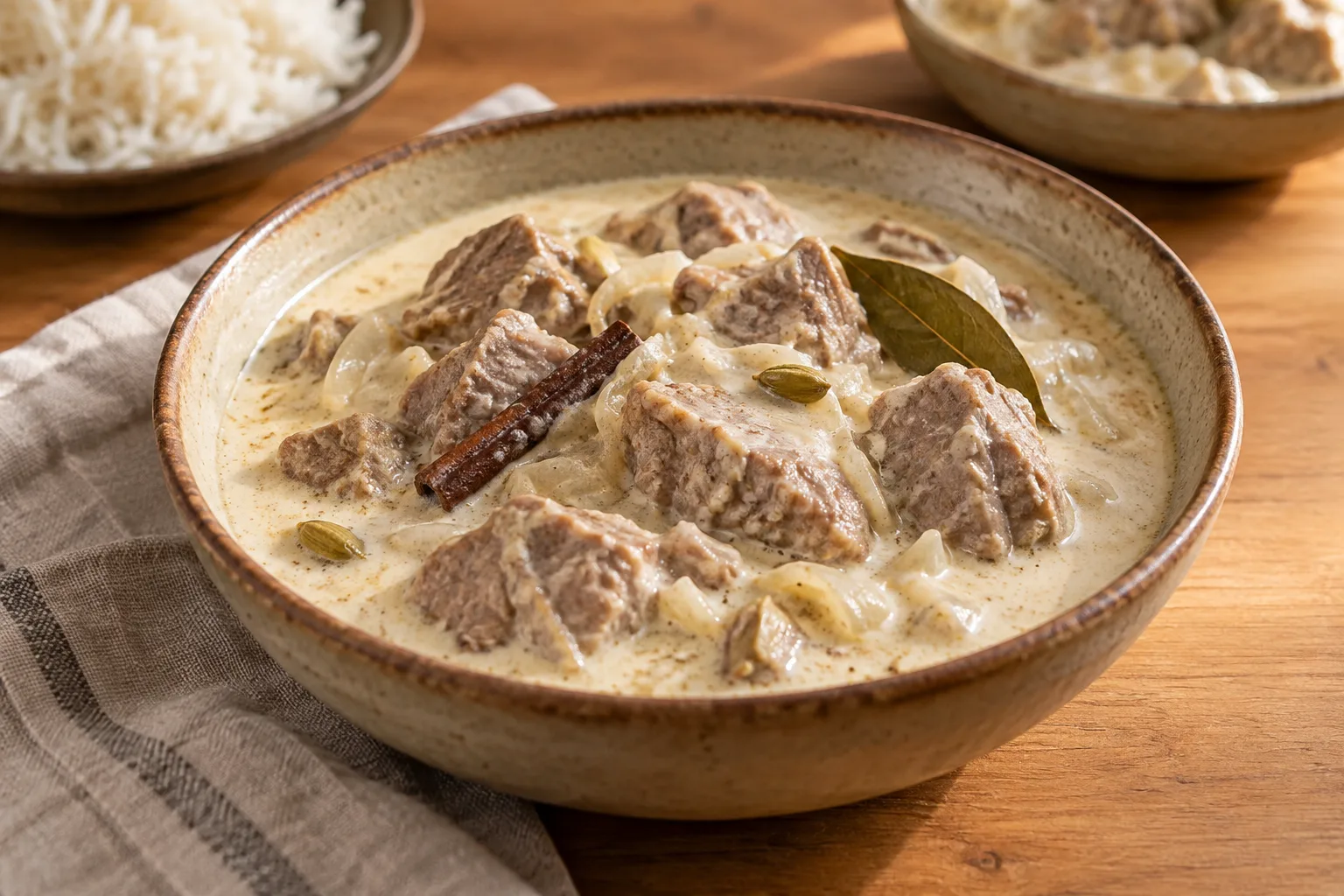
Slow simmering brings meat together with sauces and grains. Shakriyeh is a Syrian lamb stew served with cooked yogurt; shish barak consists of small meat dumplings in a yogurt sauce. Baking and filling are also used for breads and pastries, including fatayer. No single utensil or cooking method defines the cuisine: shaping, chopping, roasting, baking, frying, and simmering each serve particular dishes.
Bread, mezze, and meals shared across the day
Bread gives structure to many Syrian meals. Flatbread can accompany a selection of mezze, scoop up a spread, or be incorporated into a layered dish. A mezze table may include tabbouleh, muhammara, and other salads or small preparations, but it is not a set menu. What appears depends on the occasion, the household, and what is being cooked. The foods are often eaten together, allowing a diner to combine fresh, tart, creamy, and savory bites.
A larger meal can bring mezze alongside meat, rice, stuffed vegetables, or a stew. Shakriyeh places tender lamb in a yogurt-based sauce; kibbeh may arrive as fried pieces, a baked layer, or another regional form. These dishes illustrate the range of textures and formats within a meal, not an obligatory sequence. Breakfast, too, may bring several foods to the table: labneh, olives, cheese, hummus, fava beans, fatteh, or manakish with bread or dough.
Sweets and hot drinks can extend the time spent together. Damascus is particularly associated with baklava, a family of nut-filled pastries made with different kinds of thin dough, including fine strands. Other documented Syrian sweets include semolina pastries and syrup-soaked preparations. The shared meal is therefore not defined by one ritual or order of service, but by the combination of foods and the company around the table.
A short glossary of Syrian and Levantine foods
These terms refer to concrete ingredients and preparations found in Syrian cooking and in related Levantine traditions. Their names and recipes may cover several forms, so the description identifies common features without suggesting that every household makes them the same way.
- Bulgur: Cracked, parboiled wheat. It is used with meat in many kibbeh preparations and in smaller quantity than herbs in Syrian-Levantine tabbouleh.
- Kibbeh: A family of preparations commonly made from bulgur and meat. Forms include fried or baked pieces, pan-baked layers, versions cooked in sauce, vegetarian variations, and raw preparations.
- Muhammara: A spread made with roasted red pepper, walnuts, and bread, seasoned with ingredients such as garlic, lemon, cumin, or pomegranate molasses. It is served with bread.
- Tabbouleh: A Levantine herb salad of finely chopped parsley and mint, tomato, lemon, and a modest amount of bulgur in the Syrian-Levantine style described here.
- Shakriyeh: A Syrian lamb stew served with cooked yogurt, combining savory meat with the sauce’s tangy, creamy character.
- Mezze: A flexible selection of small dishes shared at the table, often including spreads, salads, and other foods eaten with bread.
One country, many cuisines
Aleppo
Aleppo is a prominent Syrian culinary center, with a repertoire especially associated with varied forms of kibbeh, aromatic spices, nuts, and pomegranate molasses. Documented sweet-sour dishes include small meatballs cooked with sour cherries and kibbeh paired with quince and pomegranate juice. The city’s history as a commercial hub and its contact with different communities contributed to a distinctive urban tradition. These features describe documented Aleppine cooking, not the whole of Syrian cuisine.
Damascus
Damascus is another major Syrian culinary center, associated with household dishes, mezze, and a wide-ranging urban repertoire. Documented preparations include shakriyeh, fatteh, yabrak, stuffed vegetables, and other dishes shared with neighboring traditions. The city is also noted for baklava made in different shapes and with different nut fillings, including pastries formed from fine strands of dough. These associations describe a city tradition, not a uniform menu followed by every household.
Latakia and Tartus
Latakia and Tartus lie on Syria’s Mediterranean coast, where fish and seafood are prominent among the documented food options. This coastal setting offers a contrast with the inland urban traditions associated with Aleppo and Damascus. Nearby rural areas are also described as having local ingredients and dishes, but the available detail does not support a more specific account of those repertoires. The coastal entry is therefore limited to the regional distinction that is documented.
Cook