Documentary synthesis prepared with AI assistance. It does not replace specialist review or certify kitchen testing. · Updated 12 November 2026
An island shaped by coast and highland
Timor-Leste occupies the eastern part of Timor and includes the islands of Atauro and Jaco, as well as the Oecusse enclave on the island’s western side. Mountains rise behind coastal areas, and the country’s landscapes include both highland farming areas and communities connected to the sea. These settings help explain why the food supply draws on several kinds of staple: rice and maize, cassava and other roots, beans and vegetables, and fish.
This is not a single, uniform national menu. What reaches the table depends on local production, markets, household preferences, and what is available at a given time. A meal might bring together rice and cooked greens, or center on a corn-and-bean stew, while coastal meals may feature grilled fish. Coconut, fruit, and local herbs add further variety. The useful starting point is diversity rather than a fixed list of defining dishes: shared ingredients and named preparations recur, but their place in daily life differs among communities.
Dili’s urban food scene includes local eateries and seafood grills, while meals beyond the capital are also served in guesthouses and small warung-style establishments. The geography is not simply scenery around the cuisine; it connects farms, fishing, markets, and the ways food is prepared and shared.
A cuisine formed through contact and change
Timor-Leste’s food history includes local agricultural practices and exchanges with neighboring societies, as well as the effects of colonial rule. Portuguese influence is visible in foods and preparations associated with Portuguese-speaking communities, including feijoada and European-style pastries. Indonesian influence is also part of present-day eating: dishes such as nasi goreng, mi goreng, and soto ayam, along with tempeh and tofu, are found alongside local preparations. Their presence reflects close regional connections and a history of political contact, not a replacement of local foodways.
Portugal ruled Timor-Leste for centuries. Independence was declared in 1975, followed by Indonesia’s invasion; sovereignty was restored in 2002. These events provide essential context for the country’s modern history, but they do not establish that a particular dish originated in a particular political episode. Nor does the presence of an ingredient or preparation from elsewhere make a meal less Timorese: food traditions can be adopted, adapted, and shared over time.
Agriculture and household food production are important to the picture as well. Accounts describe families growing food for their own use, sometimes selling small surpluses, and relying on rainfall and local growing conditions. The resulting cuisine is best understood as a changing combination of local crops, regional exchange, and historical experience, rather than as an isolated or unchanging inheritance.
Staples from fields, gardens, and sea
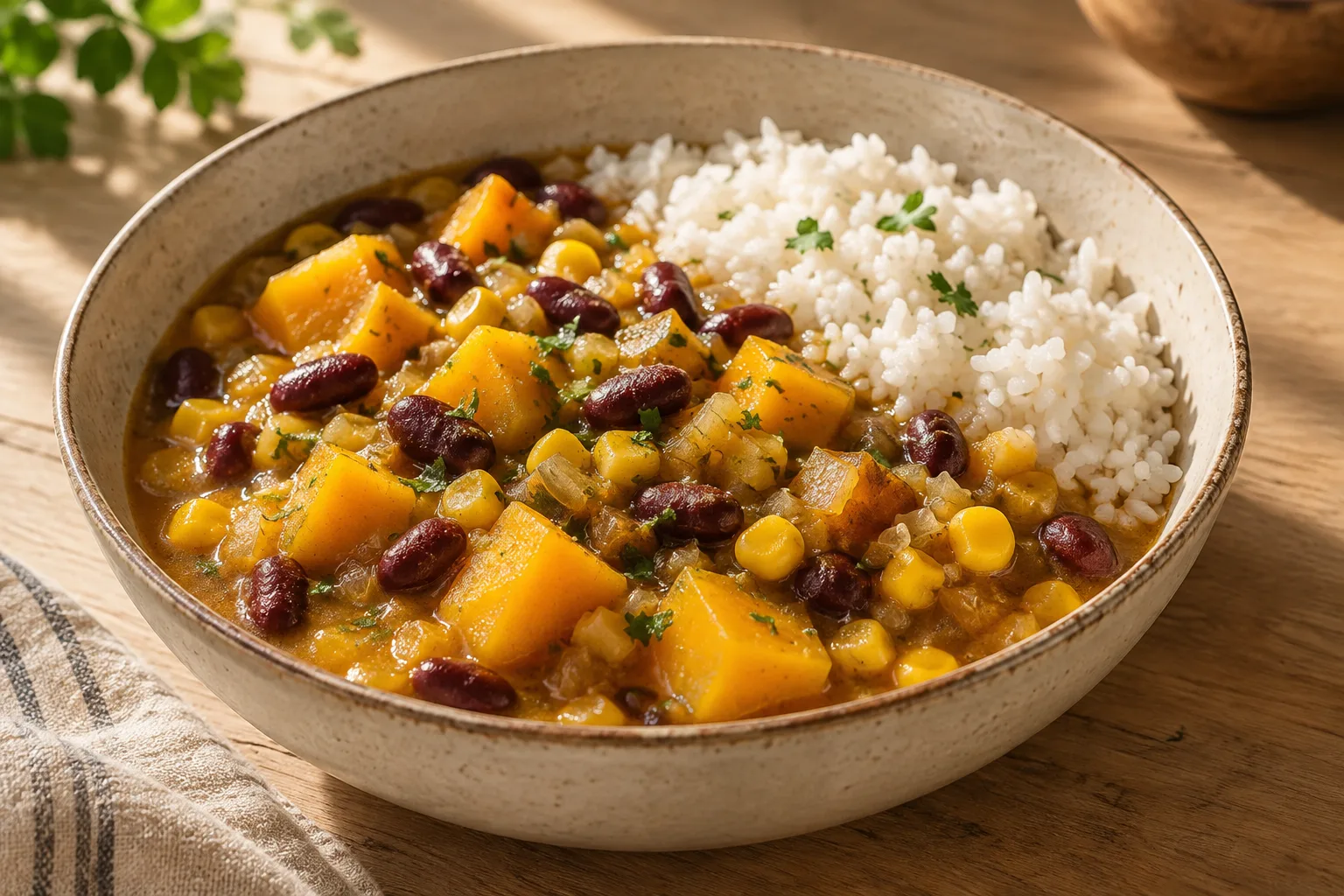
Rice and maize are central staples, but the pantry extends well beyond grain. Cassava, sweet potato, and taro provide other substantial foods; common beans and mung beans appear in accounts of local meals and in batar daan. Pumpkin is an important partner to corn and legumes in that stew. Vegetables include leafy greens, pumpkin leaves, water spinach, and cassava leaves, as well as market produce such as tomatoes, onions, eggplant, and cucumber. Bananas and papayas add fruit from tropical gardens and markets.
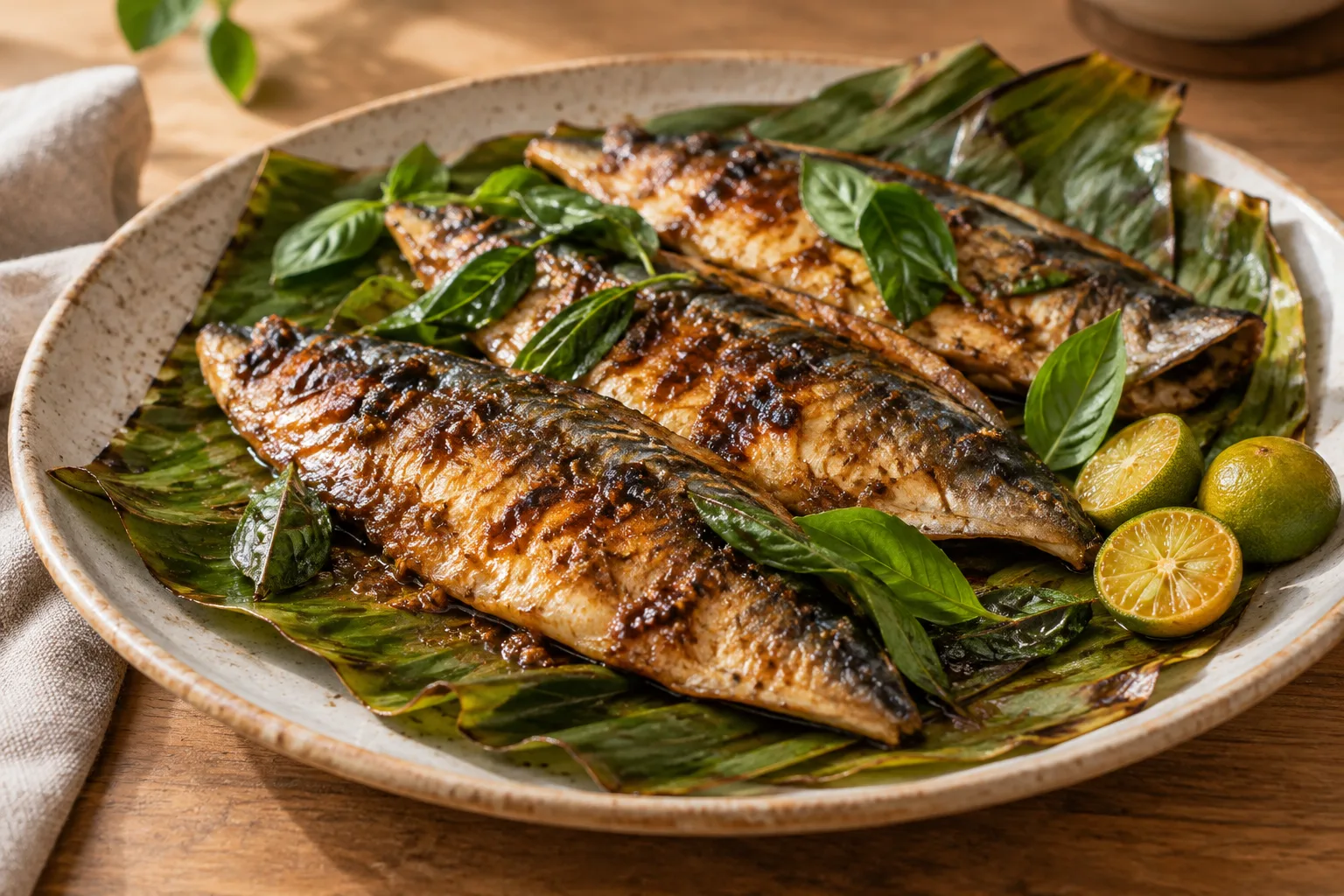
Fish brings the coastal environment into the everyday food supply. In ikan sabuko, Spanish mackerel is one documented choice, but other fish can be used when available. Tamarind, citrus, basil, and chile accompany the fish in a preparation that is grilled. Coconut is used in some dishes, including descriptions of katupa, rice cooked with coconut milk and wrapped in leaves. The precise ingredients and proportions vary among accounts and preparations.
Coffee is a prominent highland crop and a product linked to smallholder farming. This agricultural breadth matters: rice, roots, vegetables, legumes, fish, and coffee are not interchangeable symbols of one national dish, but ingredients with different roles in meals and livelihoods. Availability and household practice shape the pantry, so no short inventory can describe every locality or season.
Bright acidity, chile, and mellow staples
Several documented preparations pair mild, filling staples with sharper or more aromatic accents. Ikan sabuko brings together fish, tamarind, citrus, basil, and chile before the fish is grilled. The sourness of tamarind and citrus contrasts with the fish’s savory flavor, while basil adds fragrance and chile can supply heat. It may be served with rice, cassava, or batar daan, so the same grilled fish can sit beside different, more neutral or earthy accompaniments.
Ai-manas is a name for a spicy chile sauce with regional and household variations. Descriptions include combinations of chile with garlic, onion, ginger, and citrus. Because its heat and ingredients can differ, it is more accurate to think of ai-manas as a family of condiments than as one fixed formula. Serving a sauce separately also lets diners decide how much heat to add.
Batar daan offers a contrasting texture and flavor: corn and beans cook with pumpkin into a soft, substantial stew. It is often described with rice, which adds another mild staple to the meal. Together, these dishes illustrate a range from grilled, tangy fish to a tender vegetable-and-legume pot. The contrast is in the ingredients and textures, not a claim that every Timorese meal is spicy, sour, or prepared in the same way.
Everyday knowledge and occasions for sharing
Food is made and shared in ordinary household routines as well as on special occasions. Katupa, rice cooked with coconut milk and enclosed in leaves, is associated with celebrations and is also described as home food. Its preparation involves shaping the leaf wrapping around the rice, a practical skill passed on through making. That association should not be taken to mean that katupa belongs only to a particular festival or is made identically throughout the country.
Batar daan connects corn, pumpkin, and beans in a filling dish, while rice, roots, vegetables, and fish contribute to other everyday meals. Accounts of farming households describe food grown largely for family consumption, with small surpluses sometimes sold locally. This places cooking within a wider rhythm of cultivation, harvest, markets, and household needs. It does not imply that all families farm or eat alike.
Food can also carry memory and care through shared preparation and eating. Contemporary food initiatives in Dili have described family meals as a setting for sharing stories across generations. Such accounts offer a specific perspective, not a universal rule for every household. The clearest documented occasions are modest and concrete: daily meals, market and household food practices, and celebratory use of katupa. There is not enough consistent detail here to assign a common national calendar or ritual to other dishes.
Grilling, simmering, boiling, and wrapping
Grilling is a defining technique in descriptions of ikan sabuko. Fish is marinated with tamarind and citrus, then cooked over heat; basil and chile may contribute aroma and sharpness. Some preparations enclose the fish during cooking, but that is one documented method rather than a requirement for every version. The fish can be served with rice or other staples.
Boiling and simmering are equally useful ways to prepare the pantry. Rice, roots, and legumes can be boiled, while batar daan simmers corn, beans, and pumpkin until the ingredients are tender and the mixture thickens. Katupa uses a different kind of enclosure: rice is wrapped in leaves and cooked within its covering. Wrapping holds the rice together as it cooks and makes the result easy to portion.
Other practical preparations include cooking leafy greens. Cassava leaves are described as being boiled, sometimes with the water changed to reduce bitterness. The name tukir is used for food cooked inside a length of bamboo over a fire, including preparations with meat. This is a particular technique, not evidence that bamboo cooking is used for every meal or across all communities. For sauces, ingredients can be pounded into a paste. These methods show how cooks manage heat, moisture, and texture with familiar equipment and available ingredients.
Staples, accompaniments, and places to eat
Rice often acts as the base or accompaniment for a meal. It can be served with grilled fish, vegetables, or batar daan, whose corn, pumpkin, and beans make it substantial in its own right. Cassava and other boiled roots provide further alternatives. A chile sauce such as ai-manas can be served alongside the main food, allowing diners to adjust the heat rather than making every component equally spicy.
Katupa presents rice in a leaf-wrapped portion and is associated both with celebration and domestic eating. In towns and cities, meals are available in local eateries, warung-style establishments, and restaurants. Dili’s food scene also includes seafood grills by the coast and a range of Indonesian, Portuguese, and other cuisines. Beyond the capital, guesthouses and small eateries offer home-cooked meals shaped by the food available in their area. These settings describe different ways of eating; they do not establish one national meal schedule or table arrangement.
Coffee adds another dimension, especially in relation to highland production and local cafés. A meal’s structure is flexible: staples may be accompanied by fish, vegetables, stew, or sauce, while the choices depend on household and place. This flexible picture is more faithful to the evidence than prescribing a fixed sequence of courses or claiming that one dish is served at every gathering.
Names for dishes and ingredients
These terms identify particular foods and preparations documented in Timor-Leste. Spellings differ between accounts, and a name does not guarantee that every household uses the same recipe.
- Batar daan: a stew of corn, pumpkin, and beans; it is also served with rice. Some accounts use the spelling batar da’un.
- Ikan sabuko: grilled fish marinated with tamarind, often described with basil and chile. The fish may vary with availability; saboko is another recorded spelling.
- Katupa: rice cooked in a leaf wrapping, often described with coconut milk. It is associated with celebrations as well as home meals.
- Ai-manas: a chile sauce or condiment. Ingredients and level of heat vary among preparations.
- Budu: a sauce served with some fish preparations. Its description is not consistent across the available accounts, so the name alone does not specify a single ingredient list.
- Sasoru: rice porridge with ginger and vegetables, described as a breakfast food in some households.
- Tukir: food cooked inside bamboo over a fire; meat is one documented filling.
The terms point to different roles at the table: staple stew, grilled fish, wrapped rice, porridge, sauce, and bamboo-cooked food. They are useful reference points, not a complete inventory of Timor-Leste’s regional or household vocabulary.
One country, many cuisines
Dili and its coast
Dili’s food scene includes local eateries, warung-style establishments, restaurants, and seafood grills near the waterfront. Grilled fish is a prominent coastal offering, and ikan sabuko is described with tamarind and other aromatic ingredients. The capital also brings local foods into contact with Indonesian, Portuguese, and international dishes. These examples describe an urban food setting, not a cuisine exclusive to Dili or uniform across the city.
Baucau
Accounts associate Baucau with home-style food, including katupa, rice cooked in a leaf wrapping and often with coconut milk, and batar daan, a stew of corn, pumpkin, and beans. These dishes connect the locality to ingredients and preparations found in broader descriptions of Timor-Leste’s foodways. Their presence does not establish that they originated in Baucau, are exclusive to it, or follow one fixed recipe throughout the municipality.
Ermera highlands
Ermera is represented here through its association with Timorese highland coffee. Coffee production connects the highland landscape with small-scale agriculture and with cafés that serve locally grown beans. This is a documented regional point of reference, rather than enough evidence to define a distinct Ermera cuisine. Food at home or in rural guesthouses may draw on local ingredients, but the available detail does not support a fuller catalogue of dishes specific to the area.
Cook