Documentary synthesis prepared with AI assistance. It does not replace specialist review or certify kitchen testing. · Updated 12 November 2026
Landscapes and foodways
Tanzania’s culinary landscape reflects a country that includes an Indian Ocean coast and islands, inland plains, highlands, and areas around major lakes. Foods and preparations differ with local ingredients and community traditions, so no single menu represents every household. Maize, rice, beans, greens, bananas, cassava, fish, and meat appear in different combinations across the country.
A useful way to understand many meals is to distinguish a filling staple from its accompanying relish, vegetables, or stew. Ugali, a firm porridge made from flour and water, is commonly served with cooked greens, beans, fish, meat, or sauce. Rice may be plain, cooked with coconut milk, or prepared as spiced pilau. These dishes can be shared across places while their ingredients and importance vary.
Coastal and island cooking makes especially visible the use of coconut, seafood, and aromatic spices. Inland descriptions more often foreground grain-based staples, legumes, and vegetable or meat stews. These are broad patterns, not hard boundaries: foods travel, and national as well as regional meals reflect many communities and histories.
Trade, movement, and adaptation
Tanzania’s food history is connected to Indian Ocean exchange. Coastal ports and Zanzibar were part of routes linking East Africa with Arab, Persian, and Indian traders. Rice, coconut, and spices such as clove, cinnamon, and cardamom feature in coastal preparations, including seasoned rice and dishes cooked with coconut. Their presence reflects exchange and adaptation over time; it does not make the coast’s food a single imported tradition or explain every dish in the country.
Crops also arrived and took on local roles. Historical accounts describe Portuguese links to the introduction of maize and identify cassava as a crop that became important to small-scale producers. Maize flour is now central to ugali, while cassava and other grains and tubers are used in staple preparations. The everyday place of these foods shows how ingredients can become embedded in local cooking beyond the circumstances of their arrival.
Tanganyika and Zanzibar united in 1964 to form Tanzania, bringing together communities with distinct histories and food traditions. Kiswahili provides widely shared names and a common language for many foods, while the country remains linguistically and culturally diverse. Culinary history is therefore best understood through overlapping exchanges and local practices, rather than a single origin story.
Staples, greens, and coastal ingredients
Maize flour and water form the basic ingredients of ugali, while rice serves as a plain accompaniment or the starting point for pilau and coconut rice. Cassava, millet, and sorghum also appear in accounts of staple foods. Beans provide a substantial accompaniment, and bananas or plantains may be cooked in stews. These ingredients are used in different ways from place to place; the presence of a product in the national pantry does not mean it is eaten in the same dish everywhere.
Tomatoes, onions, garlic, okra, aubergine, peppers, and leafy vegetables help make sauces and cooked sides. Sukuma wiki is a preparation of greens, commonly cooked with onion and tomato. Mchicha uses amaranth leaves or other greens, with versions that include tomato, coconut, or peanuts. A study in Iringa and Dodoma documents cowpeas eaten as grains and leaves, including as relishes alongside rice or ugali, as well as in maize-and-cowpea dishes and cowpea buns called bagia.
On the coast and islands, coconut milk is used with rice, fish, and beans. Clove, cinnamon, cardamom, ginger, and curry seasonings appear in different dishes. Their use is neither universal nor a measure of heat: a coconut rice may be mild, while fresh chilli in a salad supplies sharper pungency.
Mild staples, bright relishes, and aromatic rice
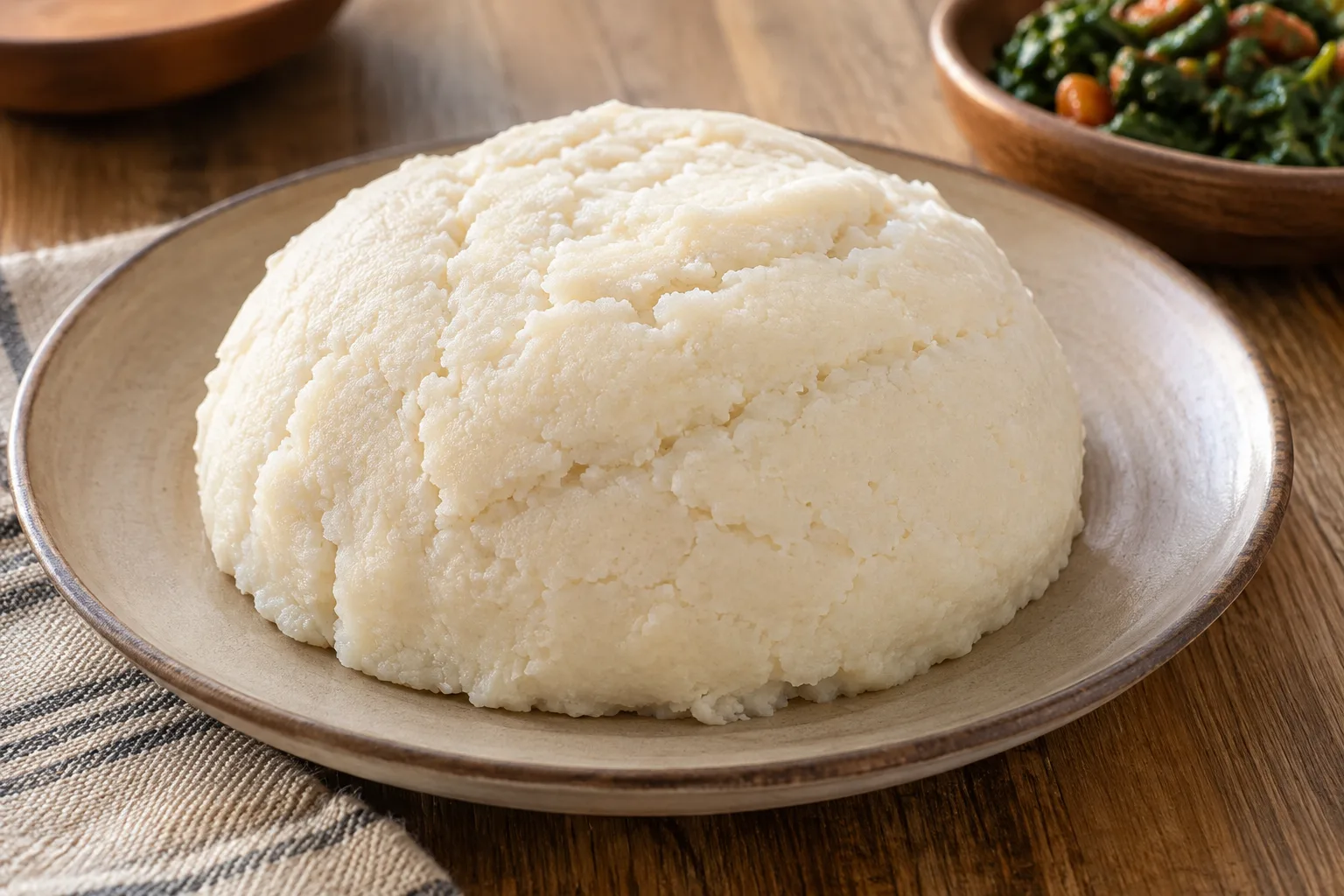
Many meals balance a relatively mild staple with a more strongly seasoned accompaniment. Ugali has a dense, firm texture and a restrained taste, allowing it to be eaten alongside a stew, greens, beans, or meat. Rice is similarly adaptable: pilau is cooked in seasoned broth, with spices such as cardamom, cinnamon, and clove, while wali wa nazi takes on the creamy, slightly sweet character of coconut milk.
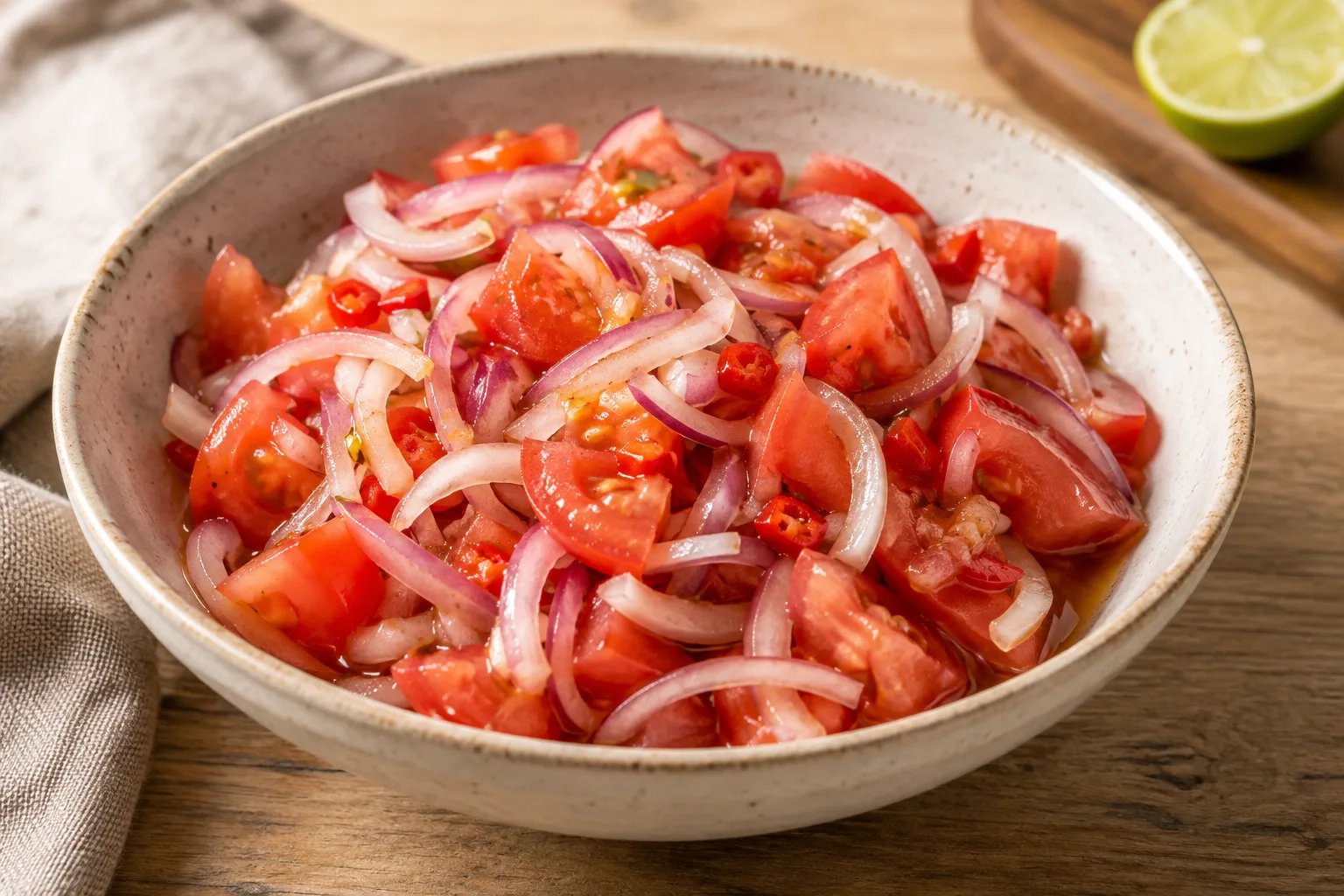
Freshness and acidity provide a contrast to these softer or richer foods. Kachumbari is a chopped tomato-and-onion salad or relish, often made with chilli and sometimes lemon or coriander. It is served with grilled meat and other dishes, adding a crisp, bright counterpoint. Cooked greens offer a different texture: sukuma wiki is often sautéed with onion and tomato, while mchicha can become thicker when cooked with coconut or peanuts.
Grilling gives nyama choma and mishkaki browned, smoky notes; the latter is made from marinated meat threaded onto skewers. Fish stews may combine tomato, coconut, and spices. Mandazi and vitumbua provide gentler sweet flavours, respectively as fried dough and small rice-and-coconut cakes. The balance of spice, sweetness, acidity, and texture depends on the particular preparation.
Everyday learning and occasions to share
Food is prepared and shared in varied settings across Tanzania, with no single pattern of celebration applying to all communities. Nyama choma—grilled meat, often goat or beef—is associated in descriptions with social gatherings and outdoor meals. It may be eaten with ugali, vegetables, or sauces. The shared meal is a social context for the dish, but that does not imply a fixed ritual or identical custom in every region.
Pilau is described as a dish for special occasions, including weddings and birthdays, and as part of celebrations in coastal areas. Mchemsho, a boiled mixture of vegetables that may include meat or fish, is also associated in some accounts with special occasions, partly because it brings together several ingredients. Such examples point to particular festive uses without prescribing a national celebration menu.
Food knowledge is also carried through ordinary cooking, eating, and selling. Mandazi is commonly taken with tea or coffee as breakfast or a snack. Street stalls and markets provide settings where prepared foods such as mishkaki can be found. Kiswahili names help foods circulate between speakers, while household recipes and community practices retain local differences. Cowpea dishes documented in Iringa and Dodoma, for example, show how a widely familiar staple can be prepared in locally specific forms.
Thickening, simmering, grilling, and frying
Ugali is made by adding flour to hot water and stirring until the mixture thickens into a firm mass. Maize is common, but accounts also mention cassava, sorghum, and millet flours. The texture depends on the flour and the amount of water: it may be softer or more compact. It is served as a staple alongside other foods rather than requiring one particular sauce.
Rice dishes rely on different cooking liquids and flavouring. For pilau, rice cooks in seasoned broth and absorbs its aromas; for wali wa nazi, it is cooked with coconut milk and water. Vegetables may be sautéed with onion and tomato or simmered in a stew. Mchemsho takes its name from boiling: vegetables are cooked together, with meat or fish included in some versions.
Grilling over an open fire or charcoal is used for nyama choma and mishkaki. For mishkaki, meat is cut into pieces, marinated, put on skewers, and grilled. Mandazi is made by frying portions of dough, while vitumbua are cooked in rounded moulds. These techniques produce very different results—from dense staple dough to crisped skewered meat and tender fried or mould-cooked snacks—and should be understood as methods for particular foods, not as one national cooking method.
Staples, accompaniments, and occasions of eating
A meal may be organised around a grain or other staple, accompanied by one or more dishes that add vegetables, beans, fish, meat, or sauce. Ugali commonly fills this role with greens, beans, or a stew. Rice can be served plain, as pilau, or cooked with coconut milk. In some households and regional settings, rice and beans form a meal together. The balance changes according to what is available and the occasion; there is no single required sequence of serving.
Kachumbari’s raw tomato, onion, and chilli bring freshness to grilled meat, skewers, and spiced dishes. Cooked greens such as sukuma wiki can accompany ugali, while coastal meals are particularly associated with fish and coconut rice. These combinations describe documented pairings, not rules that every cook follows.
Some foods are closely associated with informal eating. Mishkaki is sold as street food, and mandazi is eaten as a snack or with tea and coffee. Nyama choma is suited to shared outdoor gatherings, while pilau appears in descriptions of celebrations and special occasions. Ugali may be shaped by hand and used to pick up sauce or other food; cutlery is also used. Eating practices vary between people and settings, so a single mode should not be treated as compulsory.
A glossary of dishes and ingredients
These Kiswahili names identify foods found in descriptions of Tanzanian cooking. Recipes can differ between households and regions, so the definitions describe recognisable dish types rather than one mandatory formula.
- Ugali: A firm, thick staple made by stirring flour—often maize—into hot water; eaten with stew, greens, beans, fish, or meat.
- Kachumbari: A fresh chopped tomato-and-onion salad or relish, often including chilli and sometimes lemon or coriander.
- Nyama choma: Grilled meat, commonly goat or beef, served with accompaniments such as ugali or vegetables.
- Mishkaki: Marinated pieces of meat threaded onto skewers and grilled; also sold as a street snack.
- Pilau: Rice cooked with seasoned broth and aromatic spices, sometimes with meat or vegetables.
- Wali wa nazi: Rice cooked with coconut milk, a preparation associated especially with the coast and islands.
- Sukuma wiki: Cooked leafy greens, commonly prepared with onion and tomato.
- Mchicha: A dish of amaranth leaves or other greens; some versions include tomato, coconut, or peanuts.
- Mchemsho: A boiled mixture of vegetables, sometimes made with meat or fish and associated in some accounts with special occasions.
- Mandazi: Lightly sweet fried dough eaten as a snack or with tea or coffee.
- Vitumbua: Small rice-and-coconut cakes cooked in rounded moulds.
One country, many cuisines
Swahili Coast and Zanzibar
Accounts of the Indian Ocean coast and Zanzibar highlight fish and seafood, rice, coconut milk, and spices such as clove, cinnamon, and cardamom. Coconut rice and fish stews show how these ingredients are combined in coastal cooking. The region’s foodways also reflect long-standing exchange through Indian Ocean trade, with incoming ingredients and influences adapted alongside local traditions rather than replacing them.
Interior and Northern Tanzania
Descriptions of inland meals include grain staples, beans, greens, and stews, with ugali served alongside vegetables, fish, or meat. Northern Tanzania is associated in the evidence with mchemsho, a boiled mixture of vegetables that may include bananas and may be prepared with meat or fish for special occasions. These examples document particular foods and broad patterns; they do not imply that inland or northern communities share one uniform cuisine.
Iringa and Dodoma
A study of households in Iringa and Dodoma records cowpeas used both for their grains and their leaves. Cowpeas were eaten as relishes with rice or firm maize porridge, and the study also describes kande, a preparation combining dehulled maize and cowpeas, and bagia, cowpea buns. This evidence documents specific uses in the surveyed regions and should not be generalized to every Tanzanian household.
Cook