Documentary synthesis prepared with AI assistance. It does not replace specialist review or certify kitchen testing. · Updated 12 November 2026
An island table in the South Pacific
Wallis and Futuna is a French overseas collectivity in the South Pacific, made up of two island groups: Wallis, also called Uvea, and the Horn Islands of Futuna and Alofi. Their volcanic landscapes meet the sea in different ways. Wallis is encircled by a lagoon and coral islets, while Futuna is more rugged and bordered by reefs. These settings help explain why accounts of local food bring together marine harvests and crops grown on the islands, without making the cuisine identical from place to place.
Fish, shellfish, root crops, fruit, and coconut are central to the food described here. Taro, yams, cassava, and sweet potatoes provide substantial accompaniments; breadfruit and bananas are prepared in both savory and sweet dishes. Coconut milk adds moisture and richness to fish, leaves, and desserts. A distinctive cooking method, the umu, uses heated stones in an earth oven and can bring several kinds of food together for a shared meal.
These foods belong to a broader Pacific setting, with culinary connections to other island societies, as well as to the territory’s French context. The best-known dishes and techniques are useful entry points, not a complete inventory of what every household cooks. Local ingredients, family preferences, and the occasion shape what appears on the table.
Island connections and changing contexts
Wallis and Futuna’s culinary context is shaped by its position among Pacific islands and by a history of contact, rather than by a single outside influence. The islands have longstanding cultural connections across Polynesia, and some preparations and cooking methods are shared more widely in the region. Fresh fish salad with coconut milk, for example, is described as having many family versions and as part of a wider Pacific culinary landscape. Shared forms do not mean that each island or household makes them in precisely the same way.
European visits and French involvement are part of the territory’s documented history. Futuna and Alofi were mapped by the Dutch navigators Willem Schouten and Jacob Le Maire in 1616; the British explorer Samuel Wallis visited the island that bears his name in the eighteenth century. French missionaries arrived in the nineteenth century, and the traditional kingdoms entered into protectorate agreements with France. The islands became a French colony in 1917 and received overseas-territory status in 1961.
The contemporary food environment reflects these connections. French cuisine and products, including cheeses and charcuterie, are available alongside Pacific-style dishes and local ingredients. Restaurants also combine French culinary traditions with Pacific influences. These broad patterns describe a setting in which food has changed over time; they do not establish an exclusive origin for individual dishes or explain every recipe through a single historical event.
Root crops, coconut, seafood, and fruit
The island pantry described in Wallis and Futuna includes taro, yam, cassava, and sweet potato, as well as breadfruit and bananas. These starchy foods can accompany fish or meat, be cooked in an umu, or become part of a sweet preparation. Leaves of tuber crops are also eaten, including in dishes with coconut milk and fish, chicken, or beef. The variety matters: the pantry is not a fixed combination of ingredients served together at every meal.
Coconut is valued in several forms, especially as milk used to enrich savory foods and desserts. It is paired with fish and edible leaves, and is also served with sweet preparations such as banana po’e. The surrounding lagoon and ocean provide fish and shellfish. Tuna and bonito are eaten as sashimi or in marinated preparations; other documented seafood includes lobster, coconut crab, oysters, and clams. Catch and availability naturally depend on place and time.
Seasonal fruit includes bananas, papayas, mangoes, pineapples, avocados, citrus, and other tropical varieties. Breadfruit has several documented preparations: it may be cooked over an open fire, mashed, or cut into pieces and fried. Cassava and taro appear in faikai sweets, while local fruit and coconut are used in versions of the refreshing drink called ʻotai. These examples show the range of the pantry without suggesting that all ingredients are locally grown, in season, or used in the same way throughout the territory.
Fresh, creamy, and gently earthy
A characteristic combination in the food of Wallis and Futuna is fresh seafood with the rounded richness of coconut milk. Fish may be eaten raw as sashimi, marinated, fried, or cooked with other ingredients. A well-known fish salad mixes diced fish with coconut milk, tomato, cucumber, carrot, onion, and lime. The ingredients and proportions are not a single standard recipe: family versions differ, and the combination sits within a broader Pacific tradition of fresh fish dishes.
Root crops and breadfruit provide a more substantial counterpoint. Their textures depend on the ingredient and preparation: boiled taro can become soft, while breadfruit can be served in pieces, as a purée, or fried. Coconut milk contributes a creamy texture to savory foods as well as sweets. In leaf-wrapped umu cooking, the covered oven retains heat and moisture, making it well suited to cooking several ingredients slowly.
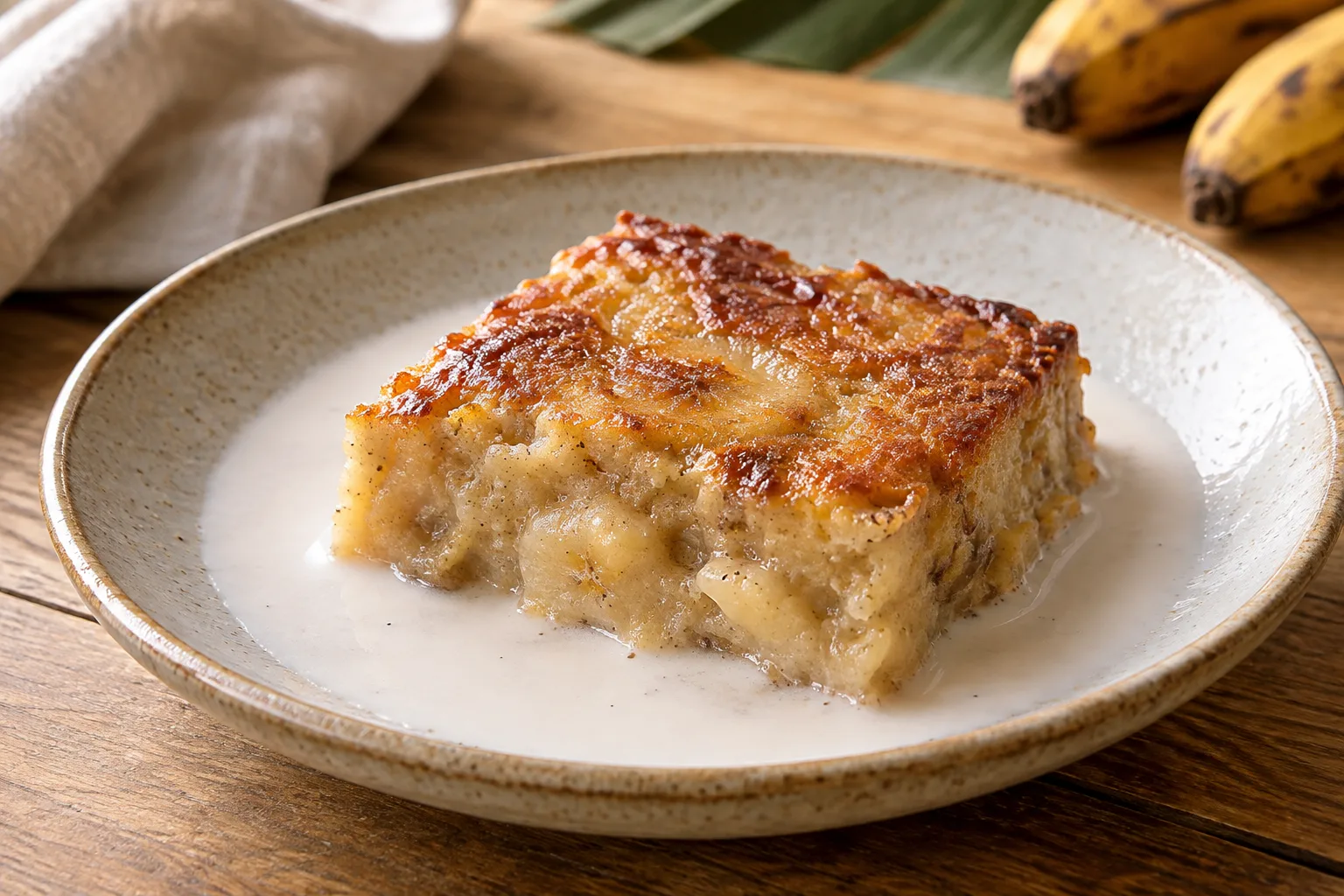
Sweet preparations offer a different balance of fruit, starch, and coconut. Banana po’e combines fruit and tapioca starch, producing a dense, cohesive dessert commonly served with coconut milk. Faikai refers to sweets made with ingredients such as cassava or taro flour and sugar; fruit-based variations are also described. Rather than one defining flavor, these dishes show how familiar island ingredients can yield contrasting textures, from a fresh, lime-bright fish salad to a soft, creamy dessert.
Food for festivals and the passing on of customs
Shared food is especially visible in accounts of traditional village and district festivals. A special meal may be prepared by villagers and offered to those attending. Foods cooked in the umu can include pork, fish, tubers, breadfruit, and shellfish, though no single menu applies to every event or community. The value of the earth oven in this setting is practical as well as social: it can cook a substantial range of foods together for a gathering.
Customary and religious life also gives kava a documented place in Wallisian and Futunan culture. The drink is made from the root of a Pacific plant in the pepper family. Its roots are pounded and ground, then strained with water; it is served ceremonially in a traditional bowl called a tanoa. Kava is a drink with a distinct social and customary role, not a dish. Its presence should not be taken to mean that every gathering or household follows the same practice.
Culinary knowledge also lives in everyday variation. Fish salad has family recipes, and the ingredients and texture of fruit-and-tuber sweets can differ. A dish may be recognizable across households without having one fixed formula. This account therefore distinguishes documented communal occasions and customary practices from assumptions about how often a particular food is eaten or which celebrations include it. The available descriptions support a picture of food shared in both household and community settings, with variations that remain part of the tradition.
Leaf wrapping and the umu earth oven
The umu is a Polynesian earth oven and a defining cooking method in descriptions of Wallis and Futuna. A pit is dug and a bed of hot volcanic stones prepared. Food is wrapped in banana leaves or arranged with woven palm material, placed over the stones, then covered with leaves and earth. The covering holds the heat while the food cooks slowly. A typical umu meal may bring together suckling pig, taro and other tubers, breadfruit, and shellfish prepared with coconut milk.
The method can accommodate different foods at once, but its ingredients and arrangement are not a rigid recipe. Fish and pork may be prepared in advance and wrapped separately; vegetables and tubers can be cooked alongside them. The result is described as moist after the long, covered cooking. As with any traditional method, the particular load and timing depend on the local preparation rather than a single universal set of instructions.
Other techniques offer different textures and uses for the same pantry. Breadfruit may be cooked over an open fire, mashed, or cut into pieces and fried. Taro, yam, and cassava can be boiled or used in sweet preparations. For banana po’e, fruit is combined with tapioca starch and traditionally wrapped in leaves for cooking; it is served with coconut milk. These methods show how leaf wrapping, direct heat, boiling, mashing, and frying each make use of island crops in distinct ways.
Household meals and occasions for sharing
Food in Wallis and Futuna is described in both domestic and community settings. Meals for village or district festivities may include a shared umu preparation, while fresh fish dishes and root crops also appear in descriptions of local eating more generally. At a meal, fish salad with coconut milk can be served with tubers or other accompaniments; fruit and coconut-based sweets provide a different finish. These are examples of combinations, not a prescribed sequence or a menu common to every household.
The umu is particularly suited to occasions when several foods are prepared for a group. A feast may include pork, taro, yam, breadfruit, and seafood, but its contents depend on the event and the community. Fish salad is another dish with room for family preferences, including the mix of vegetables and the amount of lime or coconut milk. Food traditions here are best understood through these documented variations rather than through a single standard meal.
The contemporary dining environment also reflects the territory’s French status. On Wallis, snack bars and restaurants are especially concentrated around Hahake, with establishments elsewhere on the island; Futuna has hotel catering and small snack bars. Restaurants offer dishes made with local fish, shellfish, fruits, and vegetables alongside French and other Pacific influences. This describes the range of current food settings, not what every resident eats or how often people dine out.
A small glossary of foods and customs
Several local and regional terms identify particular cooking methods, foods, and customary practices. Spellings and preparations may vary, and these definitions describe documented uses in Wallis and Futuna rather than a single recipe shared by every household.
- Umu: A Polynesian earth oven, the method of cooking in it, and, by extension, food prepared in it. Heated stones, leaves, and a covering of earth allow foods to cook slowly.
- Faikai: A name for sweet preparations made with ingredients such as cassava or taro flour and sugar. Fruit-based versions, including banana or breadfruit, are also described.
- Po’e: A dense fruit-and-starch dessert. The banana version combines banana and tapioca starch, is traditionally cooked wrapped in leaves, and is served with coconut milk.
- Kava: A customary drink made from the root of a plant in the pepper family. The pounded root is strained with water and may be served in a tanoa.
- ʻOtai: A non-alcoholic fruit drink with coconut. Versions are consumed in Wallis and Futuna as well as in other Polynesian island communities; its ingredients vary.
- Tanoa: A traditional bowl used to serve kava in ceremonial contexts.
These terms name different things: an oven and cooking practice, several foods, a drink, and a serving vessel. Keeping those distinctions clear helps make sense of the food vocabulary without suggesting that a shared name guarantees an identical preparation across islands.
One country, many cuisines
Uvea (Wallis)
Uvea, also called Wallis, is the western island group of the territory, with a lagoon surrounded by coral islets. Food descriptions for Wallis and Futuna include fresh fish, shellfish, root crops, fruit, and coconut; fish salad with coconut milk has family variations. Traditional village and district celebrations on Wallis are associated with meals that may include foods cooked in an umu. These documented features do not imply one uniform menu across the island.
Horn Islands: Futuna and Alofi
Futuna and Alofi form the Horn Islands. Futuna is described as more rugged than Wallis and bordered by reefs. Food references for Futuna include water taros, coconut crabs, and lobsters, alongside the wider territory’s use of seafood, root crops, and coconut. The umu is also a documented traditional cooking method. These details identify products and practices associated with the island group without assigning a single repertoire to all its communities.
Cook