- Category
- Bread and dough
- State
- Fresh
- Usual unit
- unit
What it is
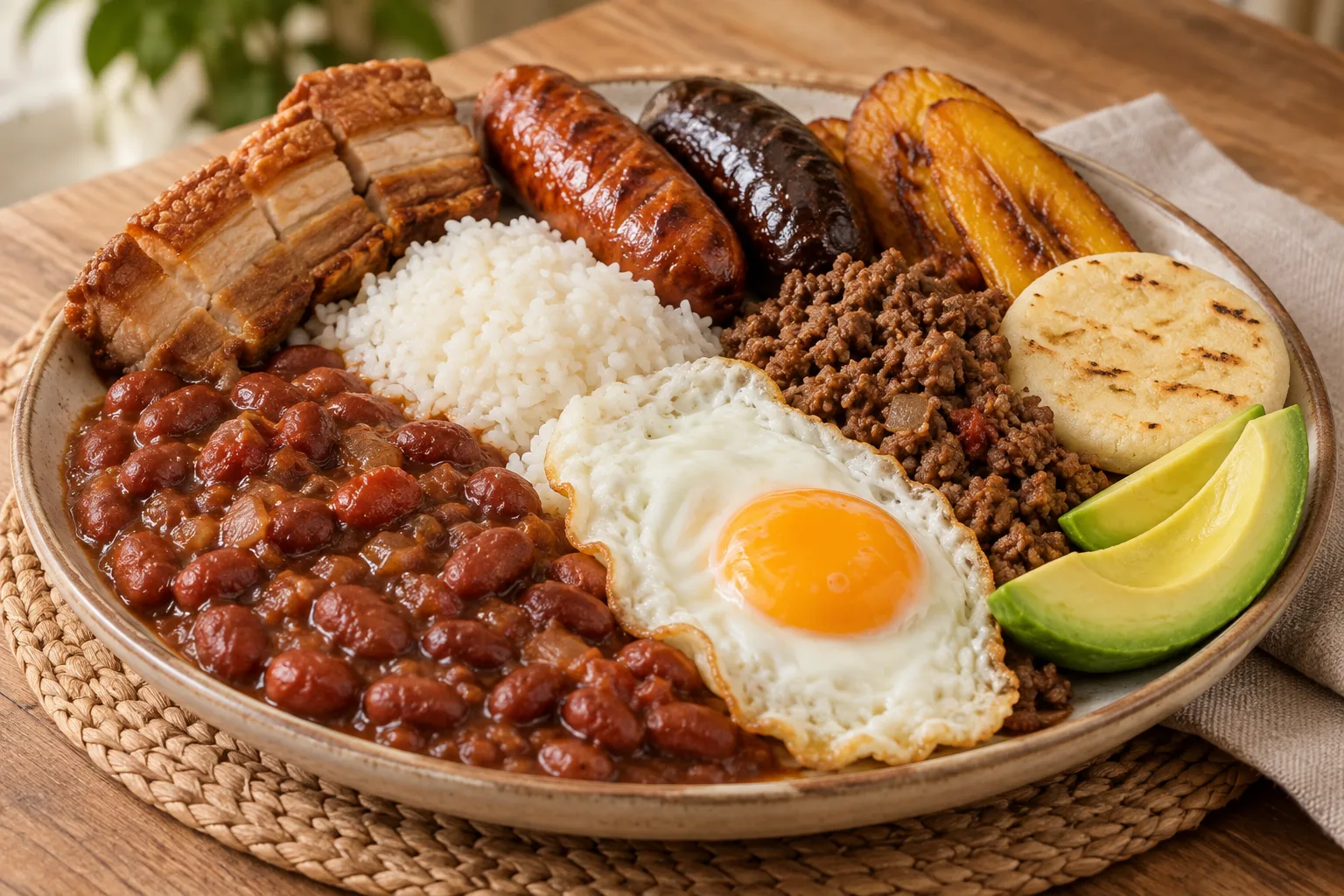
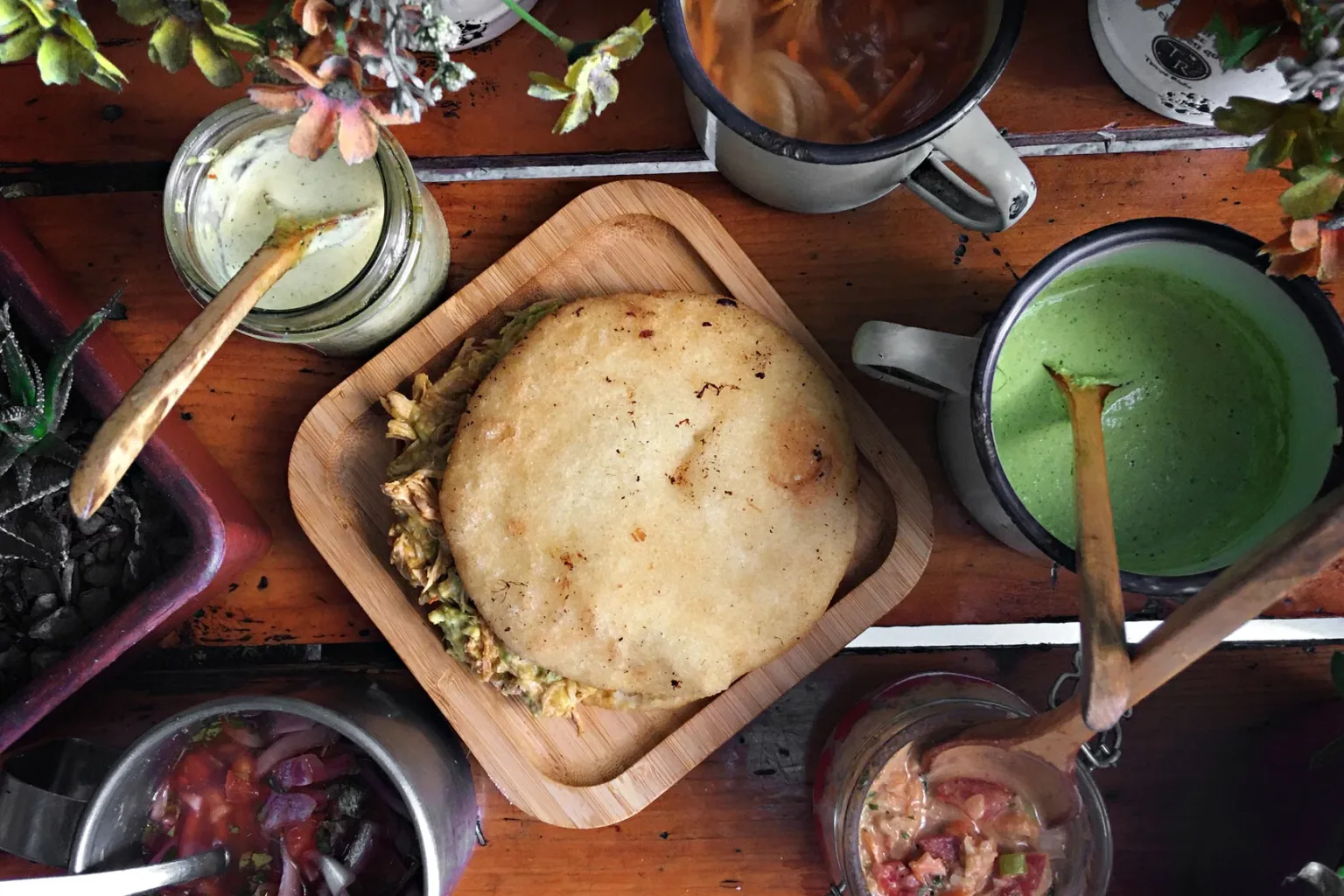
An arepa is a round, flattened preparation made most often from corn dough. Many modern versions use precooked cornmeal mixed with water, while other preparations use ground corn or additional ingredients. The shaped dough is cooked and served whole, split for a filling, or topped with other foods. Arepas belong to culinary traditions in Colombia and Venezuela, and varieties differ in size, thickness, ingredients and cooking method. Some are plain and used like bread; others include ingredients in the dough or are made with fillings. The name therefore describes a family of preparations rather than one fixed recipe or composition.
When to use it
Choose arepas when you want a cooked dough base for breakfast, lunch, dinner or a snack. A plain one can accompany soups, stews and other dishes, while a split or filled arepa can make a meal on its own. You can also top one with ingredients such as cheese, avocado or vegetables. Keep regional variation in mind: some types are thinner or crispier, while others are thicker and softer. Check the recipe or package if you need to know the exact ingredients.
How to use it
For prepared arepas, follow the package directions for heating or cooking, since products and formats can differ. To make arepas at home, shape the dough into round, flattened discs and cook them on a griddle or in a pan; other versions are grilled, baked or fried. Serve one whole as a side, or split it and add a filling. Cheese, shredded meat or chicken, beans, vegetables, avocado and sauces are common options. Some varieties include ingredients in the dough itself, so do not assume every arepa has the same recipe. If serving others, check the ingredients and the product’s preparation directions.
Flavour and texture
Flavor and texture depend on the corn, recipe, thickness and cooking method. A plain arepa typically has a corn flavor and may be tender inside with a browned or crisp outside. Versions made with tender corn can taste slightly sweet; cheese and other additions change the flavor. There is no single texture: arepas may be thin, thick, soft or crisp.
How to choose it
Choose a type that suits how you plan to serve it: thinner arepas can work well as a side, while thicker or split-ready ones can be filled. For a packaged product, read its ingredient list and preparation directions. Recipes and ingredients vary among types and makers, so do not assume that every arepa contains only corn, water and salt.
Storage
Fresh arepas vary in ingredients and packaging, so follow the package storage directions when provided. Homemade arepas are often best just after cooking; their crust can become firm over time. Do not assume every product has the same shelf life. If you are unsure how to store a purchased product, check its label.
Substitutions
A thick corn tortilla can work as an alternative when you want a corn-based base, though it will not necessarily have the same thickness or texture. A pupusa or gordita can also serve a similar role as cooked dough served with accompaniments or filled. These are different preparations, so their results and ingredients may vary.
Common mistakes
Do not assume all arepas share the same recipe, shape or texture. Some include added ingredients, and others use different doughs. Nor should you choose a flour just because it resembles cornmeal: a particular preparation may call for a specific product, such as precooked cornmeal. Check the package and adapt the method to the type you have.
Safety and allergens
Arepa recipes and packaged products can contain different ingredients. If you have a food allergy, read the ingredient list and ask about preparation before eating; also check the allergen information provided by the food business.
Culinary uses
- Pan plano para acompañar comidas
- Base para rellenar o cubrir con otros ingredientes
Recommended techniques
- Cocinar a la plancha o en sartén
- Asar
- Hornear
- Freír
Pairs well with
- Queso y aguacate
- Carne o pollo desmechado
- Frijoles y verduras
- Guisos y sopas
Frequently asked questions
How are arepas usually cooked?
They can be cooked on a griddle or in a pan, grilled, baked or fried. The method depends on the type and product.
Are arepas always filled?
No. They can be eaten plain, served as a side, split and filled, or topped with other ingredients.
Do all arepas contain the same ingredients?
No. Types differ in dough, added ingredients, thickness and cooking method. Check the recipe or package label.
Ingredient allergens
Allergen listThere are no verified associations for these ingredients yet.
Estimated nutrition
- Fat
- 14 g
- Saturates
- 9.08 g
- Carbohydrate
- 30.47 g
- Sugars
- 3.25 g
- Fibre
- 2.4 g
- Protein
- 5.66 g
- Salt
- 1 g
Sources and review
Automatically researched, cross-checked and validated content. Sources consulted:
- Alérgenos alimentarios | EFSA www.efsa.europa.eu/es/safe2eat/food-allergens
- Client Challenge doi.org/10.2307/jj.27939689.16
- Agencia Española de Seguridad Alimentaria y Nutrición www.aesan.gob.es/
- Food Allergies | FDA www.fda.gov/food/nutrition-food-labeling-and-critical-foods/food-allergies
- Food allergens | Food Safety and Quality | FAO www.fao.org/food-safety/scientific-advice/food-allergens/en
- Food Allergy Labeling Laws: International Guidelines for Residents and Travelers - PMC pmc.ncbi.nlm.nih.gov/articles/PMC10169132/
- Food allergen portal | Food Standards Australia New Zealand www.foodstandards.gov.au/consumer/foodallergies/food-allergen-portal
- Allergen guidance for food businesses - GOV.UK www.gov.uk/government/publications/allergen-guidance-for-food-businesses/allergen-guidance-f…
- Arepa - Wikipedia, la enciclopedia libre es.wikipedia.org/wiki/Arepa
- Cómo hacer arepas, la receta más fácil, casera y tradicional de Colombia y Venezuela www.directoalpaladar.com/ingredientes-y-alimentos/arepas-plato-tipico-venezuela-colombia-com…
- Arepas: una receta de moda - Formacion en Gastronomia www.formacionengastronomia.com/cocina-latina/las-arepas-una-receta-que-traspasa-fronteras/
- ¿De dónde es la arepa realmente: venezolana o colombiana? - BBC News Mundo www.bbc.com/mundo/noticias-america-latina-38698394
- La Historia de las Arepas | Blog Araguaney araguaney.com.mx/blog/historia/historia-arepas.html
- La arepa, un pedazo de tradición y sabor | Mercats de Barcelona | Ajuntament de Barcelona ajuntament.barcelona.cat/mercats/es/la-arepa-un-pedazo-de-tradicion-y-sabor
- Tipos de arepas colombianas | Marca País colombia.co/cultura-colombiana/gastronomia/tipos-de-arepas-colombianas
- Arepas: qué son y cómo se preparan www.mercontrol.com/blog/arepas-que-son-y-como-se-preparan
- Feasibility study for the creation of a company that produces and markets 100% Creole peeled corn arepa in the municipality of Lebrija | OpenAlex openalex.org/W7133379822