- Category
- Vegetables
- State
- Fresh
- Usual unit
- unit
What it is
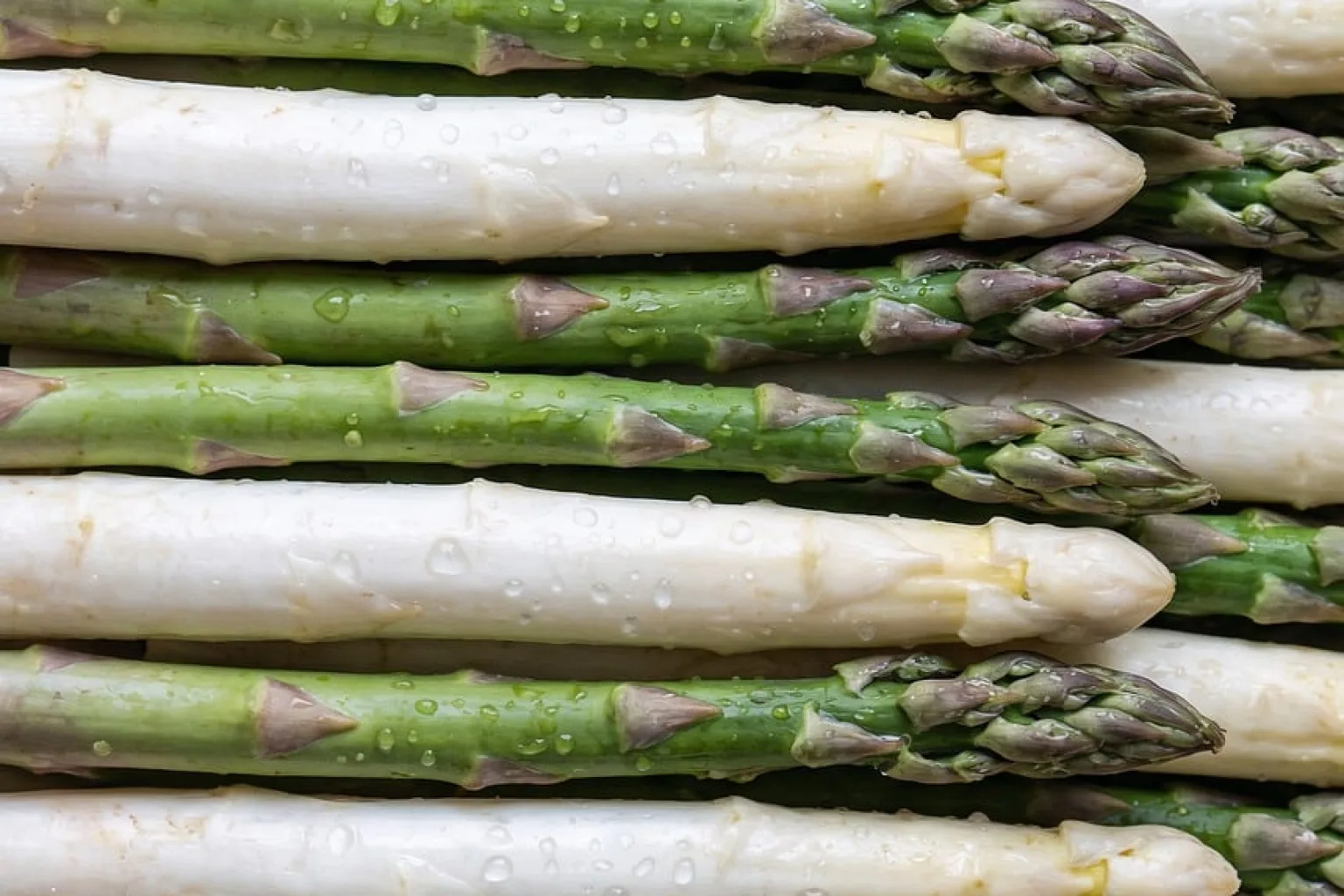
Asparagus is the young, tender shoot of the asparagus plant, sold fresh as an elongated stalk with small scale-like leaves at the tip. It is available in green, white and purple forms, as well as thin wild asparagus. Green shoots grow exposed to light; white shoots develop covered by soil and do not take on the same colour. These differences affect both appearance and taste: white asparagus tends to be delicate, while green and wild types can taste more pronounced or slightly bitter. Thickness alone does not determine whether a stalk is mild. Asparagus is a versatile vegetable, served as a side or added to salads, soups, omelettes and other dishes.
When to use it
Use asparagus when you want a vegetable with a fresh, plant-like flavour as a side or in a fuller dish. Green asparagus works well grilled, in pizzas or in quiches; white asparagus can be served in salads or with a light sauce. Thin wild asparagus, with its more intense taste, suits omelettes and salads. Availability depends on the type and how it is grown: although asparagus may be sold over a longer period, one seasonal guide identifies April and May as its best months. Consider the colour and flavour you want before choosing a type for a recipe.
How to use it
Before cooking, inspect and clean the stalks, and prepare any tough parts to suit the recipe. Tender asparagus can be eaten raw; for example, grate it over a salad or soup. It can also be steamed or cooked on a hot plate. For a simple side, cook green asparagus on a hot plate; add wild asparagus to an omelette. White asparagus can be served in a salad, with mayonnaise or alongside cooked ham. Asparagus also works in pizzas and quiches. Choose the cut and preparation for the type and thickness: wild asparagus is thin, while white asparagus has a more delicate character. Pair it with eggs or salad ingredients, and check the texture before serving.
Flavour and texture
Flavour and texture vary with the type and thickness. Asparagus generally has a mild vegetable flavour, sometimes with a slight bitter note. White asparagus tends to be more delicate; green has a vegetal character, while thin wild asparagus can be more intense and slightly bitter. Fresh stalks worth choosing are firm and straight, with tightly closed, compact tips. Do not assume that a thin stalk will necessarily taste milder than a thick one.
How to choose it
Choose fresh asparagus with straight, firm stalks and tightly closed, compact tips. Avoid spears with bruises, dents, spots or conspicuous discolouration. Colour naturally varies among green, white and purple asparagus, so select the type that suits your dish. Thickness alone is not a reliable indication of greater tenderness. If buying wild asparagus, bear in mind that it is usually thinner and more intense in flavour.
Storage
Keep fresh asparagus in the refrigerator. One storage guide suggests wrapping the stalks in a damp cloth; it also mentions a plastic bag, but the available information does not establish how long asparagus keeps in one. Check the stalks before use and follow any package directions. Wrapping in a damp cloth is a way to help maintain quality, not a guarantee of a particular storage life.
Substitutions
The types are not interchangeable without changing the result. Green asparagus can replace white when the dish can accommodate a stronger colour and a more vegetal flavour; white can work when a delicate character is wanted. Wild asparagus can be used in omelettes or salads, but its thin texture and intense taste may change the dish. Choose a substitute according to the asparagus's role in the recipe rather than expecting identical flavour or texture.
Common mistakes
Do not choose asparagus by thickness alone or assume that thinner stalks will be milder. Avoid stalks with open tips, bruising, spots or loss of firmness. Do not treat every type as if it tastes the same: white asparagus is more delicate, while wild asparagus can be more intense and slightly bitter. Adjust the cooking method to the recipe and thickness instead of assuming every stalk needs the same treatment.
Safety and allergens
If you have a food allergy, check the ingredients and allergen information for prepared or packaged asparagus products, since sauces and accompaniments may add ingredients that are not part of fresh asparagus. If a label or food-service information is unclear, ask before eating.
Culinary uses
- Vegetable side dish, served grilled, steamed or cooked.
- Main vegetable ingredient in salads, soups, omelettes, pizzas and quiches.
Recommended techniques
- Grill or cook on a hot plate.
- Steam, boil or serve raw when the stalks are tender.
- Grate finely over salads or soups.
Pairs well with
- Eggs, including in omelettes and scrambled-egg dishes.
- Salad ingredients, including citrus.
- Mayonnaise or a light sauce for white asparagus.
- Ham as an accompaniment to white asparagus.
Frequently asked questions
What is the difference between green and white asparagus?
Green asparagus grows exposed to light; white asparagus develops covered by soil. They differ in appearance and flavour, with white asparagus generally more delicate.
Can asparagus be eaten raw?
Tender asparagus can be eaten raw. One way to use it is to grate it over a salad or soup.
How do I choose fresh asparagus?
Look for straight, firm stalks with tightly closed, compact tips. Avoid spears with bruises, spots or conspicuous discolouration.
Ingredient allergens
Allergen listThere are no verified associations for these ingredients yet.
Estimated nutrition
- Fat
- 0 g
- Saturates
- 0 g
- Carbohydrate
- 3.53 g
- Sugars
- 1.18 g
- Fibre
- 2.4 g
- Protein
- 2.35 g
- Salt
- 0 g
Sources and review
Automatically researched, cross-checked and validated content. Sources consulted:
- Alérgenos alimentarios | EFSA www.efsa.europa.eu/es/safe2eat/food-allergens
- Client Challenge doi.org/10.2307/jj.27939689.16
- Sopa - Wikipedia, la enciclopedia libre es.wikipedia.org/wiki/Sopa
- Agencia Española de Seguridad Alimentaria y Nutrición www.aesan.gob.es/
- Evolución del léxico culinario desde 1932 a 1972 | OpenAlex openalex.org/W2291578502
- Food Allergies | FDA www.fda.gov/food/nutrition-food-labeling-and-critical-foods/food-allergies
- Food allergens | Food Safety and Quality | FAO www.fao.org/food-safety/scientific-advice/food-allergens/en
- Allergen guidance for food businesses - GOV.UK www.gov.uk/government/publications/allergen-guidance-for-food-businesses/allergen-guidance-f…
- Espárragos: Origen, tipos y beneficios nutricionales www.excelenciasgourmet.com/en/node/14194
- Receta con esparragos: Aprende como usar este ingrediente | Recetas Nestlé www.recetasnestle.com.co/blog-del-sabor/ingredientes/esparragos
- Espárrago: es una planta herbácea rizomatosa. Saber más. ilovefruitandvegfromeurope.com/es/productos/esparrago/
- Espárragos | Introducción | Verduras y hortalizas | EROSKI CONSUMER verduras.consumer.es/esparragos/introduccion
- Espárragos - Anónimo www.ecured.cu/Esp%C3%A1rragos
- El espárrago www.afuegolento.com/articulo/el-esparrago/20178/
- Espárragos: usos, propiedades y beneficios, recetas fáciles www.finedininglovers.es/explorar/noticias/esparragos-usos-propiedades-y-beneficios-recetas-f…
- Lúcete en la mesa incluyendo espárragos en el menú | Recetas Nestlé www.recetasnestlecam.com/escuela-de-sabor/ingredientes/esparragos