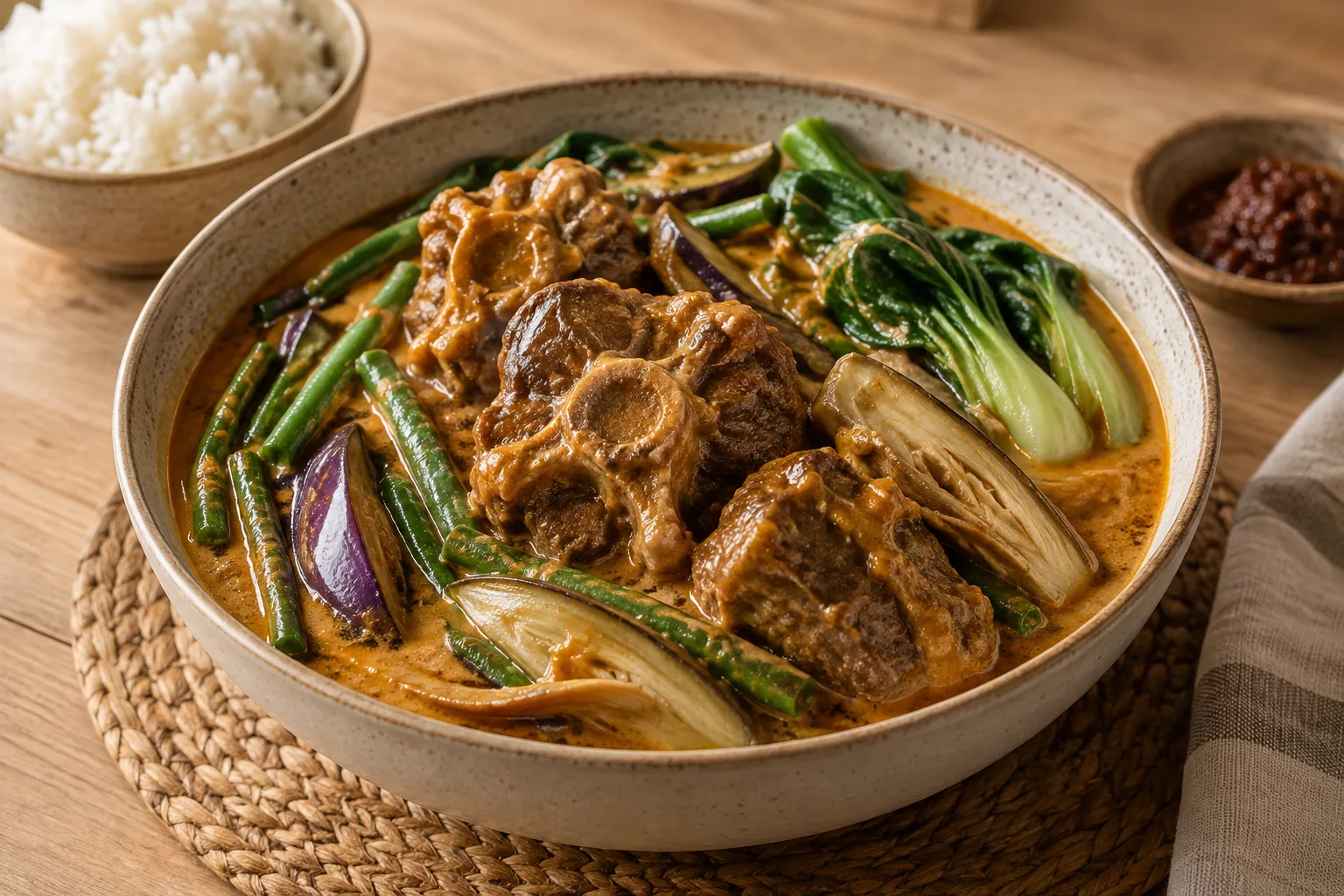
- Category
- Vegetables
- State
- Fresh
- Usual unit
- unit
What it is
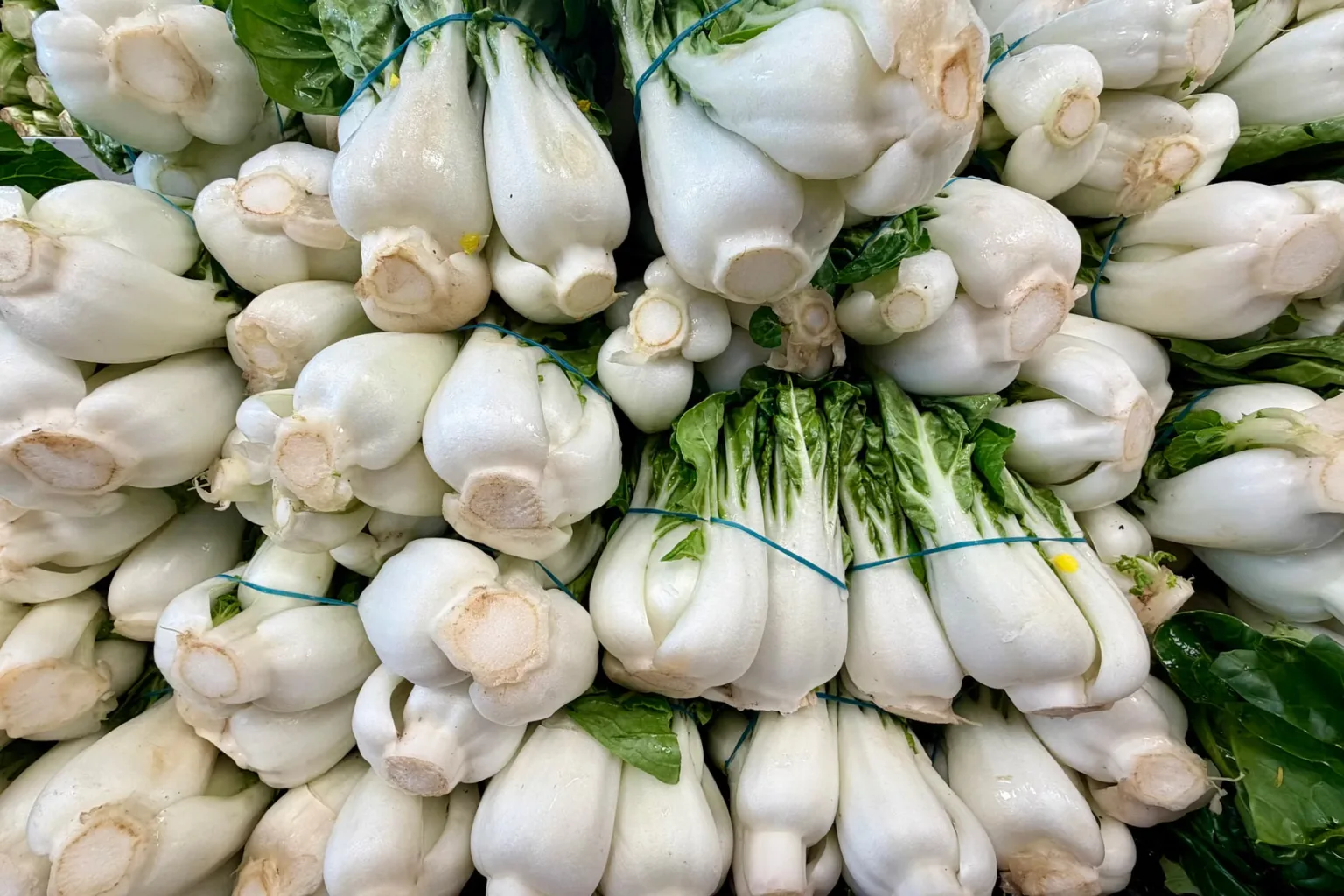
Baby bok choy is a young, compact form of bok choy, a leafy vegetable in the cabbage family. It has green leaves and fleshy stalks, which may be white or greenish depending on the variety. Unlike cabbages that form a tight head, it grows as an open cluster of leaves. The name baby bok choy generally refers to small, tender specimens, although size and appearance vary between varieties and shops. Both the leaves and stalks can be used: the leaves soften quickly, while the stalks keep more bite. Its flavour is mild and green, with a slight bitterness that can become sweeter and more delicate when cooked briefly. It can be served whole, halved lengthwise or separated into leaves.
When to use it
Choose baby bok choy when you want a leafy vegetable that cooks quickly and brings a contrast between firm stalks and tender leaves. It can accompany rice, noodles or tofu, go into soup near the end of cooking, or be served as a steamed or stir-fried side. Young specimens can also be eaten raw in salads when you want a fresh, crisp bite. For even cooking, separate or cut the stalks and leaves, as the stalks generally need a little longer. If cooking it whole, halve it lengthwise so you can reach the folds and wash it thoroughly. Avoid prolonged cooking if you want to preserve the textural difference between its parts.
How to use it
Remove any damaged outer leaves and wash the leaves and stalks carefully, separating them or opening the cluster to reach the inner folds. Cook it whole, halved or cut into pieces. For a stir-fry, start with the chopped stalks and add the leaves later, since they wilt quickly; pair with garlic or ginger and finish with a sauce or sesame seeds if desired. You can also steam, griddle or grill it, or add it to soups and stews near the end so it retains some texture. For a salad, use young leaves that have been washed and drained well. Adjust the cut and the timing according to the size of the vegetable and the texture you want.
Flavour and texture
Baby bok choy has a mild, green flavour with slight bitterness that may seem sweeter and more delicate after brief cooking. Its leaves turn tender quickly, while the fleshy stalks retain some crispness. The degree of bitterness, stalk colour and tenderness vary between specimens and varieties. A short cook helps preserve the contrast; longer cooking makes the leaves softer and the stalks less firm.
How to choose it
Look for specimens with leaves in good condition and firm stalks, without obviously wilted or damaged areas. Size, leaf colour and stalk colour can vary, so pieces need not look identical. Baby bok choy is generally more compact and tender than larger forms, but texture also depends on variety and freshness. Check the leaves and base before buying and choose pieces that look fresh rather than limp.
Storage
Keep it unwashed in the refrigerator and wash it just before preparation. To allow airflow, leave it loose or use a perforated bag. Use it soon: the leaves may lose their crispness and turn yellow over time. Before cooking, remove damaged areas and trim the base if it is dry or deteriorated. How long it keeps can vary with its initial freshness and refrigerator conditions.
Substitutions
Chard can fill a similar role in stir-fries or soups, although its stalks and leaves have a different texture and may need different cooking. Spinach or kale can also work in dishes that call for leafy greens, but the result will differ in flavour, size and bite. They are not identical substitutes: adjust the cut and add them at the point that suits their texture.
Common mistakes
Cooking the leaves and stalks for the same length of time can make the leaves too soft before the stalks reach the desired texture. With large or tightly packed pieces, washing only the outside may leave soil between the leaves. Open the cluster or separate the leaves and wash them thoroughly. Long cooking also reduces the contrast between crisp stalks and tender leaves.
Safety and allergens
Wash the leaves and stalks thoroughly before preparation and remove any deteriorated parts. If you have a food allergy, check the information on packaged products and ask about the ingredients in any sauces or seasonings you add; their composition can vary.
Culinary uses
- Hortaliza de hoja para salteados y platos al wok
- Ingrediente para sopas, ensaladas y guarniciones
Recommended techniques
- Saltear brevemente, separando tallos y hojas si se desea
- Cocinar al vapor o a la plancha
Pairs well with
- Ajo, jengibre y salsas sabrosas
- Sésamo, arroz, fideos, tofu o carnes
Frequently asked questions
Can baby bok choy be eaten raw?
Yes. Young leaves can be used in salads. Wash them thoroughly and drain them before serving.
Do I need to separate the leaves from the stalks?
No. Separating them or starting with the stalks lets you add the leaves later, since they soften more quickly.
Which cooking methods work well?
It can be stir-fried, steamed or griddled, and added to soups. Brief cooking helps the stalks retain their texture.
Ingredient allergens
Allergen listThere are no verified associations for these ingredients yet.
Estimated nutrition
- Fat
- 0 g
- Saturates
- 0 g
- Carbohydrate
- 3.53 g
- Sugars
- 1.18 g
- Fibre
- 2.4 g
- Protein
- 2.35 g
- Salt
- 0.1 g
Sources and review
Automatically researched, cross-checked and validated content. Sources consulted:
- Alérgenos alimentarios | EFSA www.efsa.europa.eu/es/safe2eat/food-allergens
- Client Challenge doi.org/10.2307/jj.27939689.16
- Para la ciudadanía www.aesan.gob.es/para-la-ciudadania
- Pak Choi: qué es, historia, propiedades y usos en cocina bonviveur.com/es/noticias/pak-choi
- Todo lo que necesitas saber sobre el bok choy | American Diabetes Association diabetesfoodhub.org/es/blog/todo-lo-que-necesitas-saber-sobre-el-bok-choy
- Pak choi: orígenes, receta y dónde comprar esta col china - Oriental Market www.orientalmarket.es/pak-choi/?srsltid=AYCX9vIUCqTenVSlh65wPKzlK1rk4d_DCHnqmMkmww8tswp0Vixf…
- - YouTube www.youtube.com/watch?v=Xfgnl6DwwBU
- El Pak Choi | Gastronomía & Cía www.gastronomiaycia.com/el-pak-choi/
- Pak Choy: usos, propiedades y recetas | Fine Dining Lovers www.finedininglovers.lat/explorar/noticias/pak-choy-usos-propiedades-y-beneficios-recetas-fa…
- ¿Qué es el Pak Choi? la acelga asiática | El arte de comer bien | mentta www.mentta.com/blog/que-es-el-pak-choi/?srsltid=AYCX9vKJav6sComZbEKP3D8UHHf-n1tAtBdwShW1C5ZU…
- Pak choi no es un Pokemon | CocinaSinReceta.com www.cocinasinreceta.com/tecnicas/manual-de-instrucciones/pak-choi-no-es-un-pokemon/
- Baby Bok Choy al microondas con encurtido dulce de manzana y sésamo hidratado en olla rápida | Dorar no sella los jugos dorarnosella.com/2012/01/11/bok-choy-con-encurtido-agridulce-de-manzana-y-sesamo-hidratado-e…
- Cómo Cocinar Bok Choy - Danza de Fogones danzadefogones.com/como-cocinar-bok-choy/
- Pak choi, la col asiática que parece una acelga: cómo usarla en la cocina www.directoalpaladar.com/ingredientes-y-alimentos/pak-choi-la-col-asiatica-que-parece-una-ac…