- Category
- Vegetables
- State
- Fresh
- Usual unit
- unit
What it is
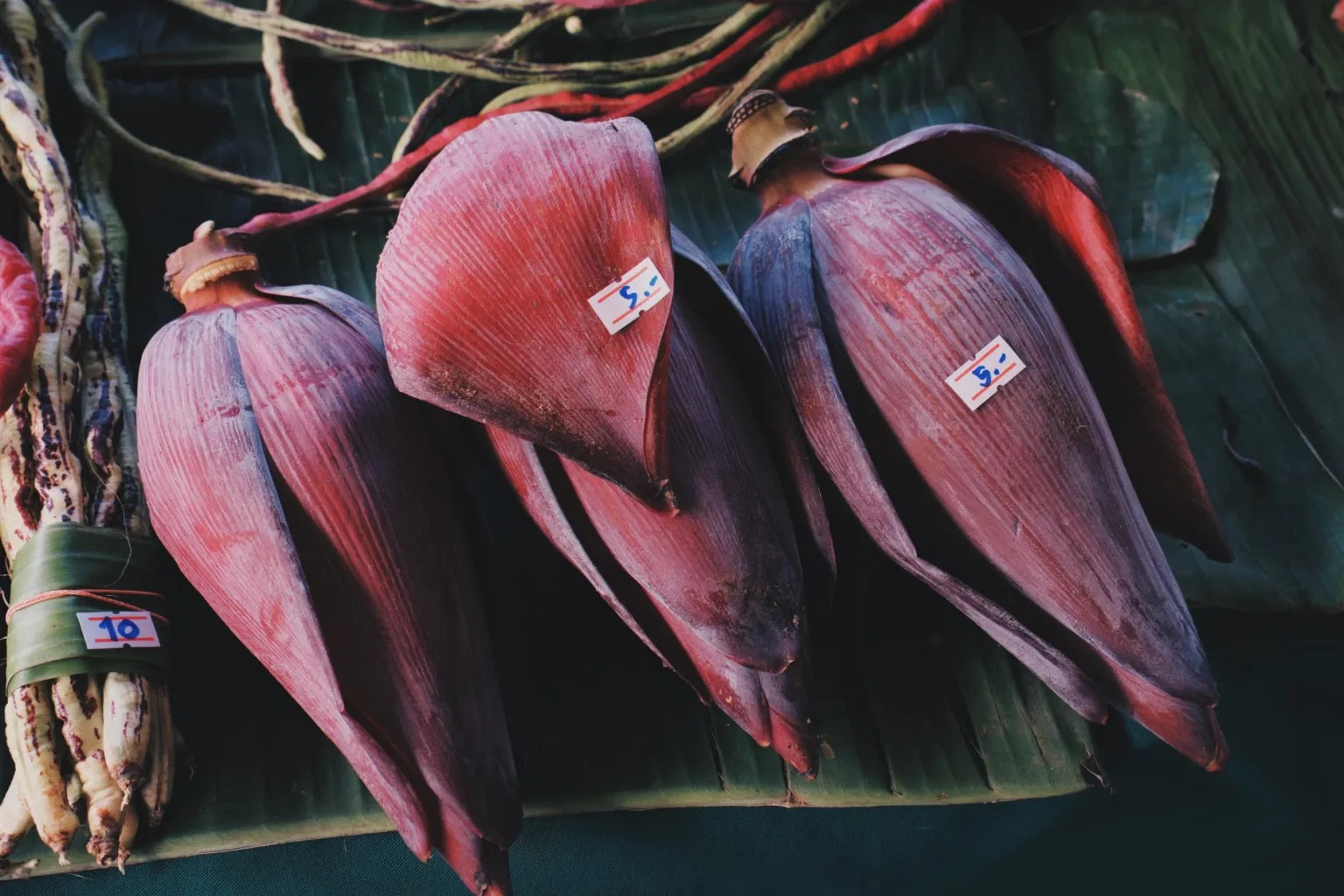
Banana blossom is the edible inflorescence of the banana plant, not the fruit that develops into a banana. It has layers of outer bracts, often dark in colour, that protect the more tender inner parts. For cooking, remove the tough outer layers and use the edible parts of the heart and inner bracts. It is treated as a vegetable: slice it finely for a salad or add it to cooked dishes. Its flavour is mild, with a slight bitterness, and its texture can be crisp. It is often compared with artichoke, though the two are not identical. Fresh blossom can darken quickly after cutting, so prepare the rest of your ingredients first and use it soon after slicing.
When to use it
Choose banana blossom when you want a mild-tasting vegetable with a firm bite to add substance to a meal. Finely sliced, it can be used raw in a salad; cooked, it works in soups, curries, stews and stir-fries with noodles or rice. Its mild flavour pairs well with more assertive seasonings and herbs. If you want it to retain some crispness, cut it thinly and avoid cooking it longer than needed for your preferred texture. The level of bitterness and the texture can vary, so taste a small prepared piece before adjusting the seasoning.
How to use it
Prepare the other ingredients first. If you wish to slow visible darkening after cutting, set out a bowl of water with a little lemon juice or vinegar. Remove the tough outer bracts until you reach the paler, tender layers. Slice the edible part thinly and put it straight into the prepared water; drain it before adding it to a dish. For a salad, toss it with herbs, vegetables and a lively dressing. For a hot dish, add it to soup, curry, stew or a stir-fry with noodles or rice. It can also be fried. Adjust the cut and cooking to the texture you want, and taste before adding more salt, acidity or heat.
Flavour and texture
Banana blossom has a mild, vegetal flavour with a slightly bitter note that may be more or less noticeable depending on the piece and how it is prepared. It does not taste like a ripe banana. The tender parts have a firm, crisp bite, especially when finely sliced and served raw; cooking changes the texture and can make them more tender. Its flavour is often compared with artichoke, but that resemblance does not make the ingredients interchangeable in every dish. It pairs well with acidic dressings, herbs and boldly flavoured sauces, which provide contrast without completely masking its delicate taste.
How to choose it
When buying fresh blossom, look for a firm piece that appears fresh rather than wilted. The outer bracts should overlap closely and should not show obvious damage. Since the tender parts are protected by the outer layers, also check that the blossom has no soft or visibly spoiled areas. Availability can vary by market; the available information does not establish a universal season. If you choose a preserved product, check its packaging and instructions, as preparation and ingredients can differ between products.
Storage
If you are not using fresh blossom straight away, wrap it and store it in the refrigerator. The available information does not establish a universally safe storage period, so follow the seller’s or product’s instructions and discard it if it shows signs of spoilage. Once cut, the edible parts can darken quickly; have your ingredients ready, then slice and use the blossom promptly. Water with lemon juice or vinegar may help reduce visible darkening during preparation, but it does not make spoiled produce suitable to eat. After opening a preserved product, follow its label directions.
Substitutions
Artichoke hearts can work when you want a mild vegetal flavour with a profile reminiscent of banana blossom. Bamboo shoots can add a crisp bite to some dishes, though their flavour and texture are not identical. Neither is a universal replacement: adjust the cut and preparation to suit the recipe. If the blossom is the main ingredient, changing it may noticeably alter the result.
Common mistakes
Do not assume every outer layer is tender: remove the tough bracts and use the edible inner parts. Do not slice the blossom long before the rest of the recipe is ready, as cut surfaces can darken quickly. Its flavour is not the same as banana fruit, and a comparison with artichoke does not mean the ingredients are fully equivalent. Taste the prepared piece and adjust seasoning and cooking to its bitterness and texture.
Safety and allergens
Use fresh blossom that is in good condition and handle it with clean utensils and surfaces. Follow the storage and use directions on preserved products. If you have a food allergy, check packaged-product labels and ask about ingredients in unpackaged preparations; recipes and commercial products can vary.
Culinary uses
- Ingredient vegetal cruixent per a amanides
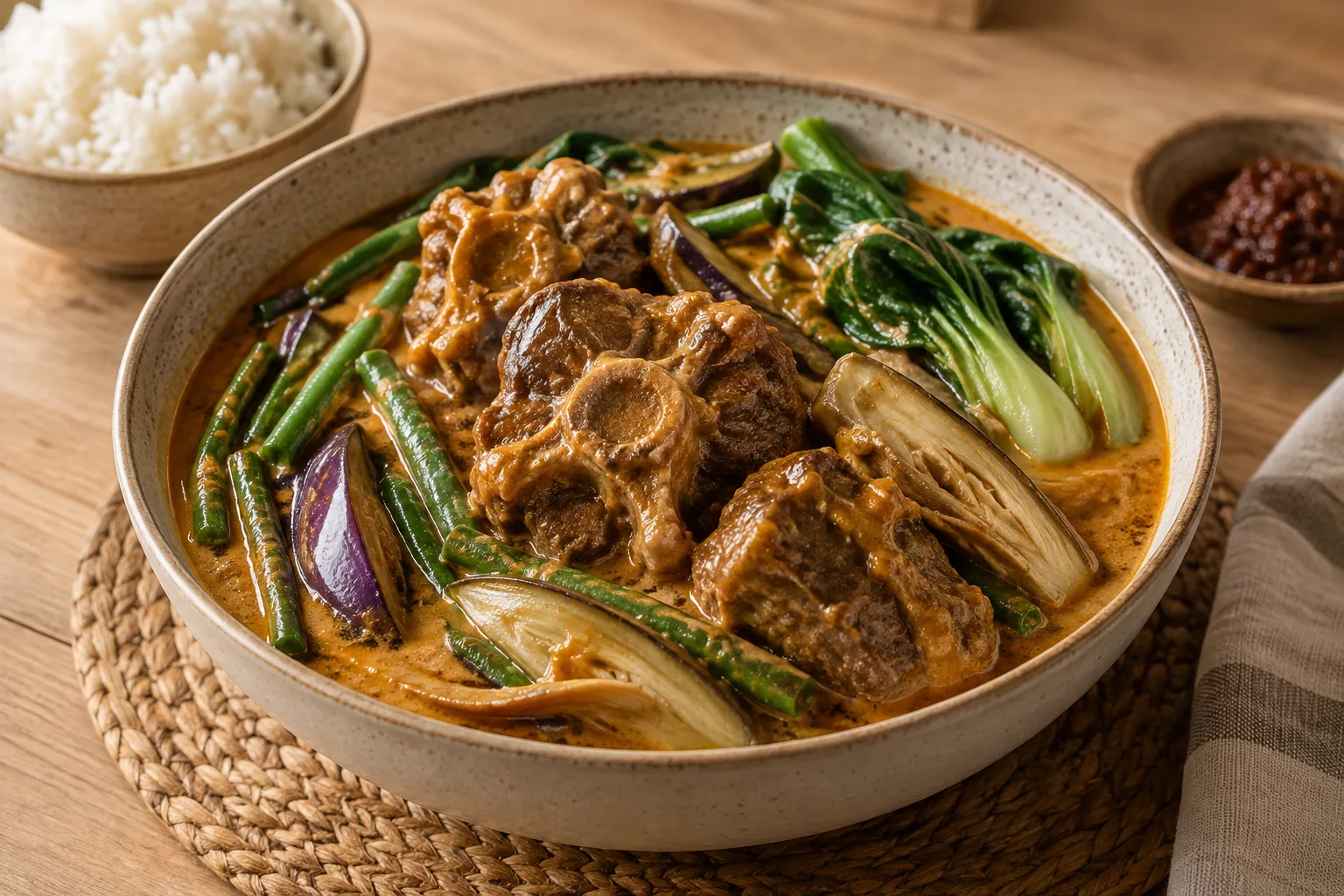
- Ingredient per a curris, sopes i guisats
Recommended techniques
- Tallar a rodanxes fines i servir en amanida
- Coure a foc lent, saltejar o fregir
Pairs well with
- Herbes fresques i cítrics en amanides
- Fideus, arròs i salses especiades
Frequently asked questions
Is banana blossom the same as a banana?
No. It is the banana plant’s inflorescence and is used as a vegetable; it is not the fruit.
Can banana blossom be eaten raw?
Yes. The tender parts can be thinly sliced for salads. Prepare them shortly before serving to limit visible darkening.
What does banana blossom taste like?
It has a mild, vegetal flavour that can be slightly bitter. It is often compared with artichoke, but the two are not the same.
Ingredient allergens
Allergen listThere are no verified associations for these ingredients yet.
Sources and review
Automatically researched, cross-checked and validated content. Sources consulted:
- Alérgenos alimentarios | EFSA www.efsa.europa.eu/es/safe2eat/food-allergens
- Usos culinarios apropiados de las variedades de plátano verde barraganete, dominico y maqueño, en la gastronomía ecuatoriana. | Revista de Gastronomía y Cocina doi.org/10.70221/rgc.v4i2.97
- Agencia Española de Seguridad Alimentaria y Nutrición www.aesan.gob.es/
- Usos de la hoja de plátano (Musa paradisiaca L.) en la ... academiaculinaria.org/index.php/gastronomia-cocina/article/download/40/68/315
- Allergies - Food Safety - European Commission food.ec.europa.eu/food-safety/campaign-2026/allergies_en
- Food Allergies | FDA www.fda.gov/food/nutrition-food-labeling-and-critical-foods/food-allergies
- Etiquetado precautorio de alérgenos NO intencionados < Tecoal ® tecoal.net/seguridad-alimentaria/etiquetado-precautorio-alergenos-no-intencionados/
- List of ingredients and allergens on food labels - inspection.canada.ca inspection.canada.ca/en/food-labels/labelling/industry/list-ingredients-and-allergens
- 1 Extractos proteicos en la flor del plátano repository.unad.edu.co/bitstreams/bc75bffc-adce-4259-be33-3116b287bc29/download
- - YouTube www.youtube.com/watch?v=IFJ5gIBidkU
- Flor de banano - Wikipedia, la enciclopedia libre es.wikipedia.org/wiki/Flor_de_banano
- Descubre la flor de Plátano… | Umami Madrid www.umami-madrid.com/2012/06/04/descubre-la-flor-de-platano/
- Flor del Plátano: Análisis y Comparativa de las Mejores Opciones para Sushi y Cocina Asiática yuanlaosi.es/flor-del-platano/
- Alimentos: Flor de plátano, sus propiedades, beneficios y valor nutricional www.lavanguardia.com/comer/frutas/20190403/461293412994/flor-platano-propiedades-beneficios-…
- Flor del plátano: análisis y comparativa de las mejores opciones asiáticas para preparar sushi y recetas exóticas sukimotril.es/flor-del-platano/
- Pescado vegano empanado con flor de plátano - Ninja Kitchen www.sharkninja.es/pescado-vegano-empanado-con-flor-de-platano/REC3186EU.html