- Category
- Vegetables
- State
- Fresh
- Usual unit
- g
What it is
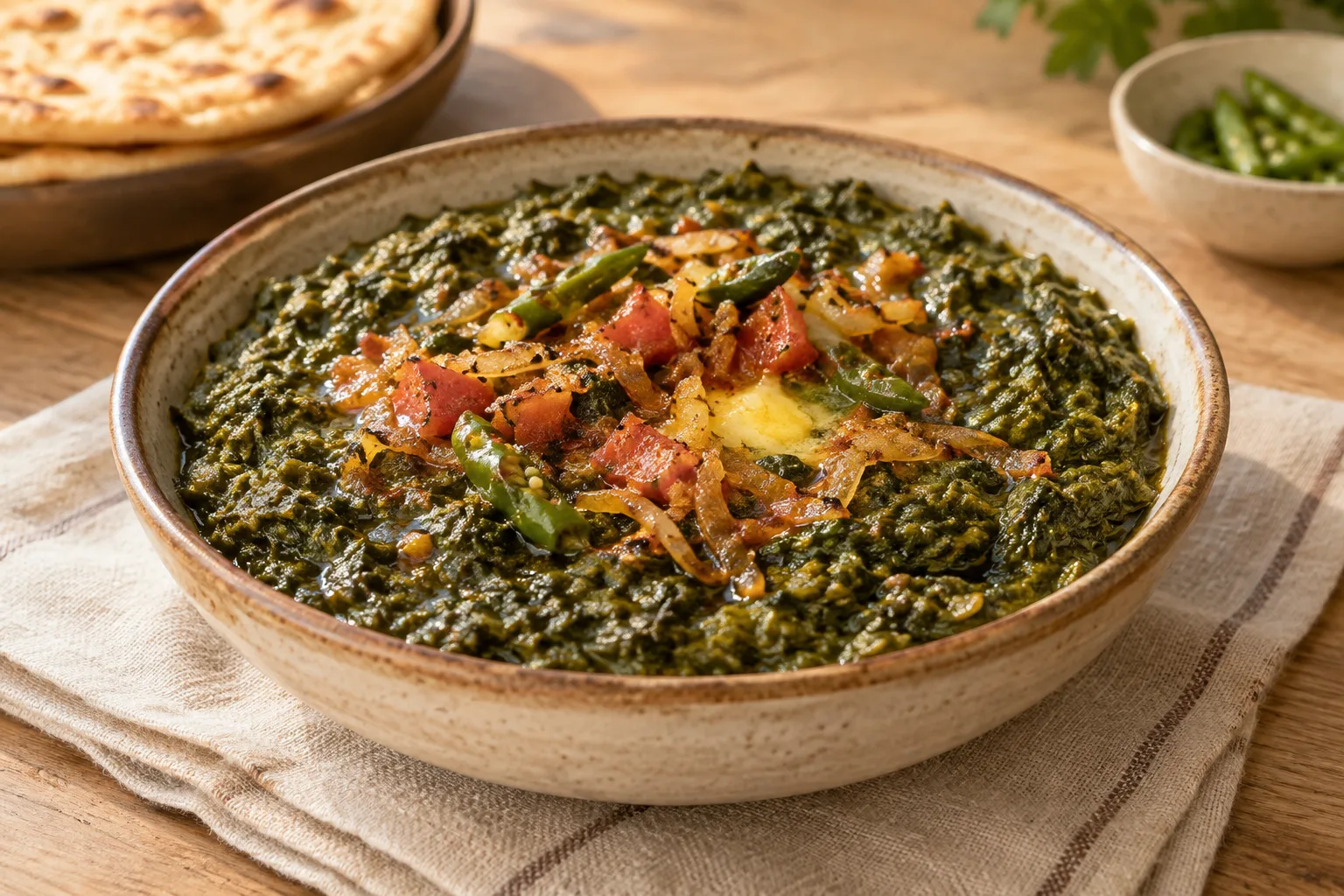
Bathua is the name commonly used in India for the leaves of Chenopodium album, a plant in the Amaranthaceae family. It is also called lamb’s quarters or goosefoot. The leaves are eaten as a vegetable, fresh or dried. In the kitchen they can be cooked as saag, combined with yogurt for raita, or added to dough for flatbreads such as paratha. Bathua may be used on its own or cooked with other greens, including mustard leaves and spinach. Because the common name can refer to a wild plant, correct identification matters if gathering it. Bathua is not identical in flavor or texture to spinach; substituting one for the other changes the finished dish.
When to use it
Use bathua when you want a leafy green in a cooked dish, a mixed-greens saag, or a yogurt-based raita. For saag, it can be cooked with mustard greens and spinach; for raita, cook the leaves and chop or purée them before mixing with yogurt. It is also used in flatbread preparations such as paratha. Bathua is described as a cool-season vegetable in northern India, but availability varies by location and market. Dried leaves can be used in other preparations, although they will not have the same texture as fresh leaves.
How to use it
Sort the leaves and wash them thoroughly to remove soil and other residue. For a tender result, boil or steam the leaves until soft, then drain and chop, mash or purée them to suit the dish. To make raita, mix cooked bathua into plain yogurt and season to taste. For saag, cook it with other greens such as mustard leaves and spinach; purée the mixture if you want a more uniform texture. Chopped or dried leaves can also be added to dough for paratha. Dried bathua may feel coarser than fresh leaves, so choose the form that best suits the texture you want.
Flavour and texture
Bathua leaves are described as green, mildly bitter and earthy. Cooking softens them; chopping or puréeing lets them blend into yogurt-based raita or a smoother saag. Dried leaves are less tender and can have a more noticeable texture than fresh ones.
How to choose it
Choose leaves that look fresh and tender, without obvious signs of deterioration. When buying gathered leaves or a bunch, make sure the plant has been correctly identified as edible bathua: similar-looking plants can be confused with it. Dried bathua is also used in cooking, but its texture differs from the fresh form.
Storage
Culinary references describe fresh bathua, dried leaves and cooked-leaf purée that can be frozen. They do not establish a storage duration for fresh leaves, so do not assume a fixed keeping time. Follow the seller’s handling advice and use leaves that still look in good condition. Keep dried bathua with other suitable dry foods, and label frozen purée with its contents.
Substitutions
In saag, bathua can be replaced with spinach, radish greens, beet greens, kale, collards or sorrel. These greens can also be combined with mustard leaves. They are not exact matches: the flavor and texture will change, so adjust the seasoning to suit the finished dish.
Common mistakes
Do not assume that every plant called goosefoot or lamb’s quarters is the edible bathua, especially when gathering wild leaves. Avoid using leaves without washing them well. Dried bathua will not have the same tender texture as fresh leaves, and another green will not give an identical flavor.
Safety and allergens
If gathering wild leaves, use them only when their identity is certain; similar-looking plants exist. Wash bathua thoroughly to remove soil and residue, and use it in cooked-leaf preparations.
Culinary uses
- Leafy vegetable for cooked greens and saag
- Leaf ingredient for raita, paratha and other preparations
Recommended techniques
- Boil or steam until tender, then chop, mash or purée
- Mix cooked leaves into yogurt or combine with other greens and cook as saag
- Dry leaves for use in preparations such as flatbreads
Pairs well with
- Plain yogurt and roasted cumin in raita
- Mustard greens and spinach in saag
- Paratha or other breads
- Rice
Frequently asked questions
What is bathua?
Bathua is a common name for the leaves of Chenopodium album, a leafy vegetable also known as lamb’s quarters.
How do you cook bathua?
Boil or steam the leaves until tender, then chop, mash or purée them for saag or raita.
Can spinach replace bathua?
Yes. Spinach can replace it in saag, although the finished dish will have a different flavor and texture.
Ingredient allergens
Allergen listThere are no verified associations for these ingredients yet.
Sources and review
Automatically researched, cross-checked and validated content. Sources consulted:
- ¿Por qué la muerte es origen de miedos y tabúes? doi.org/10.64628/aao.fccyk3qj3
- Client Challenge doi.org/10.2307/jj.27939689.16
- A Compiled Update on Nutrition, Phytochemicals, Processing Effects, Analytical Testing and Health Effects of Chenopodium album: A Non-Conventional Edible Plant (NCEP) - PMC pmc.ncbi.nlm.nih.gov/articles/PMC10343354/
- Chenopodium album L. | Colombian Plants made accessible colplanta.org/taxon/urn:lsid:ipni.org:names:55993-2
- Bathua Raita cookwithrenu.com/bathua-raita/
- Bathua leaves: nutrition per 100 g nnwa.in/foods/green-leafy-vegetables/bathua-leaves/
- Sarson Ka Saag | Spiced Mustard Greens With Spinach – DivineTaste www.divinetaste.com/sarson-ka-saag-spiced-mustard-greens-with-spinach/
- New bathua cultivars: a weed to wealth epubs.icar.org.in/index.php/IndHort/article/download/105390/41264/272930
- Fat hen (Chenopodium album): origin and uses floralens-app.com/en/encyclopedia/chenopodium-album
- Preparation, Optimization and Characterization of Ready‐To‐Eat Puree‐Based Complementary Baby Food | OpenAlex openalex.org/W7224173424
- Chenopodium album Linn: review of nutritive value and biological properties - PMC pmc.ncbi.nlm.nih.gov/articles/PMC4486584/
- Bathua has been used in India as green vegetable and for stuffing parathas (layered bread) in north India since ages epubs.icar.org.in/index.php/IndHort/article/download/105384/41259/272920
- Genetic manipulation of anti-nutritional factors in major crops for a sustainable diet in future | OpenAlex openalex.org/W4320913507